You're sitting in chaotic Sakinaka traffic in Mumbai, sweating inside your helmet, waiting for the signal to turn green. Your current bike feels heavy. The clutch is hard. Honestly, you're dreaming about that long-delayed ride to Spiti Valley. You want an adventure bike. But the current Himalayan 450 feels a bit too tall and expensive. And maybe it's just a bit intimidating if you're relatively new to touring.
Royal Enfield knows this exact feeling. That's why the Royal Enfield Himalayan 440 is happening. It's expected to hit Indian showrooms in September 2026. If you ask me, it's going to fix a specific problem for Indian riders.
The original Himalayan 411 launched a decade ago, and it changed how Indians toured. Before it, you either took a standard Bullet to Ladakh or spent ten lakhs on an imported ADV. The 411 made adventure riding accessible to college kids and IT professionals alike. But then Enfield upgraded it to the liquid-cooled 450. The new bike is amazing. But it's also more expensive and a bit of a mess to fix on the side of the road. A gap opened up at the entry level. So the 440 is here to plug that gap.
What exactly is the new 440 engine?
The engine is the heart of any motorcycle. This one brings a major change. The internal code for this project is 'D4G'. Basically, Autocar India reports that Royal Enfield is working on a new 440cc engine.
This isn't the liquid-cooled Sherpa engine from the 450. It's based on the upcoming Scram 440. So you can expect an air-oil cooled single-cylinder motor (which makes sense, actually). The old 411cc engine made about 24 horsepower. This new 440cc unit will likely push out around 28 to 30 horsepower.
That power bump is significant. On the highway between Delhi and Jaipur, the old 411 used to run out of breath above 100 kmph. Overtaking a Volvo bus required serious planning. It was annoying. The extra 30cc and better tuning should give you that much-needed top-end push. This means you can cruise comfortably at 100 kmph all day without the engine vibrating your hands numb.
The torque should improve too. You need low-end torque when you're climbing a steep, broken incline in Himachal or just navigating through flooded streets in Chennai. I expect around 35 Nm of torque. That's plenty for Indian conditions.
Expected price and launch timeline
We're looking at a September 2026 launch. This makes perfect sense. It coincides with the festive season in India. Everyone wants to buy a new vehicle during Navratri or Diwali.
Also, 2026 marks the 10-year anniversary of the Himalayan brand. Royal Enfield loves a good story. Launching the 440 on this anniversary is smart marketing.
As for the price, expect it to start around Rs 2.50 lakh, ex-showroom. On-road in Bangalore, with its high road tax, you might be looking at around Rs 3.10 lakh. In Delhi, it should be under Rs 3 lakh on-road. This places it below the current 450. It's the accessible entry point for the Himalayan family.
The 440 will serve at the entry level, specifically targeted at new adventure riders who want the Himalayan badge without the premium price tag of the liquid-cooled 450.
If you want to read more about how motorcycle pricing works in India, check out our explainers section.
Familiar design with modern tweaks
One of the biggest complaints about the new 450 is that it lost that raw, industrial charm of the original 411. Some people loved the utilitarian look of the old bike. It looked like it was built in a shed to survive a war.
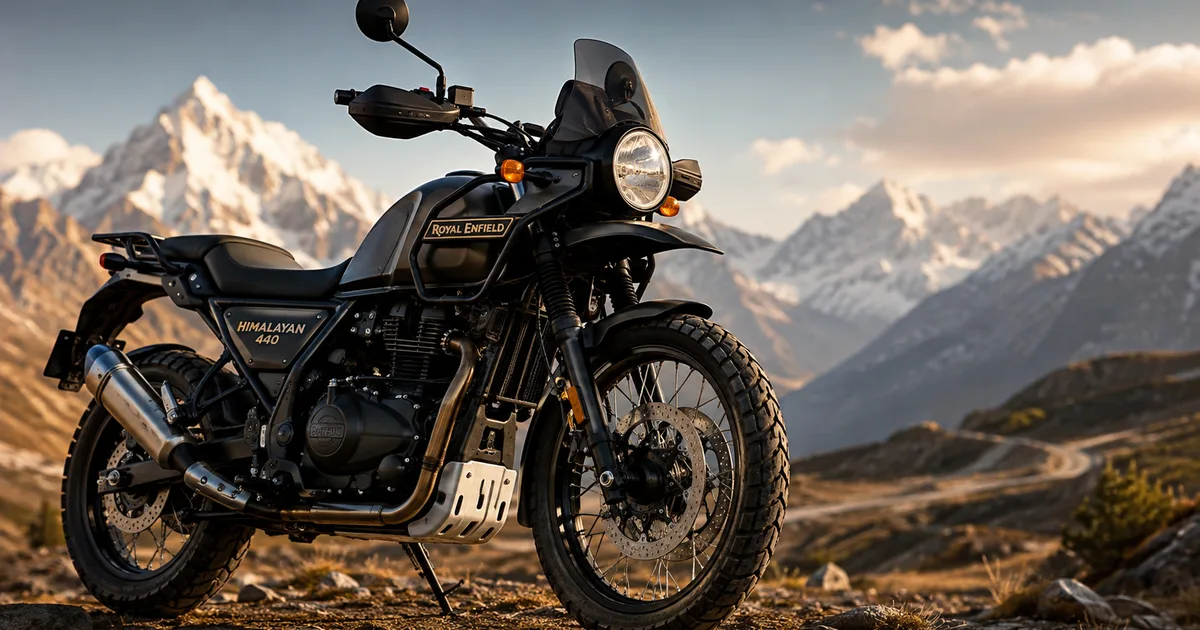
The Himalayan 440 will likely bring back that classic 411 silhouette. You'll see the familiar round headlamp and the front beak. The metal tank braces are back too. Those braces aren't just for show. They protect the tank when you drop the bike in mud. And you can strap jerry cans to them.
Upgrades over the older model
While it might look like the old 411, it won't feel like it. Royal Enfield has learned a lot in the past ten years.
- The braking system is completely overhauled. The spongy front brake of the early Himalayans is replaced with a solid dual-channel ABS setup, which you can likely switch off at the rear for off-road use.
- The instrument cluster gets a modern update. While it might not have the full-color TFT screen from the 450, a digital-analog mix featuring the Tripper navigation pod is almost guaranteed.
- The overall weight is managed better. The old bike felt incredibly heavy when you had to pick it up after a fall. Enfield is using lighter frame components now, making the 440 noticeably easier to handle on tight trails.
- The lighting is finally up to modern standards. An LED headlamp comes standard, completely solving the weak halogen beam issue that plagued night riders on the older models.
The Indian touring scene in 2026
Why does a 440cc bike make so much sense right now? Look at how our infrastructure is changing. We have massive new expressways like the Samruddhi Mahamarg and the Delhi-Mumbai corridor. But at the same time, the last mile connectivity in rural areas remains challenging.
You need a motorcycle that can hold 110 kmph on the new smooth tarmac. But it still needs to handle rocks and mud when you exit the highway. A 150cc commuter bike can't handle the highway speeds safely. A 1000cc imported ADV is too heavy and expensive for the rough stuff. The 400cc segment is the absolute sweet spot for India.
Royal Enfield knows their audience. They understand that the average Indian rider wants a machine they can fix easily. If your liquid-cooled radiator cracks in Spiti, you're stuck. If an air-cooled engine overheats slightly, you just stop, drink some chai, and let it cool down.
The ergonomics are another area where the old bike shined, and the new one should follow suit. The seat height is expected to be around 800mm. That's very accessible for the average Indian rider. In my experience, if you're five-foot-six, you'll easily flat-foot this motorcycle. That builds immense confidence. Especially when you're navigating through a rocky river crossing or just trying to reverse out of a tight parking spot in Delhi.
The seat itself will likely be split. Expect a wide, comfortable saddle for the rider and a decent perch for the pillion. Touring with a pillion is very common here. Enfield rarely messes up passenger comfort. Add a pair of hard panniers, and you have a proper two-up touring machine ready for weeks on the road.
Where does the Scram 440 fit in?
You might be confused about the Scram 440. Royal Enfield is building two bikes on the same platform. The Scram is the urban, road-biased version. It'll have a smaller front wheel, probably 19 inches, and less suspension travel.
The Himalayan 440 is the proper off-roader. It has a 21-inch front wheel and long-travel suspension. If you just commute to a tech park in Hyderabad and occasionally ride to a cafe on Sunday, the Scram is probably better for you. But if you actually want to strap luggage to your bike and ride across states, the Himalayan is the tool for the job.
Financing and booking your new adventure
Buying a Rs 3 lakh motorcycle is a big financial decision for most Indians. If you're planning to book one this September, you should start looking at your finances now.
Interest rates for two-wheeler loans currently hover around 8% to 12% depending on your CIBIL score. If you put down a 50,000 rupee down payment, your EMI for a 3-year loan will be around Rs 8,500 per month. The numbers here are a bit fuzzy, but you get the idea. You can easily set up a mandate via UPI or NACH for this.
The booking process itself has become entirely digital. Dealerships now verify your identity using Aadhaar e-KYC. You can pull your driving license directly from DigiLocker for the test ride. It's fast.
Just be careful when dealerships offer you zero percent financing schemes. There are always hidden processing fees, so read the fine print. We've seen a rise in fake loan offers circulating on WhatsApp lately. Always verify offers directly with the bank. If you spot a scam, report the scam to the national cybercrime portal at cybercrime.gov.in or call the 1930 helpline. For more on avoiding online fraud, browse our scam alerts.
Maintenance, tires, and running costs
An air-oil cooled engine is cheaper to maintain than a liquid-cooled one. You don't have to worry about coolant leaks or a damaged radiator when you're far away from a service center.
A standard paid service for a Royal Enfield 350cc or 400cc class bike usually costs between Rs 2,500 and Rs 3,500 in India, assuming no major parts need replacement. The 440 should fall right into this bracket. Fuel efficiency is another factor. I expect the 440 to return around 28 to 32 kilometers per liter in real-world conditions. With a 15-liter tank, that gives you a touring range of about 400 kilometers before you start panicking about finding a petrol pump.
Tires are another ongoing cost. Enfield typically uses CEAT dual-sport tires on the Himalayan. A new set will set you back about Rs 6,000 to Rs 8,000. They last around 12,000 to 15,000 kilometers depending on how aggressively you ride.
Should you wait for it?
If you have Rs 3.5 lakh ready today and you want the most capable machine, you can buy the Himalayan 450 right now. It's a fantastic motorcycle.
But maybe your budget is strictly under 3 lakh. Maybe you find the 450 too tall for your 5-foot-6 frame. Or maybe you just prefer the simpler, rugged look of the older generation.
If that sounds like you, waiting until September 2026 makes a lot of sense. The Himalayan 440 is the practical, accessible adventure bike that many Indian riders have been asking for. Ten years ago, Royal Enfield gave India an affordable adventure bike. Now, they're ensuring that the entry point remains within reach for the next generation of riders.
I'll be keeping a close eye on any test mules spotted around Chennai in the coming months. As we get closer to the launch, we'll update our guides section with official specs and booking details.