Why Indians are suddenly hooked on explainers
Picture this. Your cousin calls you in a panic because she got an SMS saying her Aadhaar is "linked to suspicious activity" and she needs to click a link immediately. She doesn't know what Aadhaar linking even means technically. She just knows she's scared. That call, that exact moment of confusion, is why tech explainers have become one of the fastest-growing content categories in India right now.
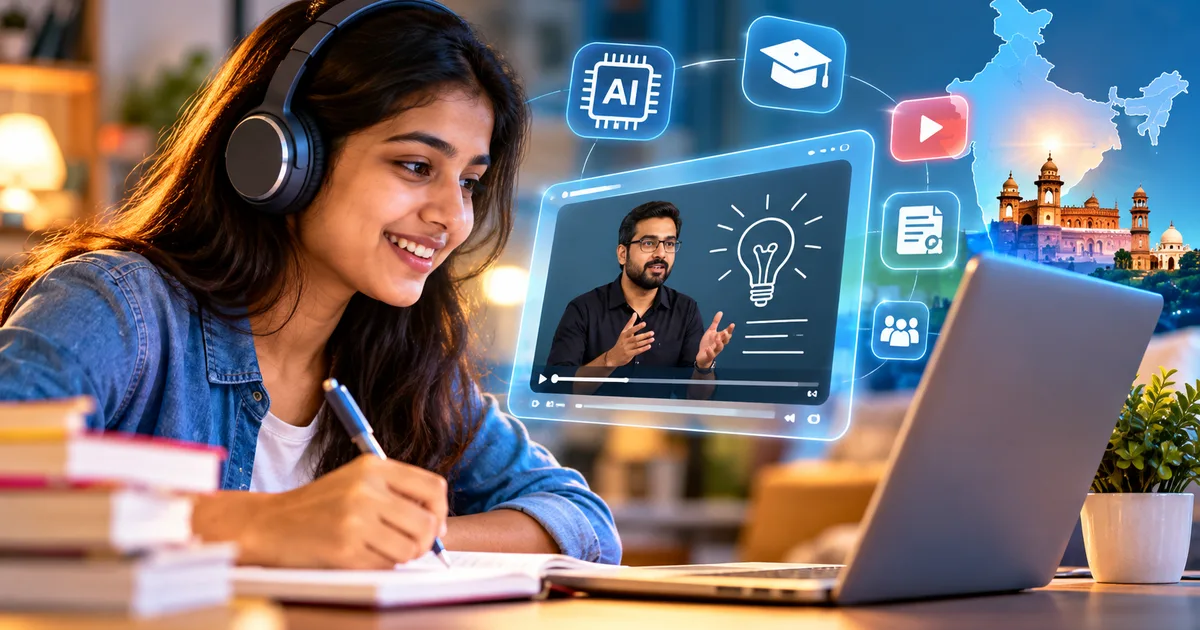
In 2026, Indians are consuming explainers the way they used to consume news. Not just the what. They want the why and the how. Take BRICS summits or voter verification drives. Look at El Nino warnings and GPS jamming in military drills. All of it's now packaged in plain language with context (which makes sense, actually). And the demand isn't slowing down.
Honestly, I think this is one of the more interesting shifts in Indian media in recent years. People aren't satisfied with headlines anymore. They want to actually understand what's going on.
What kinds of explainers Indians are actually reading
The topics that dominated in 2026 fall into a few clear buckets. And they tell you a lot about what's on Indian readers' minds right now.
Big political and geopolitical events
India hosted the 18th BRICS Summit in September 2026 at Bharat Mandapam in New Delhi. It brought together leaders from BRICS member and partner nations including Xi Jinping and Modi. Coverage by Livemint and Times of India ran dedicated explainer formats. These weren't just news reports. They were pieces answering what this means and why it matters. Readers wanted to know if BRICS will actually challenge the dollar. What does India get out of hosting this? Is this good or bad for ordinary Indians?
Reuters ran a deep explainer on India's voter verification drive. It asked whether the Election Commission's push to verify a billion voters was creating problems. That's the kind of story that would be buried in a news brief five years ago. Now it's its own long-form piece with a dedicated audience. In my experience, people really read these entirely.
India's bid for a non-permanent UN Security Council seat for 2028-29 also got the explainer treatment. Publications like India's World broke down the process. They explained what it means for India's foreign policy ambitions. They showed why it's harder than it sounds. That's the sort of civics content that used to exist only in textbooks. Now it's being read on phones during lunch breaks.
Technology and military
Exercise Tarang Shakti 2026 was India's biggest air exercise. It ran from late September through mid-October at Jodhpur. It brought in F-35s from the US for the first time ever alongside India's own Tejas. Times of India ran a full explainer video on what GPS jamming actually does in a modern battlefield. They explained how drone warfare is changing things. And they covered what India's participation signals diplomatically.
This is fascinating to me. Five years ago, defence explainers were niche. Now they're mainstream. Indian readers are actively seeking out these pieces. The Yudh Abhyas 2026 joint India-US exercise covering AI and drone warfare got similar traction. People want to understand what modern warfare even looks like now.
Environment and science
The Met Office in the UK put out a warning in mid-2026. They said the incoming El Nino could be the strongest in a century. It could make 2027 the warmest year on record. India TV News ran an explainer specifically for Indian readers. What does El Nino mean for monsoon patterns and agricultural output? What about water availability in a country already dealing with irregular rainfall? That's exactly the kind of localized science content that gets shared widely on WhatsApp. Farming communities and concerned urban families pass it around.
The format that's winning readers in India
Thing is, topics are only half the battle. The format has to work too.
The explainers getting the most traction in 2026 share a few things. They start with something concrete like a situation or a person. They avoid abstract definitions. They use analogies that feel local. Comparing something to a Diwali sale lands differently than comparing it to a stock market. They don't assume the reader knows acronyms. And they're honest about what's uncertain. They don't project false confidence.
The internet freedom organization Internet Freedom Foundation published an analysis and explainer on the SIR (Special Intensive Revision) software used in voter rolls. This software apparently runs without much public transparency. That piece required breaking down technical concepts about government databases to readers who aren't engineers. The fact that it found an audience says a lot about where Indian media consumption is heading. I'm not sure exactly why it hit so big, but it did. You can read more about how these kinds of digital rights issues are covered in our tech explainers section.
Why this matters for ordinary Indian internet users
Maybe you're a student preparing for competitive exams. Or maybe you're a parent trying to understand the new Aadhaar update rule. Or you're a small business owner wondering about India-Canada CEPA discussions. You're part of the explainer boom. You need information that's accurate and specific to India. And it shouldn't assume you have a policy degree.
And increasingly, you're getting it.
Livemint ran a detailed Mint Explainer on why India and Canada are pushing for a Comprehensive Economic Partnership Agreement (CEPA) by end-2026. It covered what's in the deal and who benefits. That's the kind of granular economic reporting that reaches people when it's framed as an explainer. Otherwise they would skip a traditional news article about trade negotiations.
The India-Canada CEPA story also connects to a broader pattern. India's economic relationships in 2026 are genuinely complicated. Readers are hungry for someone to untangle them in plain language (annoying to write, I know, but true). That appetite is real. The latest tech news trends in India in 2026 show the same thing. Readers want context.
Academic freedom and the meta-explainer
One of the more interesting explainer stories from September 2026 came from Firstpost. The "Free to Think 2026" report on global academic freedom ranked India poorly. Firstpost ran a counter-explainer. It argued that global indices use methodology that doesn't adequately distinguish between bureaucratic regulation and genuine intellectual repression.
Whether you agree with their argument or not, the format itself is notable. A publication used the explainer format to push back on a major international report. That's a step up in sophistication from simply reporting what the report said. It treats readers as people capable of evaluating arguments. They aren't just receiving information.
I find that genuinely encouraging. It suggests the explainer format in India is maturing. It isn't just "what is cryptocurrency" anymore. It's capable of carrying real analytical weight. If you ask me, this is a huge deal.
What this means for how you consume information
Here's the deal. The rise of explainers is a response to rising information literacy among Indian readers. It's also a cause. More people asking how things actually work creates demand for better explainers. Better explainers make more people capable of asking better questions. It's a good loop.
But there's a risk too. Not all explainers are created equal. Some are accurate and genuinely illuminating. Others dress up opinion as explanation. Sometimes they oversimplify to the point of misleading. As a reader, the habit worth building is asking questions. Where did this information come from? Is this an explanation or an argument? What's being left out?
For tech topics specifically, the stakes of getting an explainer wrong are real. Think about AI and UPI. Or data privacy and cybersecurity. A bad explainer about a phishing scam could leave someone thinking they're protected when they aren't. A good one could stop them from clicking a dangerous link. We cover exactly these kinds of topics regularly. You can find more in our how-to tech guides if you want practical help alongside the context.
For a deeper look at how these trends intersect with AI tools and digital safety in India, read our other post. The latest AI tools trends in India 2026 piece has a lot of good info.
The bottom line on India's explainer moment
In 2026, India's appetite for genuine explanation is at an all-time high. People don't want spin. They don't want bullet-pointed summaries. Readers want to understand BRICS and CEPA. They want to know about GPS jamming and El Nino. They're digging into voter roll software and academic freedom indices. They aren't passive consumers anymore.
That's actually remarkable. And I think it's one of the more underreported media stories of this year. The numbers here are a bit fuzzy, but the trend is obvious.
The formats will keep evolving. Video explainers and AI-generated interactive explainers are expanding. Vernacular-language explainers in Tamil and Hindi are growing too. But the core of what makes a good explainer hasn't changed. Start with something real. Explain it honestly. Trust the reader to handle complexity.
India's readers have shown pretty clearly in 2026 that they can.