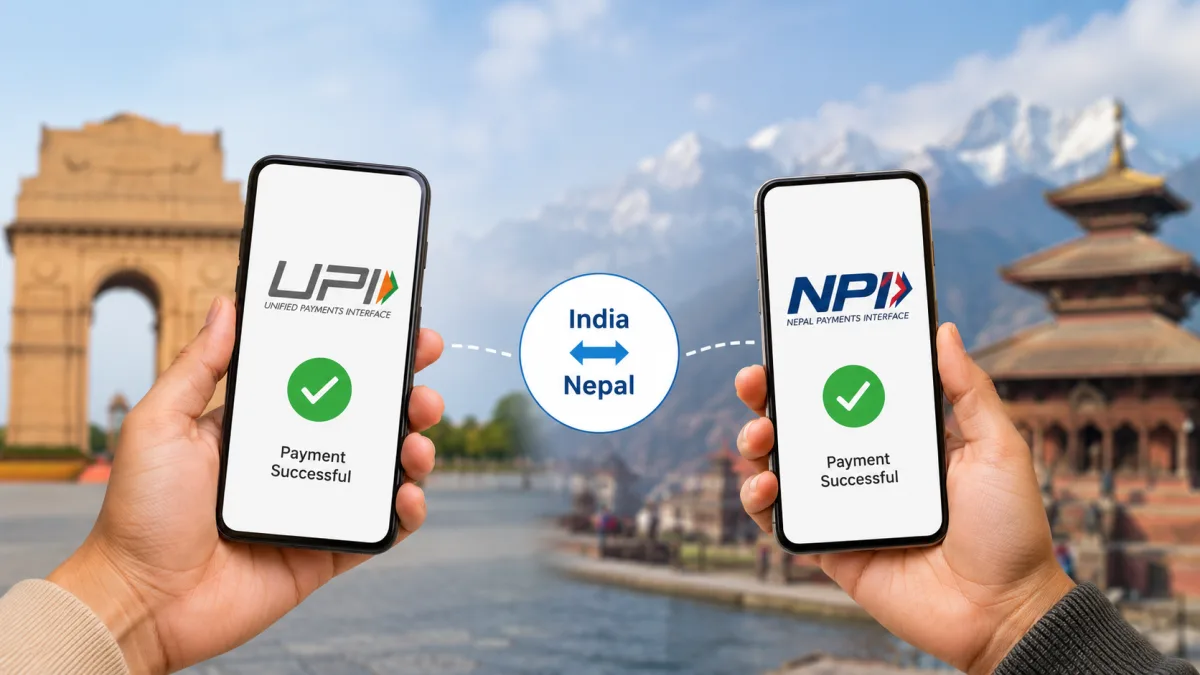
If you have family or employees working across the border, you know how painful sending money between India and Nepal has been. High fees and long delays are the norm. That changes today. The official launch of the India-Nepal UPI-NPI linkage makes sending money as simple as scanning a QR code or entering a virtual payment address. During the recent bilateral talks in New Delhi, Indian External Affairs Minister S. Jaishankar and Nepalese Foreign Minister Shisir Khanal officially kicked off this new cross-border payment mechanism.
Honestly, it's about time.
For years, millions of Nepali citizens working in India had to send money home through slow, expensive channels. Honestly, I think the whole process was a complete mess. We're talking about guards, shopkeepers, and local workers. They don't have time to stand in long lines at the bank for a few thousand rupees. But they did it anyway. High agent fees and bad rates ate up their hard-earned cash. So some chose Hundi. That's illegal. And if that money disappears, it's gone forever. There is no way to get it back.
This is why the new system is a big deal. The Reserve Bank of India and Nepal Rastra Bank signed a formal agreement to connect India's Unified Payments Interface with Nepal's National Payment Interface. It's run by Nepal Clearing House Limited and NPCI International Payments Limited. Simple as that.
Understanding the UPI-NPI integration
Basically, this linkage connects two different setups. On the Indian side, you've got the UPI you use daily to pay for chai and groceries. Then on the Nepal side, there's NPI (which is run by the Nepal Clearing House Limited). When you start a transfer, the systems talk to each other in real time. Your Indian account is debited in rupees. The system converts it to Nepalese rupees. Just like that. In seconds, the cash lands in the Nepal bank account. You don't need to deal with wire codes. And you don't wait for days for the money to clear.
It's direct, instant bank-to-bank transfer.
But why did this take so long? I'm not sure exactly why, but the central banks signed the agreement back in early 2024. Yet we had to wait until 2026 to see it working. If you ask me, connecting two national banking systems is a huge headache. Testing rate calculations and setting up secure gateways takes ages. It's a mess. They had to align foreign exchange rules. Plus, they worried about money laundering and sketchy funds crossing the open border. It took endless meetings and system tests to go live.
The old way versus the new way
To see the difference, look at the Indo-Nepal Remittance Scheme. Under that old system, a worker in India had to visit a physical SBI branch (or a partner agent) just to send cash. They had to fill out paper forms. They had to show ID. And they couldn't send more than fifty thousand rupees at a time, capped at twelve transfers a year. If they needed to send more, they had to open a bank account. That meant paying high wire fees. In my experience, it was a slow, exhausting process.
It was slow and costly.
The new UPI-NPI system sweeps all of that away. Forget finding the SBI branch. You don't need to fill out paper slips or pay hefty agent commissions. A smartphone and an Indian bank account are enough. The cash goes straight from your bank account directly to a bank account in Nepal. Since it uses the NPI network, the money can reach almost any major bank operating in Nepal. It's fast. And it runs 24/7.
If you want to see how other systems compare, check out our technical explainers on global cross-border payments.
How to send cross-border P2P remittances using the new system
Sending money is easy. You don't need a tech degree to figure it out. Honestly, it's already built into the UPI apps on your phone.
- Open your preferred UPI app on your phone and navigate to the pay or transfer section.
- Select the option for international transfers and choose Nepal as the destination country.
- Enter the recipient's virtual payment address or their bank account details linked to Nepal's National Payment Interface.
- Enter the amount you wish to send in Indian Rupees, which will show you the equivalent amount in Nepalese Rupees based on the current exchange rate.
- Verify the details, check the transfer fees, enter your secure UPI PIN, and confirm the transaction.
Here's the deal. Always double-check the exchange rate before you hit send. The rate between the Indian Rupee and the Nepalese Rupee is pegged at 1 INR to 1.6 NPR. But banks and payment gateways might add a small service fee. The app has to show the exact amount debited from your account in India and what lands in Nepal. Don't rush this step. If the rate looks bad, just wait or try a different app.
The system shows you fees upfront.
We expect these fees to be way lower than what old-school operators charge. Some banks might offer free transfers at first. In my opinion, it's worth it. Even if they charge a small fee, not having to visit a branch is great. You won't find this convenience anywhere else. And you can get more details about charges in our detailed guides on digital banking.
What makes Nepal cross-border digital payments different now?
This digital payment linkage changes how India and Nepal handle retail payments. It's a big shift. Before this, only select customers could send money using specific apps. Now, it's open to all banks integrated with NPI in Nepal and UPI in India. That means a huge reach. But there's a catch. The central banks have set daily and monthly limits to stop scams. The exact limits depend on your bank. In my view, the Reserve Bank of India has clear guidelines to keep all these transfers safe for retail users.
You can't send millions at once.
Right now, this is only for P2P transfers (which means person-to-person). If you're a tourist traveling to Kathmandu, you can't scan local merchant QR codes yet. The Kathmandu Post reports that merchant payments still have technical bugs. So don't throw away your physical cash just yet. The focus of this launch is simply helping families send money back and forth. You can't buy souvenirs in Pokhara with it.
According to a joint statement by the Reserve Bank of India and Nepal Rastra Bank, the linkage of UPI and NPI is a significant step in financial cooperation between India and Nepal, aimed at making cross-border payments faster and more affordable for citizens of both nations.
This is a welcome step. For a long time, financial integration between our countries lagged way behind our close social and economic ties. Millions cross the border every year for work. Or for fun. They shouldn't have to carry large amounts of cash or pay crazy fees to send money to their loved ones. The ease of UPI in India has spoiled us. It's only fair that our neighbors get that same convenience too. Hopefully, merchant payments get sorted soon so tourists can use this digital connection.
But security is a huge concern.
Security and dispute resolution
Fraudsters always find loopholes in new digital payment systems. Since UPI is so simple, scammers find it easy to trick people. They'll send fake request links or claim they're verifying your Nepal transfer. Don't fall for it. If you suspect any scam or lose money, report it fast. You can file a complaint on the cybercrime.gov.in portal or call the helpline at 1930. Don't wait for your bank to respond. In my experience, the faster you call the helpline, the better your chances of freezing the transfer.
Keep an eye on transaction status.
If a transfer fails but your account gets debited, don't panic. NPCI and Nepal Clearing House Limited have a joint dispute setup for this. Most failed transfers should reverse within a few business days. If they don't, raise a query inside your UPI app or contact your bank with the reference number. Keep a screenshot of the receipt just in case. You can track other updates in our latest tech news section.
What lies ahead for cross-border payments
This UPI-NPI link is part of India's larger plan to connect its payment network with neighboring countries. We've already seen this with Singapore and the UAE. It makes it easier for Indian tourists and workers to transact abroad. You don't need to deal with currency exchange counters. For Nepal, it's a big step toward digitizing its cash economy. If you ask me, P2P transfers are a solid start, even if merchant payments need time. We'll watch how it goes and update this guide when new features roll out.
For now, enjoy the savings.