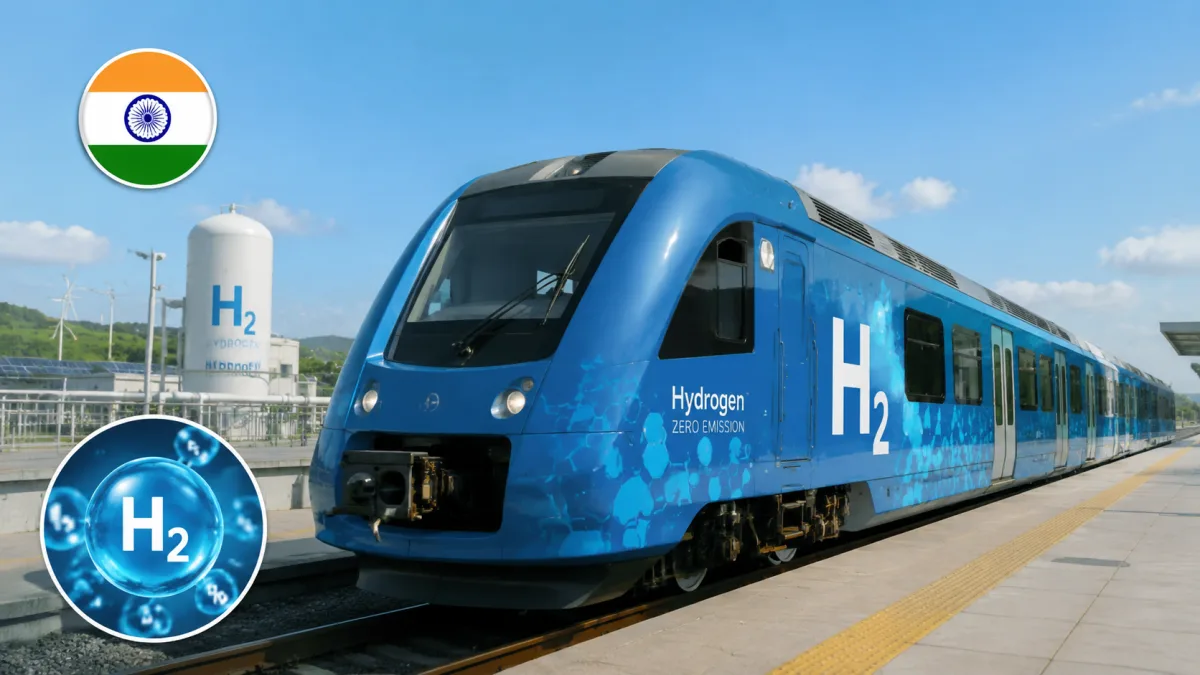
So, here we are. India's First Hydrogen Train 2026 is officially real, and honestly, this is one of the more genuinely interesting things Indian Railways has pulled off in a while. I know we hear a lot of noise about new trains and Vande Bharat launches almost every other week, but this one actually matters. On July 17, 2026, Prime Minister Narendra Modi flagged off the country's first-ever hydrogen-powered train on the Jind-Sonipat route in Haryana.
Look, I'll be straight with you. When I first heard about hydrogen trains coming to India, I figured it was another pilot project that would run for three days and quietly disappear into some government file. Seeing a 10-coach giant actually roll out onto the tracks changes things. We're talking about zero-emission transport built right here in India. And it's running on an actual daily passenger route.
I want to break down exactly what this means for you. There is a lot of confusing information floating around out there right now. I'll cover the expected routes. I'll cover the features of these new trains. And I'll get into the real story behind the trial runs and why this matters for our country.
The Jind-Sonipat route: Why start a hydrogen train in Haryana?
If you're wondering why they picked Haryana to test India's First Hydrogen Train 2026 instead of a high-traffic Mumbai or Delhi route, there's a very logical reason. The Jind-Sonipat section is a non-electrified route.
Indian Railways electrified most of its broad-gauge network over the last ten years. But some patches remain. These remaining patches are usually heritage lines or specific regional routes where stringing up overhead electric wires is too expensive. Sometimes it's just technically complicated. Instead of spending thousands of crores running electric lines for these few remaining routes, dropping a hydrogen train into the mix is a smart fix.
I checked the initial trial run details. The train is a 10-coach setup right now. That's a serious passenger capacity. It's not a tiny prototype built for photo ops. The locals in Jind are calling it a historic milestone for Haryana. They have every right to be proud. I think it's pretty cool for a tier-2 city to be ground zero for a massive tech leap.
What about heritage routes?
There are active proposals to bring these hydrogen trains to the Matheran Hill Railway in Maharashtra. If you've ever taken a trip up to Matheran, you know it's a completely eco-sensitive zone. You can't even take your own cars up there. Right now they run older diesel engines. These engines smell terrible. They're super noisy. And they completely ruin the pristine mountain air.
Replacing polluting diesel engines with water-emitting hydrogen trains on heritage mountain railways like Matheran or Kalka-Shimla is absolutely essential for preserving these fragile environments for our kids.
I really hope they fast-track the Matheran project. That's where you'll see the biggest immediate impact on local tourism and air quality. The government mapped out about 35 heritage and hilly routes under this "Hydrogen for Heritage" project. Just think about riding through the Darjeeling hills without breathing in exhaust fumes. Sounds good to me.
How exactly does a hydrogen train work?
I'm not going to bore you with a dense chemistry lesson. But you do need to understand the basics so you don't fall for WhatsApp rumors. You might hear people call it a "water train." That sounds a bit silly. But they aren't entirely wrong (which makes sense, actually).
The train carries hydrogen gas in pressurized tanks on the roof. Inside the train's engine compartment, there are fuel cells. These fuel cells mix the stored hydrogen with oxygen pulled from the outside air. That chemical reaction produces electricity. This electricity powers the heavy motors to move the train forward.
The waste product from this whole process is just pure water. And a bit of steam. There's no black smoke. There are no diesel fumes. It's incredibly clean tech. There are a few main things you should know about the technology on board:
- The fuel source is compressed hydrogen gas stored securely on the roof.
- The power is generated when fuel cells convert that hydrogen and outside oxygen directly into electricity.
- The only byproduct emitted into the air is pure water vapour.
- The engines are significantly quieter than your average diesel locomotive, making for a much smoother ride.
Producing the hydrogen itself needs to be green for this to actually make sense. If we're burning coal in a power plant just to make hydrogen to run a train, we're just moving the pollution from the train station to the power plant. The government's broader National Green Hydrogen Mission is actively pushing to produce the gas using solar and wind energy.
Main features of the 10-coach hydrogen train
When you step onto one of these new trains, you might not notice a massive change in the seating. If you're used to recent Indian Railways coaches, they still have the standard fans and seating layouts. The tech driving you forward is new, though.
Built in India, by Indians
The technology was developed right here. We didn't just import a German or Chinese train and slap an Indian Railways logo on it. The engineers managed the retrofitting of existing Diesel Electric Multiple Unit (DEMU) trains to run on hydrogen fuel cells right here in India.
This is a big win for local engineering. The cost savings of building these at home rather than importing them are huge. We're talking about keeping billions of rupees inside our own economy. It creates high-skill engineering jobs right here in India. If you're tracking the news around tech jobs, this is the sector you want to watch.
Cost and economic impact
I couldn't find a clear official answer on the exact ticket pricing yet. I don't expect the ticket pricing to be vastly different from regular passenger trains on the same route. The initial capital cost of building a hydrogen train is high. The numbers here are a bit fuzzy, but retrofitting a single existing train costs around ₹80 crore right now.
The operational costs drop significantly once the infrastructure is in place. India spends a huge chunk of its foreign exchange reserves importing oil. Every single diesel train we replace with a hydrogen train powered by locally produced gas keeps those rupees in the country. And it strengthens the Indian economy.
The challenges nobody wants to talk about
I have to put my skeptic's hat on for a minute. Launching India's First Hydrogen Train 2026 on one specific route in Haryana is great. But scaling it up across a country as massive as ours is going to be a mess if we don't fix the supporting infrastructure.
Hydrogen is difficult to store and transport. It needs high-pressure tanks. It needs specialized pipelines and entirely new fueling stations. Right now, Jind has the necessary setup for this specific route. Building a nationwide network of hydrogen fueling stations for trains is a multi-billion dollar project. It'll take decades.
Safety is a massive concern in the public mind. Hydrogen is highly flammable. I know the railways put safety protocols in place. These tanks are built to withstand severe impacts. But public perception takes time to change. People need to feel completely confident that riding a train with pressurized hydrogen on the roof is safe. They need to feel it's just as safe as riding a regular electric train.
How does India compare globally?
We aren't the very first in the world to do this. Germany rolled out the world's first hydrogen train fleet a couple of years ago. China has been testing their own versions too.
What makes India's approach different is the scale and the cost constraints. We're trying to do this cheaper and at a much larger scale eventually. If Indian engineers can crack the code on making hydrogen trains cheap to retrofit and run, we won't just use them here. We'll end up exporting this tech to other developing nations across Asia and Africa.
The real environmental impact of hydrogen trains
We need to talk about the actual environmental numbers because that's the whole point of this exercise. Indian Railways is one of the largest rail networks in the world. It consumes a huge amount of electricity and diesel every single day. Electrification helped cut down on direct diesel emissions. But it still draws heavily from a national power grid that relies a lot on coal.
By shifting to hydrogen, the railways can actually hit their target of becoming a "Net Zero Carbon Emitter" by 2030. That's an ambitious goal. A single hydrogen train replacing a diesel train can save thousands of liters of diesel annually. It can also prevent hundreds of tons of carbon dioxide from entering our atmosphere.
When you live in cities like Delhi or Mumbai where the air quality index hits hazardous levels, every little bit of emission reduction counts. The air quality in Haryana is pretty terrible, particularly around the NCR region during winter. Running zero-emission transport right through that corridor is exactly the kind of practical intervention we need.
What's next for Indian Railways?
The July 2026 launch is just step one. If the Jind-Sonipat trials run smoothly over the next few months, expect to see a much faster rollout. The railways are collecting a lot of data right now on everything from fuel efficiency to wear and tear on the tracks.
For those of you trying to keep up with all the rapid changes in tech and government initiatives, you can check out our other explainers to make sense of things. I highly recommend reading up on how these green initiatives tie into broader government tech policies. If you're worried about booking tickets on these new routes safely once they fully open to the public, make sure to read our guides on avoiding ticketing scams. Fraudsters always jump on new trends like this.
We also have a list of tools that can help you track train statuses and book tickets safely.
The launch of India's First Hydrogen Train 2026 is a big deal. It proves we can engineer green tech locally without relying entirely on western imports. I'll be watching closely over the next year to see if the government actually builds the nationwide fueling infrastructure needed to make this work long-term.