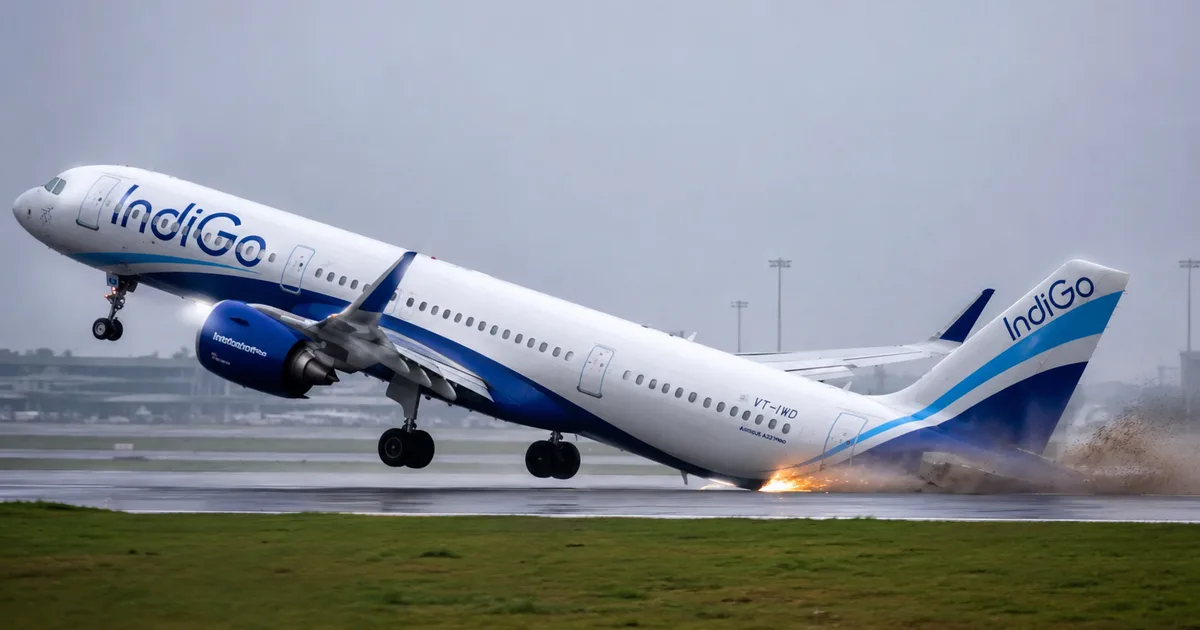
Look, if you fly domestically in India, you probably fly IndiGo. They practically own the skies here. So when the news broke about the IndiGo Airbus A321 tail strike 2026 incidents, my family WhatsApp groups immediately lit up. People were asking if their upcoming weekend flights were safe. Honestly, I get it. The idea of a plane scraping its belly on the runway sounds completely terrifying. But the reality of what happened at Gorakhpur and Mumbai airports is actually more about physics and weather than some catastrophic mechanical failure.
I want to break down exactly what a tail strike is. And why this stretched aircraft has this problem. The Directorate General of Civil Aviation is involved now. Let's look at the facts. Understanding the mechanics makes the whole thing a lot less scary.
What actually happened at Gorakhpur and Mumbai airports
There wasn't just a single isolated incident. We saw a couple of worrying reports happening close together. First, the situation in Uttar Pradesh. An IndiGo flight arriving from Delhi was trying to land at Gorakhpur airport. The pilots apparently made three separate attempts to land. On that third attempt, the aircraft experienced a tail impact on the runway (a bit unnerving, I know). They landed safely. Nobody was hurt. But when the ground crew inspected the plane, they found scratches on the belly. So they grounded that A321neo immediately.
Then we had the Mumbai incident. That one got way more attention. Mumbai is a massive hub. Mumbai weather during the monsoon or unseasonal rains gets incredibly messy. During some bad weather, an IndiGo A321 suffered a tail strike during a maneuver called a go-around.
What is a go-around and why is it risky
A go-around happens when pilots are on final approach to land, but they decide at the last second that it isn't safe. Maybe the wind shifted violently. Or maybe they couldn't see the runway. They apply full power and pull the nose up to climb back into the sky and try again.
During this aggressive pull-up, the tail of the plane dipped too low. It touched the tarmac. Again, the pilots recovered and everyone was safe. But the aircraft had to be taken out of service for a full structural inspection. I think that's standard procedure.
And this isn't just an IndiGo problem. We saw reports of an Air India flight suffering a tail strike at Bengaluru airport recently. Even internationally, a Vietnam Airlines Boeing 787 had a tail strike and runway overrun during takeoff in Munich. So this is a broader aviation issue. It pops up when conditions are challenging.
Understanding the mechanics of a tail strike
So what causes a tail strike? It basically comes down to geometry and pitch angle. When a passenger jet takes off or lands, the nose has to point up. The angle between the body of the plane and the flat runway is called the pitch. If that pitch angle gets too steep, the back end of the airplane simply runs out of room. It hits the ground.
Think about parking a long sedan or SUV in a tight underground spot in Delhi. If you turn the steering wheel too sharply while backing up, the bumper scrapes the concrete pillar. It's the exact same concept with an airplane. It just happens at 250 kilometers per hour (which is terrifying to picture, honestly).
Why the Airbus A321neo is more vulnerable
You might be wondering why we hear about the Airbus A321 so much in these reports. The Airbus A321neo is essentially a stretched-out version of the standard A320. Airlines have used the A320 for decades. Airlines love the A321 because it is longer. It can fit more seats. IndiGo operates a massive fleet of these. They pack a lot of passengers in. This keeps ticket prices down.
But that extra length means the tail is located further away from the main landing gear. When the nose is pitched up, that long tail swings down closer to the ground. Pilots have a smaller margin for error. A pitch angle of a few degrees might be perfectly safe in a smaller A320. That same angle will absolutely cause a tail strike in an A321.
When you add bad weather to the mix, things get tricky. Coastal airports like Mumbai get unpredictable crosswinds. Pilots fight the wind. They work the rudder pedals to keep the plane steady. Sometimes they have to pull up sharply to abort a landing. That sudden pitch upward can push the tail down into the runway surface before the plane has enough speed to climb away. I'm not sure exactly why it happens so fast, but the physics are unforgiving.
How wake turbulence played a role in Bengaluru
I mentioned earlier that an Air India flight suffered a tail strike in Bengaluru. But the cause there was slightly different. It was actually blamed on wake turbulence.
When a large aircraft flies through the air, it leaves behind invisible vortices of air off its wingtips. It's exactly like the wake a speed boat leaves in the water. If a smaller plane flies into that wake too soon, the turbulent air can throw the plane around. In the Bengaluru incident, the Air India plane hit wake turbulence during its landing phase. This disrupted the pilot's control and led to the tail striking the runway. This is why air traffic controllers enforce strict distance separations between planes. In my experience, air travel is mostly smooth, but this turbulence stuff is wild.
Pilot training and avoiding the strike
Airlines spend a lot of money training pilots to avoid this. In flight simulators, pilots practice crosswind landings and go-arounds endlessly. The Airbus software has built-in protections. If you ask me, that kind of automation is reassuring. If the plane senses the pitch angle is getting too high during takeoff, the flight control computers will intervene. They limit how far the pilot can pull the nose up.
But during a manual landing in unpredictable weather, human skill and quick decision-making matter most. The DGCA investigation will look at the training records of the pilots involved in the Mumbai and Gorakhpur incidents. They need to see if any refresher courses are required.
The DGCA investigation and passenger safety
The moment a tail strike occurs, the aircraft is legally grounded. They don't just buff out the paint scratches and send it back into the sky. The Directorate General of Civil Aviation takes these incidents very seriously. In my experience, regulatory bodies don't mess around with this stuff.
The DGCA immediately launched a formal probe into the Mumbai tail strike. They send a team to look at everything. They download the data from the flight data recorder. They listen to the cockpit voice recorder. They analyze the exact weather conditions. They want to know exactly what went wrong. Was it a pilot error? Or was there a sudden wind shear? They check it all.
The repair process for a grounded plane
I know a lot of people worry about flying on a repaired plane. But the repair process is incredibly strict.
Engineers have to strip away the damaged metal skin on the outside. Then they inspect the internal structural frames underneath.
If those internal frames are bent or cracked, it turns into an expensive repair job. Sometimes these repairs cost millions of rupees (though the exact numbers are a bit fuzzy). The airline often brings in a specialized repair team directly from Airbus. They cut out the damaged sections and rivet in brand new pieces. That plane absolutely cannot fly paying passengers again until it passes severe safety checks. If you ask me, it sounds like a logistical nightmare.
"A tail strike might sound minor to a passenger, but to aviation engineers, it requires a microscopic inspection of the rear pressure bulkhead to ensure the cabin can hold pressure at 30,000 feet."
Your rights and protocols as a passenger
If you happen to be on a flight that experiences a tail strike, the protocol is a safe evacuation. Or more likely, just taxiing slowly to the gate if the damage is minor. You'll likely just feel a strange bump. Or hear a loud scrape.
But the bigger impact is often on the passengers waiting at the terminal for that plane's next flight. Since the aircraft is grounded for inspection, that next flight is going to be cancelled. Or severely delayed. The airline has to try to find a replacement plane. In my experience, airline staff try their best, but they get overwhelmed.
According to Indian aviation rules, if your flight is cancelled because the aircraft is grounded, the airline has to offer you an alternate flight. Or a full refund. You aren't obligated to accept a travel voucher. You can demand to get your money back directly to your bank account or via UPI. If the delay extends beyond a few hours, the airline is required to provide you with meals and hotel accommodation.
If you get stuck at the terminal because your plane is grounded, here is exactly what you should do:
- Go straight to the airline counter and ask for the next available flight, even if it means connecting through another city.
- If no flights work for you, demand a full cash refund to your original payment method, not a travel voucher.
- Ask for meal vouchers if your delay crosses the two-hour mark.
- Keep all your boarding passes and receipts if you have to pay for a hotel out of pocket.
It's always a smart move to read through our flight safety guides. They help you understand your passenger rights if you find yourself stuck at the airport. You can also monitor our news section for live updates when groundings happen. If you ever feel an airline is denying you your basic rights, you can file a formal grievance on the government's Air Sewa portal.
Final thoughts on flying the A321neo
Honestly, I still fly IndiGo all the time. I'm almost always on an A321neo. It is the absolute workhorse of the Indian domestic aviation market. Yes, the recent tail strikes made some scary headlines. But they actually prove that the safety systems and regulatory checks work as intended. The pilots managed the difficult situations. Nobody was injured. And the planes were immediately pulled from commercial service for proper inspection.
The next time you board a flight, you really don't need to stress about the tail hitting the runway. But it's definitely good to know why it occasionally happens. And it helps to know what the authorities do behind the scenes. If you want to understand more about how airlines operate in India, take a look at some of our other explainers on aviation technology.
And remember, if your flight gets cancelled because of a grounded plane, stand your ground. Demand your alternate flight or your full refund. Don't just sit on the floor of the terminal waiting for the airline to figure it out.