Picture yourself standing at a petrol pump in Bengaluru during evening traffic. You watch a classic 350cc Royal Enfield rumble up to the nozzle. The rider fills up and hands over cash, then rolls away getting maybe 30 or 35 kmpl on a good day. That thump costs real money at petrol pumps across India. Now imagine a motorcycle wearing that same iconic emblem on the tank, but pulling off over 50 kmpl in peak traffic. That's the promise behind the upcoming Royal Enfield 250cc hybrid motorcycle.
Yes, you read that right. Royal Enfield is dipping its toes into hybrid bikes. For a brand famous for big, heavy single-cylinder engines, dropping down to a 250cc bike with electric help sounds like a weird move. It makes total sense if you ask me, though. Look at rising petrol prices and stricter government rules. Buyers want better mileage now. If you want to see how two-wheeler tech is changing in India, our Tech Explainers guide has the bigger picture, though today we're looking under the tank of this new bike.
The CFMoto partnership and the new V-platform engine
Here's the thing: Royal Enfield isn't designing this 250cc engine from scratch in Chennai. The company is in advanced talks with Chinese motorcycle maker CFMoto to source a compact 250cc engine setup. Codenamed the V-platform (not the catchiest name, I know), it's going to anchor RE's entry-level bikes for the next decade.
Outsourcing an engine will probably upset hardcore fans. Thing is, building a clean, cheap small engine from zero takes years, and I think taking a shortcut here is smart. I'm not sure why RE picked CFMoto specifically, since those details are still unclear. Still, CFMoto already has reliable 250cc single-cylinder engines running globally. Royal Enfield just takes that layout and tweaks it in-house.
Around 90 percent of the bike will be built locally at Royal Enfield's Highway Road manufacturing plant near Chennai. The chassis, body panels, retro styling, and suspension tuning stay in Indian hands. Basically, RE is bringing in the blueprint and building the bike here. That keeps costs down and lets them stick to classic looks and ergonomics.
High-end adventure bikes are getting bigger, as the Royal Enfield Himalayan 750 launch details show, while commuters just need smart engineering to stay cheap.
How hybrid motorcycle tech actually works without the jargon
Say hybrid, and most people think of cars like the Toyota Innova Hycross (which makes sense, given how popular it is). Car hybrids have big battery packs and heavy motors with complex gearboxes. You can't cram that onto a bike without making it as heavy as a small car.
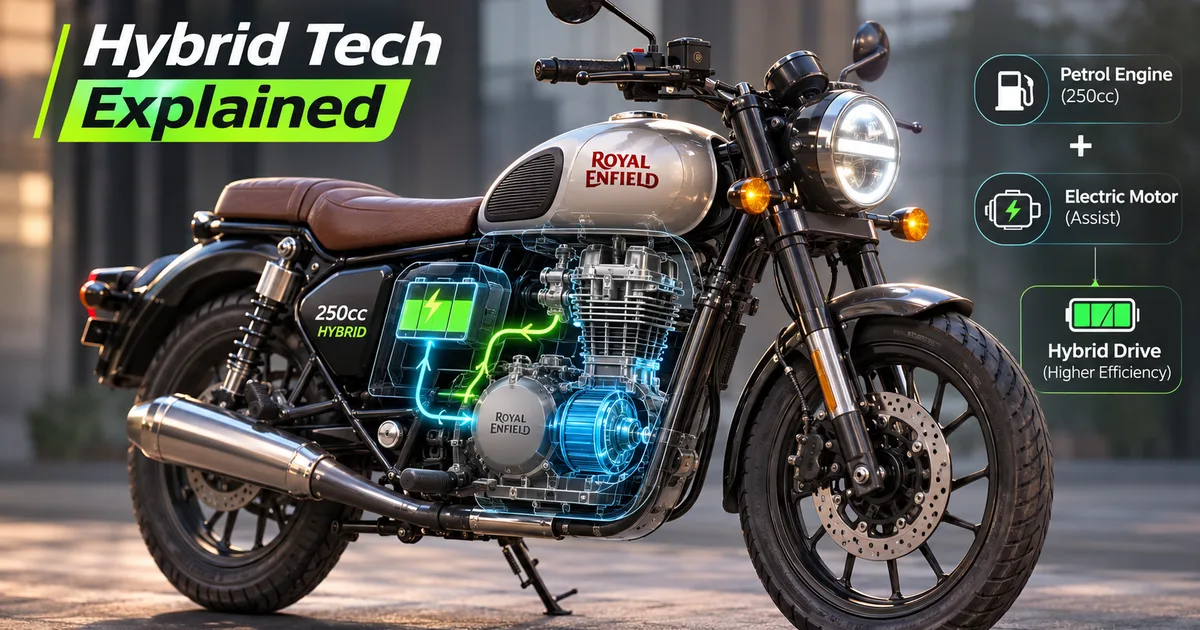
So how does a mild hybrid motorcycle powertrain work on two wheels? It's pretty simple. You get an integrated starter generator (ISG) with a small lithium-ion battery and a petrol engine.
- Electric torque assist: When you open the throttle from a complete standstill, an electric motor kicks in to give instant pulling power. Small petrol engines usually struggle at low RPMs. The electric motor fills that torque gap so the petrol engine does not have to burn extra fuel just to get moving.
- Stop-start functionality: Stop at a traffic light in Delhi or Mumbai, and the engine automatically shuts down after three seconds. Pull the clutch lever, and the ISG restarts the engine instantly and silently without any harsh starter-motor grinding.
- Regenerative energy capture: Whenever you pull the brakes or roll off the throttle while coasting downhill, the system turns kinetic energy back into electricity, storing it in the small onboard battery.
It's a closed loop, basically. You don't plug this bike into a wall at night, which I think is a huge relief for Indian parking lots. Just fill up petrol like normal and let the electronics trim your bill.
The goal is not to turn the motorcycle into a silent electric vehicle, but to use electric torque during high-load moments like acceleration to drastically reduce fuel consumption.
Engine specs, mileage claims, and strict emission norms
Let's look at the numbers. A typical 250cc single-cylinder bike gets between 35 and 45 kmpl, depending on how hard you ride. On its own, the V-platform petrol motor should manage around 40 to 45 kmpl in normal riding.
Add the hybrid setup, and internal tests point to a 50+ kmpl mileage figure. Think about that. That's right up there with 125cc commuter bikes on Indian roads, even with double the engine size and better highway stability.
Why build this now? Government rules. India already has BS6 Phase II norms with real driving emission (RDE) checks, and upcoming CAFE (Corporate Average Fuel Efficiency) rules force bike makers to cut emissions across their entire lineup.
Royal Enfield sells a lot of heavy 350cc to 650cc bikes that drink plenty of fuel. A high-mileage 250cc hybrid pulls their average emissions way down. And they're building it for future BS7 norms too, though the exact BS7 timeline is still a bit fuzzy in my experience.
Where does this bike sit in the Indian market?
Royal Enfield plans to slot this 250cc hybrid right below the Hunter 350. Target pricing is around Rs 1.30 lakh ex-showroom. That puts it right in front of everyday Indian commuters stepping up from 100cc or 150cc bikes.
Here's how the competition looks once it hits showrooms:
- TVS Ronin: Features a 225cc engine priced around Rs 1.35 lakh to Rs 1.70 lakh, offering modern retro styling and tech features, but lacking hybrid fuel savings.
- Bajaj Pulsar N250: Offers sporty streetfighter styling with a 249cc engine around Rs 1.50 lakh, targeted purely at performance rather than extreme fuel efficiency.
- Hunter 350: Royal Enfield's current entry point at roughly Rs 1.50 lakh ex-showroom, carrying a heavier 349cc engine that delivers around 35 kmpl.
- Kawasaki W230: A classic retro competitor, though priced much higher as a premium niche product.
At Rs 1.30 lakh, Royal Enfield can reach college students and daily office commuters who want the retro look (and let's be honest, most of us do) but couldn't justify the weight or fuel bills before. If you ask me, that's where the real buyers are.
Design expectations, features, and actual launch timeline
What'll it look like? Expect a clean roadster. It'll likely have a round LED headlamp, a sculpted fuel tank, a single-piece seat, and upright handlebars for city traffic. (I know, sounds standard for RE, but hiding hybrid tech under a classic frame is a bit of a mess to pull off.)
On the tech side, expect a semi-digital or full-digital console with Bluetooth navigation, plus single-channel or dual-channel ABS depending on the variant. And it'll be lighter than the Hunter 350. That alone makes it easier to drag out of tight parking spots, I think.
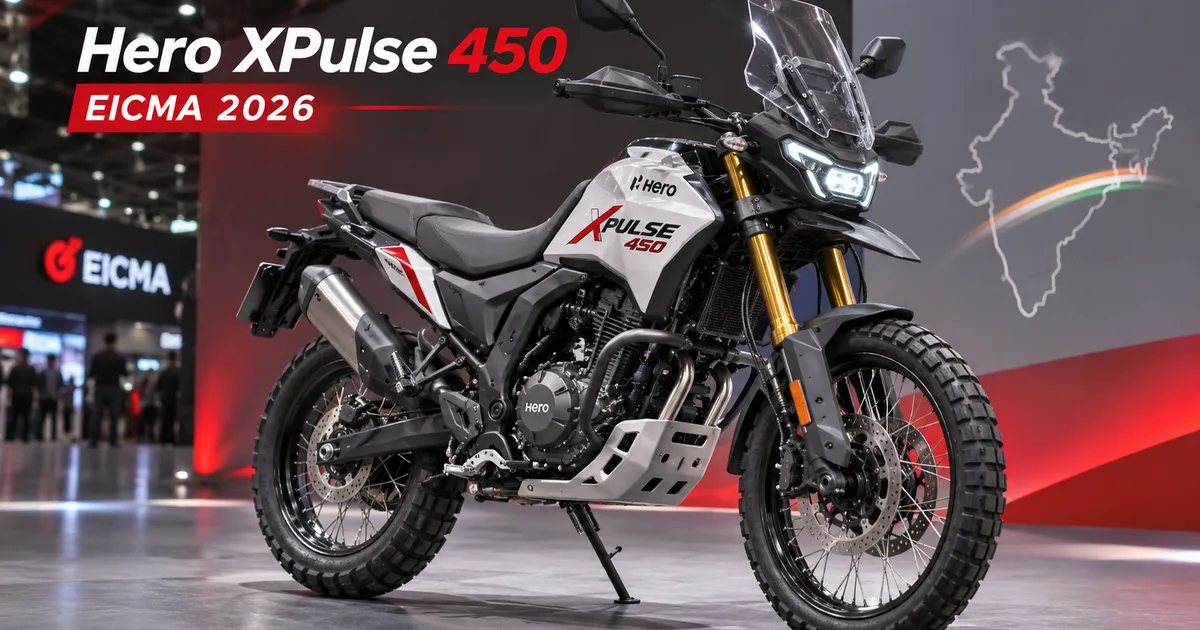
Timing-wise, the rollout is planned between late 2025 and 2026, though RE has a packed calendar. Along with this V-platform hybrid, they're building the pure-electric Flying Flea C6 city bike and rally machines aimed at rivals like the Hero XPulse 450 engine specs crowd.
Check our Latest Tech News page for launch dates and ride reviews once test bikes hit Indian highways.
The verdict: Is a hybrid Royal Enfield worth waiting for?
Honestly, some brand purists are going to hate this bike. They'll complain that a 250cc engine co-developed with CFMoto doesn't have the soul of an old Bullet. They'll miss the heavy flywheel and deep exhaust thump.
But purists don't pay your monthly petrol bills. Ride 30 kilometers a day through chaotic Indian traffic, and saving 30 to 40 percent on fuel on a retro bike is a great deal, if you ask me. Royal Enfield has to adapt to strict emission laws anyway. Look, extra hybrid parts can turn into a headache down the line, so reliability decides everything. If RE gets the basics right, this could become their biggest-selling city bike in India.