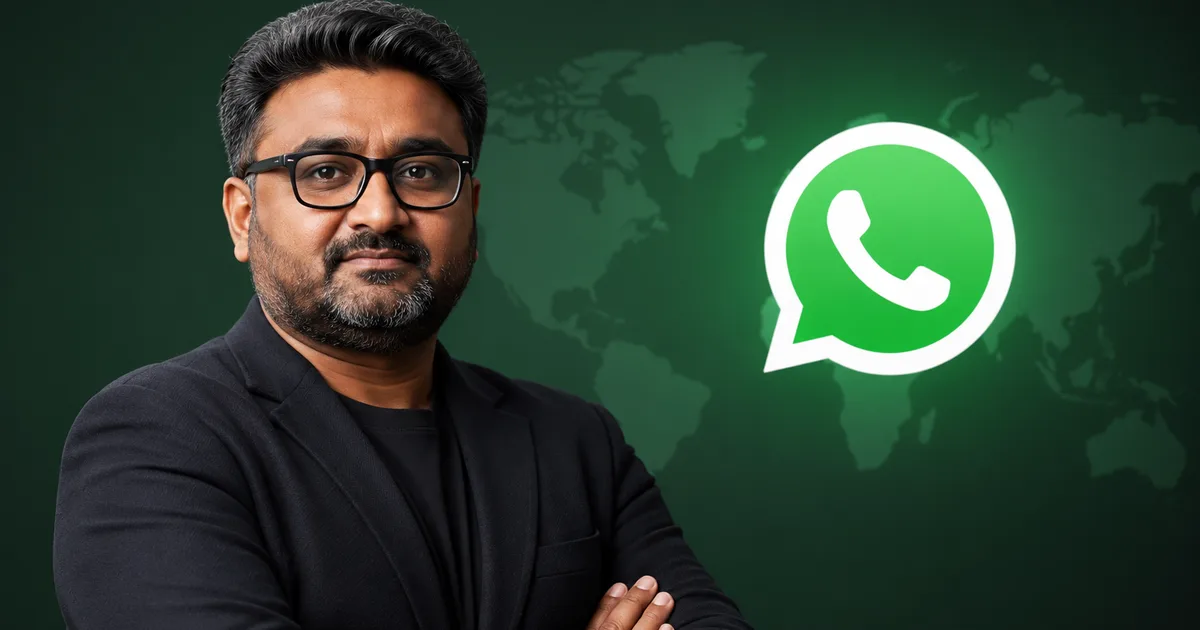
In a surprising shakeup for the Indian tech ecosystem, Kunal Shah Appointed Global Head of WhatsApp as Meta announces a massive 900 million dollar investment in CRED. The deal, which values the Indian fintech firm at 4.5 billion dollars, is a massive shift in Meta's commerce strategy. The news surprised a lot of people in the startup scene. Will Cathcart, who ran WhatsApp since 2019, is moving to a new product team inside Meta, while CRED's daily operations will now run under interim CEO Miten Sampat. If you use WhatsApp for messaging or UPI payments, you'll want to see how this affects your daily chats.
The logic behind Meta's 900 million dollar bet on CRED
Look, Meta's buying a piece of CRED for reasons beyond credit card bill payments. Business Standard reports that the US tech giant is injecting 900 million dollars (which is roughly 7,500 crore rupees) to tie messaging with financial services. Honestly, I think the company is trying to solve a huge problem. WhatsApp has over 500 million users in India. But it's struggled to get people to use its payment feature. Most of us still use PhonePe or Google Pay for daily UPI transactions. Why? It's just easier. So, by investing in CRED and hiring its founder, Meta is trying to build a payment system that actually gets used. CRED has a reputation for attracting high-spending users, and Meta wants that audience.
Here's the deal on the transaction details:
- Meta is investing 900 million dollars directly into CRED.
- The investment values the Indian fintech firm at 4.5 billion dollars.
- Miten Sampat becomes the interim CEO to manage CRED's daily operations.
Thing is, CRED isn't a cheap investment. Valued at 4.5 billion dollars (around 37,500 crore rupees) after this round, the company's spent years trying to monetize its user base. I think it's a bit of a mess to be honest, but they've added personal loans and retail investments. And Meta wants that financial expertise inside WhatsApp. Imagine if you could get a personal loan or check your score without leaving your chats. That's the goal here. So this deal lets Meta integrate CRED's payment tech directly into WhatsApp.
Why Kunal Shah is running WhatsApp instead of CRED
Honestly, Kunal Shah's move to Meta is a massive surprise. He's been the face of CRED since he started it in 2018. Before that, he built FreeCharge and sold it for 450 million dollars (roughly 3,750 crore rupees). If you ask me, he's one of the few who really get Indian consumers. And Meta says he has the builder mindset that the app needs right now. Will Cathcart did a decent job keeping the app stable. But WhatsApp needs someone who can build features that make money. Shah knows how to design apps that keep users hooked, and he's running WhatsApp's global strategy from now on.
So what's going to happen to CRED? Miten Sampat, who was the chief strategy officer, is stepping up as interim CEO. He's going to manage the day-to-day work while Shah moves to Meta. Some people are wondering if Shah can handle a massive global product like WhatsApp, which has over two billion users worldwide. Running a Bengaluru startup is very different from managing a global tool (which is a totally different ballgame, really). Honestly, I'm not sure. But Meta's leadership believes his fintech experience is what they need to make WhatsApp make money. For more updates on Indian startup funding and acquisitions, read our latest tech news.
How this changes WhatsApp payments for Indian users
Here's the thing. WhatsApp payments have been really slow to catch on in India. The National Payments Corporation of India, or NPCI, capped WhatsApp's user limit for UPI for a long time to prevent a monopoly. And even after the cap was gone, people just didn't trust it for money transfers. It's always felt like a chatting app, not a bank. So with Kunal Shah at the helm, you should expect some changes. We might get credit card management and shopping tools directly inside our chats.
But will Indian users actually switch from PhonePe or Paytm? That's the big test. Honestly, think about how you use UPI. You open Google Pay, scan a QR code at a local shop, and pay. It takes three seconds. So for WhatsApp to beat that, it needs a seamless payment flow. If they integrate CRED's rewards system or offer exclusive discounts, people might start using it. Otherwise, it'll just be another ignored feature in the settings menu.
I tried WhatsApp Pay last week for my rent. It felt clunky compared to Google Pay, honestly. Too many clicks. But if Shah can fix these design issues, WhatsApp might become a serious player in the Indian fintech space. (Sounds simple, but it's actually quite hard to pull off).
Moneycontrol reports that Meta's primary goal is to turn WhatsApp into a super app for India, using CRED's technology to handle complex financial transactions like personal loans and merchant payments.
The regulatory hurdles waiting for Meta in India
Indian regulators aren't known for letting big tech companies do whatever they want. The Reserve Bank of India, or RBI, has strict rules about where payment data can be stored. And WhatsApp had to comply with local data localization laws, which delayed their payment launch by years. Now, with Meta investing 900 million dollars in CRED, regulators will be watching closely. I think the Competition Commission of India, or CCI, is likely to examine if this partnership harms competition in the digital payments market.
There's also the Digital Personal Data Protection Act, or DPDP Act. WhatsApp collects a lot of metadata about who you text and when. But unlike digital platforms like Aadhaar or DigiLocker, which are government-run utilities designed for public service, WhatsApp and CRED are private businesses trying to make a profit. So they've got to convince the government that your chat history stays encrypted and separate from your financial profile. In my experience, if they fail, they could face massive fines. If you want to understand how other government digital programs are shifting, check our policy explainers.
So don't expect these changes to happen overnight. It takes months, sometimes years, to get regulatory approvals for new financial products in India. The government wants to promote local innovation and protect consumer data. And while Meta has the money, they still have to play by the rules set by the RBI and MeitY. (Which, if you ask me, is actually a good thing because it protects our hard-earned money). If you're concerned about digital payment safety, check our digital safety guides to stay secure.
What Miten Sampat's appointment means for CRED's future
With Kunal Shah heading to WhatsApp, CRED needs a leader who can focus entirely on growth. Miten Sampat isn't a newcomer to the fintech space. He's been CRED's strategy head and knows the company's inner workings. Under his leadership, the company will have to prove that its 4.5 billion dollar valuation is justified. Right now, CRED makes most of its money from credit card bill payments and personal loans. But in my experience, they need to find new ways to make money if they want to survive.
Some users are worried that CRED will lose its unique style without Kunal Shah. He was the one who designed those quirky TV ads and built the exclusive club feel. But honestly, a shift to a more operational CEO like Sampat might be exactly what they need. I think they need to cut down marketing expenses and focus on building profitable services. They've already launched insurance and retail investment options. And they need to expand these features to compete with the likes of Groww and Zerodha.
If you're a CRED user, you probably won't see any immediate changes to your app. Your credit card points are safe, and the interface will look the same. But behind the scenes, the company's focus is shifting. They've got a massive pile of cash now, thanks to Meta's 900 million dollar check. Honestly, I'm not sure if they'll ever find a business model that actually works, but this buys them a lot of time to try.