We need to talk about what's actually happening in the Indian technology sector right now. Half the year is gone, and if you look at the **latest tech news trends in India 2026**, things are shifting fast. I'm seeing a massive change in how businesses operate on the ground. Forget about cheap smartphones or data plans. We're talking about artificial intelligence actually taking over small businesses. Plus serious international partnerships. And big money is flowing back into the startup ecosystem.
Honestly, it feels different this time. Less hype. More execution.
The funding winter is thawing for serious startups
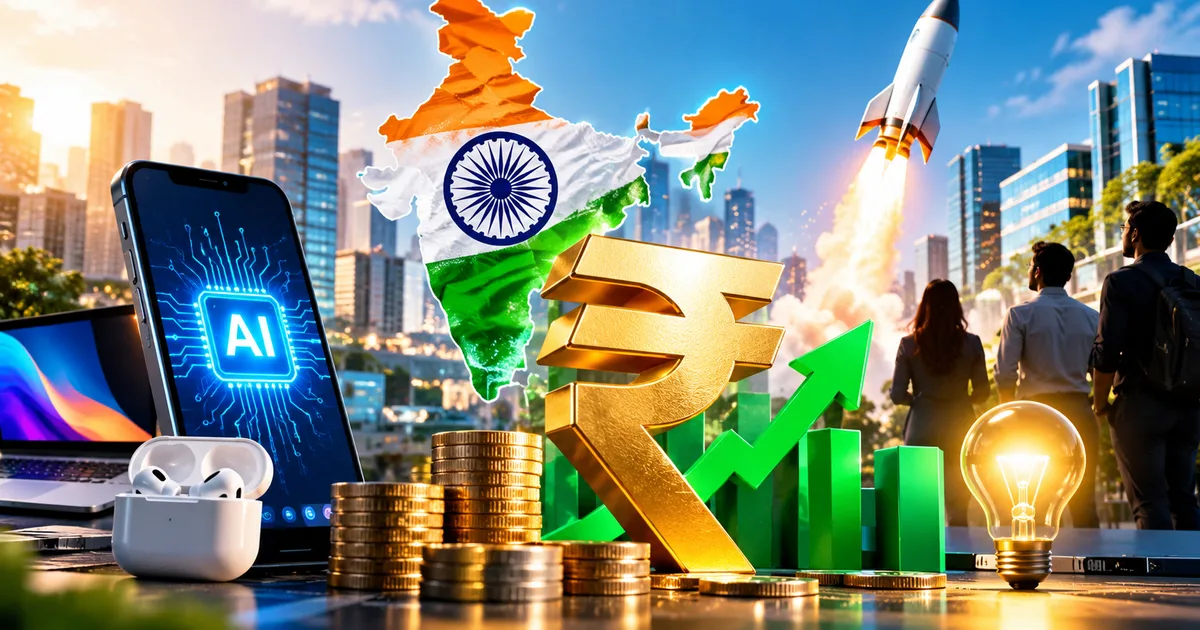
Let's look at the money. India's tech funding rose 12% to $7.2 billion in the first half of 2026. The Economic Times reported this yesterday. It sounds great on paper. But here's the catch. The actual number of deals shrank.
Investors are putting more money into fewer bets. And bigger ones. They're mostly looking at AI and enterprise software. The days of securing ₹10 crore for a simple grocery delivery clone are completely over. Now you need to be building something technically difficult if you want funding. (Which makes sense, actually).
Look at SAP Labs India. They just unveiled their 2026 Startup Studio Cohort. What are they focusing on? Enterprise AI and deep tech. The message is loud and clear if you're a founder. Build real technology. Drop the simple aggregators.
We saw a massive dip in 2023 and 2024. Startups were laying off thousands of employees. It was a brutal period for the industry. Now we're seeing the thaw. But investors are being ruthless today. They want a clear path to profitability and real unit economics. You can't burn cash to get users anymore. Investors will laugh you out of the room if you buy a user for ₹500 and make ₹50 off them. This is why B2B software companies have clear revenue models and get the cheques.
AI jobs are taking over the MSME sector
This part really surprised me. I expected the big IT firms to hire for AI. But a recent report by Apna showed AI job demand in India's MSMEs jumped 164%.
Yes, small and medium businesses. They are hiring far beyond the massive tech parks in Bengaluru or Hyderabad.
Your local chartered accountant firm in Pune. The mid-sized logistics company in Surat. The manufacturing unit in Coimbatore. They're all looking for people who understand basic AI tools.
- They're not looking to hire researchers who can build language models from scratch.
- They want regular people who know how to use AI to automate boring tasks.
- They want employees who can integrate basic workflows to save time.
This is a huge opportunity. Take a breath if you're a college student feeling anxious after seeing the IB JIO Tech final result. The job market is changing. But it isn't shrinking. It just wants different skills now. Learn to use these tools properly and you'll be fine. I highly recommend checking out some beginner tech guides if you don't know where to start.
Geopolitics and the China alternative strategy
We can't ignore the political side of technology anymore. US Under Secretary Jacob Helberg recently made a big statement to News18. He said India is the only country that rivals China right now for engineering talent. Our booming population and rapid economic growth make us the prime market for modern services. (I'm not sure exactly why it took the US this long to realize it).
That isn't just polite talk. We're seeing real movement.
Look at VivaTech 2026 in Paris. PM Modi pitched India as a global tech hub. India and France reaffirmed their commitment to technology cooperation. Why does this matter to a regular developer or tech business owner in India? Because the US and Europe are actively looking for alternatives to China for hardware manufacturing. And software partnerships. The geopolitical winds are blowing in our favor. We're no longer just the back office of the world. We're sitting at the main table. International companies want to partner with Indian firms for research and development. They don't just want cheap labor anymore.
DPDP act enforcement is getting real
You can't talk about Indian tech without talking about regulation. The Digital Personal Data Protection (DPDP) Act is finally moving from theory to strict enforcement.
For years, companies treated our personal data like free real estate. They collected everything and stored it insecurely before selling it to the highest bidder. Those days are ending.
I spoke to a compliance officer last week. Businesses are genuinely panicking. They now have to prove they have explicit consent for the data they hold. This is fantastic news if you're a consumer. You're finally getting some control back over your inbox and phone number.
But if you run a small business? You have a lot of work to do. You can't keep an Excel sheet of customer phone numbers sitting unprotected on a shared computer anymore. You need proper data governance. Take a look at the new privacy compliance tools built specifically for Indian companies.
Big tech's changing relationship with India
Apple, Google, Microsoft, and Amazon all view India completely differently today than they did five years ago.
Apple is manufacturing a huge chunk of iPhones right here in Tamil Nadu and Karnataka. Google is deeply integrating its translation systems with local languages. Microsoft is also pushing its enterprise software heavily into Indian banks and government departments.
But the relationship remains complicated. The Indian government is pushing back hard on unfair app store practices. We're seeing a real push for local solutions. Remember the whole drama with domestic app developers fighting Google over billing policies? That tension hasn't gone away. It has just evolved. We're seeing local companies launch their own app stores and payment gateways to bypass the Silicon Valley toll booth.
The government wants these companies to invest and build here. (They want them to hire here too). But they also want them to play by local rules. It's a delicate balancing act. Companies that adapt to the Indian way of doing business will thrive. Those that try to force American business models onto Indian consumers will struggle. We're a price-sensitive market that demands extreme value.
Hardware and consumer tech updates
Consumer hardware is still a massive part of our daily lives. The June updates brought us news about the Samsung Galaxy M47 and the Infinix Note 60 Pro. Standard iterative updates with better cameras and faster charging. We're reaching a plateau in smartphone innovation. Manufacturers are scrambling to find the next big thing.
But the really interesting hardware isn't fitting in your pocket anymore.
The 2026 Toyota Hilux is set for an India launch in July. And it's bringing hybrid power. We're seeing cars become rolling computers. The software inside vehicles is advancing incredibly fast right now. Electric and hybrid vehicles are forcing a complete rethink of automotive engineering in India. You aren't buying a vehicle anymore. You're buying a software platform on wheels. One complete with subscription features and over-the-air updates. (Which is annoying, I know).
Cyber threats are scaling up
We have to talk about security. With more digital adoption comes more risk.
Israel's cyber chief recently claimed there has been a massive spike in state-sponsored hacking in 2026. India is absolutely in the crosshairs. As we digitize everything from our bank accounts via UPI to our identity via Aadhaar, we become a bigger target.
I've written extensively about financial frauds and digital arrests. But the threats are getting more sophisticated. You can't treat cybersecurity as an afterthought anymore if you run a business.
"The combination of India's booming population, vast engineering pool, and rapid economic growth makes it a prime market for creating cutting-edge services. But it also makes it a prime target."
You need to train your staff. You need to lock down your networks. Go read up on latest security practices before you become a statistic.
What you should do next
So, what do you do with all this information?
First off, stop ignoring AI. Even if you think it's a fad, your future boss doesn't. Just spend an hour a week learning how these tools actually work.
Also, if you're building a startup, focus on solving hard problems. The easy money is gone.
Finally, take your digital privacy seriously. Turn on two-factor authentication for everything. Check your bank statements regularly.
The technology landscape in 2026 is moving incredibly fast. You don't need to be a programmer to keep up. But you do need to pay attention to where the money and jobs are moving.