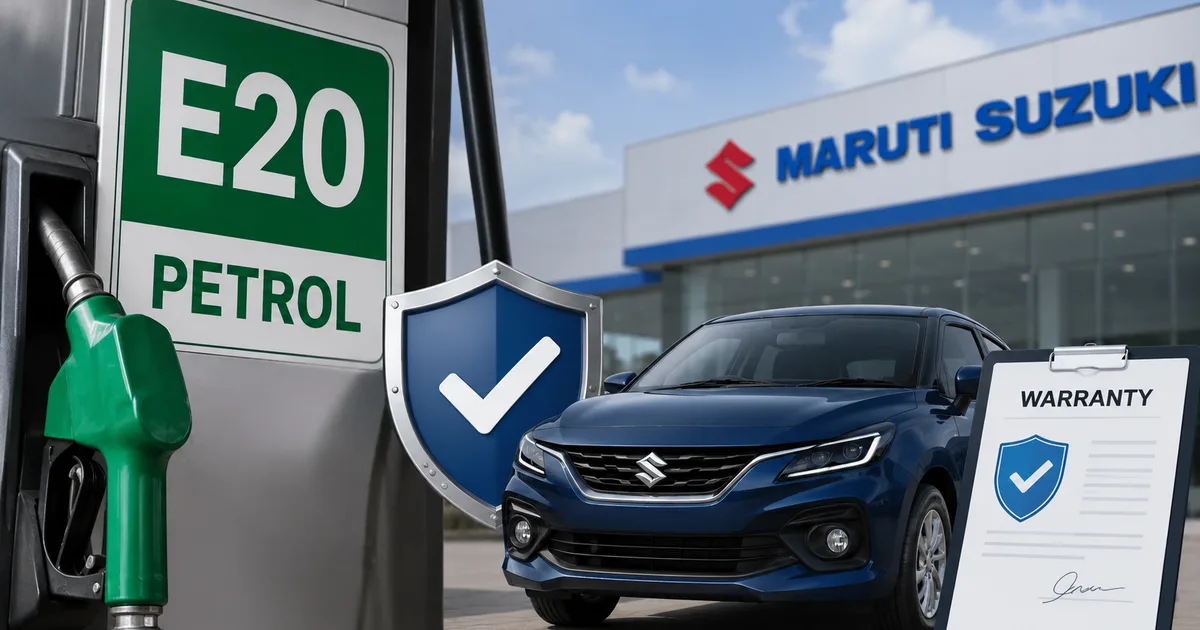
I was reading the news this morning and something caught my eye that every car owner in India needs to know about. The Maruti Suzuki E20 Petrol Dispute 2026 is blowing up right now, and it affects anyone who bought a car recently. Basically, a district consumer court in Raipur just ordered Maruti Suzuki to completely replace a customer's Grand Vitara Strong Hybrid or refund them Rs 20.5 lakh. Why? Because the owner claimed E20 petrol damaged the car.
And honestly, this is a massive deal. We're all dealing with E20 petrol at our local pumps now. You pull into a fuel station. You don't even think about what exactly is flowing from that nozzle. You just tell the guy to fill the tank and hand over your credit card. But this case changes things. It brings up uncomfortable questions about what we're actually putting into our engines (which makes sense, actually). Let me explain exactly what happened and what it means for your garage.
What exactly is this E20 petrol situation?
You've probably heard the government talking about ethanol blending over the last few years. E20 petrol simply means the fuel is 80% regular petrol and 20% ethanol. Ethanol is basically alcohol made from agricultural products like sugarcane or grains. And the government is pushing this hard to reduce our massive crude oil import bills. We spend billions of dollars buying oil from other countries, so blending local ethanol keeps some of that money in India. It also cuts down tailpipe emissions. It sounds great on paper. Less pollution and cheaper fuel eventually.
Thing is, ethanol is highly corrosive. It eats through certain rubber hoses and plastic seals in older car engines. It also absorbs water straight out of the air. If you leave E20 petrol sitting in your car's fuel tank for a few weeks while you take a long holiday, the water separates from the fuel. That causes rust inside the tank. And it leads to severe engine knocking when you try to start it again. So car makers had to completely update their engine components to handle this new chemical mix. In my experience, most people have no clue about this.
Most cars sold in India after April 2023 are supposed to be fully E20 compatible. The government mandated it. They gave the car makers a strict deadline to upgrade their hardware. But this new court case in Chhattisgarh is making everyone question if the car makers actually got it right. Did they really redesign the engines? Or did they just slap an E20 sticker on the back window and hope for the best?
The Raipur consumer court ruling explained
Here's the deal. A customer in Raipur bought a Maruti Suzuki Grand Vitara. This is an expensive SUV. We're talking over 20 lakh rupees for the strong hybrid version. The owner expected a smooth experience. Instead, they started facing some really serious technical issues almost immediately. The car eventually broke down completely. They towed it to the authorised service centre expecting a quick fix under warranty.
The owner claimed the severe engine damage happened because they used E20 petrol. That was the only fuel available at their local pumps. But the dealer refused to fix it for free. The owner then filed a formal case with the Raipur District Consumer Disputes Redressal Commission. And the commission actually agreed with them. They held both Maruti Suzuki India Ltd and the local authorised dealer guilty of deficiency in service.
The court didn't mess around. They gave Maruti a strict deadline. They have exactly 45 days to replace the damaged car with a brand new, fully E20-compatible model. If they fail to deliver a new car, they have to refund the entire purchase amount of Rs 20.5 lakh to the customer. This is a massive ruling. It's the first time an Indian court has handed down such a severe penalty to a major car maker specifically over E20 fuel damage. The whole situation is a mess.
I honestly didn't expect a consumer court to move this fast. Or hand down such a heavy penalty. Usually, automotive defect cases drag on for years. By the time you get a verdict, the car is already a rusty scrap heap. This fast ruling shows the legal system is taking fuel compatibility issues very seriously.
Maruti's defence and the fuel contamination argument
Maruti Suzuki is the biggest car maker in the country. They're already preparing their legal teams to challenge the order in a higher court. Their argument is completely different from what the angry customer claims.
According to Maruti's official statements, the Grand Vitara is built to run on E20 petrol without any problems whatsoever. They state the vehicle was already E20 compatible straight from the factory floor. So why did the engine fail so badly? Maruti blames fuel contamination. They argue the petrol the customer put in the car was adulterated or contaminated with foreign substances (annoying, I know). They reject the idea that the 20% ethanol mix itself caused the breakdown.
"The company asserts that the vehicle was designed for E20, and the actual cause of the breakdown was contaminated fuel."
This is where it gets sketchy for regular buyers. Fuel contamination is a real problem in India. We all know sketchy petrol pumps exist, especially on state highways. Sometimes they mix cheap solvents into the petrol to boost their profit margins. Water frequently leaks into the underground storage tanks at the pump during heavy monsoon rains. If you get a bad batch of dirty fuel, it can wreck a highly tuned engine in a matter of days.
The core fight in the higher courts will be about proof. How do you prove if the damage was caused by the ethanol blend slowly corroding the fuel lines? Or did some random petrol pump attendant pump dirty, water-logged fuel into the tank last Tuesday? The numbers here are a bit fuzzy, honestly.
What this means for your car warranty
This is the part you really need to care about. If you own a car, this dispute sets a scary precedent for your warranty claims. Carmakers offer standard warranties of 2 to 3 years. Dealers constantly push you to buy extended warranties covering up to 5 or even 7 years. You pay thousands of extra rupees thinking you're protected.
But warranties have massive loopholes written in tiny legal text. One of the biggest exclusions is damage caused by improper fuel or fuel contamination.
- If an automaker examines your broken engine and blames bad fuel, they instantly deny your warranty claim.
- You are then stuck paying lakhs of rupees for engine repairs out of your own pocket.
- Proving the fuel was clean when you bought it is almost impossible for a regular customer.
Think about it for a second. Are you going to carry a chemistry kit and test the fuel every single time you fill up? Of course not. You just scan the UPI QR code and pay your money. Then you drive away to work. If your engine dies a week later, the service centre drains the tank. They find a few drops of water or some dirt. Then they hand you a repair bill for Rs 1.5 lakh.
This Raipur case matters because the consumer court rejected the manufacturer's standard bad fuel excuse. They sided with the buyer who just bought fuel from a normal pump like everyone else. If this ruling holds up in the higher courts, it might force car companies to actually honour their warranties. They won't be able to instantly blame the local petrol pump whenever an engine fails.
How to protect yourself right now
Until the higher courts settle this Maruti Suzuki E20 petrol dispute 2026, you're caught in the middle of a massive corporate fight. You have to buy fuel to commute. And you desperately want your expensive warranty to stay valid. Here's what I do to minimise my risk of getting screwed over.
Always keep your printed fuel receipts
I know it sounds annoying. But you have to start asking for a printed bill every single time you buy petrol. Don't just rely on your UPI app transaction history. A payment screenshot only proves you paid some random vendor money. It doesn't legally prove you bought petrol at that specific fuel station on that specific date. A printed receipt shows the exact product and pump details. If your engine fails and the company blames the fuel, you at least have a solid paper trail. You can potentially drag the fuel pump owner into the consumer dispute.
Stick to reputed company-owned pumps (COCO)
Try your best to fill up at Company Owned Company Operated pumps. These are directly managed by large oil companies, not by private franchised dealers. The fuel quality standards and underground tank maintenance are generally much stricter at COCO pumps. The chances of deliberate adulteration are lower. You can usually spot them because they are huge. They often have a big sign near the entrance that explicitly says COCO.
Read your owner's manual properly
Stop guessing what fuel your car needs based on what your mechanic tells you. Open the glovebox and take out the manual to read it. If you have an older car from 2018 or 2019, it might only be rated for E10 petrol. Putting E20 in an E10 car will cause long-term damage. The company will legally deny your warranty because you used the wrong fuel grade. If you need to understand more about car maintenance, check our explainers section.
The bigger problem with India's ethanol push
Look, I get why the government is pushing ethanol. The macroeconomic reasons make sense. But they rolled this massive transition out incredibly fast. E20 petrol was originally supposed to be fully implemented across the country by 2030. They pushed the deadline forward aggressively to 2025-2026. That gave car makers very little time to thoroughly test these new engine components in real Indian conditions.
Testing an engine in a clean, air-conditioned lab is one thing. Dealing with 45-degree Indian summer heat and inconsistent fuel storage at rural pumps is a completely different challenge.
And right now, it feels like the regular consumers are acting as unpaid beta testers. If a seal corrodes after 40,000 kilometres because of ethanol exposure, the customer takes the massive financial hit. We're essentially subsidising this national energy transition with our own car repair bills. I'm not sure exactly why it has to be this way.
I'm not 100% sure how the higher courts will handle Maruti's appeal. The legal questions surrounding India's E20 rollout are incredibly complex. If the national commission overturns the Raipur order, it will be a loss for everyday car buyers. It will give car makers a permanent free pass to blame fuel contamination for any engine failure related to ethanol.
We're definitely going to see more of these cases pop up. Maruti Suzuki is the biggest carmaker in India by a huge margin. They sell hundreds of thousands of cars every single month. If an expensive vehicle like the Grand Vitara has issues, what about the cheaper models like the Baleno or the Swift? The financial stakes are astronomical.
What happens next in this dispute?
Maruti Suzuki has publicly stated they'll challenge the consumer court order. The case will move up the complex legal chain. It will probably take months or even years to reach a final binding conclusion at the national level. Meanwhile, the E20 rollout continues expanding across the country every single day.
You need to be vigilant about your own vehicle. Pay close attention to how your car drives and sounds. If you notice a sudden unexplained drop in fuel mileage or weird metallic knocking sounds from the engine bay, don't ignore it. Take it to the authorised service centre immediately. The longer you wait, the more damage the potentially corrosive fuel can do to the expensive internal parts.
And remember to document everything. Keep a file with every service invoice and a stack of fuel receipts. If you end up in a brutal fight over a 2 lakh rupee engine replacement, a thick file of solid documents is your only real weapon against a massive corporation.
This whole situation is a massive headache. The transition to greener locally sourced fuels was supposed to be smooth and beneficial for everyone. Instead, we have broken down cars sitting in service centres. Angry customers are filing lawsuits. And massive legal fights are looming on the horizon. Keep a close eye on how this specific Raipur case develops. It directly impacts the reliability and warranty of the car parked outside your house right now. For more deep dives into consumer tech issues, you can always read our news coverage.