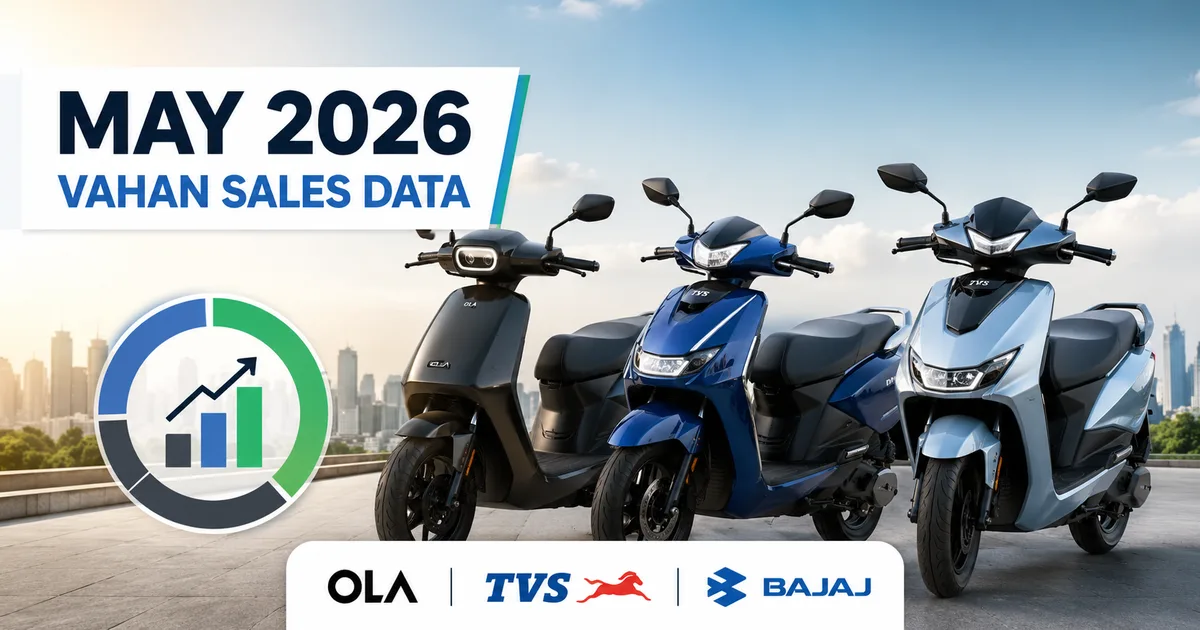
The numbers for last month are officially out. If you want to know what Indian consumers are actually buying right now, the May 2026 Vahan sales data paints a very clear picture. People are abandoning petrol scooters for electric alternatives at a massive scale.
Electric two-wheeler sales zoomed up 42 percent in May. They crossed the 1.5 lakh unit mark. Total industry volumes hit over 1.64 lakh units.
That is a crazy amount of new electric scooters hitting Indian roads in just 31 days.
We review a bunch of gadgets and tech trends here. But the shift happening in Indian driveways is probably the biggest consumer tech story of the year. Petrol is ridiculously expensive right now. Running a normal scooter hurts household budgets. So families are sitting down to do the math. They see the savings and decide to plug their vehicles into a wall socket instead. I think it makes total sense.
Understanding the real registration numbers
Before we look at the brands, we need to understand the data. Automakers love to report wholesale dispatches. That just means the number of vehicles sent from their factories to their dealers. But a scooter sitting in a showroom is absolutely not a sale.
The government's Vahan portal tracks actual vehicle registrations at the RTO level. It tells us exactly how many people paid money and drove a registered vehicle home. That makes this dataset super accurate (which is refreshing, honestly).
And the Vahan numbers for May show a massive rebound. April 2026 was a messy month for the industry. Sales dropped 22 percent. A lot of folks thought the EV demand bubble had finally burst. But that drop had a very specific reason behind it. March 2026 saw record retail sales of 1.92 lakh units because brands threw huge discounts and cashback offers to close out the financial year. Buyers rushed to grab those deals. April was just the natural hangover.
May brought the buyers back. People accepted the normal pricing. They kept buying anyway. You can check out our recent tech news updates for more on how consumer spending is shifting this quarter.
Ola Electric keeps its lead by a mile
Ola Electric is still dominating the market completely. They reported a 23 percent month-on-month rise in May. That translates to over 15,139 units in specific early tracking metrics, while holding massive overall volume leads that heavily outsell the competition. I'm not sure exactly why their margins hold up, but they do.
They are consistently beating the broader EV industry growth average. Honestly, they figured out exactly what young Indian buyers want right now.
Ola gives you giant touchscreens and constant software updates. They price their entry-level models to directly compete with standard petrol scooters like the Honda Activa. They also launched the Roadster portfolio. That specific lineup is generating a lot of early interest.
But their biggest advantage is sheer brand visibility. You see them literally everywhere. When someone thinks of buying an electric scooter today, Ola is the first name that pops up. They completely normalized the idea of buying a two-wheeler without an exhaust pipe.
The real fight is between Bajaj and TVS
While Ola sits comfortably at the top, the most interesting battle is happening right behind them.
Bajaj is actually closing in on TVS. This is a massive, unexpected shift in the market hierarchy.
For the past few years, the TVS iQube has been the safe choice. If a buyer didn't want to risk their money on a new startup, they bought an iQube. It looks like a normal family scooter. It rides beautifully. It has the backing of a massive legacy service network. TVS built a solid lead in the number two spot.
But Bajaj isn't sitting quietly anymore. They've expanded their Chetak lineup and aggressively pushed their dealership availability. The May Vahan numbers show Bajaj capturing serious market share. Families trust the Bajaj badge just as much as they trust TVS. When an uncle or father is co-signing the loan for a new scooter, they find a lot of comfort in a brand they've known for thirty years.
Thing is, the legacy brands are finally awake. They let the startups do the hard work of educating the market. Now they're stepping in with their massive manufacturing power and solid supply chains. If you're trying to pick between the two, you might want to read our latest buying guides to compare specific models.
Why petrol scooter sales are struggling
The electric boom is coming directly at the expense of traditional petrol vehicles.
Sales for regular bikes and scooters remained completely flat month-on-month in May 2026. The Vahan data listed steady, unmoving numbers for popular models like the Suzuki Burgman, Hero Destini, Honda Unicorn, Royal Enfield Classic, and Bajaj Platina.
There is zero growth in the petrol segment. Meanwhile, we see a huge 42 percent jump in the electric segment.
Basically, the economics just make sense now. A litre of petrol costs over 100 rupees in most Indian cities. A daily commute of 20 kilometers starts to eat into a monthly salary very quickly (and we all know how bad traffic makes the mileage even worse). Charging an electric scooter at home overnight costs a tiny fraction of that amount.
Even with the higher upfront cost of an EV, the EMI on a loan plus the monthly electricity bill is often cheaper than the EMI plus the petrol bill for an ICE vehicle. Indians are very good at calculating running costs. In my experience, nobody ignores a clear bargain. Once the math flipped in favor of EVs, the sales charts followed right along.
Passenger electric vehicles are also moving fast
The two-wheeler market gets the most attention because of the sheer volume. But the four-wheeler EV market had an incredible May as well.
Passenger EV registrations grew 81 percent year-on-year.
Tata Motors is leading this space by a massive margin. They have EVs at multiple price points, from the Tiago to the Nexon. Mahindra is trying hard to close the gap with their own electric SUV lineup. If you've driven in city traffic recently, you've definitely noticed the green license plates everywhere.
Fleet operators are driving a large chunk of this growth. Cab companies and delivery services are pushing for rapid electrification. They operate on incredibly tight margins. Running an electric fleet just makes better business sense for them.
What to do if you are buying a scooter today
If you're planning to buy a scooter this month, you have a lot of good choices.
Startups like Ola and Ather will give you the best technology and the most range. They treat their scooters like big smartphones. You get built-in navigation and constant software updates over the air.
Legacy brands like Bajaj and TVS will give you better build quality and actual peace of mind. The panels will fit perfectly. The suspension will handle Indian potholes a lot better. And if something breaks, you know exactly where the service center is.
The decision comes down to your risk tolerance. Do you want the latest tech, or do you want the most reliable mechanical experience?
Look, you really need to take test rides. Talk to people in your neighborhood who've owned an EV for more than a year to ask about their battery degradation and service experiences. You're going to live with this vehicle for five to seven years. Don't rush the purchase just because the current models look shiny.
The market is maturing quickly. As battery prices drop and charging infrastructure expands across tier 2 and tier 3 cities, these sales numbers will only climb higher. The May 2026 Vahan data proves that electric mobility isn't a niche trend in India anymore. It is just reality.
If you want to read more about how technology is changing daily life in India, check out our detailed explainers on government digital programs.