So, the government is mad at Meta again.
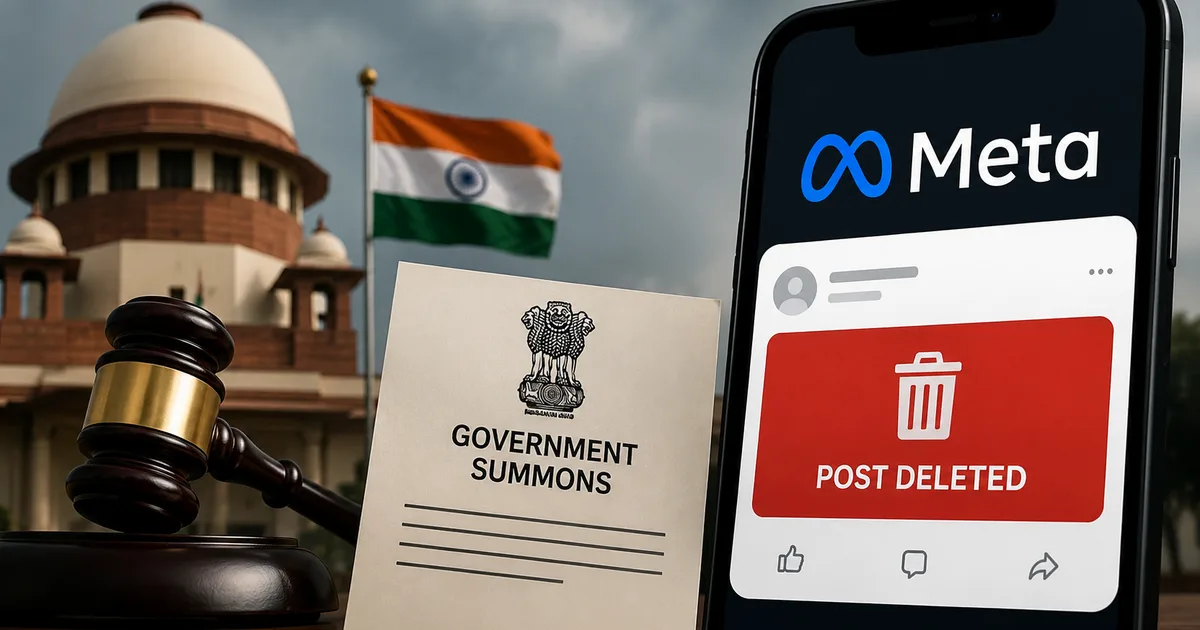
And honestly, they have a point this time. You probably saw the news headlines: Meta Summoned Over Deleted Post in India: Government Action and IT Rules 2026 Explained. Basically, a Facebook reel featuring Prime Minister Narendra Modi talking about youth quietly disappeared. Just gone. Meta calls it an "error." The Ministry of Electronics and IT (MeitY) called that excuse unacceptable. So now, Meta's global leadership has to come answer some tough questions.
Look, I get it. Tech glitches happen all the time. But when a platform with hundreds of millions of Indian users deletes a post from the country's leader, people notice. I think it raises massive questions about who really controls what we see online.
I want to break down exactly what happened here. Why did the government react so strongly? And what does this actually mean for your daily scrolling habits?
How a simple reel triggered a massive showdown
The facts are pretty straightforward. A video of the PM was posted. It got taken down, and people obviously noticed. So the government stepped in. The post came back up.
Meta claims their automated systems or human reviewers just made a mistake. They restored the content after MeitY intervened. End of story, right?
Wrong. The Centre isn't letting this go. Reports from The Economic Times and News18 show the government outright rejected Meta's explanation. They called the "error" defense unreasonable. The issue is far from settled.
Thing is, this isn't just about one video. It's about accountability. When you run an app like Facebook or Instagram, you wield insane power over public discourse. If you can delete the Prime Minister's content by mistake, what happens to regular users? I've had friends lose access to their small business pages for weeks with zero explanation (which makes sense, actually, given how broken support is). You probably know someone in the same boat.
If you're a creator relying on these apps to pay your bills, a random deletion can mean losing thousands of rupees. We've covered these issues before in our latest news updates. But this incident puts the problem on a much bigger stage.
The rules of the game have changed
You can't talk about this without bringing up the IT Rules 2026. The government has been tightening the leash on big tech for a while now. They want platforms to be more responsive to Indian laws and user complaints.
Under the current framework, social media giants have to appoint compliance officers based right here in India. They can't just hide behind a corporate office in California anymore. If something goes wrong, the government wants someone they can call. Or in this case, summon.
By calling in Meta's global head, the government is sending a very clear message. They're saying that operating in India means playing by Indian rules. You don't get to treat this market of a billion users as an afterthought.
Why the error excuse fails
I'm not a software engineer. But I know how big tech companies operate. They rely heavily on automated systems to police content, and these algorithms scan millions of posts a day looking for violations.
But these systems are a mess. They lack context. They don't understand nuance. And they certainly don't understand Indian political realities. Meta has admitted this themselves in the past.
So when they blame an error for removing a high-profile post, the government sees a systemic failure. If your system is this broken, fix the system. Don't just apologize when you get caught.
What this means for the everyday Indian user
You might be thinking you shouldn't care about politicians arguing with a tech company.
But the outcome of this fight directly impacts your experience online.
When the government forces platforms to be more transparent about content moderation, it technically helps everyone. If you get unfairly banned, or if someone steals your photos to create a fake profile, you want a system that actually responds to your complaints. Right now, trying to get help from Facebook support is basically like shouting into a void.
The pressure on Meta might actually force them to improve their grievance redressal mechanisms for regular Indians. That means less reliance on buggy bots. And more actual humans reviewing cases.
The bigger picture of digital sovereignty
There's a bigger conversation happening here about digital sovereignty. India is making it very clear that foreign tech companies don't have the final say over what happens on the Indian internet.
We're seeing this across the board. From the DPDP Act to pushback against unfair app store fees, the government is flexing its regulatory muscles. If you want a deep dive on how these policies affect your digital rights, check out our detailed explainers on the topic.
The goal is to ensure platforms operate fairly and don't arbitrarily censor content. (Which, for the record, I think is actually a good thing for users in the long run).
The AI factor in content moderation
You can't ignore the elephant in the room. Artificial Intelligence.
Meta relies heavily on AI to moderate content. They process billions of posts, photos, and videos every day, and I'm not sure exactly why they think this works perfectly. Human review is physically impossible at that scale. So, they train algorithms to spot hate speech, violence, and spam.
But AI is incredibly stupid sometimes. It doesn't understand sarcasm. It doesn't understand local context, and it often fails to distinguish between a news report about violence and actual promotion of violence.
"When a platform with hundreds of millions of users relies on algorithms that cannot understand basic political context, we have a serious problem with digital accountability."
A recent report by WION showed Meta's AI was allegedly blocking legitimate videos while allowing scam ads to run unchecked. It's a massive problem. The AI is aggressive where it should be lenient. And it is blind where it should be vigilant.
Until these AI systems actually understand Indian languages and cultural nuances, we're going to keep seeing these "errors." And the government is going to keep summoning executives.
The problem of uneven enforcement
But there's a catch. And it's a big one.
While the government is quick to act when the PM's post is deleted, everyday users rarely get this kind of swift justice.
We see ads for fake loan apps and investment scams slipping through the cracks. The central government has even had to summon Meta officials over child abuse ads on Instagram in India. Why does the system fail to catch these obvious violations, but somehow manages to accidentally delete a legitimate political post?
It feels incredibly lopsided.
When a normal person loses their livelihood because an algorithm decided their local bakery page violated some vague community standard, nobody summons a global executive. They just get an automated email. And a denied appeal.
Protecting yourself from platform whims
So what can you actually do?
- First, don't put all your eggs in one basket. If you run a business, you need a website you actually own. Don't rely purely on an Instagram page.
- Second, back up your data. If you have years of family photos on Facebook, download an archive. Don't trust a free platform to preserve your memories forever.
- Third, be aware of the scams. Since we are talking about Meta's failings, remember that their ad networks are currently flooded with fake investment schemes and phishing links.
If you see an ad offering unbelievable returns or asking for your UPI PIN, report it. You can also file complaints directly on the national cybercrime portal at cybercrime.gov.in. Or just call the 1930 helpline.
The role of local compliance teams
Let's talk about the people stuck in the middle. The Indian compliance officers.
The IT Rules mandated that companies like Meta hire local grievance officers and chief compliance officers. These individuals have to be residents of India. The idea was simple. If the company messes up, the government has someone local to hold accountable.
But how much power do these local teams actually have?
When a major moderation decision is made, or a massive algorithmic error occurs, it's rarely the local team calling the shots. They're often just the messengers. So when the government summons the "global head," it shows they know exactly where the real power lies. They're bypassing the local shields and going straight to the source.
What happens if they do not comply?
This is the big question. What if Meta just shrugs and gives another non-answer?
The government has tools at its disposal. They can revoke the safe harbour protection that these platforms enjoy. Safe harbour basically means that a platform isn't legally responsible for what its users post. If someone posts something illegal on Facebook, you arrest the user, not Mark Zuckerberg.
But if a platform loses safe harbour status, they become liable for every single piece of content on their site. It would be a logistical nightmare. It could completely break their business model in India.
Nobody wants it to go that far. It would be a mess for users and the government itself. But it's the nuclear option sitting on the table, and both sides know it.
Where do we go from here?
The dust hasn't settled on this issue yet. Meta's leadership will have to answer to the IT ministry, and we'll likely see some strong statements from both sides.
I don't expect Facebook or Instagram to dramatically change overnight. But these confrontations add up. They force tech companies to treat the Indian market with more respect. And they allocate more resources to content moderation that actually works.
For now, keep an eye on how this plays out. The rules governing your digital life are being rewritten right now, one summons at a time. Next time your favorite app acts sketchy, just remember that even the Prime Minister isn't immune to a rogue algorithm.