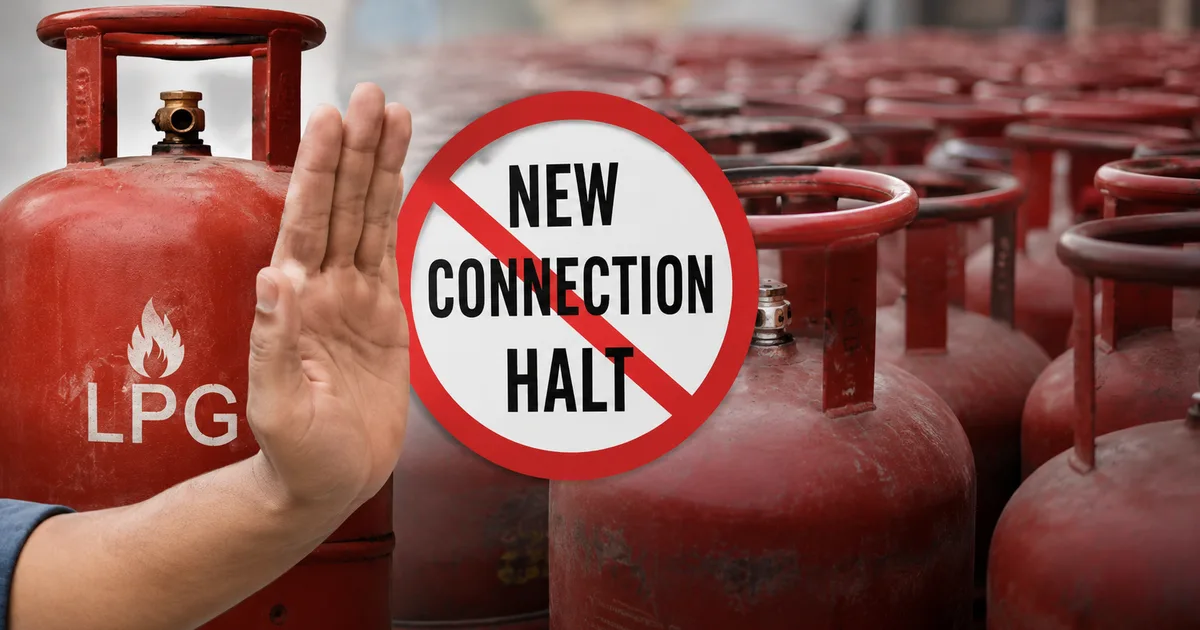
Imagine this. You just moved to a new apartment in Pune. You've unpacked the boxes and set up the Wi-Fi. You walked down to the local gas agency to get a cylinder. You expect to fill out a form and pay a deposit. But the distributor shakes his head. "No new connections," he says. You think he's joking. He isn't. The New Domestic LPG Connection Halt in India 2026 is a very real situation, and it's catching thousands of families off guard across the country.
I spoke to a friend who recently moved for a new job in Bengaluru. She spent two weeks cooking instant noodles on a borrowed induction plate because three different agencies told her the exact same thing. They aren't giving out new cylinders. And they aren't giving out second cylinders to existing customers either. The whole system is basically a mess. Honestly, nobody has a clear answer on when it will unfreeze (which makes sense, actually).
So, what is happening behind the scenes? Why is the government suddenly stopping people from getting basic cooking fuel? And how are you supposed to manage your daily meals if you're caught in this mess right now? I'm not sure exactly why it's so sudden.
Why are new LPG connections suspended?
It isn't a local shortage. It isn't a problem with your specific dealer. It's a massive international supply chain problem. Since March 2026, oil marketing companies (OMCs) across India have informally frozen the issuance of new 14.2 kg domestic LPG connections. This halt affects Indane and HP Gas. It affects Bharat Gas too. No matter where you go, the answer is the same.
The root cause? Geopolitics. Specifically, the escalating crisis in the Middle East. A huge chunk of India's LPG is imported directly from that region. When ships can't travel safely through major choke points like the Strait of Hormuz due to regional conflicts, the whole supply chain breaks down. Cargoes get delayed. Shipping insurance costs skyrocket overnight. So the total volume of gas reaching Indian ports drops.
The Petroleum Ministry isn't blind to this reality. They know exactly how sensitive the cooking gas issue is for Indian households. But instead of letting everyone suffer with delayed refills, they made a tough choice. They decided to prioritize the millions of families who already have an active connection. If you already have a cylinder at home, they want to make sure your refill arrives on time. To do that, they simply had to shut the door on new applicants. They have to conserve existing stocks.
What makes this situation frustrating is the lack of official paperwork. If you walk into an agency, the online booking system might let you submit a new application. The portal might look normal. But behind the scenes, distributors have strict verbal instructions not to issue the physical connection. One desperate distributor in Pune told the Times of India that he has a confirmed waiting list of nearly 290 customers. He has another 300 offline applications. So he has a backlog of 600 people, and he can't help a single one of them. The system won't generate the release paperwork.
This kind of supply chain shock isn't entirely new to us. But it rarely hits consumers this hard on a basic necessity. For instance, you might remember reading one of our Tech Explainers about how global shipping issues affect smartphone availability. Or maybe you saw our recent piece on the Leap India IPO 2026 Explained: GMP, Allotment & Supply Chain Impact. The economic principles are exactly the same. When global logistics break down thousands of miles away, local availability disappears.
What does this mean for existing customers?
If you have an active LPG connection right now, take a deep breath. You are mostly safe from this immediate crisis. I think the numbers here are a bit fuzzy, but the government's strategy is to protect existing users at all costs.
Your regular 14.2 kg refill will arrive. The oil companies are actually working overtime to ensure those deliveries aren't interrupted. They monitor stock levels at ports and bottling plants every single day. They have to balance the load.
But there is one big catch you need to know about. If you rely on a single cylinder setup and were planning to apply for that second cylinder, forget about it. OMCs have paused issuing second cylinders too. The logic is brutal but simple. A second cylinder sitting idle in your kitchen is a luxury right now. They need every spare physical cylinder in circulation to serve someone else's cooking needs. In my experience, you'll just have to get used to booking your refill the absolute moment your cylinder runs out. And maybe keep an induction cooktop handy if there is a delivery delay.
And please, make sure your e-KYC is updated. Agencies are using this tight supply period as a reason to aggressively weed out fake or dormant connections. If your Aadhaar biometric authentication isn't completed, your agency might block your refills without warning. Don't give them an easy excuse to cut off your supply.
The aggressive push for piped natural gas (PNG)
Here's where things get really interesting from a policy perspective. The government isn't just sitting around waiting for ships to arrive. They are using this crisis to force a permanent shift in how urban India cooks.
For years, city gas distribution companies like Mahanagar Gas Limited (MGL) and Indraprastha Gas Limited (IGL) have been digging up roads. They lay down steel and polyethylene pipelines across our major cities. Piped Natural Gas (PNG) is cheaper. It's safer because you don't have a high-pressure bomb sitting in your kitchen. And it's domestically sourced. We simply don't rely heavily on the Middle East for our PNG needs.
Now, the government is playing hardball to get people to switch. A Gazette Notification issued recently under the Essential Commodities Act made things clear. If you live in an urban housing society where PNG infrastructure is available, you have to switch. The notification states that LPG cylinder supplies to addresses with active PNG access may cease within 90 days of an official notice.
Think about that for a second. If a yellow PNG pipe runs outside your apartment building, your gas agency might legally refuse to deliver your red cylinder. The government wants those cylinders freed up exclusively for rural areas and smaller towns. Laying underground pipes there is physically impossible or economically unviable.
MGL is already pushing this mandate hard in Mumbai and Thane. They've connected over 32 lakh households. They are offering zero upfront registration costs and flexible payment plans for the internal piping charges. Look, if you live in a metro city and don't have PNG yet, treat this as a wake-up call. Stop procrastinating and apply for it before your cylinder supply stops.
Alternative options if you're stuck without gas
So what do you actually do if you genuinely need a new connection today? Maybe you just got married, or moved to a new city for work. You can't exactly stop eating while geopolitical tensions cool down.
First, check for the 5 kg or 10 kg commercial cylinders. While the standard subsidized 14.2 kg domestic cylinders are blocked, some distributors still have stock of the smaller "Free Trade LPG" cylinders. These are sold at local supermarkets or petrol pumps. You just pay a flat commercial cost for the cylinder and the gas. It's more expensive per kilo, but it reliably gets the stove running when you have no other choice.
Second, consider electricity. Induction cooktops are cheap now, starting around ₹1,500 for a decent brand. You will need to invest in induction-compatible flat-bottom cookware. But it's the fastest way to set up a functional kitchen in a crisis (annoying, I know). Many young professionals in cities like Bengaluru and Pune already rely entirely on induction cooking. It's cleaner and avoids the hassle of booking gas.
Third, pursue a PNG connection if your area is eligible. Yes, I know it takes time. The process involves getting the society secretary's permission, waiting for the technicians to drill holes in your kitchen wall, getting the final meter installed, and testing the entire system. It could take a month or two of constant follow-ups. But once it's done, you never have to book a cylinder again. You never have to worry about missing the delivery guy while you are at work. You definitely won't have to worry about global supply chain politics affecting your dinner plans.
The bigger picture for Indian consumers
This situation is a frustrating reminder of how deeply connected our daily lives in India are to global macro events. We often ignore international news, thinking it won't affect our quiet lives. But a conflict thousands of miles away in the Hormuz strait is literally deciding whether you can boil milk at home tomorrow morning.
It's very similar to how global financial decisions directly impact our local investments. We saw this recently with the Tata Motors Demerger 2026: Investor Impact Explained. Broader economic shifts reshaped the strategy of a beloved Indian brand. Everything in the modern economy is deeply connected.
The government's push towards PNG is a smart move for India's long-term energy security. We need to reduce our reliance on imported fossil fuels. But the transition phase is painful. Cutting off new connections without a formal written announcement has caused unnecessary panic on the ground. Gas agencies are overwhelmed with angry customers. And regular people who simply want to buy cooking gas feel completely helpless. If you ask me, the communication could have been handled much better.
I honestly hope the international supply situation resolves soon and the blockade is lifted. Until then, hold onto your existing cylinder carefully, and don't miss your refill booking window. If you have the option to switch to piped gas, do it today. Don't wait for your local distributor to force your hand.
And if you're looking for more updates on how changing policies and tech issues affect your daily life, make sure to check out our Latest Tech News section. We'll keep you posted the moment the LPG suspension gets officially lifted.