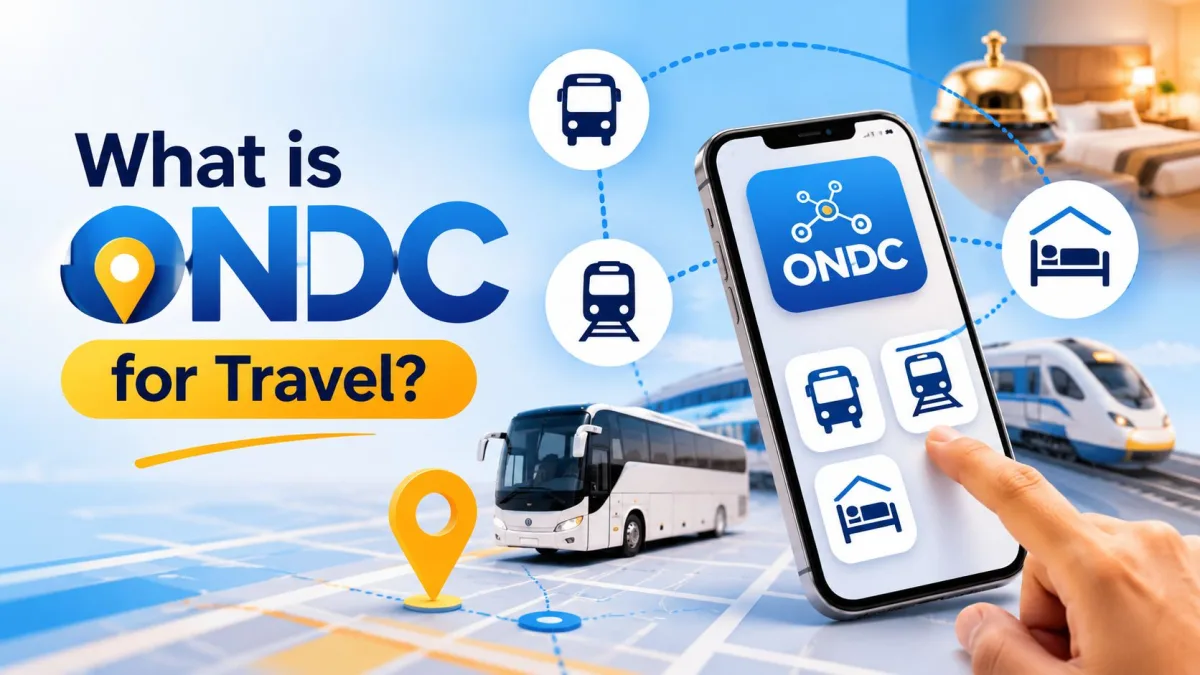
Picture this: you're trying to plan a long weekend trip from Hyderabad to Coorg. You've got the ixigo app open for trains, a separate Redbus tab for the last-mile bus, and you're toggling between MakeMyTrip and OYO for hotels. Three different platforms, three logins, and no guarantee the prices are showing you everything available. Most of us just pick whatever's on top and move on. ONDC for travel is a genuine attempt to fix this, and in 2026 it's finally moved past the pilot phase into something real and useful.
What ONDC is, in plain terms
ONDC stands for Open Network for Digital Commerce. It's a government-backed initiative from the Department for Promotion of Industry and Internal Trade (DPIIT) and part of India's broader digital public infrastructure, the same family as Aadhaar, UPI, and DigiLocker. The core idea: any seller lists their inventory once on the shared network, and any buyer app can discover and book from it.
The UPI comparison is the easiest way to understand it. Before UPI, a small shopkeeper accepting digital payments had to partner with every bank individually. UPI created one pipe that connected everyone. ONDC is trying to do the same thing for commerce and bookings: list once, be discoverable everywhere.
We have a full breakdown of how ONDC works for everyday shopping if you want the broader picture. For travel specifically, there's enough happening in 2026 to warrant its own conversation.
What you can actually book through ONDC travel in 2026
The scope is wider than most people expect:
- Bus tickets from state RTCs like KSRTC, MSRTC, TSRTC, and APSRTC, plus private operators
- Train tickets, with IRCTC still as the official issuing authority but accessible through more apps
- Delhi Metro tickets via QR code, through the new DMRC-ONDC integration
- Hotels, including smaller independent properties that never made it onto major OTAs
- Cabs and local transit on select platforms
The Delhi Metro integration is the most talked-about development right now. In early 2026, ixigo Trains partnered with DMRC and ONDC to launch QR-based metro ticket booking. You buy the ticket inside ixigo, get a QR code, and scan at any Delhi Metro gate. No separate DMRC app. No token queue. My cousin tried it last month and said it took under a minute from search to QR code on screen.
How the open network model actually changes things
Here's what most people miss: ONDC doesn't change what your app looks like. You're still searching and booking the same way. What changes is what shows up in your results.
Before ONDC, every travel app had to individually negotiate with bus operators, hotels, and metro authorities. DMRC wanting to offer ticket booking through ixigo meant a bilateral deal, custom API work, and revenue sharing agreements, all specific to that one relationship. Under ONDC, DMRC joins the network once. Any app that's a buyer app on the network can pull that inventory automatically. Honestly, that's a pretty big shift from how things worked before.
The downstream effect matters. A small hotel in Puri that couldn't afford a 20% OTA commission might now appear in your search results. A state bus operator in Chhattisgarh that only had a basic government website might now be bookable through Paytm Travel. This is what "open network" actually means in practice.
ixigo Trains partnered with Delhi Metro Rail Corporation (DMRC) and ONDC to launch QR-code-based metro ticket booking inside the ixigo app, making Delhi Metro tickets accessible across the ONDC open network for the first time. (Business Today, 2026)
Which apps support ONDC travel bookings in 2026?
As of May 2026:
- ixigo (trains, buses, and Delhi Metro via ONDC)
- Paytm Travel (buses and select routes with ONDC backend)
- Magicpin (hotels, particularly smaller independent properties)
- PhonePe (rolling out travel verticals gradually)
Honest caveat: I couldn't find a clean official list of which operators are live on ONDC Travel, and the ONDC website isn't easy to navigate for this kind of thing. Coverage varies a lot by city and route. The practical test is to search your usual travel app and see if you're getting more state RTC options than you were six months ago. For ongoing updates on what's newly added, the ONDC news and updates section is worth bookmarking.
The train booking situation and IRCTC
People keep asking whether ONDC means they can finally book IRCTC tickets without opening the IRCTC app or website. Sort of.
IRCTC is still the only authorized platform for issuing reserved rail tickets. That's a legal requirement, not a tech limitation. What ONDC changes is that more apps can now work as a front end for IRCTC, similar to how MakeMyTrip and Yatra have worked for years through custom deals, except now any developer can build this without a separate bilateral agreement with IRCTC. So you'll see more apps where you can search, select, and pay for a train ticket that IRCTC actually issues.
Your PNR, your cancellation policy, your refund timeline — all of that is still IRCTC's domain (which makes sense, actually). For unreserved tickets and platform tickets, the picture is simpler and more apps are already experimenting with it.
Hotels: the underrated part of ONDC travel
This gets far less coverage than the Delhi Metro and IRCTC news. But it could matter more for everyday Indian travelers.
India has an enormous number of small hotels, guesthouses, dharamshalas, and homestays that are perfectly decent but never made it onto Booking.com or MakeMyTrip. OTA commissions running at 15-25% and complex technical integration requirements kept them out. ONDC's lower entry barriers mean this inventory is slowly becoming searchable and bookable online for the first time.
Think of a decent Rs. 800-a-night guesthouse near the Hampi ruins or a clean family-run place in Pushkar that previously existed only through word of mouth and walk-in bookings. These properties are now showing up in search on ONDC-connected apps.
One honest warning: inventory accuracy for smaller ONDC hotel listings has been a mess in the early rollout. Outdated pricing and availability mismatches came up repeatedly in early user reports. I'm not sure exactly why the listing quality has been this inconsistent, but until it stabilizes, it's worth calling the property directly to confirm before finalizing. You can also read our guide on comparing hotel booking apps in India for a broader view of where ONDC properties fit against the big OTAs.
What ONDC travel doesn't fix yet
Worth being straight about the gaps.
Customer support is the biggest one. If your booked bus doesn't show or your hotel room looks nothing like the listing, who do you contact? The buyer app? The seller? ONDC has a dispute resolution framework but it's still being stress-tested in real conditions. Compare this to booking on MakeMyTrip, where there's one clear escalation path, and you'll see why this matters for travelers who aren't comfortable with ambiguity.
Geographic coverage is uneven. Major intercity routes are reasonably well served. Smaller operators in hilly areas, the northeast, and remote destinations are mostly absent from the ONDC travel network still.
And price consistency isn't guaranteed. The same bus might show slightly different rates on ixigo versus Paytm if both are pulling ONDC inventory but applying different service fees. Worth checking a couple of apps before confirming.
How to start using it today
No special setup required. No separate app to download.
- Open ixigo, Paytm Travel, or another ONDC-connected travel app
- Search your route or destination as you normally would
- Look for the expanded list of operators, especially for state bus services
- For Delhi Metro: open ixigo Trains, go to the metro section, pick your origin and destination, pay via UPI, and use the QR code at the gate
- All payment options, UPI, cards, wallets, work exactly as before
India's travel booking space has been fragmented for a long time. Dozens of siloed operators, no shared discovery layer, no way for a small Coorg homestay to appear on the same screen as a KSRTC bus. ONDC is a structural fix for that, not another aggregator app. The Delhi Metro QR ticket is a small thing, but it's a working demonstration of what the open network approach can deliver when it works properly.