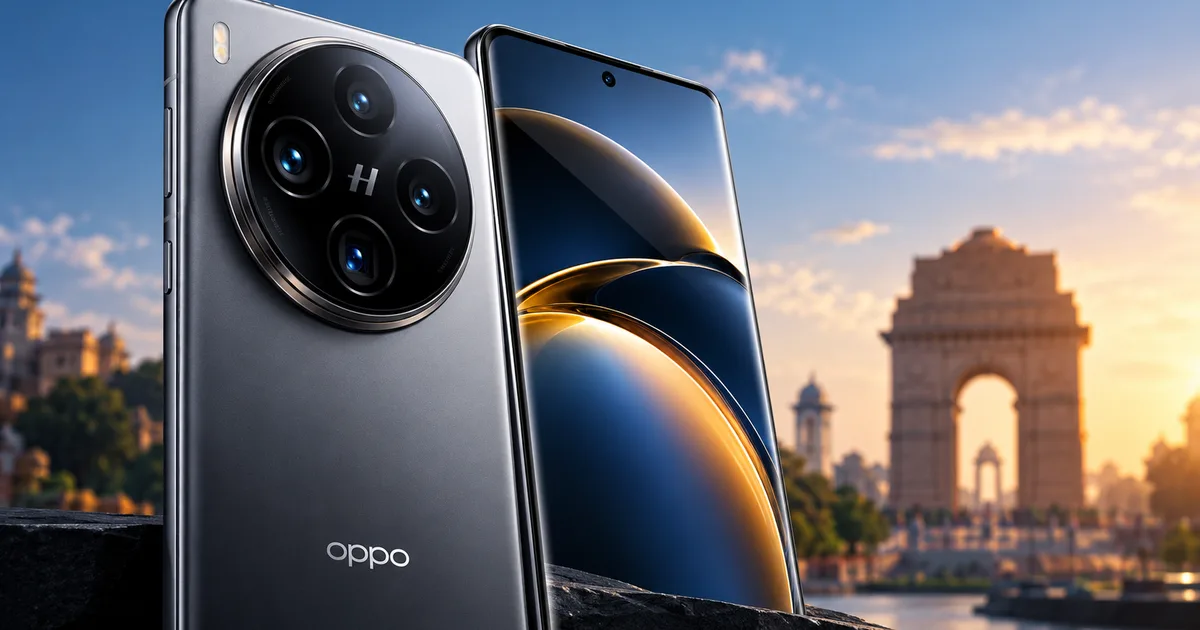
Listen, I've got a drawer full of dead power banks. You probably do too. If you're following the Oppo and OnePlus 10,000mAh battery leak, what to expect in 2026 smartphones is pretty clear: the absolute end of battery anxiety. For years, phone makers tried making smartphones impossibly thin. Now, they finally realized we just want our phones to survive a local train ride from Virar to Churchgate while streaming Netflix and using 5G on full brightness.
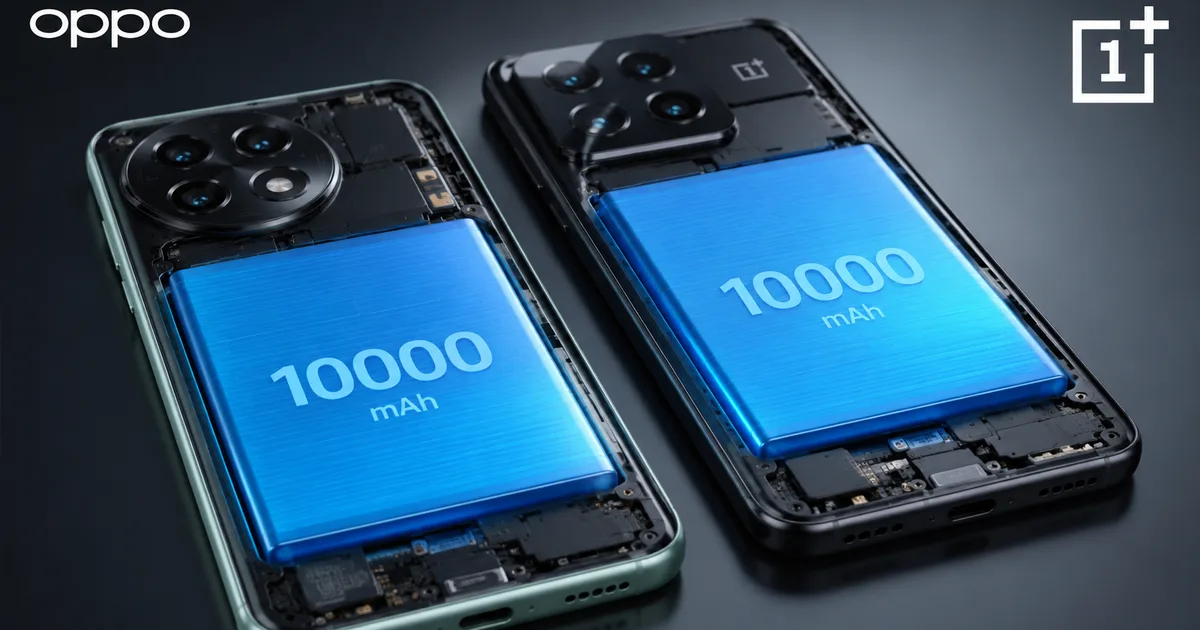
This massive battery upgrade is real. And it's wild. Multiple reports indicate that both Oppo and OnePlus are gearing up to drop mid-range smartphones packing a ridiculous 10,000mAh battery later this year. That is double what we considered standard just three years ago. Look, I spent all morning reading through the leaks from 91mobiles and Notebookcheck. I want to break down exactly what this means for your next smartphone buy. (Honestly, it's about time.)
Indian summers are brutal on lithium-ion batteries. We all know the feeling of buying a new phone, being happy with the battery life for six months, and then watching it degrade fast. By the second year in the Delhi or Rajasthan heat, your 5,000mAh battery effectively acts like a 3,500mAh one. It's a mess. Starting with 10,000mAh gives you a massive buffer against that natural battery degradation. In my experience, heat is the absolute killer.
What the Oppo and OnePlus 10,000mAh battery leak tells us
The actual facts floating around the internet today are clear. The latest smartphone news points to Oppo dropping this massive battery into its popular A-series lineup. OnePlus is testing this exact battery capacity for its upcoming Turbo 6X and Turbo 6X Pro models in China. Given how OnePlus operates with its release cycles, we can expect rebranded versions of these phones to hit the Indian market shortly after their Chinese debut. I'm not sure exactly why they stagger it like that.
These two brands share research and development under the BBK Electronics umbrella. So when one makes a hardware jump, the other follows instantly. A 10,000mAh capacity completely changes how you interact with your device. Most high-end flagships right now top out at 5,000mAh or maybe 5,500mAh. Doubling that capacity means you stop looking at the battery icon entirely. It's liberating.
The shift to 10,000mAh is happening because of new silicon-carbon battery technology, which allows manufacturers to increase energy density without making the physical battery cell twice as large.
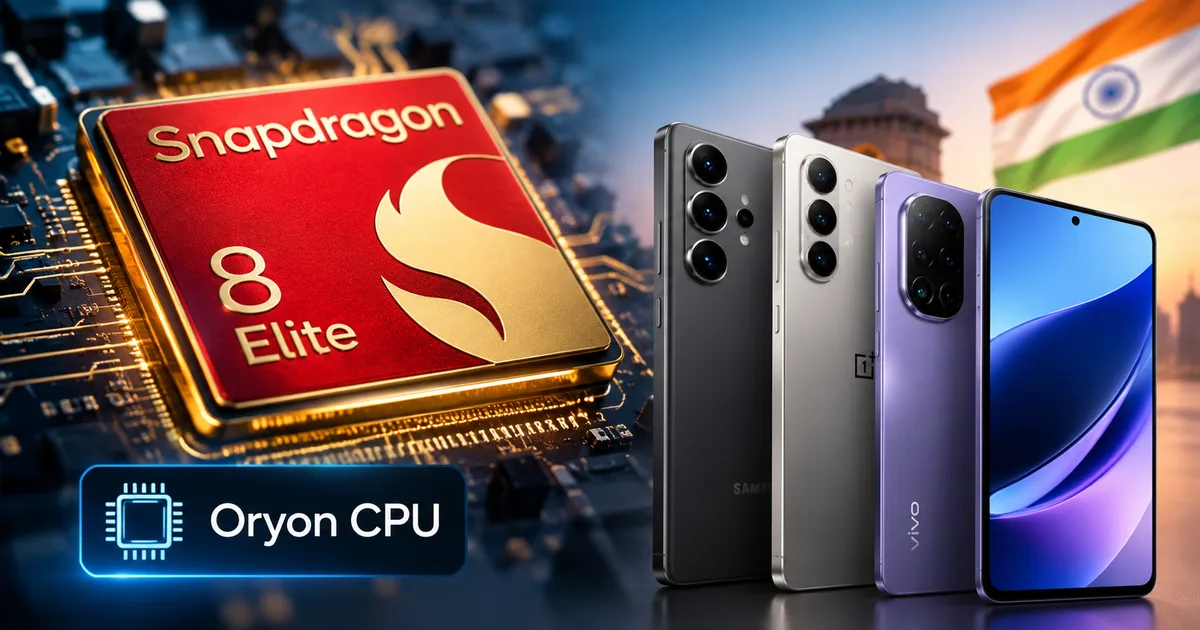
According to a recent report from Notebookcheck, these upcoming phones might feature the new **Snapdragon 8 Elite Gen 6 processor**. That chip is highly efficient. Pair a 10,000mAh battery with an efficient processor, and you're looking at three days of actual, heavy usage without seeing a wall socket.
Why 10,000mAh phones are essential for Indian users
We use our phones differently here in India compared to western markets. Your phone is your wallet, your train pass, your entertainment center, and your work computer all rolled into one device. Think about how much we rely on the UPI network every single day. Last week, my phone died right after I finished a plate of momos at a street stall in Pune. I had absolutely zero cash in my wallet. I had to awkwardly stand near a pan shop, plug my charger into their wall socket, and wait five minutes just to pay a ₹60 bill via PhonePe. It was embarrassing.
A 10,000mAh battery fixes that daily anxiety completely. It means you can keep GPS running all day during a weekend road trip to Lonavala. You can leave your 5G data on without watching the battery percentage drop every two minutes. For Ola and Uber drivers, or Zomato delivery partners who keep their screens on under direct sunlight all day, this is a massive upgrade. They need that screen time.
And let's not forget gaming. Playing BGMI on a 5G connection drains a battery incredibly fast. A standard 5,000mAh phone gives you maybe four hours of continuous heavy gaming. But a 10,000mAh phone lets you play through a long power cut without worrying about having enough juice left for your morning alarm.
How Redmi and Honor are fighting back
The smartphone market is brutal. No company gets to keep a hardware advantage for very long. The moment the Oppo and OnePlus leak surfaced, reports about their rivals started flooding in. According to a recent Memeburn report, the Redmi Note 17 is rumored to arrive in July 2026 with its own 10,000mAh battery configuration. Xiaomi knows exactly how important the Indian market is for their Note series. They simply can't afford to look weak on battery specs. It's too big of a risk.
Then we have Honor. A report from Gadgets 360 suggests Honor is testing an upcoming smartphone featuring a massive 11,000mAh battery. This is becoming a full-blown arms race. For consumers like us, this competition is fantastic news. When brands fight over battery capacity instead of useless software gimmicks, we win.
Even companies like Samsung and Motorola will have to react eventually. Samsung has relied on standard 5,000mAh capacities for their popular Galaxy M and Galaxy A series for years. But if you ask me, if a customer is standing in a Reliance Digital store comparing a 5,000mAh Samsung phone to a 10,000mAh OnePlus phone for the exact same price, the choice becomes painfully obvious.
The impact on power banks and mobile accessories
India Today recently ran a piece suggesting that the era of power banks is officially over. I agree completely with that assessment. We only bought those heavy bricks out of necessity. If your phone has 10,000mAh inside it natively, carrying an Ambrane or Xiaomi power bank in your backpack becomes entirely pointless.
- You no longer have to remember to charge a secondary device before leaving the house.
- You save money by not buying ₹1,500 power banks every two years.
- You travel lighter without dealing with tangled USB cables in your bag.
The trade-offs of 10,000mAh smartphones
You can't double the battery size without breaking the laws of physics somewhere. These upcoming phones are going to be heavy. I expect the new Oppo A-series to cross the 230-gram mark easily, maybe even hitting 240 grams. If you prefer light, compact phones that easily slide into skinny jeans, this new industry trend will frustrate you. (Which makes sense, actually.)
Then there's the charging problem. Charging a 10,000mAh battery takes a massive amount of sustained power. Oppo is famous for its fast **SuperVOOC technology**. But if they ship a 10,000mAh phone with a basic 33W charger in the box, it will take nearly three hours to fill up from zero. They need to bundle at least a 100W or 120W charger to make this practical for everyday users. If they try to copy Apple and Samsung by removing the charger from the box, it will be a disaster for Indian consumers. Absolute chaos.
Pricing is another major question mark. Mid-range in India usually means anything sitting between ₹25,000 and ₹35,000. Will these high-density batteries cause a sudden price hike? The numbers here are a bit fuzzy right now. Recent leaks about the upcoming Oppo Reno 16 series suggest those phones might cost up to ₹15,000 more than their predecessors. If that premium pricing strategy bleeds into the cheaper A-series, buyers will hesitate. Indian consumers are extremely price-sensitive. A bigger battery is great, but nobody wants to pay flagship prices for a mid-range processor just because the battery is huge.
Upcoming OnePlus 16 and Oppo foldable updates
While massive batteries are stealing all the headlines right now, other interesting leaks came out this week that deserve attention. If you care deeply about mobile photography, the recent OnePlus 16 leak is fascinating. Reports from 91mobiles suggest OnePlus is completely skipping the hyped 200MP camera trend that other brands are chasing. Instead, they're sticking with a high-quality 50MP telephoto sensor.
I think this is a highly practical move. Mega-pixel counts are mostly marketing nonsense designed to trick buyers. A high-quality 50MP sensor with excellent software processing takes better photos than a cheap 200MP sensor every single time. It allows for better low-light performance and faster shutter speeds. Period.
On the foldable side of the market, the unreleased Oppo Find N7 Wide is generating its own series of leaks. They're reportedly packing a solid 6,500mAh battery into that folding chassis, along with a completely crease-free inner display. We've been hearing promises about crease-free foldables for years now. But combining a truly flat screen with a 6,500mAh battery makes it genuinely interesting. Foldable phones usually suffer from terrible battery life because they have two separate screens to power. Bumping the capacity up to 6,500mAh might finally solve that lingering issue.
You can read more deep dives in our battery tech explained section. The short version is that silicon-carbon battery technology is finally maturing. It is making these massive capacities possible without turning the mobile phone into a literal brick in your pocket.
Should you upgrade now or wait for 2026 models?
This massive leak puts anyone looking to buy a phone right now in a weird spot. If your current phone screen is shattered into pieces and the battery dies in exactly two hours, go ahead and buy something today. Don't torture yourself. Take a look at our smartphone buying guide for solid recommendations under ₹30,000.
But what if your phone is doing fine and you just feel the sudden urge to upgrade? Wait. Hold tightly on to your money. By late 2026, the entire landscape of the smartphone market will shift dramatically. We're looking at a near future where 10,000mAh becomes the minimum acceptable baseline for mid-range devices.
Once you experience using a phone that lasts three full days on a single complete charge, you'll simply never accept anything less again. I'm keeping a very close eye on BBK Electronics over the next few months. The moment OnePlus or Oppo officially announce a launch date for the Indian market, I'll test those battery claims and charging speeds myself. Because honestly, the promise of leaving the house for a long weekend trip without packing a single charger sounds like absolute freedom.