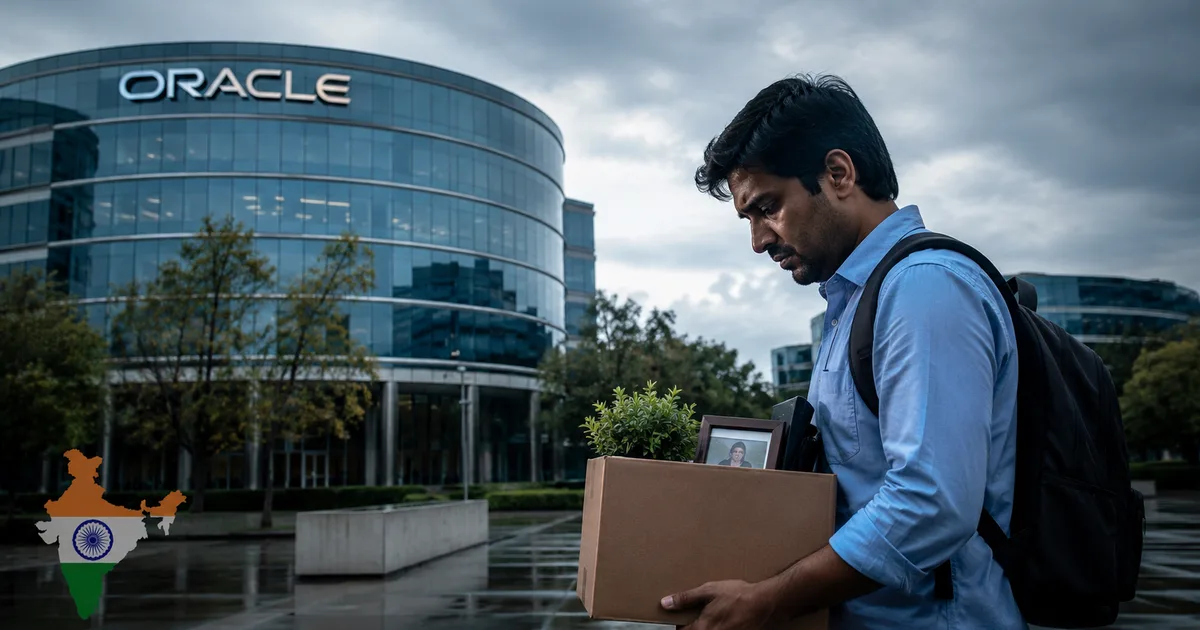
You wake up at 5:50 AM, check your phone out of habit, and see an email from "Oracle Leadership" sitting in your inbox. That's exactly what happened to thousands of tech workers across India and the US recently. The Oracle layoffs 2026 are here, and they're messy. Honestly, it's one of the harsher ways I've seen a tech giant handle restructuring in a long time.
If you work in the Indian IT sector, you're probably feeling a bit anxious right now. And you should be paying attention. Oracle is laying off around 10% of its workforce in India. The numbers here are a bit fuzzy, but that is around 12,000 jobs gone. Just like that. Behind those numbers are real people with EMIs and families who just had their plans derailed.
Why's a company that just partnered with OpenAI suddenly handing out pink slips left and right? The answers are a mess. They involve a massive shift in corporate strategy and a harsh new reality for legacy skills. In my experience, these kinds of shifts leave many employees feeling undervalued. Things are changing fast.
Why are the Oracle layoffs 2026 happening?
The short answer is artificial intelligence. But the slightly longer answer is that Oracle's aggressively shifting its budget to fund AI infrastructure and cloud expansion. And they're paying for it by cutting human jobs.
Look, tech companies restructure all the time. But this feels different. The company's already cut around 21,000 jobs globally this year. Now they're planning another wave. The focus is entirely on AI-linked restructuring. They're spending billions on data centers and NVIDIA chips. So, to make the math work for their shareholders, payroll has to shrink.
I read a report suggesting managers were asked to name affected employees weeks ago. They want payroll numbers down before the end of the quarter. It's a brutal calculation (annoying, I know, when you think about the human cost). Thing is, you're basically seeing human capital being traded for computing power.
"The shift towards AI infrastructure is not a temporary phase. It is a fundamental rewiring of how these tech giants allocate capital. Legacy teams are the ones paying the price to fund the AI arms race."
If you want to understand the broader context of how AI's changing things, check out our other explainers on tech trends. The pattern's pretty clear across the industry right now. Meta and Amazon have done similar things. The era of hoarding tech talent is over. And the era of hoarding GPUs is here.
The return of the 6 AM email
This is the part that really gets to me. The execution of these layoffs is cold. On March 31, thousands of employees woke up to a 6 AM termination email. No warning. No face-to-face meeting with a manager. Just a sterile email telling them their role no longer exists.
There are reports that these 6 AM emails are returning for the next wave of cuts. I'm not sure exactly why they do it this way. Imagine dedicating years to a company and putting in late nights. Then you get fired via an automated blast before you've even had your morning coffee.
Here's what typically happens on the day of a cut:
- You receive the termination email around 6:00 AM IST.
- By 6:30 AM, your access to Slack, email, and internal VPN is completely revoked.
- You get a separate email on your personal ID with a link to an offboarding portal.
- Your manager might reach out later, but often they're kept in the dark until the emails go out.
It's efficient for HR. But it's devastating for morale. I know a few folks who survived the first round. They say the anxiety inside the offices in Bengaluru and Hyderabad is through the roof. Everyone's just waiting for the next early morning notification.
Severance details for Indian employees
If you're caught up in the Oracle layoffs 2026, the immediate question is about money. How're you going to pay rent? What about the car loan? The severance package details in India are becoming a massive point of debate among tech workers.
Indian labor laws are different from the US. But tech giants usually have standard severance formulas. Based on what we're hearing from affected employees and unions, the severance is closely tied to how you exit.
Basically, you're given a choice. You can sign a "voluntary exit" agreement. Or you can wait for the formal termination process.
The voluntary exit package
If you sign the voluntary exit paper, you generally get a more structured payout. The company wants you to sign this because it prevents future lawsuits. It usually includes:
- Two to three months of base pay as standard severance in lieu of notice.
- One week of salary for every year of service completed at Oracle.
- Encashment of any accrued but unused earned leaves.
- Medical insurance coverage extended for a month or two.
If you refuse to sign and wait for termination, things get complicated. You might only get the legally mandated retrenchment compensation under the Industrial Disputes Act. This is often less favorable. And the process drags out. Most people just sign the paper. It's hard to fight a giant corporation when your income's just been cut off.
But here's the catch. The severance amounts are capped. If you're a senior developer making ₹35 Lakhs a year, three months of base pay is decent. But it won't last forever in a tough job market. And if you have a high-interest home loan, that buffer disappears fast.
Impact on the Indian IT job market
We need to talk about the ripple effects. 12,000 jobs lost in India isn't a small number. It hits Bengaluru, Hyderabad, Pune, and Noida hard. And Oracle isn't the only one doing this. We've seen cuts across the board.
When a company like Oracle dumps 12,000 experienced professionals into the job market all at once, it shifts the balance of power. Suddenly, recruiters have thousands of desperate and highly qualified candidates to choose from.
I spoke to two HR directors in Bengaluru last week. They're seeing an influx of resumes. If you ask me, this means a few concrete things for anyone looking for an IT job right now:
- When supply exceeds demand, wages stagnate. Companies know you need a job, so they offer less. Don't expect those 30% hikes we saw a few years ago. The power's back in the hands of the employers.
- Everyone wants AI skills now. If your resume only lists legacy database management, you might struggle. You have to show how you fit into the new landscape.
- With so many candidates, companies are taking their time. Four or five rounds of interviews are becoming the norm again. They want to be absolutely sure before extending an offer.
If you're currently safe but feeling nervous, now's the time to start networking. Keep your LinkedIn updated. Take some courses. Read up on our career survival guides. Don't wait until you get a 6 AM email to start planning your next move.
The AI shift: what Oracle is actually building
To really grasp why 12,000 Indian techies are suddenly out of work, we've got to look at where Oracle's putting its money. They aren't just shrinking the company to save cash. They're aggressively reallocating those funds.
Oracle's recently inked massive deals with OpenAI and is pushing hard into sovereign cloud infrastructure. They're building data centers at a terrifying pace. The company wants to be the backbone for the next generation of generative AI applications. They're buying up NVIDIA GPUs by the truckload.
This means a complete overhaul of their required talent pool. If you were working on legacy on-premise database support, your job was likely on the chopping block. The company simply doesn't see future growth there. They want cloud architects and machine learning engineers.
I find this pivot sketchy but brutal. It shows a harsh reality for Indian IT workers. You can't rely on a single technology stack for your entire career anymore. The half-life of tech skills is shrinking. What was highly sought after five years ago is now considered a legacy burden by management.
This is why upskilling is no longer optional. It's basic survival. If you're a Java developer, you need to understand how your code interacts with cloud infrastructure and AI APIs. You need to be adaptable because the companies you work for are going to pivot violently every few years to chase the next big trend.
What should you do if you get laid off?
First, take a deep breath. It's a shock. Give yourself a day or two to process it before you panic-apply to 50 jobs on Naukri.
When you're ready, here's a practical checklist. I've seen too many people make mistakes in the first 48 hours because they're operating out of pure panic.
Review everything before signing
Review the severance document carefully. Don't sign anything immediately. Read it. If something seems off, consult an employment lawyer. Yes, it costs a bit of money. But it's worth it if they're shortchanging your leave encashment or holding back a bonus you earned.
Secure your finances
Secure your finances immediately. Log into your bank accounts. Calculate your exact monthly burn rate. Pause any aggressive SIPs or investments temporarily until you've got a new income stream. If you have an emergency fund, this is exactly what it's for. Cut down on non-essential spending. Cancel the extra streaming services. You need cash flow clarity.
Manage your public profile
Update your profile quietly at first. Don't immediately post a long, emotional essay on LinkedIn. It might feel good in the moment, but recruiters can be wary of candidates who seem angry. Update your resume. Reach out to close former colleagues and managers privately. Ask them if they know of any openings. The best jobs are found through whisper networks anyway.
Save your documentation
Prepare for background checks for your next role. Make sure you download your payslips, Form 16, and any performance review documents from the Oracle portal before your access is completely revoked (which makes sense, actually, given how fast they lock you out). Do this the second you get the email. You'll need these for your next job's background verification. Trying to get them from a former employer's HR department weeks later is a nightmare.
And remember, getting laid off isn't a reflection of your worth or your skills. It's a mathematical decision made by executives thousands of miles away who're looking at spreadsheets, not people. The market's tough right now. But Indian techies are resilient. You'll bounce back.
Things are moving fast in the tech world. Stay informed. Keep an eye on our latest tech news to track which companies are hiring and which are firing. Knowing the trends gives you a slight edge. And right now, you need every edge you can get. Keep your skills sharp and watch your spending.