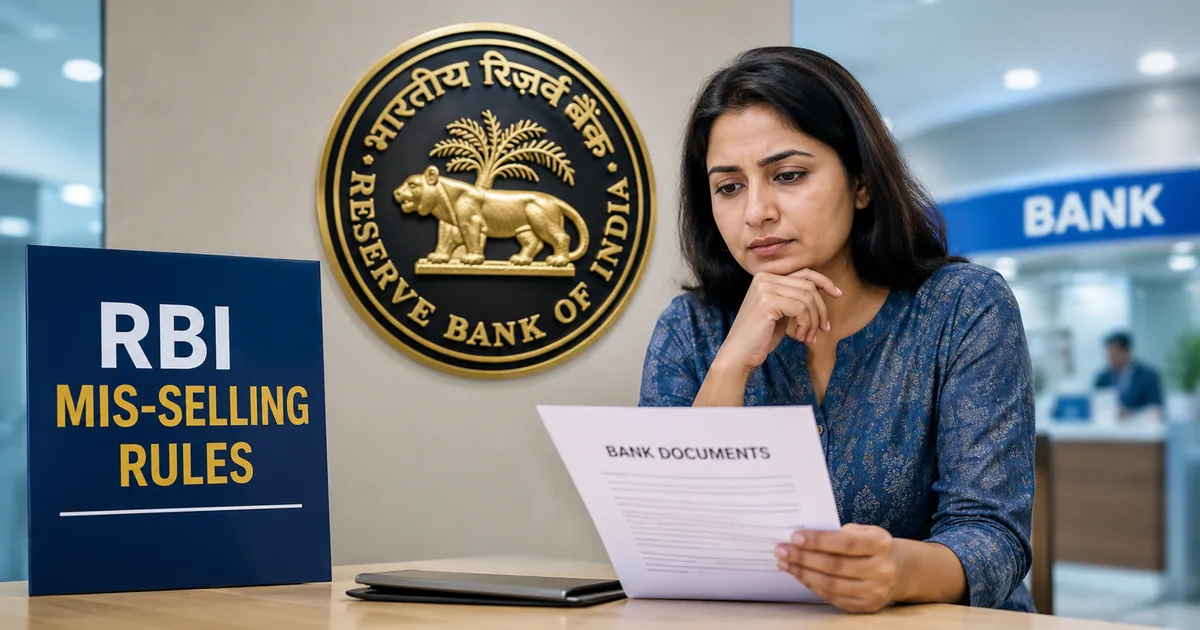
Picture this. You walk into a bank branch in Delhi or Mumbai, seeking a home loan of INR 50 lakh to buy your first apartment. The loan officer reviews your files, smiles, and says the loan's approved. But there's a catch. They insist you must buy a single-premium life insurance policy from their partner insurer. Without it, they claim, they can't release the funds. This is a classic case of forced bundling. The good news is that the RBI mis-selling rules are changing from January 2027 to protect you from this exact problem.
Look, banks have done this for decades.
They call it cross-selling. But honestly, it's extortion. In my experience, you usually need the loan so badly that you just swallow the pill and buy the useless insurance anyway. But the Reserve Bank of India's finally issued final directions to stop this nonsense. The new rules kick in on January 1, 2027. That gives banks and NBFCs some time to fix their systems.
I read the master directions (which are incredibly dry, let me tell you) so you don't have to. The changes are massive. They'll change how banks sell insurance and mutual funds.
How forced bundling in banks leaves customers with useless products
Forced bundling is basically when a bank makes you buy a second product to get the first one. It's super common with home loans. Loan officers often refuse to process your application unless you buy life or health insurance from their partner company. And this insurance is usually expensive. Sometimes they even add the premium to your loan amount. That means you pay interest on it for twenty years. If you ask me, this is just sneaky.
So why'd they do it? Simple. Huge commissions. Banks make crazy money by selling third-party insurance and mutual funds. Honestly, many banks make more profit from these side deals than from their actual lending business. A report by Outlook Business says these rules'll hit the bancassurance revenue of big Indian lenders pretty hard.
But under the new rules, this practice's totally illegal. Banks can't force you to buy insurance from their chosen provider. If you need insurance for a loan, they've got to let you choose any provider licensed by the Insurance Regulatory and Development Authority of India (IRDAI).
The official definition of bank product mis-selling
For the first time, the RBI's actually written down a clear definition of what mis-selling is. Before this, banks could easily wriggle out of trouble by saying the customer signed everything voluntarily. The regulator's closed that loophole.
According to the official guidelines, bank product mis-selling includes:
- Offering financial products that do not match the customer needs or risk profile.
- Providing misleading, inaccurate, or incomplete information about a product.
- Selling a product without getting the explicit, informed consent of the customer.
- Hiding charges, fees, or penalty terms in the fine print.
Here's a classic example. A senior citizen walks into a bank to renew their fixed deposit. The relationship manager tells them about some new deposit scheme with higher interest. But in reality, it's just a single-premium life insurance policy with a five-year lock-in. The senior citizen doesn't get this. They sign the papers, thinking their money is safe in an FD. When they try to withdraw the cash next year, they find out they've lost a huge chunk of it. Under the new rules, the bank's forced to refund the money and compensate them.
New rules for NBFC staff and direct sales agents
The RBI targets banks, but they also went after Non-Banking Financial Companies (NBFCs) with these rules. These rules change how these firms sell their products.
For starters, the RBI's banned NBFC staff from getting direct incentives from third-party product sellers. Previously, a loan officer at some private NBFC could get a neat cash bonus or a fancy holiday trip from an insurance company just for hitting sales targets. That created a massive conflict of interest. The employee'd just push the product that gave them the biggest kickback, not the one that actually made sense for you. Starting 2027, that's completely banned.
Also, banks and NBFCs have to keep a much closer eye on external Direct Sales Agents (DSAs). Honestly, you probably get ten spam calls a day from these guys. Under the new rules, the parent bank's fully responsible if these agents make false promises.
Social media influencers face strict marketing rules
If you watch finance videos on YouTube or Instagram, you've definitely seen influencers pushing mutual funds, trading apps, credit cards, or crypto products. Most of these are just paid promotions. Thing is, lots of these influencers don't have any real qualifications.
Under the new directions, the RBI's extending marketing rules to social media influencers. Regulated companies can't hire anyone who isn't registered with SEBI or some other proper authority. If a bank uses an influencer to talk up a product, that influencer's got to follow strict disclosure rules. They have to say clearly if they're getting paid. They can't make wild, unrealistic claims about returns.
I think this's a great move. I've seen way too many people lose their hard-earned cash after following sketchy advice from unverified influencers on social media. This rule'll hopefully clean up the whole mess.
Compulsory audits and customer refund mechanisms
Under the new directions, the RBI's forcing banks and NBFCs to run regular audits on their sales practices. They've got to check if customers are happy and if the products sold actually fit their needs, instead of just forgetting about them the second the deal's done.
Also, if a bank's caught mis-selling, they've got to refund the customer's money. That's a massive shift. Honestly, getting a refund for a mis-sold policy used to be a complete nightmare. You'd have to run from branch to branch, filing endless complaints with both the insurer and the bank while they passed the buck. Now, the RBI's made it crystal clear that the selling bank or NBFC is responsible. They have to return the cash and sometimes even pay compensation for all the mental stress.
This rule's incredibly important for folks in rural areas. They're often less financially literate and become easy targets for aggressive sales agents. In my experience, many farmers are forced to buy crop insurance or personal accident insurance they don't even understand just to get a basic crop loan. That has to stop.
How the new guidelines impact digital banking apps
Most of us don't visit bank branches anymore. Instead, we just use mobile apps or net banking. But mis-selling happens online too. Have you noticed how some apps pre-tick boxes for insurance or credit card protection when you're applying for a loan? It's a classic dark pattern.
The RBI's new rules tackle this head-on. From January 2027, those pre-ticked check boxes are completely banned. Every single financial product you buy online'll require your active consent. You've got to check the box yourself. The app also has to show you a simple, one-page summary fact sheet before you buy anything. That sheet must list the interest rate, processing fees, partner details, and exit options in a clear, readable font.
I think this's a fantastic rule. Way too many people end up paying monthly recurring charges for services they didn't even know they'd signed up for. It's about time we got full control of our digital bank accounts.
According to the RBI Master Direction on the Sale of Financial Products, regulated entities must ensure that their incentive structures for sales staff do not encourage aggressive sales behaviors that lead to mis-selling or unfair treatment of customers.
How to protect yourself and complain under the new system
Even though the rules start in January 2027, you've got to stay alert. You can't just rely on the regulator to protect your money. Look, you need to be proactive.
First off, don't ever sign anything without reading the fine print. If a bank officer tells you a product's mandatory, ask them to show it to you in writing. If they say no, that's a huge warning sign. You can read more about spotting these financial tricks in our financial guides. If you think a bank's lied to you, write everything down. Note the officer's name, the date, the branch location, and exactly what they said.
To keep yourself safe from online fraud, check out our guide on common digital scams in India. If you're a victim of mis-selling, here's the step-by-step way to get your money back under the RBI's system:
- File a written complaint with the branch manager of the bank or NBFC. They must give you an acknowledgment receipt.
- Wait for 30 days. The bank is required to investigate and resolve your complaint.
- If the bank rejects your complaint or does not respond within 30 days, escalate the matter to the RBI Ombudsman. You can do this online through the RBI Complaint Management System (CMS) portal.
- If the mis-selling involved actual financial fraud or identity theft, you should also file a complaint at the national cybercrime portal at cybercrime.gov.in or call the 1930 helpline.
We also track the latest policy updates in our tech news section. Look, the system's not perfect. But these new rules give you a pretty strong shield. Once banks know they've got to refund your money, they'll think twice before pushing useless products on you.