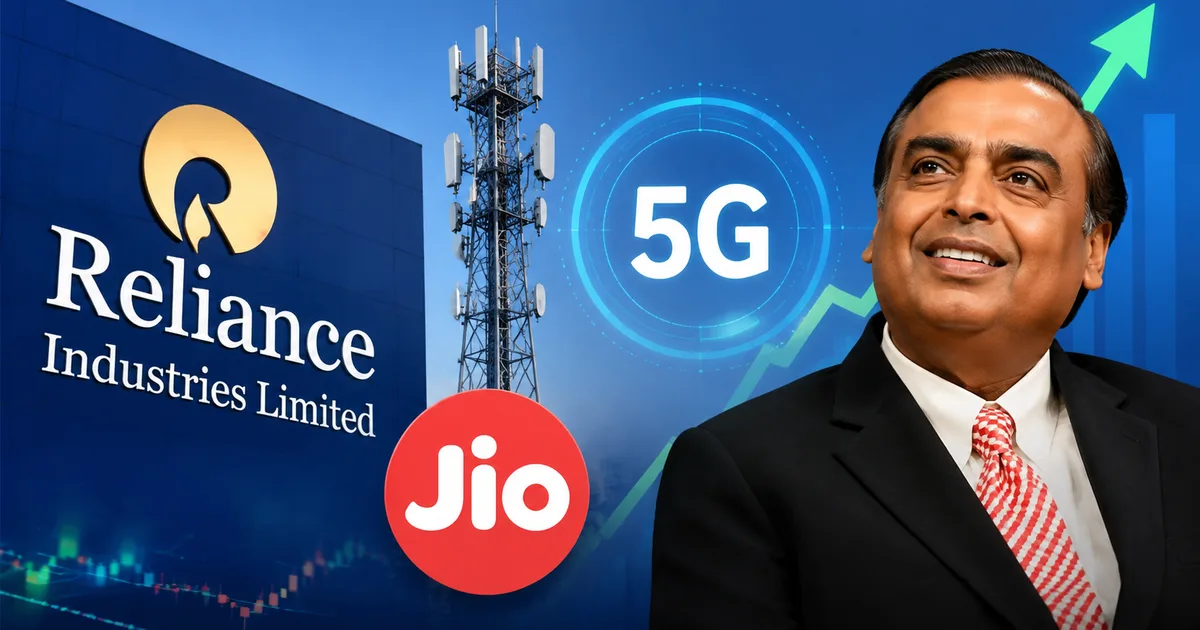
So, the Reliance Industries Q1 2026 Results are finally out. Honestly, they tell a pretty interesting story about where our money goes every month. If you've recharged your Jio number recently or bought groceries at Smart Bazaar, you're part of this massive financial report. I spent the morning digging through the earnings transcript. Let's break down the numbers. We can skip the corporate jargon and figure out what this actually means for everyday Indians.
Here's the deal. Reliance just posted a massive gross revenue of ₹3,11,850 crore for the June quarter. That's a solid 25% jump from last year. But here's where it gets slightly tricky. It's why you might see conflicting headlines today. The net profit dropped 22% year-on-year to ₹20,946 crore. Why? Because last year they had a massive one-time income boost. That skewed the numbers. Strip that anomaly away. Their core businesses like telecom and retail are doing exceptionally well. They're practically printing money (which makes sense, actually).
Breaking down the Reliance Industries Q1 2026 results
You can't really talk about Reliance without looking at the big three engines that run the show. These are Oil-to-Chemicals (O2C) and Retail. Then you have Digital Services. Mukesh Ambani noted that strong double-digit growth across these sectors drove that 25% revenue spike.
Let's talk about the O2C business first. I know. Oil and chemicals sound boring compared to smartphones. But it's the cash cow that funds everything else. The O2C operational profit grew nicely. Kotak Institutional Equities predicted around a 12% growth here. This was mostly supported by their SEZ refinery and some favorable currency exchange rates. When the Rupee weakens slightly against the Dollar, companies exporting refined oil products tend to make a bit more cash.
Then you have Reliance Retail. We all feel the pinch of inflation when we buy groceries. But retail still delivered what the company calls "resilient growth." Whether you're buying a television at Reliance Digital or picking up daal at Smart Bazaar, they're capturing a massive chunk of Indian consumer spending. I track a lot of tech news and market trends. I think seeing a single company maintain this kind of iron grip on both digital and physical retail markets in India is rare. They're literally everywhere.
Jio subscriber growth and the 215 rupee question
Let's be real. The part most of us actually care about is Jio. It hits our wallets every 28 days. It's the internet lifeline for half the country.
Jio Platforms had a very solid quarter. Revenue jumped 12% to ₹45,961 crore. They're adding subscribers consistently. But the number you should actually be paying attention to is the ARPU. That stands for Average Revenue Per User. It has now hit ₹215.6 per month. I'm not sure exactly why they settled on that exact price point, but it's working.
Why does ARPU matter to you? Simple. It's exactly how much money Jio manages to extract from you on average every single month. For years, Jio kept prices artificially low to kill the competition. We all enjoyed the free data era. Now? They want to make actual money. We saw those recent tariff hikes. This ARPU number proves their strategy is working perfectly.
"Jio's ARPU increasing to nearly ₹216 shows that Indian consumers are finally willing to pay a premium for consistent data, especially as 5G becomes the norm rather than a luxury."
I remember when paying ₹150 a month for unlimited 4G felt slightly expensive. Now, dropping ₹300 to ₹400 via Google Pay or PhonePe for a standard 28-day pack is completely normal. And they're adding millions of rural and semi-urban subscribers. These people are fully dependent on this network. They use it for everything from watching YouTube shorts to paying the local sabziwala via UPI.
5G rollout impact explained: are we getting what we pay for?
This is where things get a bit frustrating for me. The 5G rollout impact explained by telecom analysts always sounds amazing on paper. Jio has practically blanketed the entire country with True 5G. They hold the bragging rights for the fastest 5G rollout in the world. But ask yourself if you really need gigabit 5G speeds to scroll Instagram.
Here's what the massive 5G rollout is actually doing to the market right now:
- Pushing forced phone upgrades: You basically can't buy a decent 4G phone anymore. The market forces you to upgrade to a 5G handset, even if you don't strictly need it.
- Eating through daily data faster: Faster network speeds mean videos on Netflix or YouTube often load in 4K resolution by default. Your 2GB daily limit vanishes by 3 PM without you even noticing.
- Justifying higher recharge costs: Telecom companies are using the massive billion-dollar investments in 5G infrastructure as the primary excuse to hike our monthly prepaid bills.
I tested the 5G network extensively across Mumbai and Delhi recently. Yes, it's fast. Downloading a mobile game takes seconds. But for the average user, a solid 4G connection is enough for most daily tasks. The real benefit of 5G isn't for our phones. It's for smart factories and heavy enterprise use. We just end up footing the bill through those higher prepaid plans.
The connected ecosystem and how Jio feeds Reliance retail
Thing is, people often miss how interconnected everything is when reading these quarterly reports. Jio is a massive digital funnel. It pushes you straight into the broader Reliance ecosystem.
Think about it. You use a Jio SIM. You open the MyJio app to recharge. Inside that app, you see ads for JioCinema and JioMart. You click an ad. You buy some clothes. Then you pay using Jio Financial Services. They own the pipeline and the product. They own the payment gateway too. This is why their Digital Services segment is so insanely profitable. They aren't just selling you data. They're selling you access to their own massive digital mall.
If you want to understand how deep this goes, you should read some of our explainers on how digital monopolies work. It's fascinating. And it's slightly terrifying.
The hidden giant behind the new energy initiatives
While Jio and Retail grab all the flashy headlines, there is a third massive piece to the Reliance puzzle. New energy. The company is pouring billions of dollars into green energy and solar panels. They're building massive gigafactories in Jamnagar as we speak.
Why should you care about solar panels in Gujarat? Because it dictates the future of electricity costs in India. Reliance wants to do to the energy market what they did to telecom. They want to make green energy so cheap that nobody else can compete. If they succeed, it could alter how our homes are powered. Plus, it's a massive hedge against the decline of their core oil business. It's a wildly ambitious pivot. These quarterly reports show they have the cash flow to pull it off (annoying, I know, but true).
Mukesh Ambani's next big move with the Jio IPO
So, what happens next? Mukesh Ambani dropped a large hint during these Q1 FY27 results. The corporate focus is shifting toward two things. New energy and the highly anticipated Jio IPO.
An IPO means Jio Platforms will become a separate publicly traded company on the stock market. If you trade on Zerodha or Upstox, this is going to be one of the biggest market events in Indian history. They've spent the last seven years building an absolute monopoly on digital services. Now, they're getting ready to cash in. They're letting the public buy a piece of the pie.
Why now? Because the numbers look great. An ARPU of ₹215 looks fantastic to foreign investors. A massive 5G subscriber base looks even better. They've proven they can raise prices without losing millions of customers to Airtel.
What should you do about your mobile bill?
Honestly? Nothing much changes for you today. Your internet will work exactly the same way tomorrow. But you need to keep a very close eye on those recharge packs. As Jio prepares for its IPO, they need to show investors that they can make even more money per user. I fully expect we'll see fewer free OTT benefits and creeping price hikes over the next 12 to 18 months.
If you're tired of paying premium rates, it might be worth looking at our guides on choosing secondary SIM options. People are checking out BSNL's new 4G rollout. Their network coverage is still a huge gamble depending on where you live. But at least it's cheap.
At the end of the day, Reliance is playing the long game beautifully. First, they gave us free internet and got us hooked. Then, they made our jobs and our payments via UPI dependent on it. Now, they're collecting the rent. And looking at these Q1 2026 results hitting ₹3.11 lakh crore in revenue, business is booming.