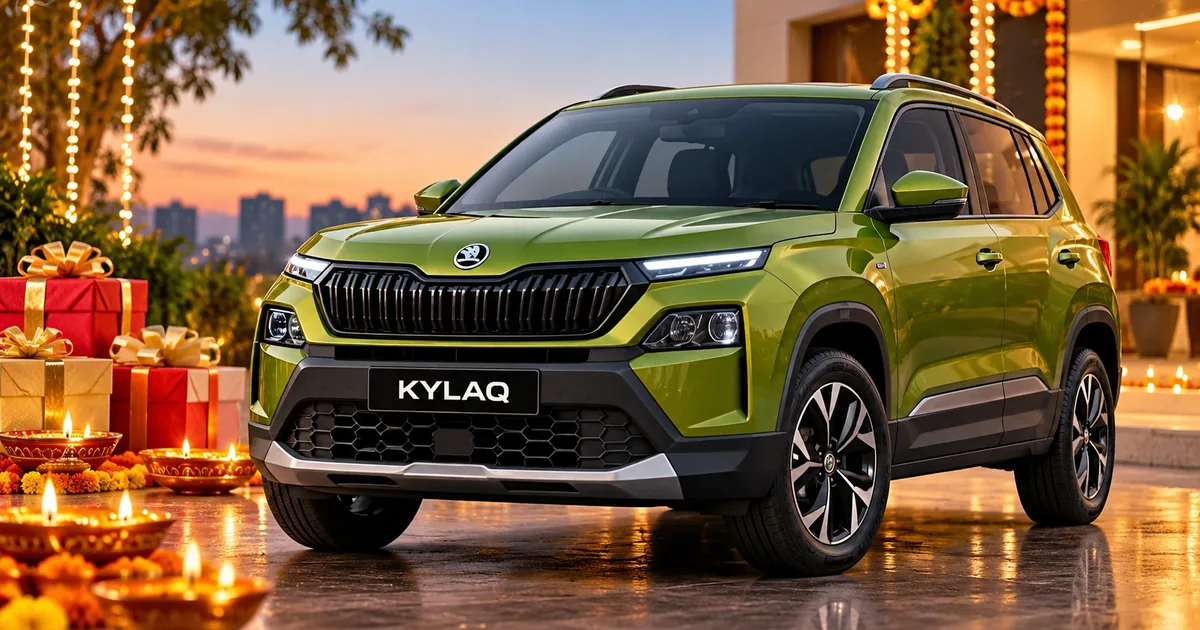
Picture this. You walk into a brightly lit car showroom on a weekend afternoon right before Diwali, sweets on the reception desk, marigold garlands strung across the front grill of a test drive car, and a giant banner shouting big savings. Dealerships across India are currently pushing Skoda Kylaq festive discounts reaching up to Rs 90,000 for October 2026. If you've been keeping an eye on the subcompact SUV market, that banner looks tempting. Cars cost money, and saving nearly a lakh on a brand-new vehicle sounds great.
Look, before you whip out your phone to scan the showroom UPI QR code, you need to know how festive discounts actually work in India. In my experience, showroom posters make big promises that sales reps quietly slice up into fine print.
Don't sign anything yet.
I spent the last week digging into internal dealer circulars, chatting with sales leads, checking buyer forums, and comparing price sheets across major Indian cities. The advertised ninety thousand figure is technically real. But almost nobody gets that full amount knocked off the sticker price in hard cash (annoying, I know). Part of it is an exchange bonus, while another chunk is locked behind corporate discount lists. And the rest only kicks in if you trade in an old family car on the spot.
How the Skoda Kylaq festive discounts actually break down
Dealerships love bundling multiple incentive buckets under one massive headline figure. When inkl and regional automotive outlets reported that Skoda rolled out offers worth up to Rs 90,000 across models like the Kylaq and Kushaq this festive season, buyers rushed to inquiry desks expecting direct price cuts. That's rarely how it goes on actual showroom floors.
Here's how that maximum Rs 90,000 benefit actually splits up, because what you get depends entirely on who you are:
- Direct consumer cash discount: Dealers offer between Rs 25,000 and Rs 40,000 in upfront cash reductions on selected trims, depending on how much inventory they hold on their yard.
- Exchange bonus: If you trade in your old vehicle through the dealership exchange desk, Skoda adds an incentive ranging between Rs 25,000 and Rs 30,000 toward your down payment.
- Corporate and professional rebate: Employees of registered multinational firms, government staff, and select professionals like doctors receive an extra Rs 10,000 to Rs 15,000 off.
- Skoda loyalty bonus: If someone in your immediate household already owns a Skoda or Volkswagen car, dealers chip in an extra Rs 10,000 loyalty benefit.
Thing is, the numbers here are a bit fuzzy depending on the dealer yard you visit, but the general pattern is always the same. Got no old car to swap? You immediately lose thirty thousand rupees from that banner figure. If your company isn't on their approved corporate roster, another slice disappears. If you ask me, that's where most buyers get caught off guard. Basically, for a straightforward first-time buyer with no old car to swap, the actual cash savings sit between Rs 30,000 and Rs 45,000.
Still good money in your pocket.
Just don't count on ninety thousand in cash.
Cash discounts vs exchange bonuses: what dealers give you
Exchange bonuses look great on paper until you meet the showroom's used-car evaluator. That's where people lose out. In my experience, dealership valuation desks routinely lowball your old hatchback or sedan by Rs 40,000 to Rs 60,000 compared to what you'd get selling directly on open used-car platforms.
That valuation gap wipes out your festive bonus on the spot.
So, a seemingly attractive Rs 30,000 exchange bonus turns into a net loss if the dealer undervalues your old car by fifty thousand rupees (which happens all the time, honestly). Do yourself a favor and get at least two independent online quotes before you hand over your keys for an in-house evaluation.
As an inkl report on festive automotive retail noted this month: The maximum advertised discount doesn't mean every buyer will receive the full amount. Exchange bonuses, corporate offers and loyalty benefits depend strictly on buyer eligibility and individual dealership terms.
Competition in this compact SUV space is intense. Hyundai has festive cuts reaching up to Rs 1 lakh across its cars, while Tata is pushing heavy deals on the Tata Nexon Camo Edition. Skoda knows you have options. That's why sales teams will throw in freebies like extended warranties or roadside cover if you stand your ground at the negotiation desk.
Skoda Kylaq variant breakdown: which trim is genuinely worth your money
The Kylaq lineup has four trims: Classic, Signature, Signature+, and Prestige. Each one is aimed at a distinct price point and type of driver. Picking the right one decides whether those festive savings actually feel rewarding or leave you regretting your choice later on.
The entry-level Classic trim is mostly there to create a catchy starting price on billboards. It has the standard 1.0-litre TSI turbo-petrol motor pushing 115 PS of power, plus solid safety kit like six airbags (which, for the record, I think is fantastic). But it drops conveniences most families expect, skipping out on alloy wheels, a touchscreen display, power-folding mirrors, or rear AC vents. If your budget is tight, it puts German engineering in your garage for hatchback money. You'll just have to spend extra cash at local accessory shops to finish the car.
Honestly, the Signature trim is the sweet spot for driving in India. It gives you the 10-inch touchscreen, steering-mounted audio buttons, rear AC vents, and electric folding mirrors without demanding top-spec pricing. Check out our in-depth car buying guides to see how we weigh trim levels against long-term maintenance bills. If you tackle brutal rush-hour traffic every single day, matching the Signature trim with the 6-speed torque-converter automatic is the best combination in the whole lineup.
The higher Signature+ and Prestige variants have extra perks like an electric sunroof, ventilated front seats, ambient lighting, and digital dials. If you deal with scorching summers in places like Rajasthan or Gujarat, ventilated front seats are worth every single rupee. And remember that top trims bring higher RTO fees and steeper insurance premiums that quickly eat up your festive discount.
Skoda Kylaq booking offers and waiting period realities this festive season
Here's what nobody tells you at the sales counter: the painful gap between booking a car and actually parking it outside your home on Dhanteras or Diwali. Sales reps will gladly take your booking payment over UPI in thirty seconds. But delivery backlogs on high-demand trims are already climbing towards four months, according to Autocar India showroom tracking.
Need your car before the festival wraps up? Your color and trim options shrink fast. In my experience, showrooms will happily nudge you toward whatever is sitting unsold in their stockyard, usually a manual car in white or silver that's gathered dust for three weeks, instead of the automatic Prestige in olive green you really wanted. Never settle on the gearbox or key features just to drive something home on an auspicious day.
Dealers love impatience.
Watch the cancellation policy closely too. Most authorized Skoda outlets ask for a refundable booking deposit of Rs 10,000 to Rs 25,000. Get the refund terms printed on dealer letterhead before you send any money. Some dealerships sneakily try to keep Rs 1,000 to Rs 3,000 as a "cancellation charge" when you back out because deliveries got delayed past the promised date. That's sketchy behavior, plain and simple, and you should walk out if they won't put a 100% refund guarantee on paper.
While you weigh your options, take a look at our consumer automotive explainers for wider market trends, including how the incoming Skoda Slavia facelift might reshape what families buy this quarter.
What to check before you pay the booking token
Buying a car around Diwali is emotional. Sales reps know you want that shiny new machine sitting in your driveway before the holiday kicks off. And they lean on that excitement to slip bogus charges into your final price quote.
First off, look straight at the insurance line on the proforma invoice. Dealers routinely slap on Rs 55,000 to Rs 70,000 for bundled comprehensive insurance with a zero-dep insurance cover. If you check that exact same policy online through aggregators or PSU insurers, full cover with engine protect and return-to-invoice costs around Rs 32,000 to Rs 38,000. If you ask me, dealer insurance markups are total madness. Indian law gives you every right to buy car insurance from any IRDAI-approved company you want. Tell the sales advisor you'll buy your own policy outside unless they price-match the aggregator quote. Nine times out of ten, their in-house price drops by twenty thousand rupees on the spot.
Second, say no to "mandatory" accessory packs. Dealers love tacking on Rs 20,000 to Rs 30,000 for basic items like mud flaps, floor mats, door visors, and chrome garnish strips, claiming you can't buy the car without them. That's nonsense. Every single accessory is optional, so have them strike the whole kit off the bill unless you actually want those parts.
Third, check your paperwork ahead of time. Modern RTO registration in India runs through digital verification via DigiLocker or Aadhaar OTP authentication. If your mobile number on Aadhaar is outdated, high-security registration plate (HSRP) generation stalls out, and your delivery gets delayed. Also check your FASTag setup. Make sure it links directly to your savings bank account rather than a prepaid wallet that eats away balance with random maintenance charges.
And remember that all current Skoda festive offers wrap up on October 31, 2026. Don't rush your car loan either. If you need financing, pit the dealer's partner banks against pre-approved rates from your salary account. Even a 0.5% interest rate drop on a five-year tenure saves you far more money than the festive cash discount on the poster. Do the math, stay patient, and push hard before you wire a single rupee.