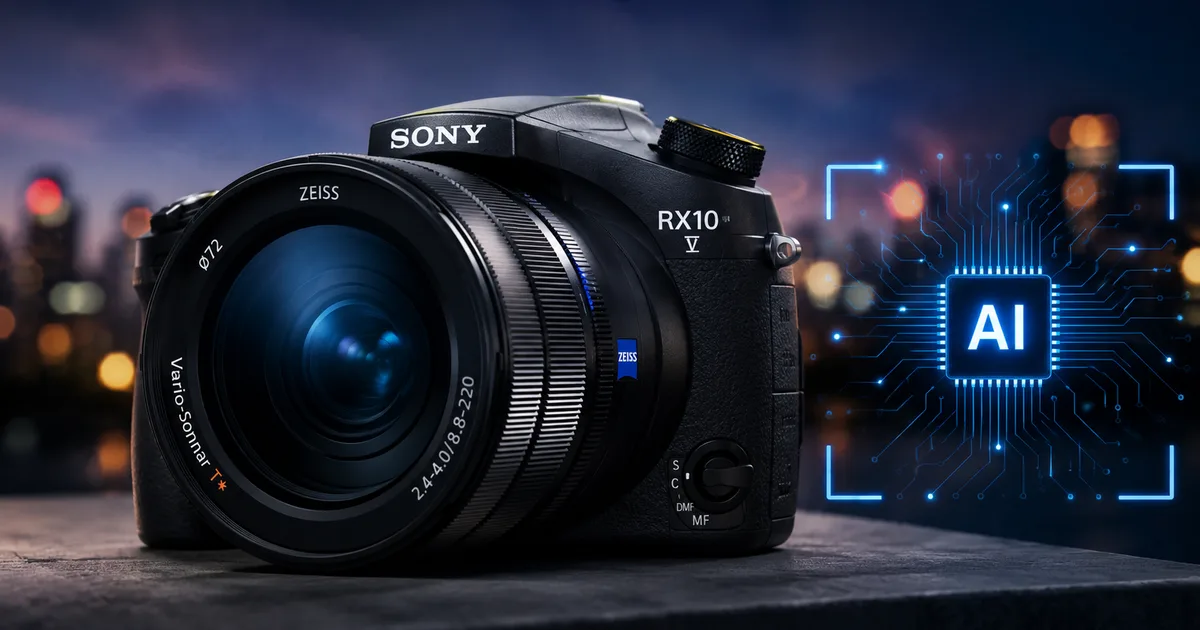
If you've been waiting for a true all-in-one travel camera, the recent Sony RX10 V leaks probably have your attention. Honestly, nine years is an eternity in the camera world. The RX10 IV came out back when most of us were still figuring out how to use UPI properly and TikTok wasn't even banned in India yet. But now, it looks like Sony's finally ready to drop the successor. And from what I'm seeing, it might actually be worth the long wait.
I know a lot of people just shoot with their phones these days. Phone cameras are insanely good now. They process images instantly and let you share to Instagram in seconds. But there's a massive difference between a phone's digital zoom and a dedicated 24-600mm optical superzoom lens. That's what the RX10 series is always about. You get one camera that can shoot a wide landscape in the Himalayas and then punch in close enough to count the individual feathers on a bird in a wildlife sanctuary.
The leaks give us a pretty clear picture of what's coming. From the new tech inside to how much it'll probably burn a hole in your wallet here in India. Because buying a camera in 2026 is a massive financial decision for most of us (which makes sense, actually). I'm not sure exactly why prices got so insane lately.
The big sensor upgrade explained
Here's the deal. The biggest rumor pointing to a massive upgrade is the stacked sensor. If you don't keep up with camera hardware nerds, a stacked sensor basically means the camera can read data incredibly fast. This is just better performance overall. In my experience, it's night and day.
With a stacked sensor, you get blackout-free shooting. When you hold down the shutter button for a burst of photos, the screen doesn't go black between shots. You just see a continuous live feed. This is game-changing for wildlife or sports. Imagine tracking a tiger running through Ranthambore National Park. You need to keep it perfectly in the frame while firing 20 frames per second. Blackout-free shooting makes that easy because you never lose sight of the tiger.
A stacked sensor completely changes how responsive a camera feels, moving it from consumer-grade to something professionals can comfortably use as a serious backup tool.
The leaks also confirm 4K60 video recording. That means you can shoot high-resolution video and slow it down by half. It gives that smooth cinematic look. The old model topped out at 4K30. That feels super outdated for a premium camera in 2026. For travel vloggers or people shooting their family trips, having 4K60 without cropping the image is a massive selling point.
AI autofocus is the real star here
Sony's arguably got the best autofocus system on the market right now. And they're bringing their latest AI-driven subject detection chips to the RX10 V.
What does that mean for you? It means the camera knows exactly what it's looking at. It can recognize humans, animals, birds, and cars. You don't have to manually put a focus box over your subject anymore. You just point the camera. It instantly locks onto the eye of whatever you're shooting.
- Human eye tracking works even if the person turns away briefly or wears sunglasses
- Bird tracking can lock onto a bird in flight against a busy, distracting forest background
- Vehicle tracking keeps focus locked on speeding cars or bikes during motorsports events
- Insect tracking can even follow butterflies or bees if you shoot macro photography
I tried this specific AI tracking system on a recent Sony mirrorless camera. It honestly feels like cheating. You can just focus on your composition while the camera does the hard work. For an all-in-one travel camera, this makes getting sharp photos incredibly easy. Even beginners can just point and shoot without messing with settings.
That massive 24-600mm superzoom lens
The lens seems to be mostly similar to the last generation. That actually makes perfect sense. Building a 24-600mm equivalent lens that stays sharp across the whole zoom range is a mess from an engineering side. Sony nailed it the first time around nine years ago. There's no real reason to mess with a winning formula.
Just to put 600mm into perspective. If you're sitting in the stands at an IPL match, you can zoom in close enough to fill the frame with the batter's face. You can't do that with a phone. You can't even do that with most professional DSLR lenses without spending lakhs of rupees on giant heavy glass.
The main trade-off is the physical size. It isn't something you can slip into your pocket. It looks and feels like a small DSLR. But compared to carrying a camera body and some heavy lenses in a massive backpack, it's a way better option for travel. If you want to read more about how different camera setups compare for travel, check out our other explainers.
Weather sealing and Indian conditions
One thing that often gets overlooked in these leaks is build quality. If you ask me, this is huge. If you're taking this camera traveling across India, it needs to survive harsh conditions. The dust in Rajasthan and the extreme humidity in Kerala are brutal on sensitive electronics.
Previous RX10 models had decent weather sealing. But they weren't invincible. With the premium price tag expected on the RX10 V, Sony needs to make sure this thing's built like a tank. The leaks suggest a robust magnesium alloy body. That's a good sign. But I'd still keep a dedicated rain cover handy if you plan on shooting during the monsoon season.
I've personally ruined a very expensive lens before. I totally underestimated how quickly moisture can get inside the barrel during a sudden downpour in the Western Ghats. Don't make the same mistake. You can read some of our guides on protecting your tech during the Indian monsoon season for more practical tips.
Alternatives in the current market
Before you commit to buying something this expensive, check out the alternatives. The superzoom bridge camera market's pretty quiet lately. Panasonic used to be a major player here with their Lumix FZ series. But they largely shifted focus to full-frame mirrorless cameras.
If you don't need the massive 600mm zoom, look at the Sony RX100 series. Those cameras fit in your pocket and still have excellent image quality, though their zoom is a lot shorter. Or you could buy a crop-sensor mirrorless camera like the Sony a6700 and attach a travel zoom lens. But you'll never get a 24-600mm equivalent range in a single lens for a mirrorless system. It'd be completely massive and unwieldy.
That's why the RX10 V exists. It fills a very specific niche.
It gives you maximum versatility in a single package that you never have to take apart.
Expected India price and launch date
Based on the teasers and leaks from Imaging Resource and Notebookcheck, Sony's gearing up for an announcement next week. It's potentially on Thursday or July 22.
Now for the painful part. The RX10 IV launched at around ₹1,30,000 in India back in 2017. Camera prices have only gone in one direction since then. Thanks to inflation and heavy import duties on electronics.
Given the expensive stacked sensor and the new dedicated AI autofocus chips, I'd expect the India pricing to land somewhere between ₹1,60,000 and ₹1,80,000. It's a premium product. If that price makes you wince, you aren't alone. It's a massive amount of money for a fixed-lens camera.
But think about buying a mirrorless camera body and a dedicated 600mm lens. That'd cost you double or triple the amount. So it suddenly looks like decent value for a very specific type of buyer. We'll have to wait for the official announcement for the exact INR pricing (the numbers here are a bit fuzzy still). Start saving your rupees now if you're interested. You can also read our news section to stay updated on the official launch details as they drop.
Who is this camera actually for?
It definitely isn't for everyone. If you just want to take photos of your food or your friends at a local cafe, stick to your smartphone. If you want to shoot professional weddings in low light, get a full-frame mirrorless camera instead.
The RX10 V is for the serious traveler or the dedicated wildlife enthusiast who hates changing lenses in the field. It's for the person going on a safari in Jim Corbett National Park. They want high-quality shots of tigers far away in the brush. But they also want to quickly take wide shots of the sunrise over the landscape without fumbling in their bag for a different lens.
And yes, as one of the humorous leaks from DivePhotoGuide pointed out, it's wholly unsuited for underwater photography. So maybe leave it safely on the boat if you go scuba diving in the Andamans.
What to look out for next week
When the official announcement drops, pay close attention to the battery life and the exact frame rates for video. Sony has a habit of artificially limiting certain software features in their all-in-one cameras. They do this so they don't cannibalize sales of their more expensive interchangeable lens models. We'll see if they hold anything back this time around.
I'll be keeping a close eye on this one. It's rare to see a point-and-shoot bridge camera generate this much excitement anymore. We live in an era completely dominated by smartphones. But a 24-600mm lens combined with 2026 AI autofocus capabilities might just be a great travel companion for the right person.