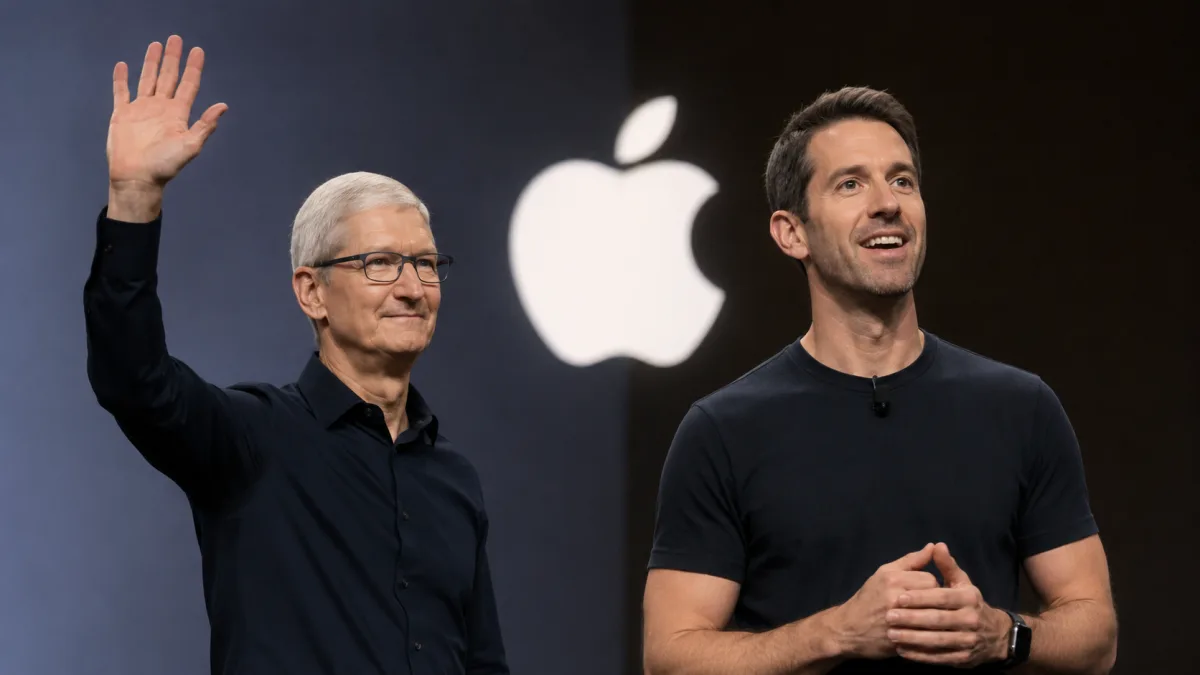
After fifteen years at the helm, Tim Cook's final WWDC keynote has officially happened. This is the start of a massive shift at Apple. He's stepping down as CEO, and John Ternus is taking over the reins. For Indian iPhone owners, this is more than corporate musical chairs in Cupertino. The devices you use every day will change under a new boss. Cook's exit comes at a time when Apple is betting its future on artificial intelligence, and India is becoming a critical battleground for phone sales.
Things are different now. Back when Cook took over from Steve Jobs in 2011, Apple basically treated India as an afterthought, and you couldn't even buy an iPhone easily because authorized resellers were so sparse. Honestly, today is a whole new world. Apple manufactures millions of iPhones in Tamil Nadu and Karnataka, and they've got massive flagship stores in Mumbai and Delhi. Cook made India a priority. He got the scale of our market.
Indian users have changed too. We aren't happy with older, discounted models anymore. If you ask me, the demand for the latest Pro models has absolutely exploded in major metro cities. People are willing to pay these high prices, but they want real, cutting-edge tech and localized services. That's the backdrop as Cook hands over the keys to his successor.
What the Apple leadership transition means for you
According to a report by Gadgets 360, this transition is the end of an era, and the change from Cook to Ternus is a major shift in Apple's character. Cook was a supply chain genius. He optimized margins and built an incredibly profitable machine. Ternus is different. He's an engineer through and through. He joined the company in 2001 and worked his way up to lead hardware engineering. Honestly, he was the guy behind the transition to Apple Silicon, which gave us the M-series chips.
That hardware shift was a massive success. Before Apple Silicon, Macs ran on hot, power-hungry Intel chips, so Ternus led the engineering team that designed custom ARM-based processors to replace them. For Indian developers and video editors, this changed everything. Suddenly, you had laptops with incredible battery life that could handle heavy workloads without sounding like a jet engine (which makes sense, actually, given the design). That transition showed that Ternus knows how to execute complex engineering projects.
This engineering background matters for the average user. Under Cook, Apple focused heavily on services and subscriptions. But with an engineer at the top, I think we might see a return to product-first thinking. That could mean:
- Bolder hardware designs
- Better battery technology
- More focus on repairability
Repairability is a massive deal in India. We don't like throwing things away when they break, because we want to fix them. If Ternus pushes for modular hardware designs, local repairs will get cheaper and easier. That's a big win for older iPhone users.
Meet John Ternus, the next Apple CEO
Ternus isn't a flashy presenter. He's soft-spoken, and honestly, he's very practical. A report by Business Standard details internal memos sent by Cook and Ternus during the announcement. In his memo, Ternus spoke about maintaining Apple's standards and pushing the boundaries of what consumer tech can do. He's inherited a company at a crossroads. Apple is facing intense pressure from the US government over antitrust issues, and sales in China are slowing down.
If you've watched Apple keynotes recently, you probably recognize him. He presented the new iPads and Macs. TechCrunch reports that Ternus is highly respected within Apple's engineering teams. Unlike some executives who focus purely on financial spreadsheets, Ternus actually understands the minute details of how a device is built, which makes a big difference. That respect will be huge as he takes control of a massive global workforce.
"Imagination has no limits, and I truly believe the best is still ahead for Apple."
Cook shared those words during his final address. He tried to reassure investors and fans that the transition would be smooth. But Ternus has a mountain to climb. The biggest challenge is AI. I'm not sure why, but Apple was really slow to join the generative AI race, and that left the door wide open for competitors.
For the record, I think this transition is happening at the right time. Cook did what he was hired to do. He turned Apple into a three-trillion-dollar giant. But the era of supply-chain optimization is over. The next decade belongs to AI and hardware integration, which needs an engineer's touch.
Siri AI features and the iOS 27 upgrade
The main highlight of WWDC 2026 was the debut of iOS 27, which has a completely redesigned Siri powered by Apple Intelligence. Reports from India Today confirm that Siri's AI capabilities were the main highlight of the keynote. Craig Federighi called the update a major leap forward for the virtual assistant. Siri can now understand context across different apps and perform actions on your behalf.
A report by PCMag says this update is Siri's biggest test yet. Beyond standard voice replies, Apple has introduced a new Extensions system to connect apps. This lets third-party developers plug their apps directly into Siri's brain. For example, you could ask Siri to book a cab using a local ride-share app or check your order status on an e-commerce platform. And the Camera and Photos apps have new integrated AI features too. Users can remove unwanted objects from photos or search their library with complex descriptions.
For instance, you can ask Siri to find a PDF receipt in your emails and add it to your expense tracker app. It does this locally on the device. This keeps your data private. This is where Apple's tight hardware integration really shines. The new AI features require massive processing power, so they'll only work on newer devices with high-end chips.
Things get interesting for Indian users here. We use our phones differently. Most of us speak a mix of English and regional languages. Siri has historically struggled with Indian accents and multilingual commands, and in my experience, these systems rarely work perfectly from day one. Apple has promised better support for local languages in this update, but we'll have to test it in the real world to see if it actually works.
Our team has written a lot about how these updates compare to other platforms. You can read more about how Apple Intelligence works on different devices to see if your current phone will support it.
How this shift impacts Indian buyers
India is a massive market for Apple, but these days, it's also a major manufacturing hub for them. Thanks to government schemes like the Production Linked Incentive, they've really scaled up assembly (annoying, I know, that they still import components, but it's a start). This helps them avoid high import duties on some models, though the price of Pro models in India remains eye-wateringly high.
I'm not sure exactly how much Apple will expand this, but if Ternus continues to expand local production, we might see better pricing for Indian consumers. When a phone is assembled locally, the supply chain costs drop. But Apple is unlikely to cut retail prices by much. They prefer to keep their premium margins. Instead of lower prices, we'll probably get better financing options or trade-in values.
We've already seen Apple investing heavily in its physical presence in India. Opening flagship stores in Mumbai and Delhi showed that the company is serious about the Indian retail market. Under Ternus, they might focus more on devices tailored for emerging markets. If Apple wants to capture a larger share of the Indian premium market, I think they must address local software needs.
Another factor is services, since India's a UPI-first economy. Apple struggled for years to integrate local payment methods because of RBI's strict rules on recurring transactions. They eventually added UPI support for App Store purchases. This made buying apps and subscribing to iCloud+ a whole lot simpler.
But we still miss out on several features. The Apple Wallet app in the US lets users store driver's licenses and state IDs. In India, we rely on DigiLocker for that. Apple hasn't shown much interest in integrating DigiLocker directly into iOS. So, Indian users still have to use separate government apps. If Ternus wants to win in India, he needs to prioritize these local integrations.
You can check out our guide on iOS updates to see how to prepare your device for the upcoming beta release.
The road ahead under new leadership
Ternus takes the wheel at a fascinating moment. Apple also previewed its plans for a foldable iPhone at the event, which was a nice surprise. This suggests they're finally ready to challenge Samsung's dominance in the premium segment. A foldable iPhone will be incredibly expensive, probably costing over ₹1,5,0000. If it ever arrives, it'll be a status symbol for the ultra-wealthy.
Most Indian users prefer standard slab phones because they're durable and easy to carry. Foldable screens are notoriously fragile, and getting them repaired in India can be a mess. It'll be interesting to see if Ternus's engineering team can solve these durability issues before the device hits the market.
If you ask me, reliability and software support are what matter for the rest of us. Cook's final WWDC keynote was the end of an era, but it also set the stage for Apple's next chapter. Ternus has the technical chops to lead, but he needs to prove he can actually innovate.
We'll track the rollout of these new features. For more details on policy changes and market updates, you can follow our Apple news section.