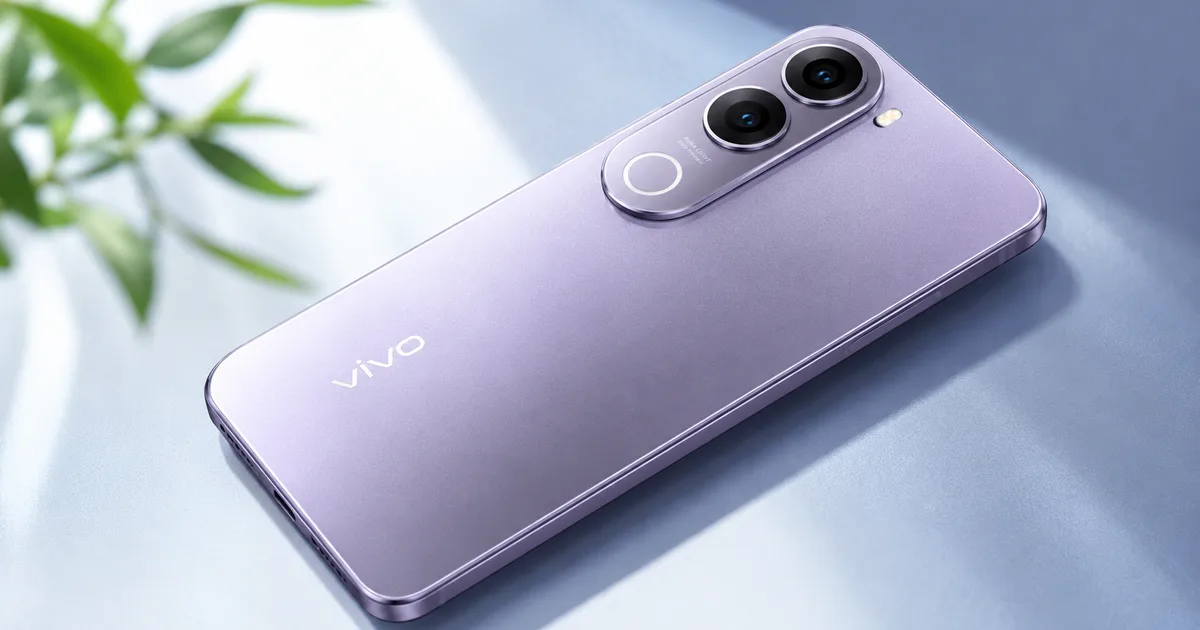
Everyone complains about their phone dying by 4 PM. We all carry power banks in our backpacks or beg friends for chargers at the office. But the new Vivo V80 Lite 2026 leaks suggest the company is taking this complaint literally. Rumors point to a phone packing an absolutely massive 10,000mAh battery. That's double what most premium Android phones have right now.
I've been tracking the leaks pouring in ahead of the expected September 3 global launch in Malaysia. And honestly, the details we're seeing on Geekbench and Google Play Console paint a weird picture. We're looking at a mid-range device with a battery so large it feels like a typo. But it isn't. Teasers are already appearing in India (which makes sense, actually). The Vivo V80 series launch might be delayed. But the Lite version is seemingly right around the corner.
Let's break down exactly what these specs mean for normal Indian users. We'll look at how much it might cost in rupees. And we need to figure out if carrying a 10,000mAh phone is actually a good idea.
The reality of a 10,000mAh battery
Most popular phones in India top out at 5,000mAh. Devices like the Redmi Note series or the Samsung Galaxy M series have standardized this number. A 5,000mAh battery easily gets you through a day of WhatsApp and YouTube. You can do your UPI payments fine.
A 10,000mAh battery changes the math entirely. You're looking at a phone that could easily last three or four days on a single charge. If you travel frequently on long train journeys across India, this sounds incredible. You wouldn't need to fight for the charging socket on the Vande Bharat express. But there's a serious catch.
Batteries are heavy. Lithium-ion cells have physical limitations. You just can't fit double the capacity into the same slim profile. A normal phone weighs around 190 grams. But a phone with a 10,000mAh battery will likely weigh close to 300 grams.
It'll be thick. It will feel like holding a literal brick in your hand while lying in bed.
Then there's the charging speed. The leaks suggest it has 44W fast charging. Look, 44W is decent for a normal, everyday phone. But for a 10,000mAh cell? You'll be waiting a very long time to see that battery hit 100 percent.
You're looking at well over two hours plugged into the wall. You'd basically have to charge it overnight.
Thing is, some conflicting reports suggest a 7,050mAh battery instead. A 7,050mAh cell feels slightly more realistic for a mainstream phone. It gives you great battery life without making the phone a mess to hold. We'll know for sure on September 3. But the 10,000mAh rumor is dominating the conversation right now.
Processor specs and performance details
The Vivo V80 Lite 5G has been spotted on Geekbench. The numbers give us a clear idea of its performance. The listing shows an alleged MediaTek Dimensity 7360-Turbo chipset paired with 8GB of RAM.
This is a solid mid-range setup. In my experience, MediaTek has been pushing out very capable Dimensity chips lately. The 7360-Turbo should easily handle your daily tasks. Swapping between Instagram and checking emails will feel completely smooth. Scanning QR codes at the local kirana store will be fine too. It'll also handle casual gaming without breaking a sweat.
If you want to read more about how different processors stack up, check out our other explainers on mobile chipsets.
The phone also reportedly has a 120Hz display.
A high refresh rate makes scrolling through Twitter look incredibly fluid. Swiping through your app drawer feels great too. This is the standard for any phone costing more than Rs. 15,000 in India now. So seeing it here is expected.
The 8GB of RAM is perfectly fine for 2026. You can keep multiple apps open in the background. Android is better at memory management these days. And 8GB gives the operating system enough breathing room. I expect Vivo will also have their virtual RAM feature to let you allocate some storage space as extra memory. It rarely makes a huge difference in real life. But it looks good on the spec sheet.
Is it just a rebranded Vivo S2?
Here's an annoying trend in the smartphone industry. Companies often launch a phone in China under one name, then launch the exact same phone in India with a different name. Leaks from Google Play Console suggest the Vivo V80 Lite could simply be a rebranded Vivo S2 for select international markets.
This happens all the time. Sometimes they change the colors. Or they tweak the camera software slightly. But the core hardware is identical. If it really is a rebranded Vivo S2, we already know what to expect in terms of camera layout and basic design language.
I have mixed feelings about this practice. It makes tracking phone models confusing for buyers. When you're looking for reviews, you have to search for both names to find accurate information (annoying, I know). But it also means the hardware is tested. By the time it reaches the Indian market, any initial software bugs are usually ironed out.
We see this constantly with other brands too. You can find similar stories in our latest tech news section where we track these regional naming changes.
Vivo V80 Lite India launch date and expected price
The V80 series India launch has reportedly faced delays. Usually, companies launch the standard and Pro models first. Then they follow up with the Lite version a few months later. This time, the Vivo V80 Lite seems poised to arrive before its premium siblings.
Teasers are already popping up online. The global debut is set for September 3 in Malaysia. An Indian launch usually happens within a week or two of the Malaysian announcement. We should see it hit Flipkart and Amazon before the big Diwali sales kick off. It'll probably be in offline stores too.
Pricing is the big question. Looking at the leaked specs, specifically the Dimensity 7360-Turbo and the 120Hz display, this phone is squarely in the mid-range segment. If it actually packs a 10,000mAh battery, Vivo might charge a slight premium for the novelty. I'm not sure exactly why they'd push the price too high though.
I expect the price in India to land somewhere between Rs. 24,999 and Rs. 27,999 for the base model. Anything above Rs. 30,000 would be a tough sell. Companies like Poco and Motorola sell aggressively priced alternatives. Speaking of Poco, there are rumors of a POCO X8 Power launching soon with similar battery specs. So Vivo will have direct competition.
- Expected base price: Rs. 24,999
- Expected launch window: Mid-September 2026
- Availability: Online platforms and Vivo exclusive offline stores
What this means for your daily use
Let's talk about practical reality. Buying a phone purely for a massive battery involves trade-offs. You're trading comfort and pocketability for endurance.
If you work outdoors or travel constantly, a 10,000mAh battery is a practical tool. It's great if you drive for Uber or Ola. Your phone screen stays on all day for navigation. And your GPS is constantly draining power. Having a phone that simply refuses to die means you don't have to worry about plugging into a slow car charger.
But what if you work in an office with a charger at your desk?
A 300-gram phone will get annoying very quickly. Your hands will ache if you read articles in bed. Or if you watch Netflix. It'll pull down your shorts if you put it in your pocket while walking.
A 10,000mAh battery is not a blanket upgrade. It is a specific tool for a specific type of user. Make sure you actually need that much power before committing to the weight.
If you're confused about which phone fits your lifestyle, you should browse our buying guides before making a decision.
We still need official confirmation from Vivo. The numbers here are a bit fuzzy. Smartphone leaks are often inaccurate. Sometimes companies test prototypes with extreme hardware that never makes it to the final production line. The 10,000mAh leak could be one of those prototypes. Or it could be the next big trend in the mid-range market.
Either way, September 3 will give us the answers. I'll be watching the Malaysian launch closely to see how Vivo positions this device. If they manage to keep the weight reasonable while giving you multiple days of battery life, they might have a serious winner. But if it ends up being a sketchy, heavy brick, Indian buyers have plenty of lighter options to choose from.
Keep your expectations realistic. Check the official weight specs the moment they're announced. And don't pre-order until you see a real person holding the device on video. You need to know exactly how thick this phone really is before spending your money.