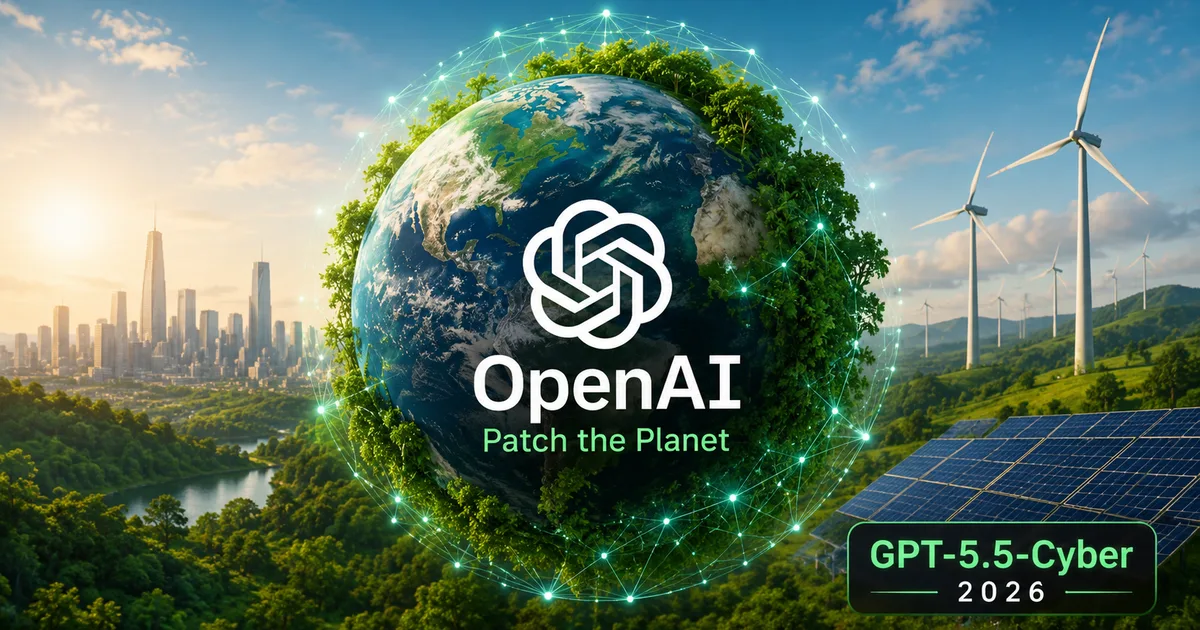
Finding security bugs in open-source code is a massive headache for developers, but a new initiative aims to change that. OpenAI's Patch the Planet is a security program launched under their Daybreak project, designed to automatically discover and fix vulnerabilities in public repositories. Powered by the newly announced GPT-5.5-Cyber model, this tool is geared towards helping open-source maintainers who are often overwhelmed and underfunded. If you write code in India or run a tech startup relying on open-source packages, this development could impact how you secure your software stack in 2026.
Basically, most software products today are built on open-source packages. From Bangalore payment gateways using UPI to Mumbai SaaS startups, developers use these pre-written libraries to get things done quickly. But the maintainers are usually just volunteers (who don't get paid for their time, remember). They don't have the time to check every line of code for security bugs. It's a mess. Honestly, in my experience, when a bug is found in a popular package, it breaks everything downstream. For a small Indian business, a single code vulnerability can lead to data loss, legal trouble under the Digital Personal Data Protection Act, customer trust issues, and massive financial penalties.
Sure, automated tools like Dependabot already exist. But they have limits. They can point out known vulnerabilities, but they can't inspect your custom business logic to find new bugs. And they definitely can't write security patches for complex logic flaws. This is where AI-driven security comes in. I think using large language models trained on code security is going to help us automate both finding and fixing these vulnerabilities.
What is the Daybreak initiative and how does it fit?
OpenAI started Daybreak to build tools that protect digital infrastructure. In a TechCrunch report, the program focuses on creating AI systems that defend organizations instead of attacking them. Look, the security community is worried that AI will make hacking easier. I don't blame them. So OpenAI designed this program to show that AI can make defense faster and more reliable.
This initiative doesn't exist in a vacuum. Actually, a report from WIRED explains that OpenAI is competing directly with Anthropic to secure open-source software. Just weeks before OpenAI's announcement, Anthropic revealed its own defense project, known as Project Glasswing, alongside the Mythos model. This fight has sped up the release of security-focused AI models (which makes sense, actually). A Times of India article noted that this competition forces both firms to make their tools accessible to the public. Honestly, that's great for developers who can't afford expensive security audits.
For open-source maintainers, Patch the Planet is the first concrete tool coming out of Daybreak. It works by scanning public repositories to find security bugs, and then it submits pull requests directly to the project. The AI doesn't just flag a problem. It actually writes the code needed to fix it. This is a massive change from old security tools that only report errors and leave the hard work to human developers.
How GPT-5.5-Cyber works to secure open-source projects
The engine behind this patching initiative is GPT-5.5-Cyber. It's a specialized variant of OpenAI's model. They trained it on code repositories, vulnerability databases, patch histories, and security documentation. In a Mint article covering the announcement, Sam Altman explained that they designed the model specifically for defenders, focusing on helping public utilities as well as critical infrastructure like open-source packages.
Unlike standard models that suggest code snippets, this system reads the entire codebase to understand the context. When the AI scans a repository, it looks for common errors like SQL injections, buffer overflows, credential leaks, and authentication bypasses. It also looks for custom logic bugs. For example, if a library handles UPI transactions in India, the AI can check if the code verifies signature parameters before a payment is confirmed.
Setting up and using the tool is pretty straightforward.
- First, a developer visits the Daybreak portal. The dashboard is clean and has a list of linked GitHub repositories. A screenshot of this interface shows a simple onboarding screen with a button that says 'Link GitHub Organization'. Once you click it and grant permissions, the AI starts scanning the repository in the background.
- Second, you can check the scan progress. A status page has a progress bar and a list of scanned files. If the AI finds a vulnerability, it won't show it publicly. Instead, it creates a private fork of the repository and writes a patch.
- Third, the maintainer gets a pull request. The interface for this pull request shows a clear diff of the changes. The AI explains the bug in simple terms. It also lists the tests it ran to verify that the patch fixes the issue without causing any errors in the existing code. You can review the diff, run your own test suite, check for errors, and merge the code with one click.
Comparing OpenAI and Anthropic defensive tools
With both OpenAI and Anthropic releasing security tools, developers have choices. OpenAI focuses on community-driven open-source protection. Anthropic, on the other hand, targets enterprise environments with its Mythos model.
Here is how these tools stack up against traditional static analysis software:
| Tool or Initiative | Developer Accessibility | Primary Advantages | Main Drawbacks |
|---|---|---|---|
| OpenAI Patch the Planet (GPT-5.5-Cyber) | Free for registered open-source maintainers under the Daybreak grant program. | Automatically generates and tests pull requests; deep contextual code reasoning. | Limited initial roll-out; depends heavily on GitHub actions setup. |
| Anthropic Project Glasswing (Mythos) | Enterprise-focused via API integrations. | High accuracy in identifying logical flaws; low false-positive rate. | No free community-driven patching program announced yet; higher API cost. |
| GitHub Dependabot / Snyk | Free tier available for public repositories; paid team plans. | Excellent database of known CVEs; extremely easy to set up. | Fails to detect zero-day logic bugs; cannot auto-write complex custom patches. |
When looking for new AI tools to add to your workflow, you should consider the type of projects you run. If you are an open-source maintainer, the OpenAI program is the clear choice because it is free. If you build proprietary software for clients, wait for OpenAI's commercial APIs. Or just go with Anthropic's enterprise options (though the pricing is still a bit fuzzy to me).
Practical implications for Indian developers and startups
The Indian software development community has a unique relationship with open source. Many young professionals in Bengaluru, Hyderabad, Pune, and Chennai contribute to global projects while they work at local startups. For these developers, keeping code secure is a major challenge. Honestly, hiring a professional cybersecurity agency in India for an audit can easily cost between ₹50,000 and ₹2,00,000 (a lot of cash for early-stage teams). That's a massive sum for a bootstrapped startup or an independent freelancer.
Automated AI tools offer a way to get high-quality security reviews without the high cost. A tool like Patch the Planet helps developers identify bugs early. It does this before they get deployed to production. This is important for apps that handle user data and integrate with national systems like DigiLocker or UPI. The Indian Computer Emergency Response Team, known as CERT-In, regularly issues alerts about vulnerabilities in common software libraries. Those alerts are scary. But staying compliant is much easier when you have an AI agent that automatically fixes vulnerabilities in your dependencies.
However, developers must remain cautious. AI models can sometimes generate sketchy patches. An automated fix might compile and pass tests, but it could introduce a subtle logical error that breaks other parts of your application (I'm not sure exactly why AI gets these logic flows wrong so often, but it happens). Honestly, you shouldn't merge any automated PR blindly. Always review the code changes and test them in a staging environment.
Another issue is trust. Granting write access to your repository to an external AI model requires confidence in the security of the tool itself. If the AI company is compromised, the automated patching system could become a vector for supply-chain attacks. OpenAI claims they secure the Daybreak environment with strict controls. But maintainers must still verify every suggestion.
For freelancers and small businesses building client websites, staying updated with the latest cybersecurity news is essential. You can check our other developer guides for tutorials. These cover how to secure cloud instances and manage database credentials. If you're running an open-source project, apply for access to the Patch the Planet program on OpenAI's website. If you get accepted, the integration is simple. And it runs right alongside your existing GitHub Actions workflow.
Final thoughts on AI-driven code repair
AI-powered security tools are changing how we write and maintain software. OpenAI's Patch the Planet shows that automated defense isn't just a theoretical concept anymore. While you can't rely on AI to fix every bug without human eyes on it (which would be reckless anyway), it's a helpful assistant for busy developers. As these tools become more common in India, they will likely help bridge the gap between large companies with dedicated security teams and small developers working with limited resources.