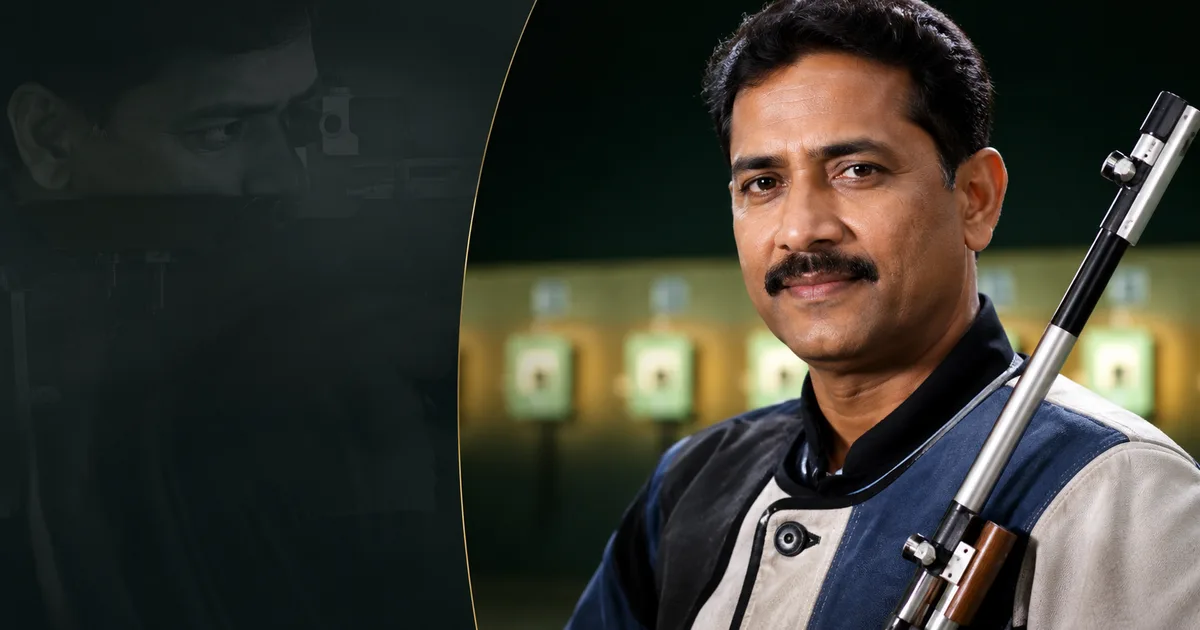
If you followed Indian sports in the mid-1990s, you'd probably remember a teenager who made pistol shooting look ridiculously easy. That teenager grew into a giant of Indian sports, someone whose name was synonymous with precision under pressure. Recently, news broke that shook the Indian sporting community to its core. Many began asking: Who was Jaspal Rana, and how did a shooter from Uttarakhand change the way India looks at Olympic sports? He was a pioneer who taught a generation of Indians they could win on the global stage, way before multi-million rupee budgets and elite training programs were the norm. You can find more about Indian sports history in our detailed explainers section.
His sudden passing at the age of 49 due to heart-related complications leaves a massive void. Just 49. Honestly, it's hard to process.
The shockwaves of his death reached the highest levels of government and sport. Tributes poured in from all corners of the country. Many young athletes training today at academies across Delhi and Haryana look up to his journey. It was a journey of pure grit. I think he showed us you don't need a massive support system if you have the drive to succeed.
The rise of a teenage prodigy
Let's trace the roots of this legend. Rana grew up in Uttarakhand and Delhi, and he fell in love with shooting early on. He was a prodigy. By the time he was 18, he'd achieved what most athletes only dream of. At the 1994 Asian Games in Hiroshima, he won gold in the 25m Center Fire Pistol event. Honestly, he didn't just win; he equaled the world record.
Think about that. In 1994, Indian sports was in a very different place (a worse one, if you ask me). We weren't winning Olympic medals. Cricket was dominant, and other sports starved.
Then this young shooter steps up and beats the best in the world. Look, it was a massive moment for Indian shooting. It showed that success on the global stage was actually possible. For more context on how Indian sports administration has changed, you can read our general guides on sports infrastructure in the country.
He did it without the fancy gear today's shooters take for granted. In a recent interview with News24, he revealed that he won a major gold medal using a weapon that was 17 years old. He had to struggle for sponsors. I'm not sure exactly why, but there weren't corporate firms waiting to hand him checks for lakhs of rupees. He had to fight for every bullet and every trip abroad. I think that grit defined his career.
How Manu Bhaker's coach built a champion
You can't talk about Rana's legacy without bringing up Manu Bhaker. Their partnership is easily one of the most fascinating stories in Indian sports history. It wasn't always smooth sailing, though. They had a public and painful split before the Tokyo Olympics, a setback that could've ended Bhaker's career. Many sports commentators wrote off both the shooter and the coach.
But they eventually got back together. And that reunion changed everything.
Rana knew exactly how to rebuild her confidence. He is known for his unfiltered, old-school coaching style. He doesn't believe in sugarcoating things. If you're shooting poorly, he'll tell you. In my experience, he focused on mental toughness to prepare her for the Olympic stage's intense pressure. The results speak for themselves. Bhaker went on to win two bronze medals at the Paris Olympics, a feat that cemented her place in history.
She was in tears during his final rites. It showed the deep bond between student and mentor. The Hindu reported that Bhaker credits much of her success to his guidance. He was the shield that protected her from external pressure, which let her focus entirely on her targets.
A decorated career of national honors
Rana's trophy cabinet was legendary, if you ask me. He won multiple gold medals at the Asian Games and the Commonwealth Games, and dominated the National Championships too. The Indian government recognized his achievements early. He received the Arjuna Award in 1994, right after his Hiroshima triumph. Just two years later, he got the Padma Shri, one of the country's highest civilian honors.
Major achievements of Jaspal Rana
His career was defined by consistent excellence on the global stage. Honestly, he accumulated tons of medals and awards, which inspired a new wave of shooters across the country. Here's a summary of the major honors and milestones Jaspal Rana achieved during his lifetime:
- Gold medal at the 1994 Hiroshima Asian Games in the 25m Center Fire Pistol event
- Multiple gold medals at the Commonwealth Games, dominating pistol events
- Recipient of the Arjuna Award in 1994 for outstanding athletic performance
- Recipient of the Padma Shri in 1996, one of India's highest civilian honors
- Recipient of the Dronacharya Award in 2020 for coaching and mentorship
Later in life, he transitioned into coaching and brought the same intense work ethic to the training range. The government awarded him the Dronacharya Award in 2020. Honestly, this award is the highest honor for sports coaches in India. It was a tribute to a man who spent his retirement years producing world-class shooters.
He didn't care for the spotlight. He worked in the background, where he focused on the technical and mental aspects of the sport. I think his students knew him as a hard taskmaster, but he was also someone who'd stand by them through thick and thin.
The challenges behind the glory
Here's the deal: sports in India today is very different from what it was thirty years ago. Today, elite athletes get funding from the Target Olympic Podium Scheme (TOPS). They have sports psychologists and personal physiotherapists. They also get custom-made equipment. In the 90s, Jaspal Rana had none of that.
Basically, he had to deal with bureaucratic red tape. Import duties on weapons and ammunition were high. Getting clearance to travel for international events was a nightmare. He once mentioned that he almost left India because of the lack of support.
But he stayed. He fought the system and won. I think this struggle is why he was so protective of his students. He knew what it felt like to be ignored by the authorities, and he made sure his shooters never felt that way. He became a father figure to many of them. He defended them in public, but also pushed them to their limits in private.
In the early days, getting quality ammunition in India was a challenge (an understatement, really). Shooters often had to make do with substandard local bullets that would jam or misfire. Rana spent hours manually sorting through bullets to find the most consistent ones. He taught his students to control every variable they could instead of complaining about the ones they couldn't. Read our latest news coverage to stay updated on how current athletes are preparing for upcoming tournaments.
The final salute to a legend
Honestly, news of his death brought tributes from across the nation. Prime Minister Narendra Modi expressed his sadness and called him a towering figure in Indian sports. President Droupadi Murmu and Congress President Mallikarjun Kharge also sent condolences to recognize his massive contribution to the nation.
"Shri Jaspal Rana Ji was a towering sports figure who made India proud on numerous occasions. His passing is a major loss for the sports community." - Prime Minister Narendra Modi
If you ask me, his sudden departure due to a blocked artery is a reminder of how fragile life is. He was only 49, and he was still coaching. He still had so much to give to Indian shooting.
His final Instagram bio went viral after he passed away. It read, 'When death is certain...', which is a reference to Rabindranath Tagore's poem 'Mrityunjay' that has the line 'I am greater than death'. That was Jaspal Rana. He was unapologetically bold and larger than life. He's gone, but his spirit will be on the shooting range every time an Indian pistol shooter raises a weapon.
Honestly, Indian shooting has lost its first superstar. Before Rajyavardhan Singh Rathore won silver in Athens, and before Abhinav Bindra won gold in Beijing, Jaspal Rana showed India how to win. He gave the sport its identity in a country obsessed with cricket. His legacy is the confidence he instilled in Indian athletes. He taught them to stand tall and look their international competitors in the eye. He made them believe they belonged on the podium.