So your cooking gas runs out halfway through making Sunday lunch. You call the agency. They tell you it'll take two days. You end up ordering food, spending five hundred rupees, and waiting anyway. We've all been there. Getting a gas cylinder in India has always been a bit of a waiting game, but things are finally changing. I want to talk about the BPCL Lite Zip LPG Cylinder 2026 rollout. This is Bharat Petroleum's new premium offering for urban households. And honestly, it fixes a lot of the annoying things about getting cooking gas.
I looked into what this actually is. It's not a regular cylinder painted a different color. BPCL built a lightweight cylinder from scratch. They're pushing instant connections and promising express delivery. And they want to get this into 100 cities by August 15.
I'll break down exactly what you get and what it costs. Plus I'll tell you if you should bother upgrading from your heavy steel cylinder.
What exactly is a Lite ZIP cylinder?
Most of us grew up with those heavy red steel cylinders. They weigh over 15 kilos when empty. Full, they're nearly 30 kilos. You drag them across the floor and they ruin your tiles. And the delivery guy asks for extra money just to haul them to the second floor.
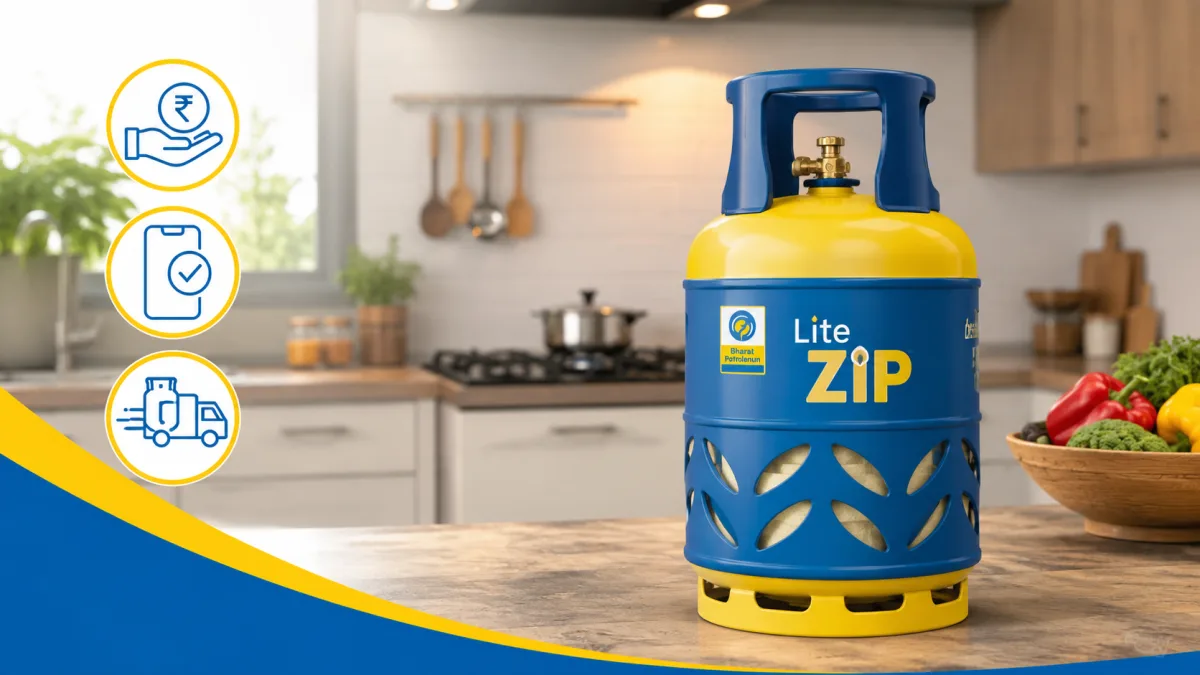
The new Lite ZIP cylinder is completely different. It's made of composite materials (which makes sense, actually, for weight reduction). That basically means tough plastic and fiberglass. This cuts the empty weight down by half. You can actually pick it up without hurting your back. I tried lifting a similar composite cylinder last week at a friend's place. The difference is ridiculous.
But the real upgrade is the translucent body. You know how we always shake the steel cylinder to guess how much gas is left? You don't have to do that anymore. You can physically see the liquid gas level through the cylinder wall. You'll know exactly when you're about to run out.
The composite cylinder design is completely rust-proof. This means no more ugly brown rings on your kitchen floor, which is a massive relief for renters.
BPCL is targeting this squarely at urban households. They know people in apartments hate the heavy steel tanks. They also know we expect things quickly now. We get groceries in ten minutes. Waiting three days for gas feels backward.
The promise of instant connections and express delivery
Getting a new LPG connection used to take weeks of paperwork. You needed address proofs and multiple visits to the gas agency. BPCL is throwing that old process out for the Lite ZIP.
They're offering instant connections. How? Digital India infrastructure. If you have your Aadhaar card linked to your phone number, you're pretty much good to go. The agency will do an eKYC right there. You pull your documents from DigiLocker, pay via UPI, and the connection is yours. No physical forms. No waiting for verification.
Then there's the express delivery part. Regular gas booking means joining a queue. But BPCL is setting up a separate supply chain for these premium customers. When you book a refill, it's supposed to arrive in just a few hours. I can't verify if they hit this target every single time. Honestly, the numbers here are a bit fuzzy. But the commitment itself is a big step up from the usual standard.
For more on how digital verification works for government services, check out our detailed explainers on Indian digital infrastructure.
Where is this available?
Right now, BPCL is rolling this out fast. They want to reach 100 cities by August 15, 2026. If you live in a major metro like Mumbai, Delhi, Bengaluru, or Chennai, you probably already have access to this.
They're focusing on Tier 1 and Tier 2 cities first. The urban centers where high-rises demand a lighter service. If you're in a smaller town, you might have to wait a bit longer for the ZIP service to reach your local distributor.
Pricing: What does the BPCL Lite ZIP cost?
You have to think about pricing in two parts. There's the security deposit for the connection, and then the cost of the gas refills.
First, the deposit. Composite cylinders are expensive to make. A standard 14.2 kg steel cylinder has a government security deposit, usually around INR 2,200. The Lite ZIP cylinders have a higher security deposit. Usually, 10 kg composite cylinders require a deposit of around INR 3,350. BPCL hasn't plastered an exact single rate across all states because local taxes change things a bit. But expect to pay a premium upfront.
As for the gas itself, the refill cost depends on current LPG rates. Just this month, commercial LPG cylinder prices went up by INR 42 to INR 53.50 across India. A 19 kg commercial cylinder now costs over INR 3,113 in Delhi. Domestic LPG prices have seen their own changes. The government says there's still a gap of about INR 700 that public sector oil companies are absorbing on domestic gas.
Since Lite ZIP targets domestic premium users, the per-kilo price of the gas is tied to the domestic rates you currently pay. A 10 kg refill will cost less than a 14.2 kg refill. You might pay a small convenience fee for the express delivery. In my experience, it's always best to check the exact daily rate on the BPCL app before you book.
If you're confused about how fuel prices work, read our consumer guides to understanding Indian utility pricing.
Step-by-step booking guide for a new connection
Want to switch or get a new Lite ZIP connection? It's pretty straightforward. Just follow these steps.
- Download the Hello BPCL app first. Skip the website because the app works much better on Indian mobile networks.
- Start a new connection request by clicking the banner for the Lite ZIP service on the home screen.
- Complete your eKYC using your Aadhaar number. You get an OTP on your phone, and it verifies your identity and address instantly.
- Pick your distributor from the list of Bharatgas agencies near your GPS location. I suggest choosing the one with the highest ratings.
- Pay the security deposit for the composite cylinder and the regulator using a UPI app like GPay or PhonePe.
- Pick a delivery slot. Since it is the express service, you can often get it the same or next day.
If you already have a steel cylinder with BPCL, you can just apply for an upgrade. You'll need to surrender your old cylinder and pay the difference in the security deposit. They'll swap it out for you.
BPCL Lite ZIP vs Piped Natural Gas (PNG)
You might be wondering why BPCL is pushing premium cylinders when cities are digging up roads to lay piped natural gas lines. It's a fair question. PNG is super convenient. You just turn on the tap. You get a bill at the end of the month based on your meter reading, and you never run out of gas.
But here's the reality of Indian infrastructure. Laying PNG pipelines takes years. You have to get permissions from the municipal corporation and dig through underground networks of water and power cables. Many older apartment societies simply don't have the structural layout to safely install gas pipes after the fact. I have friends in Delhi who have been waiting for a PNG connection for five years because their neighborhood is a mess to dig up.
This is exactly the gap the Lite ZIP cylinder fills. It offers a near-seamless experience for people who can't get PNG yet, or for folks who live in rented apartments and move frequently. You can't take a PNG connection with you when you shift houses. But you can take your BPCL connection and your lightweight cylinder to your new address. That mobility is a huge advantage for young professionals living in cities like Bengaluru or Pune.
The safety aspect of composite cylinders
Safety is always the biggest concern with cooking gas. We all know the horror stories of cylinder blasts. I want to address how these new composite cylinders compare to the old steel ones. Because frankly, they're much safer.
Steel cylinders can explode under extreme heat, like in a house fire. The pressure builds up inside the rigid metal until it fails catastrophically. The Lite ZIP composite cylinders handle heat very differently. The fiberglass and resin material is designed to melt locally in a fire. This creates a small opening that lets the gas escape and burn off steadily. It's a fundamental shift in safety design.
Plus, they don't corrode. A lot of minor leaks in old steel cylinders come from rust damage around the valve area, especially in humid coastal cities like Mumbai or Chennai. The plastic and fiberglass body of the Lite ZIP is totally immune to rust (annoying, I know, how fast steel rusts here). You don't have to worry about the bottom rotting away because the kitchen floor is wet after mopping.
BPCL tests these rigorously. They go through drop tests and extreme pressure tests before they ever reach a consumer's kitchen. So if the plastic look makes you feel they're sketchy, don't worry. They are structurally superior to the metal tanks.
Things you need to watch out for
I think this is a great service. But you should keep a few realistic things in mind before you ditch your steel cylinder.
First, the capacity is lower. Most composite cylinders are 10 kg or 5 kg, while the regular steel one is 14.2 kg. This means you'll have to book refills more often. If you cook heavily three times a day for a family of six, a 10 kg cylinder might only last three weeks instead of a month. You trade convenience for frequency.
Second, distributor compliance. BPCL promises express delivery from the top down. But your local gas agency is run by a private dealer. Some dealers are amazing, and some are terrible. The express delivery guarantee will rely entirely on how good your specific local distributor is at managing their staff. Don't be surprised if express delivery sometimes still means waiting until the next morning.
Finally, watch out for fake agency scams. Every time a new government or PSU service launches, scammers set up fake websites. They'll promise a Lite ZIP connection for a low price, ask for a UPI payment, and disappear. Always use the official Hello BPCL app or the bharatpetroleum.in website. Never click on random WhatsApp links offering gas connections. You can learn more about avoiding these scams in our latest alerts on digital frauds targeting Indian consumers.
Who should get the Lite ZIP cylinder?
So, is it worth the higher deposit and smaller capacity?
If you live in a multi-story building without a lift, yes. Absolutely. Your back will thank you. If you're tired of rust marks on your kitchen tiles, this is the solution. And if you hate the anxiety of suddenly running out of gas while boiling milk, the see-through body alone is worth the switch.
It's also perfect for small families or working professionals. Basically, people who don't cook huge meals every single day but want a hassle-free service. BPCL has looked at the market and realized that many urban Indians have the money to pay a little extra for convenience.
I wouldn't recommend it for a large joint family that burns through gas rapidly. The constant re-ordering of a 10 kg cylinder will get annoying, even with express delivery. You're better off sticking to the 14.2 kg steel tanks for sheer volume.
My final thoughts on the rollout
India is changing fast. We have the best digital payments system in the world with UPI. We have instant grocery delivery. It was only a matter of time before basic utilities caught up. BPCL pushing this Lite ZIP cylinder is a smart move. They know private piped gas networks are expanding slowly. A premium cylinder service keeps customers from switching away from LPG entirely.
The success of this will depend purely on execution. Reaching 100 cities by August 15 is a solid target. If they can actually make the express delivery reliable, people will gladly pay the premium. Nobody likes waiting for the gas man. We just want to cook our food and get on with our day. I'm not sure exactly why it took this long for an innovation like this. But if BPCL can deliver on that simple promise, the Lite ZIP will be a massive hit.