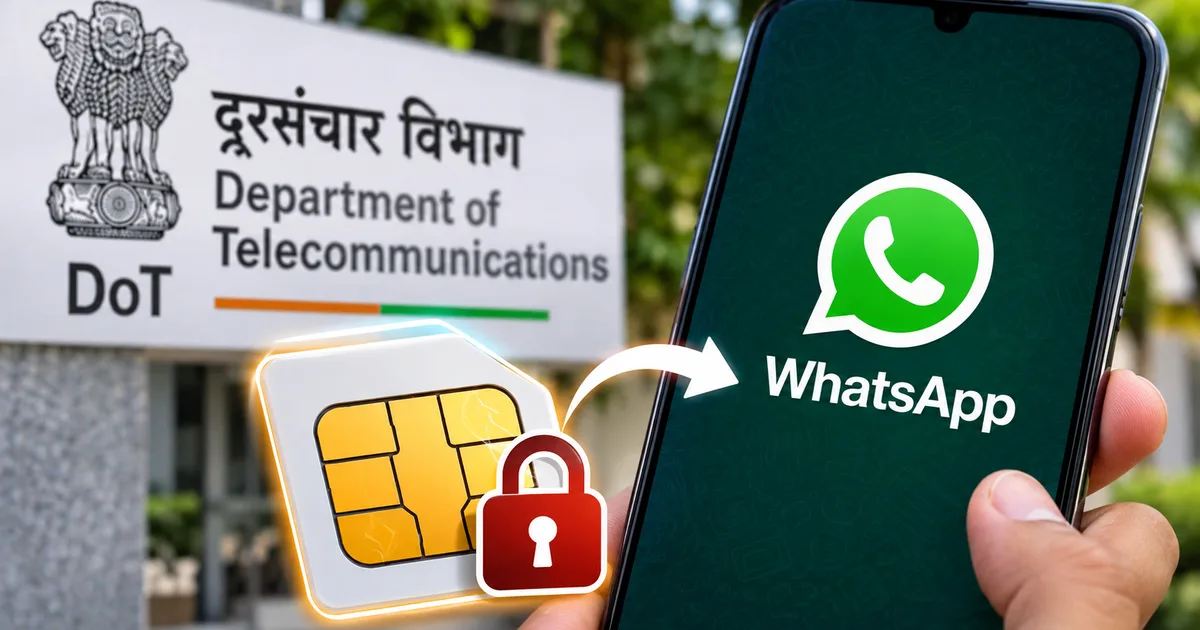
If you have an old phone lying around that runs WhatsApp on your home Wi-Fi without any SIM card inside, that setup has an expiry date. The DoT mandatory SIM binding rules will soon require messaging apps to stay tied to an active, physical SIM card installed on your handset. Pull the SIM out, and the app goes quiet. It's that simple.
Look, I get why this sounds annoying. Plenty of us keep a spare device at home for family chats or grocery lists without paying for a separate monthly mobile plan. In my experience, almost every Indian household has an old backup handset doing exactly that. But the Department of Telecommunications wants to shut down an illicit gateway that exploded over the past year. Overseas scam syndicates buy Indian numbers, activate WhatsApp or Telegram accounts, throw away the plastic SIM, and run extortion rackets from Southeast Asia.
That loophole is finally closing.
How SIM binding for WhatsApp and Telegram works
Under directives issued under the Telecom Cyber Security Rules 2024, messaging platforms can't treat phone numbers as a one-time login code anymore. Right now, you receive a six-digit SMS code, enter it, and WhatsApp works indefinitely. It doesn't care if that phone number gets recycled or sits in a drawer with zero balance. The new directive forces messaging services to verify that the registered SIM card is physically present in the SIM tray or loaded as an active eSIM. If you ask me, this change is long overdue.
If the app sees that the SIM was removed or disconnected by your telecom operator, it stops working right away. Just like that. You can't send messages or receive calls until you put that registered SIM right back into the phone.
Here is what happens under the hood when this runs:
- The messaging app queries phone hardware periodically to verify the subscriber identity of the installed card.
- If the card matches the registered account, chats stay open without disruption.
- If the slot is empty or contains an unregistered card, the app locks down message transmission.
- Restoring chats requires putting the original registered SIM back inside the handset and running a network check.
And the DoT order goes way beyond WhatsApp. Far beyond it. It covers Telegram, Signal, Snapchat, ShareChat, JioChat, and Zoho's Arattai. Basically, every major messaging app operating in the country has to build this verification check directly into its software stack. Apple already pushed an iOS patch back in September 2026 to help iPhones detect missing physical cards. Meanwhile, Android phone makers are scrambling to add modem-level status checks (a messy engineering fix, honestly).
Why the government wants physical SIM verification
Honestly, the scale of financial bleeding here is staggering. Official estimates link detached numbers and fake accounts to annual losses topping Rs 22,000 crore across India. That is a massive sum of money. You probably know someone who received a frantic video call from a fake police officer claiming their child was detained, or got threatened with an arrest warrant from a bogus CBI officer. These digital arrest scams almost always rely on an Indian mobile identity to establish trust before draining life savings through immediate RTGS or UPI transfers.
Fraud rings run these operations from places like Cambodia and Myanmar. Far away from Indian police. They buy thousands of pre-activated Indian SIM cards through shady dealers and slip them into burner phones just long enough to register WhatsApp. Then they toss the plastic cards straight into the trash. By the time victims file complaints on the national cyber fraud helpline 1930 or the portal at cybercrime.gov.in, the SIM itself is dead. But the WhatsApp account stays alive. It pings victims across Delhi, Mumbai, Bengaluru, and Pune without any trouble.
The DoT found that communication apps were allowing users to consume services without the underlying subscriber module inside the handset. This specific loophole allowed transnational fraud syndicates to impersonate legitimate citizens and evade real-time telecom tracking.
So when DoT officials mandated SIM binding, they took a page out of the UPI playbook. If you use Google Pay or PhonePe, you already know this drill. The second you take your bank-registered SIM out of your phone, your UPI apps stop working immediately. You can't send a single rupee until the SIM is back inside. The telecom ministry is applying that exact banking logic to messaging apps (which, for the record, I think makes a lot of sense given the scale of recent fraud).
What the Telecom Cyber Security Rules mean for secondary devices
Now comes the part that will actually disrupt normal routines. The government initially gave tech companies 90 days to comply back in late 2025. That caused panic. Building hardware-level SIM verification across millions of device models is an engineering headache. After companies pushed back, the DoT moved the compliance deadline to December 31, 2026. Official enforcement begins on January 1, 2027.
Different hardware setups get treated very differently under this mandate:
- Your primary smartphone with your main Airtel, Jio, or Vi SIM continues working as usual without noticeable difference.
- Secondary phones used purely on Wi-Fi without a physical SIM or active eSIM will stop running your primary WhatsApp account.
- Old Android devices given to grandparents or young kids for family video calls will need their own active SIM card with a basic recharge plan.
- Tablets without cellular connectivity that currently run companion messaging apps face uncertain support depending on how platforms implement linked device policies.
- Dual-SIM phones can still host two separate instances of messaging apps, provided both SIM cards remain slotted inside the tray.
Thing is, that Wi-Fi tablet problem is where things get genuinely tricky. I use an iPad on my desk every day for quick work replies while my phone charges across the room. It's super convenient. But under the strictest reading of the telecom rules, any device running the primary app must hold the subscriber card. The exact timeline for multi-device support on secondary phones is still somewhat fuzzy, as telecom engineers and app developers work out compliance details before the year ends.
Web logins and the risk-based logout compromise
When the original draft came out in December 2025, one clause caused an uproar among office workers. The government originally wanted all web and desktop sessions, like WhatsApp Web on Chrome or Telegram Desktop on Mac, to force a mandatory logout every six hours. Every six hours! Can you imagine scanning a QR code with your phone four times every workday just to reply to your office group? It would have been infuriating (annoying, I know).
Thankfully, common sense prevailed. Tech companies demonstrated that a rigid six-hour timer does little to stop sophisticated criminals while punishing millions of regular office workers. The DoT revised that requirement to a risk-based logout architecture instead.
Under the revised framework, your browser session stays active as long as your account patterns look normal. No repeated logins needed. But if your desktop client suddenly logs in from a sketchy IP address or starts blasting automated messages, the system cuts the connection immediately. Then you need a fresh QR verification from your primary handset to get back in. If you ask me, that's a sensible middle ground that keeps desktop messaging practical, and it stops automated scam bots cold.
For businesses that rely on web dashboards for customer support, this compromise came as a massive relief. If you follow our regular coverage of Indian telecom policy updates, you know that balancing consumer convenience with anti-fraud enforcement has been a constant struggle for regulators.
The real cost for everyday Indian families
Stopping financial scammers is a goal everyone supports, but there's an unavoidable financial side effect for ordinary consumers. India has millions of people who maintain a secondary phone on a shoestring budget. In my experience, it's remarkably common. Maybe you bought a cheap second-hand phone for your domestic help, or your retired parents use an old Redmi handset on home broadband to see photos of their grandchildren.
Right now, that secondary phone costs zero extra rupees per month once set up. But once mandatory SIM binding goes live, keeping that account active means keeping an active SIM inside that phone. And keeping a SIM active in India today requires a minimum monthly recharge of around Rs 150 to Rs 199 on Jio, Airtel, Vodafone Idea, or BSNL to prevent the number from getting deactivated by the telco.
That's an extra Rs 1,800 to Rs 2,400 a year just to keep a family chat app working on a secondary household handset. For middle-class families and small traders operating on tight margins, that isn't pocket change. It really adds up.
Then there's the question of platform compliance. Meta is cooperating. They've been working closely with Indian authorities on WhatsApp integration, while homegrown platforms like Arattai already built compliance right into their roadmap. On the other hand, privacy-focused Signal hasn't responded to government notices regarding how it plans to enforce physical SIM presence. Not a word yet. I'm not sure how Signal will handle this, but whether it complies or faces potential regulatory friction remains an open question as the deadline draws near.
How to prepare your messaging accounts right now
You still have time before the January 2027 deadline hits, but you shouldn't wait until the final week of December to sort out your hardware. Taking a few proactive steps today will prevent sudden lockouts when telecom operators and tech platforms flip the switch.
Here are practical steps to take over the coming weeks:
- Check which phone holds your registered SIM card and ensure your messaging apps are installed on that exact physical device.
- Avoid letting your secondary SIM cards expire by scheduling small periodic top-ups, preventing your number from slipping into the telco grace period.
- If you use a Wi-Fi only tablet, link it via official companion device modes rather than running standalone account setups.
- Audit your active web sessions under linked devices in your WhatsApp settings and disconnect any browsers or office computers you no longer use.
- Store copies of your identity documents safely on DigiLocker so you can quickly re-verify numbers if your carrier flags an account mismatch.
We saw how much chaos a temporary communication blackout causes during the unplanned WhatsApp outage in August, when millions of users were left completely disconnected for several hours. It was total confusion. Nobody wants to experience a self-inflicted version of that blackout simply because their SIM card sat on a study table instead of inside their phone.
Beyond messaging apps, tightening account identity is part of a broader push across Indian tech infrastructure. A big one. Look at the corporate safeguards outlined in enterprise security alerts this year, or the tighter Aadhaar-based telecom audits. The days of anonymous, detached digital accounts are rapidly ending.
If you or someone in your family encounters fake police video calls or sketchy investment groups, don't wait around. Report them immediately. You can visit the official portal for reporting online financial fraud, or dial the national cyber helpline at 1930 directly. Acting fast is your best shield against financial loss.