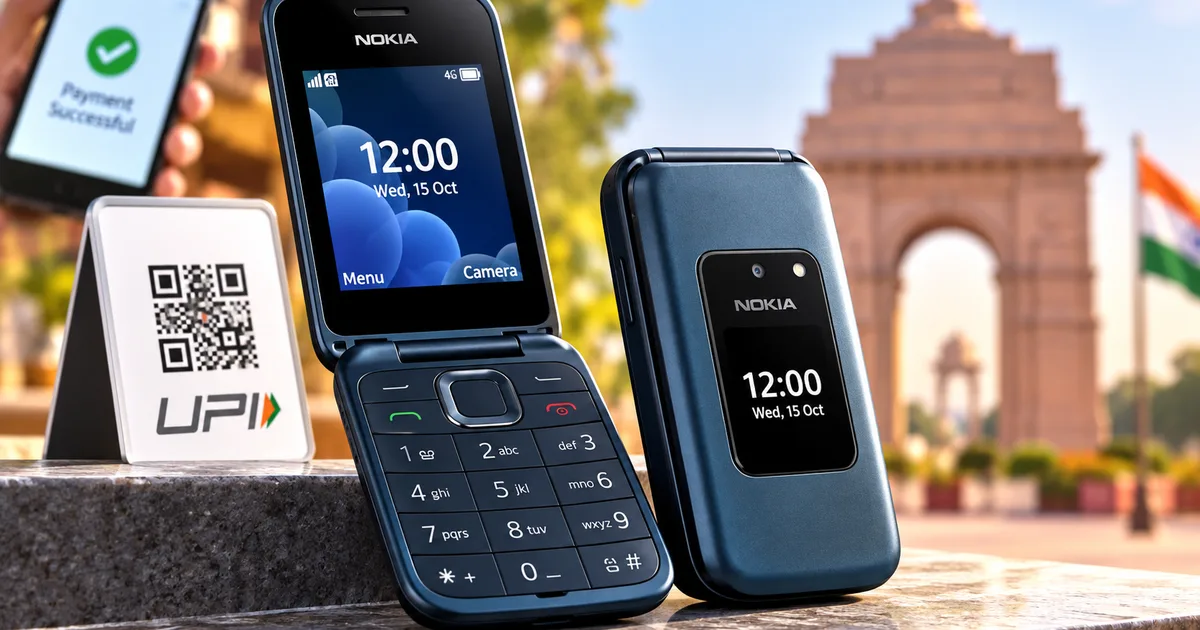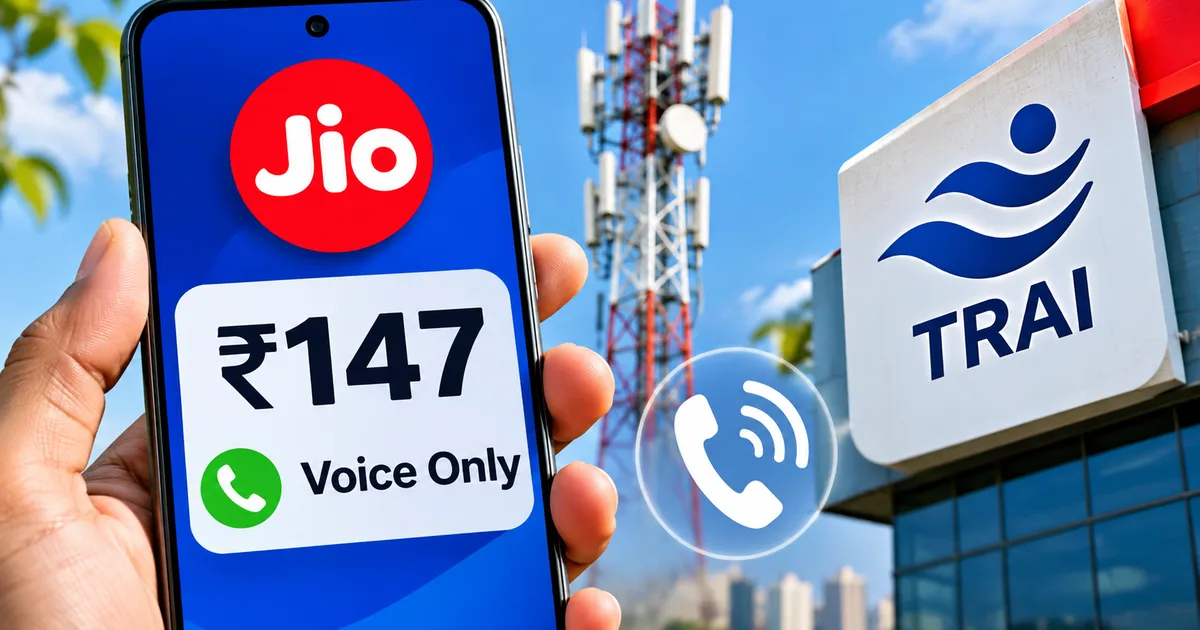
If you keep a secondary SIM just for bank OTPs and family calls, you probably hated recharging it lately. For years, you had to pay for 1.5 GB of daily data you never touched on a backup phone or a parent's basic handset. The new Reliance Jio ₹147 standalone voice plan finally changes that equation. Rolled out quietly following direct orders from the telecom regulator, this recharge gives you pure calling without forcing you to buy mobile data. It's a welcome relief for keypad phone owners, but there are important trade-offs in the fine print.
For nearly a decade, Indian telecom companies ran on a single playbook: bundle mobile data with every single recharge whether you wanted it or not. Honestly, if you just wanted an active SIM for incoming calls, your only choice was dropping ₹250 or ₹300 every four weeks on bandwidth that went completely to waste. In my experience, that was pure daylight robbery for secondary phone owners. But that bundled era is finally cracking open.
What the new Jio voice-only prepaid plans offer
Jio rolled out six voice-only tiers across several validity windows. None of them have cellular data. If your phone tries to connect to mobile internet on one of these vouchers, the data connection won't work at all (which makes sense, actually). That's deliberate. It prevents accidental balance deductions that used to burn through prepaid main balances in the old days.
Here's how the complete lineup looks across different validity periods:
| Plan price | Validity | Calling benefits | SMS allowance | Additional benefits |
|---|---|---|---|---|
| ₹147 | 22 days | Unlimited domestic calls | 300 SMS | None |
| ₹177 | 28 days | Unlimited domestic calls | 300 SMS | None |
| ₹196 | 30 days | Unlimited domestic calls | 300 SMS | None |
| ₹197 | 1 calendar month | Unlimited domestic calls | 300 SMS | None |
| ₹448 | 84 days | Unlimited domestic calls | 1,000 SMS | JioTV, JioAICloud |
| ₹1,748 | 336 days | Unlimited domestic calls | 3,600 SMS | JioTV, JioAICloud |
The whole list comes with zero mobile data included. You get unlimited local calls, STD calls, and free roaming across India. But look at the validity windows carefully. Jio launched an unusual 22-day tier right next to standard 28-day packs and full calendar-month options. If you ask me, that 22-day duration is a bit wonky.
Why the TRAI mandate on voice plans forced telecom operators to act
Telecom operators didn't launch these plans out of generosity. In fact, both Jio and Bharti Airtel opposed unbundling earlier this year when the Telecom Regulatory Authority of India first floated the idea in public consultations. The operators wanted to keep pushing average revenue per user higher. If every subscriber spends ₹300 a month just to keep an active connection, telco balance sheets look great.
Thing is, millions of Indian households felt squeezed. People using basic keypad phones in rural villages and small towns don't watch YouTube on 5G. They use their handsets to speak with family or receive official government subsidy alerts. Forcing them to pay for daily data was unfair. I think TRAI was completely right to draw a line here.
"The Authority has directed service providers to offer dedicated voice and SMS tariff vouchers corresponding to bundled products, priced with proportionate adjustments for consumers requiring no data access."
Under the updated Telecom Consumers Protection Regulations, TRAI set an October 21 compliance deadline. If operators failed to show standalone calling options clearly on their apps, they faced direct regulatory penalties. That regulatory pressure produced immediate results, as we tracked in our coverage of Indian telecom policy over recent months.
The telcos resisted because pure voice users are lower margin. But as recent Reliance reports on subscriber churn revealed, pushing tariffs too high backfired. I'm not sure exactly why telecom bosses thought people wouldn't notice, but subscribers simply dropped secondary SIM cards. By introducing unbundled packs, Jio can keep those price-conscious connections.
Understanding the 22-day catch on the ₹147 voucher
Let's look at the math behind the headline plan. At first glance, ₹147 looks like an affordable entry point. But check the validity: 22 days.
Do the simple division. ₹147 divided by 22 days works out to ₹6.68 per day.
Now look at the ₹177 28-day pack right above it. ₹177 divided by 28 days works out to ₹6.32 per day. You actually pay around 36 paise less per day on that 28-day pack than on the ₹147 pack. Over a full year of recharging, sticking with the 22-day voucher means you have to recharge roughly 16.5 times, costing you around ₹2,425. If you buy the ₹177 plan 13 times, you spend around ₹2,301. So the ₹147 plan is actually more expensive over time. It's a slightly sketchy pricing trick (classic telco math, honestly) designed to advertise a low sticker number while keeping daily revenue fat.
If you have tight cash flow this week and only have ₹150 in your bank account, sure, get the ₹147 option. But if you can spare an extra ₹30, the 28-day pack is the smarter buy every single time, if you ask me.
The 300 SMS limit and what it means for daily use
Every short-term pack in this lineup comes with a fixed 300 SMS limit for the entire validity period. Forget the 100 SMS per day you see on standard data bundles. You get exactly 300 messages total across the whole recharge window.
Is that enough? For most people, yes.
Most of us send daily chats over WhatsApp anyway. The occasional text on a backup number comes down to specific verification tasks:
- Receiving automated one-time passwords from banking apps, Aadhaar verification, and payment gateways.
- Sending a single verification text to bind your SIM card to UPI apps like PhonePe, Google Pay, or Paytm.
- Sending a porting request message to 1900 if you decide to switch service providers.
Receiving SMS is completely free and doesn't count against your 300-message quota (which helps a lot). That means you can receive thousands of OTPs without denting your limit. But sending out texts will slowly eat into that 300-count pool. If you run an offline shop where you text payment reminders to customers, you'll finish 300 messages quickly. For everyone else, in my experience, 300 texts over three or four weeks is plenty.
Who should actually switch to these standalone plans
Don't put these plans on your primary smartphone if you step outside your home a lot. Without cellular data, you can't book an Uber ride or scan a shop's QR code for UPI payments (annoying, I know, when you're caught without Wi-Fi). That makes pure voice impractical for daily outdoor smartphone use.
Still, several groups of Indian users can save good money by switching:
- Senior citizens and family members who only use keypad devices like JioBharat or classic basic phones. They talk for hours to relatives but do not browse the web.
- Professionals with dual-SIM smartphones who carry one number for work data and keep a second personal number strictly for banking OTPs and personal calls.
- Remote workers who stay home all day connected to high-speed broadband fiber. If your phone never disconnects from home Wi-Fi, paying ₹349 a month for mobile cellular data is unnecessary.
For parents using basic keypad phones, switching from a ₹299 monthly data pack to the ₹177 voice pack saves ₹1,464 per year per person. In a household with two elderly parents, that's nearly three thousand rupees saved each year for the exact same phone calls. If you ask me, that's real money staying right in family savings instead of padding telecom margins.
Long-term tiers: are the 84-day and 336-day plans worthwhile?
If you hate recharging every few weeks, Jio has two extended options: ₹448 for 84 days and ₹1,748 for 336 days. Both packs include access to JioTV and the Jio AI Cloud storage offering over home Wi-Fi.
The ₹448 pack costs ₹5.33 per day. That beats the monthly packs on cost hands down. If you know your backup SIM will stay active for the long haul, recharging ₹448 four times a year keeps your number running for under ₹1,800.
Then there's the ₹1,748 tier. Notice the duration: 336 days, not 365 days. That gives you 12 cycles of 28 days, leaving you roughly a month short of a full year. The daily cost comes out to ₹5.20 per day. For anyone wanting peace of mind without touching a recharge portal for eleven months, it's a solid set-and-forget choice, if you ask me.
How to find and activate the new packs in MyJio
Don't expect Jio to put these plans on the front banner of their app. In my experience, telcos always bury their cheapest options because they'd much rather sell expensive 5G bundles. When you open the recharge screen, the data-heavy packs are right at the top.
To find the unbundled calling options:
- Open the MyJio app or log in to jio.com with your mobile number.
- Tap on recharge and swipe past recommended plans.
- Look for the specific tab named TRAI Mandated Packs or scroll into the Value section.
- Select your preferred duration, like the 22-day ₹147 pack or the 84-day ₹448 option.
- Complete the payment using UPI, debit card, or net banking.
If you recharge through third-party platforms like PhonePe or Google Pay, search under the special vouchers or voice category. Telecom operators were forced under the TRAI mandate to make these plans accessible across all official third-party retail channels, so they can't hide them exclusively inside proprietary apps.
Comparing Jio against Airtel and Vodafone Idea
Bharti Airtel and Vodafone Idea also introduced standalone calling tiers under the same regulatory order, though their lineups look a little different.
Jio is the only provider offering an entry-level 22-day voucher at ₹147. If your bank balance is tight right now, Jio has the lowest cash barrier at checkout. On standard 28-day tiers, the major networks all sit between ₹175 and ₹185. Both Vi and Airtel match Jio's ₹197 calendar month recharge too.
Where Jio pulls ahead is rural VoLTE coverage. But there's a hardware catch. Unlike Airtel and Vi, which still run 2G networks for older feature phones, Jio operates exclusively on 4G and 5G. Your handset has to support 4G VoLTE (like the JioBharat series) to use Jio's voice packs. An old 2G Nokia handset won't connect to Jio at all. If you ask me, that's where people get tripped up.
Our verdict on Jio voice recharge plans
Unbundling data from voice calls was long overdue in India. For years, telecom pricing treated every subscriber like a heavy video streamer. For elderly relatives on keypad phones and anyone holding a backup SIM for bank alerts, these options fix an annoying problem. I think it's about time users stopped paying for unused data.
If you plan to recharge, skip the advertised ₹147 headline pack unless you're really penny-pinching this week. Spend the ₹177 for 28 days instead to get a cheaper daily rate, or jump straight to the ₹448 plan for 84 days to lock in the best value. Honestly, before you pick your next recharge, check out our collection of plain-language tech explainers to see how other telecom rules affect your monthly bills.