Look, I get it. Trying to check your EPF balance usually feels like asking a government clerk for a favor during lunchtime. The site is slow. You forget your UAN password, and suddenly you're staring at an error page. But something huge is happening right now with the Employees' Provident Fund Organisation. They're finally moving to a modern setup. Here's what the EPFO centralized database migration actually means for the money sitting in your PF account.
For the last week of June and early July 2026, the entire EPFO system went dark. You couldn't file claims. You couldn't check your passbook. Even the UMANG app locked you out. And they extended the outage a few times. They pushed the resume date to July 1, then July 2. People were panicking on Twitter. I saw folks worried that their savings were gone. But there was an actual, solid reason for the blackout.
The great EPFO blackout and why the site went down
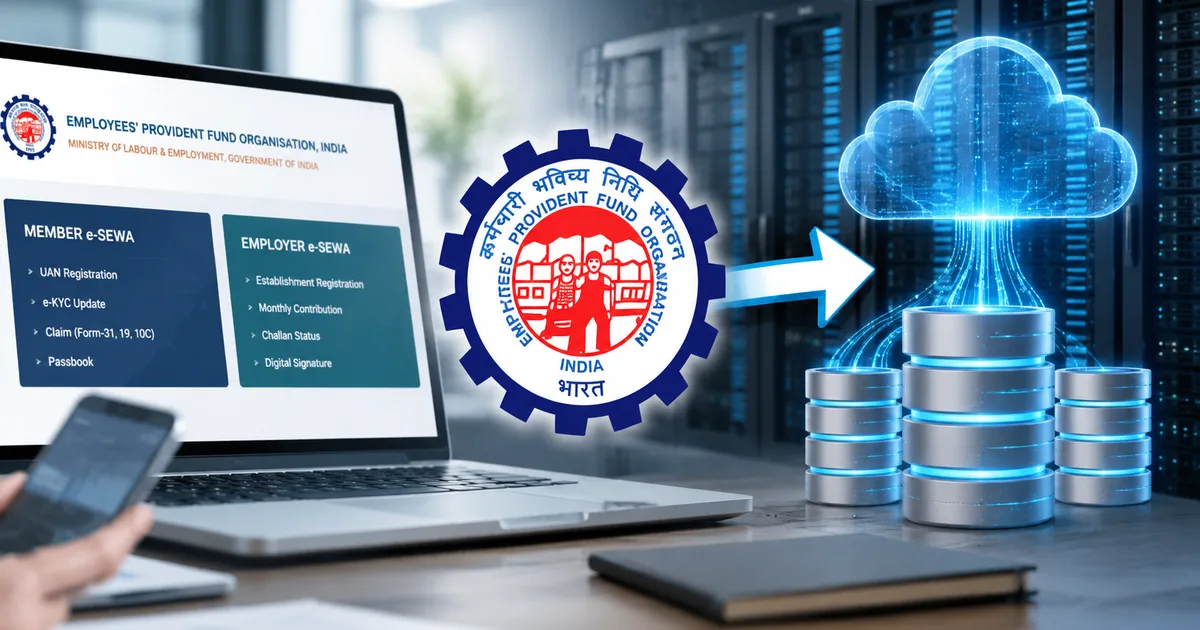
Basically, the EPFO has been running on fragmented databases for decades. Every single regional office across India had its own separate data silo. So if you worked in Bangalore and then moved to Delhi, your PF account didn't just seamlessly follow you. You had to initiate a transfer online, wait for your old employer to approve it, wait for the new employer, and wait for the regional office. You get the picture. (And it's always a mess, frankly.)
They just completed a massive tech migration under a project called CITES. The goal here is very simple. They're merging all these isolated regional databases into one big centralized national database. I know, it sounds complicated. It's not. It just means your data is finally living in one place. It isn't scattered across twenty different servers anymore.
The suspension of online claim services and UMANG app access was frustrating, sure. When you need money for a medical emergency, being told the system is upgrading doesn't help at all. But honestly, I think a few days of downtime is a fair price to pay for a system that actually works in 2026. The new EPFO portal is now live. And the changes are huge.
Faster PF claims and withdrawals
Here's the deal. Under the old system, withdrawing your PF could take up to 20 days. Sometimes it took longer if your employer dragged their feet on verifying details. Or if your signature didn't match some physical ledger from 2012. With the new centralized system, the EPFO is promising much faster claims processing.
They're introducing smarter processing tools on the backend. You'll now have a clear facility to see the exact eligible amount for withdrawal right on the screen. No more guessing. The new system calculates it instantly based on your accumulated balance and the rules for that specific withdrawal type.
I tried logging into the new portal yesterday. The interface still looks a bit government-issue. So don't expect a slick startup app experience, but it's noticeably faster. The auto-claim settlement feature will now work much better. Why? Because the system doesn't have to talk to multiple regional servers just to verify your identity. If your KYC is updated with Aadhaar and your bank account, claims should clear in a fraction of the time. Some claims might even clear in three to four days.
No more manual PF transfers
This is probably the biggest win for anyone who switches jobs frequently. In my experience, getting a new UAN or merging an old member ID with a new one was always a massive headache. We've all been there. Staring at a screen, trying to figure out why the previous HR hasn't approved the transfer yet.
Because of this centralized database migration, your PF account is now truly portable. When you join a new company, your EPF account will just move with you automatically. Your UAN remains the same. And the backend handles the transfer without you having to fill out Form 13.
Which, for the record, I think is a very good thing. We're in 2026. Everything else in India, from UPI payments to grabbing documents off DigiLocker, is instant. There was zero reason our retirement savings needed to operate on 1990s speed. A centralized database means the EPFO finally knows exactly who you are. Regardless of which city you happen to work in.
The 8.25% interest credit is coming
So, where is the interest for FY26? You've probably been waiting for it. The news reports confirm that the EPFO will start crediting the 8.25% interest to member passbooks by July 15.
They actually needed this centralized system live before they could process the interest payments for all 34 crore members. Under the old system, crediting interest was a total nightmare. Regional offices processed the interest in batches. Your friend in Mumbai might get their interest in June. But you in Chennai would still be waiting in September.
Now that the migration is done, they can push the interest credit nationally in one massive batch. I'm not sure exactly why it takes until mid-July, but if you log in around then, you should see the updated balance. Keep your UAN and password handy. If you haven't linked your mobile number to your Aadhaar, do that right away. Because you won't be able to log in without the OTP.
What this means for employers
Employers have been struggling with the EPFO portal for years, too. Filing monthly returns and generating challans on the old system was painfully slow. Especially on the 15th of the month when everyone tried to log in at once.
With the new centralized infrastructure, the employer portal is getting a much-needed bandwidth upgrade. HR departments will have a clearer view of employee data. This makes it easier to approve KYC and manage exits. If your company uses third-party payroll tools, the API integrations with the EPFO should become much more stable now. I spoke to a friend who runs HR at a mid-sized IT firm. They're incredibly relieved the migration is finally over.
Watch out for EPFO scams
Thing is, anytime a major government system goes down or undergoes a big change, scammers come out of the woodwork. Right now, there are several scams floating around on WhatsApp.
People are getting messages saying their PF account is blocked due to the migration and they need to click a link to update their KYC. Don't click these links. They lead to sketchy fake websites designed to steal your UAN and password. Once scammers have that info, they can change your bank details and empty your account entirely.
Here's what you need to remember about PF fraud:
- The EPFO will never ask you to share your OTP, UAN password, PAN, or Aadhaar details over a phone call or WhatsApp message.
- You don't need to pay any processing fee to a third-party agent to get your claims cleared faster.
- If you receive a suspicious message, report it immediately to the national cyber crime portal at cybercrime.gov.in or call the 1930 helpline.
The only official places to check your balance or file a claim are the epfindia.gov.in website and the government's UMANG app. Never trust third-party links sent on WhatsApp.
Protect your retirement money.
How to check your EPF balance now
You have a few options to check if your account is active and updated. The services are fully restored. Though you might see minor glitches as the system stabilizes over the next week (which makes sense, actually).
- Download the UMANG App from the Play Store or App Store, log in with your mobile number, and link your UAN. The EPFO service section is back online.
- Go to the official EPFO Member Portal site on your laptop. You'll need your UAN, password, and the captcha. They've made the passbook section a bit more intuitive, and you can clearly see the employer and employee share.
- If you're completely offline or don't want to deal with passwords, you can give a missed call to 9966044425 from your registered mobile number. You'll get an SMS with your balance in a few minutes.
- Send an SMS with the text EPFOHO UAN ENG to 7738299899. The ENG stands for English. You can use HIN for Hindi, TAM for Tamil, and so on.
Sort out your KYC today
KYC is another big issue. The centralized database makes things faster. But it also means the system is going to be far stricter about mismatched data. If your name in the EPFO database is 'Rahul Kumar' but your Aadhaar says 'Rahul Kumar Sharma', the new automated system is going to reject your claim instantly. In the old days, a human clerk at the regional office might have looked at it and approved it anyway. Now, it's all algorithms matching strings of text.
So, before you try to withdraw any money, go to the Manage tab and click on KYC. Make sure your Aadhaar and PAN are verified. The numbers here are a bit fuzzy for some older accounts, so double-check them. If your bank has recently merged with another bank, for example when Syndicate Bank merged into Canara Bank, your old IFSC code might cause your claim to bounce. Update your bank details with the new IFSC code. And get your employer to digitally sign it. Do this now, so you aren't scrambling when you actually need the money.
Also, check your nominee details. The EPFO has been pushing e-nomination heavily lately. If you haven't added a nominee to your PF account, you won't be able to view your passbook online at all. It takes five minutes. You just need your nominee's Aadhaar number and a scanned photo. Just get it done.
What you need to do right now
Honestly, you don't need to do much. The migration happened entirely on the backend. But I strongly recommend logging into the new portal this week just to check your details.
Verify that your name matches your Aadhaar exactly. Check if your bank account KYC is approved and active. Look at your service history to ensure your past employers marked your exit dates correctly. The centralized system is only as good as the data inside it. If your old employer messed up your exit date or spelled your name wrong, you'll still face issues when you try to withdraw money.
You can also use the EPFiGMS portal if you have any pending grievances.
The EPFO overhaul was long overdue. Yes, the week-long outage was a massive headache for people who needed emergency funds. The communication could have definitely been better. But the move away from scattered regional servers to a unified national database is a huge upgrade for ordinary Indian employees. Keep an eye on your passbook around July 15 for that interest credit. And seriously, don't forget your UAN password this time. Save it somewhere safe.