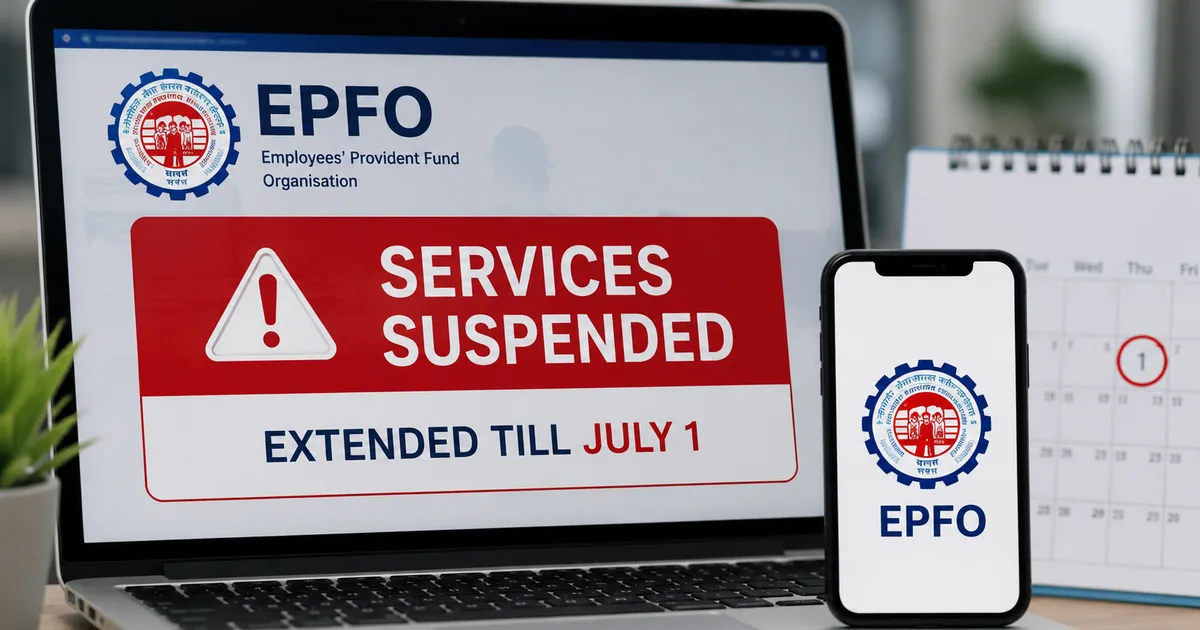
Look, nobody likes logging into the EPFO portal on a good day. It's usually slow, the passbook takes forever to load, and half the time you get some obscure server error. But right now, you can't log in at all. The EPFO online service suspension that started on June 26 has just been extended.
Originally, they said the servers would be down for 72 hours. We all thought they'd be back online by June 29. Nope. The Employee Provident Fund Organisation has pushed the deadline. The entire system migration will now take until July 1. If everything goes according to plan, services will finally resume on July 2.
Honestly, this is a massive headache for millions of Indian salaried workers.
When you need to check your PF balance, you usually need it fast. Maybe you're applying for a home loan. Maybe you have a medical emergency and need a quick PF advance. Having the portal completely dark for almost a week is rough. But there's a reason they're doing this. The backend systems that run the UAN login portal and claim processing desperately need an upgrade.
Why the system migration is actually necessary
If you've tried doing a PF claim online anytime in the last five years, you know the struggle. The old infrastructure was built for a different era. Today, we have millions of people checking their passbooks simultaneously on their phones.
The current system migration is supposed to fix the underlying architecture. They're moving to better servers. Or at least, that's the official line. We don't have the exact technical specs of what they're changing in the server rooms, but the goal is clear. Less downtime. Faster claim settlements. Fewer random Aadhaar name mismatch errors that take months to resolve.
(I know, expecting a flawless government portal sounds optimistic, but remember how bad the Income Tax portal was when they launched the new version? It was a disaster for months, but now it actually works pretty well. We have to hope EPFO follows the same path.)
This migration affects literally everything. It isn't just the member portal that's offline.
What you can't do right now
Here's the deal: if it involves the EPFO servers, it's currently broken. They pulled the plug on the whole operation to do this migration safely.
- You can't check your EPF passbook. The app will just throw an error or time out.
- You can't submit new claims for withdrawal or advance.
- You can't update your KYC details, link your Aadhaar, or change your bank account numbers.
- You can't merge old PF accounts with your current UAN.
- Employers can't file their monthly returns or deposit PF contributions.
If you submitted a claim before June 26, don't panic. Your data is safe. The claim is just sitting in a queue somewhere on a server that's currently powered down or being moved. Processing will begin again once the lights come back on.
If you read our daily tech news updates, you know that server migrations of this scale are incredibly complex. You have terabytes of sensitive financial data, Aadhaar linkages, and legacy accounts dating back decades. Moving all of that without losing a single rupee is tough. I'd rather they take an extra two days to get it right than rush it and corrupt the database.
The real impact on ordinary users
Let's talk about the human side of this. Not having access to your own money is frustrating. I got a message from a friend yesterday who's trying to pay a hospital bill and was counting on a medical advance from his PF account. He's stuck.
The timing is interesting though. Doing this at the end of the month means they avoid the salary processing window. Most companies deposit PF contributions between the 10th and 15th of the month. By doing this shutdown now, they miss the peak traffic days. That was smart.
But what happens when the portal comes back online?
How to handle your PF claim online on July 2
This is important. Don't try to log in at 9 AM on July 2. Just don't do it.
Think about it. Millions of people have been waiting for six days to check their passbooks. The moment the news breaks that the site is back up, a massive wave of traffic is going to hit the login page. The servers will almost certainly crash again from the sheer volume of requests. It happens every single time.
If your work isn't urgent, wait until July 4 or 5. Let the desperate people get their work done first. Let the initial bugs get patched.
When you do log in, the process should be exactly the same. You'll need your UAN, your password, and access to the mobile number linked to your Aadhaar for the OTP. If you've forgotten your password during this long break, you'll have to reset it, which again requires that Aadhaar-linked phone.
I highly recommend keeping copies of your UAN card and basic details in DigiLocker. It won't show your live balance, but having the official document saved locally saves a lot of hassle when portals go down. We have some good tutorials on setting that up in our guides section.
The UAN login portal: a brief history of frustration
To really understand why this migration matters, you have to look at how we got here. Before the Universal Account Number system was introduced, changing jobs meant opening a completely new PF account. Your money was scattered across different regional offices. Transferring funds took months of paperwork and chasing your previous HR department.
The UAN login portal changed the game. It tied all your accounts to one number and linked it to your Aadhaar. It was a massive leap forward for the Indian workforce. Suddenly, you could actually see your money growing.
But the system became a victim of its own success. As more people got smartphones and cheap Jio data, the traffic skyrocketed. What used to be a physical process happening in dusty government offices shifted entirely to the cloud. The servers just couldn't handle the load.
Every time the government announced the annual interest rate, the site would crash for days. People trying to download their yearly statements accidentally launched a denial of service attack on the EPFO servers just by hitting refresh too many times. The architecture was simply not built for modern internet traffic patterns.
That's why this current outage, while annoying, is actually good news. They're finally doing the heavy lifting to fix the foundation. We're talking about moving databases that hold the retirement savings of nearly 7 crore active members. It's a staggering amount of money and data.
Dealing with Aadhaar mismatch issues post-migration
One of the biggest hopes for this new system is that it'll handle KYC discrepancies better. Right now, if there's a tiny mismatch between your name on the EPFO records and your name on your Aadhaar card, you're in for a nightmare. A missing middle name or a misplaced initial can stop your PF claim online dead in its tracks.
The process to fix a simple name error currently requires joint declarations from your employer, physical forms, and weeks of waiting. It's archaic.
We don't know the exact features of the upgraded system yet. But fintech developers are hoping for better API integration with UIDAI. If the new servers can verify identities more intelligently, it'd save millions of working hours for both employees and the EPFO staff.
If you've been putting off fixing a KYC issue, you'll have to wait a little longer. But when the portal reopens, make that your first priority. Having your PAN and Aadhaar perfectly synced with your UAN is the only way to ensure smooth withdrawals when you actually need the cash.
What about the employers?
Small business owners and HR departments are also locked out. They can't process employee exits, generate UANs for new hires, or pay their monthly dues.
Usually, there are strict deadlines and heavy penalties for delaying PF deposits. Since this is an official outage, the government will almost certainly relax the deadlines for June deposits. If you run a small business, just make sure your Excel sheets and data are ready to go. The moment the employer portal stabilizes, upload your files. Don't wait for the last minute, because everyone else will be doing exactly the same thing.
Watch out for the inevitable scams
Whenever a major service goes down in India, the scammers come out to play. It never fails.
You might get an SMS or a WhatsApp message claiming they can help you bypass the server outage to check your balance. They might send a link to an alternate portal or ask you to download a random APK file. Don't click those links.
Here are the basic rules to stay safe right now:
- The only official website is epfindia.gov.in. There's no backup site. There's no secret VIP portal.
- EPFO officials will never call you and ask for an OTP to process your claim faster.
- Don't pay anyone claiming they can speed up your withdrawal while the servers are migrating. It's physically impossible.
If you see these kinds of messages, ignore them. You can read more about how these financial frauds operate in our scam awareness hub. If you actually fall for one, report it immediately to the national cybercrime portal at cybercrime.gov.in or call 1930. You can also check our tools section for a list of trusted apps to monitor your finances safely.
What to do if you have a genuine emergency
I mentioned earlier that you shouldn't panic. But what if you actually have a dire medical emergency right now?
Unfortunately, there's no offline bypass for the system migration. Even if you walk into a regional provident fund office today, the officers there are looking at the same blank screens as you are. Their internal terminals are connected to the same core database that's currently being migrated.
You'll have to find alternate bridge funding for the next few days. I hate saying that, but it's the reality of centralized digital systems. When the single point of failure goes down, everything stops.
Always keep some cash in a standard savings account or a liquid mutual fund for immediate crises. Don't rely completely on government portals being functional on the exact day your life falls apart.
Will the EPFO portal upgrade 2026 fix the glitches?
That's the million-rupee question. The government has poured a lot of resources into digital infrastructure lately. We have UPI, which handles billions of transactions flawlessly. We know Indian tech teams can build systems that scale.
But the EPFO legacy systems are old. Really old. Unwinding decades of bad code and patch-jobs takes time. This current downtime is just the backend migration. We don't even know if we're getting a new user interface yet.
I suspect the first few days of July will be rough. The servers will be unstable. People will complain on Twitter. News channels will run segments about stranded claims. But by mid-July, things should settle down. If this migration was successful, we should see faster OTP delivery and fewer random session timeouts.
Until then, all we can do is wait. Keep an eye on the official channels. We'll update our tech explainers as soon as the site is functional again. Just keep your UAN handy and your expectations low for that first week. It's government tech, after all. Progress is slow, but it does happen.