Look, I get it. We've all been waiting for the Binance unban in India. The news about them registering with the Financial Intelligence Unit (FIU) and paying a large penalty has everyone expecting normal service to resume. For months, Indian users had to rely on alternative exchanges or use VPNs just to check their portfolios. So when an update finally arrives, people are eager to act. Scammers know this. They watch the news carefully. And they're using the confusion around the FIU compliance updates to steal your money.
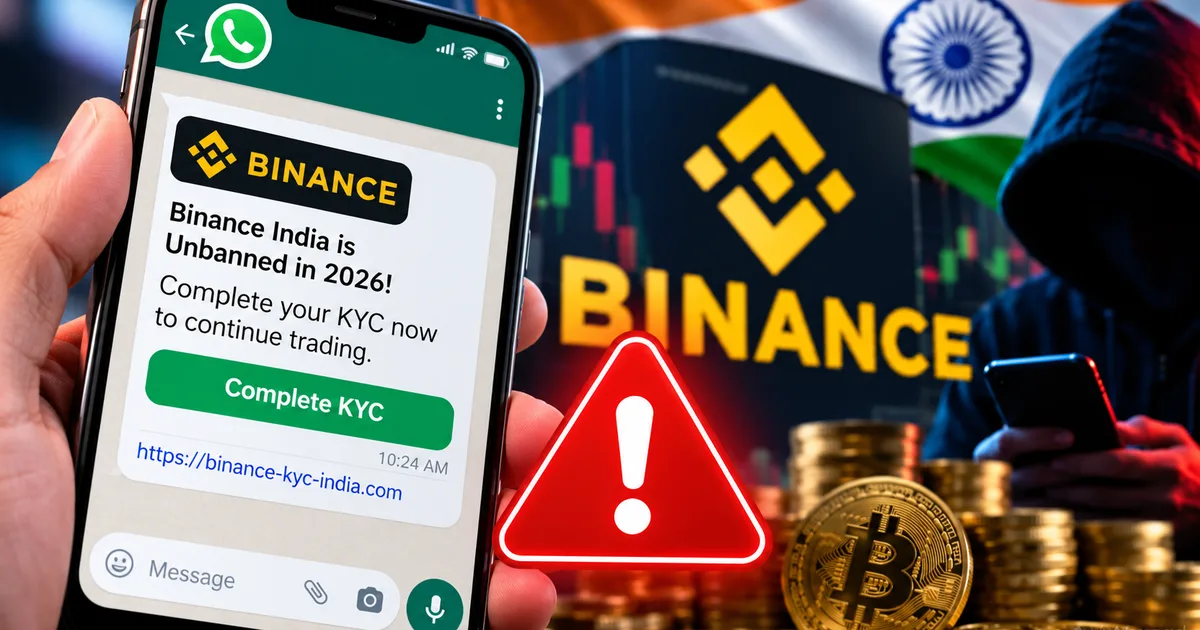
There's a massive scam going around right now on WhatsApp and Telegram. You get a text saying your Binance account needs mandatory crypto asset verification to comply with new Indian regulations. It looks totally official. It sounds urgent. I think people fall for it because it uses the exact legal jargon you'd expect. But honestly, it's a complete trap designed to drain your wallet in seconds.
I've seen the recent reports from the Indian Cyber Crime Coordination Centre (I4C) under the Ministry of Home Affairs. The numbers are ugly. They issued a formal threat advisory this week about these specific wallet drainer attacks targeting Indian users (the scale of it is actually mind-boggling). People are losing lakhs of rupees just because they clicked one wrong link on WhatsApp. The complaints on the national cyber crime portal are piling up fast. And the authorities are struggling to keep up with the volume of reports.
Understanding the mechanics of this fake Binance KYC update scam makes it much easier to spot.
What is the fake Binance KYC verification scam?
The main goal of this scam is simple. Criminals want access to your non-custodial wallets like Trust Wallet or MetaMask. Trust Wallet alone has over 50 million Android users worldwide. That makes it a massive target. Scammers know they can't just guess your password or crack the cryptography protecting your funds. So they have to trick you into handing over the keys yourself.
They impersonate official Binance support or compliance officers. The hook relies on current events and real news stories. They tell you that because the platform is officially re-entering India as an FIU-registered entity, you have to complete a new KYC verification process immediately. They claim your account will be frozen or your crypto assets will be permanently locked if you fail to do this today.
Basically, it's classic social engineering. They manufacture panic. They want you acting fast so you don't stop to think or check official sources. And this isn't just happening here. If you read our Scam Alerts & Safety section regularly, you know these high-pressure tactics are standard operating procedure right now across the entire internet.
This situation is very similar to the Fake Binance India Reactivation KYC Telegram Scam 2026 we covered last month. The scammers simply changed their platform from Telegram to WhatsApp. But the playbook is exactly the same.
How the crypto drainer attack actually works
This is where things get a bit technical. Stay with me, though. The process usually happens in four distinct phases.
The initial contact and grooming
Scammers often find their victims on peer-to-peer (P2P) trading platforms. They initiate a small trade and complete it successfully to build a tiny bit of trust. Then they quickly suggest moving the conversation to WhatsApp for future trades. They do this because WhatsApp is encrypted. Platform moderators can't monitor the chat or ban their accounts for suspicious behavior.
Sometimes they don't even use P2P platforms. They just scrape phone numbers from compromised databases on the dark web and blast thousands of automated WhatsApp messages hoping someone takes the bait. I'm not sure exactly why, but people seem to trust WhatsApp messages more than emails these days. They use business accounts with logos to look like automated support lines.
The fake verification link
Once they have your attention on WhatsApp, they drop the bomb. They say your account is flagged for non-compliance with the new Indian government rules. They send you a link to a verification portal. The URL will look incredibly close to the real thing. It might be something like binance-india-kyc.com or a shortened link that hides the true destination completely.
The malicious wallet connection
You click the link and land on a very professional looking website. It has all the right logos and even fake customer support chat widgets. But instead of asking you to upload an Aadhaar card or PAN card like a normal Indian KYC process, the site asks you to connect your Trust Wallet or Web3 wallet to verify your assets.
This makes no sense if you think about it calmly. A centralized exchange doesn't need you to connect a decentralized wallet for identity verification. They just need your government documents.
The silent drain of your assets
This is the fatal mistake. When you connect your wallet, a popup appears asking for permissions. Most people just click approve without reading the complex text on the screen. You aren't just logging in. You're approving a malicious smart contract.
"Once permissions are granted, wallet drainer scripts automatically transfer funds without further user interaction or approval," according to the I4C advisory.
Your funds disappear instantly. There's no OTP sent to your phone. There's no second confirmation on your email. The blockchain executes the contract exactly as written. And because there's no central authority to reverse the transaction, your money is gone for good in a matter of seconds.
Other ways scammers find you online
WhatsApp isn't their only hunting ground. Cyberattackers are also misusing features on X (formerly Twitter) to promote these scams and fake giveaways to massive audiences.
Scammers modify URLs on X to make their posts look like they belong to legitimate organizations. They impersonate massive accounts like the official Binance account with its 11 million followers or the Ethereum Foundation which has millions of its own followers. When you visit that manipulated URL, it redirects you to a scammer's post. That post promotes a fake crypto giveaway or a link to one of these exact same wallet drainers.
They also push fake Red Packet codes. Legitimate Red Packets are a real feature on Binance Pay where users can claim small amounts of free crypto like BNB or USDT. Scammers create fake promotions around these codes to steal user information (which is just a complete mess for victims). They promise you hundreds of dollars in free crypto. But the link takes you straight to a phishing site that asks for your private keys.
Warning signs you should never ignore
You don't have to be a blockchain expert to spot these scams. Just look out for these massive red flags whenever you're dealing with crypto online.
- Real financial institutions give you weeks or months to complete compliance updates. If someone says you have 24 hours before your account is blocked permanently, it is a scam.
- Official support will never ask you to chat on WhatsApp or Telegram to resolve an account issue. They handle support in their own secure apps or official website portals only.
- Centralized exchanges do their KYC internally using government IDs like Aadhaar or PAN. They never ask you to connect a decentralized wallet like Trust Wallet to verify your identity.
- Apps like Trust Wallet have built-in safeguards. They show a bright warning alert when you try to connect to known malicious domains. Scammers will tell you to ignore this warning and click proceed anyway. Don't listen to them.
- Any promotion asking for your private key or seed phrase in exchange for free crypto is completely fraudulent.
How to protect yourself and your money
Security in the crypto space is entirely your responsibility. In my experience, relying on anyone else to protect your funds usually ends badly. Here's what you need to do right now to keep your assets safe from these specific attacks.
Never share your seed phrase with anyone. Not even if the person claims to be the CEO of a major exchange. Your seed phrase is the absolute key to your money. Write it down on a piece of paper and keep it offline in a safe place.
Also, disconnect any sketchy apps from your wallet immediately. Go into your Trust Wallet or MetaMask settings and revoke permissions for any site you don't actively use or don't recognize. Do this regularly as a habit to keep your wallet clean.
And rely only on official channels for updates. If you want to know about regulatory status in India, check the official app or verified website. Don't trust random WhatsApp forwards or screenshots sent by strangers. You can also keep an eye on our Latest Tech News hub for verified updates on the FIU compliance situation as it develops.
The Indian Computer Emergency Response Team (CERT-In) regularly publishes guidelines on digital security. Their main advice always comes down to having zero trust. Don't click links from unknown numbers. Just delete the message and block the sender right there on WhatsApp.
Where to report crypto scams in India
If you made a mistake and clicked the link, you have to act immediately. The chances of recovering stolen crypto are low. But reporting it is helpful to let authorities track these syndicates down and freeze the exchange accounts where they try to cash out your stolen funds.
Call the national cybercrime helpline at 1930 right away. Don't wait until tomorrow. Every minute counts when dealing with blockchain transactions.
Then file a detailed formal complaint on the official government portal at cybercrime.gov.in. Make sure you provide all the details. Give them the phone numbers the scammers used and the exact URLs they sent you. And definitely provide the wallet addresses where your funds were transferred.
The I4C is actively tracking these wallet drainer attacks and has set up the Sahyog Portal specifically to speed up data disclosures in crypto investigations. Over 45 crypto exchanges are cooperating with Indian authorities right now. Reporting helps them build the database they need to take these criminal operations down for good.
Stay sharp out there.