So, BSNL actually launched a satellite phone. It costs Rs 1,34,166. That part is completely real news. The state-run telco made headlines recently with this massive release. But here's the problem. Scammers read the news too. And they're already weaponising it against normal people.
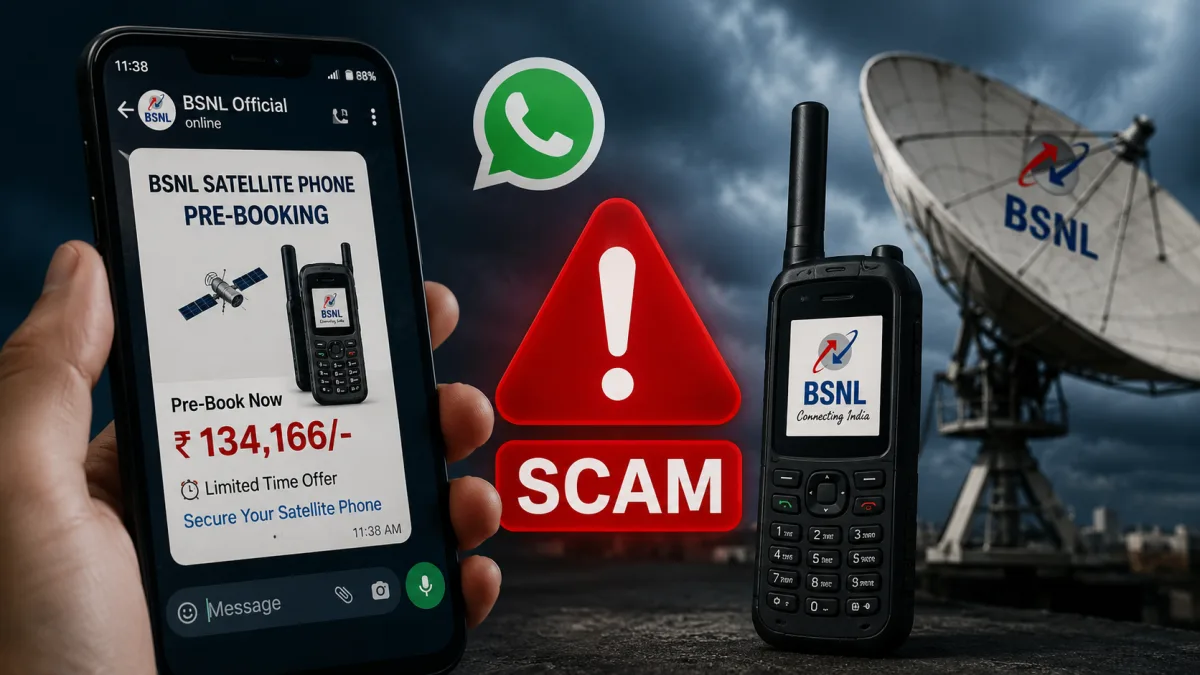
Right now, thousands of Indian smartphone users are getting messages about a fake BSNL Rs 134,166 satellite phone pre-booking WhatsApp scam. The message usually claims you've been picked for an exclusive early bird discount. They say you can secure this heavy-duty off-grid phone for a tiny pre-booking fee of Rs 2,000 or Rs 5,000. It's a lie. A massive lie. If you ask me, it's pretty brazen.
I get it. A satellite phone sounds incredibly cool. You probably read about it online. And you thought about how it works without normal cell towers. You imagine taking it on a trek in the Himalayas. Or maybe keeping it for emergencies when the local network goes down. The fraudsters know you're curious. They feed on that curiosity to drain your bank account.
Honestly, this is one of the more dangerous telecom frauds making the rounds in India right now. Because the product itself is real, people are letting their guard down. They search Google and see real news articles from Business Standard about the BSNL satellite phone. So they assume the WhatsApp message must be legit.
What is the fake BSNL Rs 134,166 satellite phone pre-booking scam?
Let's clear this up first. The actual BSNL satellite phone isn't for you and me. It's explicitly designed for disaster management teams and government agencies operating in remote areas with zero network coverage. You can't just casually buy one on Flipkart. And you certainly can't pre-book it through a random WhatsApp chat sitting at home in Mumbai or Delhi.
The scam is a classic phishing operation wrapped in current events. Fraudsters send a highly professional-looking WhatsApp message.
It has the official BSNL logo. It uses formal language. Sometimes it even includes a fake PDF brochure detailing the phone's specs and battery life.
The hook is simple. They tell you that due to high demand, only a limited number of units are available for civilians. To reserve yours before the stock runs out, you need to click a link and pay a small token amount. But the moment you click that link, you're walking straight into a trap. One that could cost you your entire savings.
"Financial fraudsters constantly adapt their lures to match trending news. The BSNL satellite phone launch provided the perfect credible cover for a nationwide phishing campaign targeting Indian UPI users."
Losing Rs 5,000 is bad enough. But you're also handing over the keys to your entire digital identity. They want your name, your Aadhaar details, your PAN number, and your UPI PIN. I'm not sure exactly why people give this up so easily, but they do. If you want to understand how these things escalate to identity theft, read our latest breakdown of tele-frauds.
How this WhatsApp scam actually works
These criminals are heavily organised (annoying, I know). They run operations from fake call centres that look exactly like legitimate customer service desks. Here's exactly how the trap snaps shut, step by step.
Step 1: The initial bait
You get a message from an unknown number. Usually, the profile picture is the BSNL logo or a picture of the Indian flag. The text congratulates you on being selected for the "Direct to Consumer Satellite Program" or something similarly official-sounding.
It lists the actual specs of the real Rs 1,34,166 phone. It mentions the rugged build and the satellite network range. This builds trust. Then comes the call to action. "Click here to secure your pre-booking via official BSNL portal."
Step 2: The fake portal
You click the link. It takes you to a website that looks exactly like BSNL's official site. The blue and white colours match. The fonts match. It might even have fake reviews scrolling at the bottom. But look at the URL in the address bar. Instead of bsnl.co.in, it's something sketchy like bsnl-satphone-prebook.in or bsnl-vip-booking.com.
The site asks for your basic details to "register" your device. Name, Aadhaar number, PAN card, current address. They tell you this is required for security clearance. In reality, they're already harvesting your data for future identity theft.
Step 3: The payment trap
Now they ask for the booking amount. Usually, they keep it low. Between Rs 2,000 and Rs 5,000, so you don't overthink it. They push you towards UPI because it's instant and irreversible. You select Google Pay or PhonePe. The app opens on your phone. You enter your UPI PIN.
Here's the worst part. Sometimes, the amount they actually request in the background is much higher. You think you're paying Rs 2,000. But a malicious script modifies the request to Rs 50,000 or Rs 1,00,000. If you don't read the prompt carefully on your screen before typing your six-digit PIN, the money is gone instantly.
Step 4: The malware download
Some versions of this scam skip the fake website entirely. Instead, the WhatsApp message tells you to download a "BSNL Pre-Booking App" directly from a link provided in the chat. It's an APK file. If you install it, you've just given a remote hacker full access to your Android phone.
This app sits silently in the background. It reads your SMS messages and it tracks your keystrokes. When you try to log into your real banking app later, the malware intercepts the bank's OTP. Before you know it, your account is empty. In my experience, these cases end badly. I saw a case recently where someone lost Rs 4.5 lakh because they installed one of these fake apps. We talk more about this danger in our malware deep dives.
Warning signs you are dealing with a fraudster
- Unsolicited WhatsApp messages: Real telecom companies like BSNL or Jio don't reach out randomly on WhatsApp to sell Rs 1.34 lakh enterprise-grade satellite phones to regular prepaid customers. It just doesn't happen.
- Manufactured urgency: The message will always say "Offer valid for 24 hours only" or "Only 5 units left in your pincode." They want you to panic and stop thinking logically.
- Sketchy URLs: If the link doesn't end in a verified .gov.in or the exact bsnl.co.in address, close the tab immediately. Fraudsters buy cheap domains that look similar to trick you.
- Requests for APK installation: You should never, ever install an app from a direct WhatsApp link. Only use the Google Play Store or Apple App Store. Period.
- Suspicious payment demands: Paying a random personal UPI ID for a government product makes zero sense. Official payments always go through secure, verified gateways connected to corporate bank accounts.
How to protect yourself from fake BSNL offers
Prevention is boring. But it's the only thing that actually works. You have to treat your smartphone like a wallet left on a park bench. Someone is always trying to take it.
First, turn off the setting on your Android phone that allows installation from unknown sources. This stops rogue APKs from installing themselves if you accidentally click a malicious link. It takes exactly ten seconds to fix this in your phone's security settings.
Second, verify everything independently. If you genuinely think BSNL is offering a crazy deal, don't click the link in the message. Open your browser. Type the official BSNL website address manually. Check their official press releases. You'll quickly see there's no consumer pre-booking available for the satellite phone.
Third, talk to your older relatives. They're the primary targets for this stuff. They trust official-looking logos and formal language. Sit them down and explain that the government will never ask for their UPI PIN on WhatsApp. We have a list of security apps that can help block these spam numbers before they even reach your parents' phones.
Finally, keep an eye on official warnings. Organisations like CERT-In regularly post alerts about active phishing campaigns. The numbers here are a bit fuzzy, but thousands get scammed daily. Following their updates is just basic digital hygiene in 2026.
I fell for it. What do I do now?
Okay, it happened. You clicked the link and entered your PIN. The money left your account. First of all, take a breath. Don't waste time feeling stupid. These scams are designed by professionals to trick smart people. You need to act fast.
Every single minute counts right now. The fraudsters move money through multiple dummy bank accounts within hours to make it completely untraceable. You have a very narrow window to stop them.
Step 1: Disconnect and isolate your phone
If you downloaded any app or file, turn off your Wi-Fi and mobile data immediately. Put the phone in airplane mode right now. This cuts the remote hacker's connection to your device and stops them from intercepting your OTPs.
Step 2: Call the 1930 helpline
Dial 1930 immediately. This is the national cybercrime helpline managed by the government. Tell the operator exactly what happened. Give them the UPI ID you sent money to and the exact transaction reference number. If you call within the first hour or two, the police can often freeze the scammer's bank account before they withdraw the cash at an ATM.
Step 3: Freeze your bank account
Grab a different phone and call your bank's emergency customer service number. It's usually printed on the back of your debit card. Tell them your account has been compromised via UPI fraud. Ask them to freeze all digital transactions immediately. Also, block the debit card attached to that account.
Step 4: File a formal report online
Go to cybercrime.gov.in from a safe computer. File an official complaint. You'll need to upload evidence. Take screenshots of the WhatsApp chat and the payment receipt from your UPI app. This creates a formal paper trail, which you'll absolutely need if you try to claim a refund from your bank later.
Step 5: Clean your device completely
If you suspect you installed malware, a simple uninstall isn't enough. Hackers hide things deep in the system files. You need to back up your photos, then perform a complete factory data reset on your phone. It's a massive pain, I know, but it's the only way to be 100% sure the spyware is actually gone.
Look, the internet is hostile right now. The fake BSNL Rs 134,166 satellite phone pre-booking WhatsApp scam is just today's flavour. Tomorrow, it'll be a fake Jio 5G offer or a bogus DigiLocker KYC update. You have to stay suspicious. Don't trust logos. And never give out your UPI PIN just because a WhatsApp message told you to.