July is tax season in India. And scammers know it. If you're waiting for your income tax refund right now, you need to be extremely careful about the fake ITR refund APK scam 2026 that's spreading like wildfire across WhatsApp. I've seen similar tricks before. But the sheer volume of these attacks this year is alarming. Basically, fraudsters are hijacking the anxiety of taxpayers and turning it into a very profitable business.
Look, we all want our money back from the government. When you get a message saying your refund of ₹15,400 has been approved, your first instinct is to click. That's exactly what they want you to do. Honestly, this is one of the more dangerous threats I've seen recently because it completely bypasses your normal banking security.
Taxpayers in cities across India are reporting massive losses. People are waking up to zero balances in their salary accounts because they clicked on a single sketchy file sent by a stranger on WhatsApp (which is terrifying, honestly).
What exactly is the fake ITR refund APK scam?
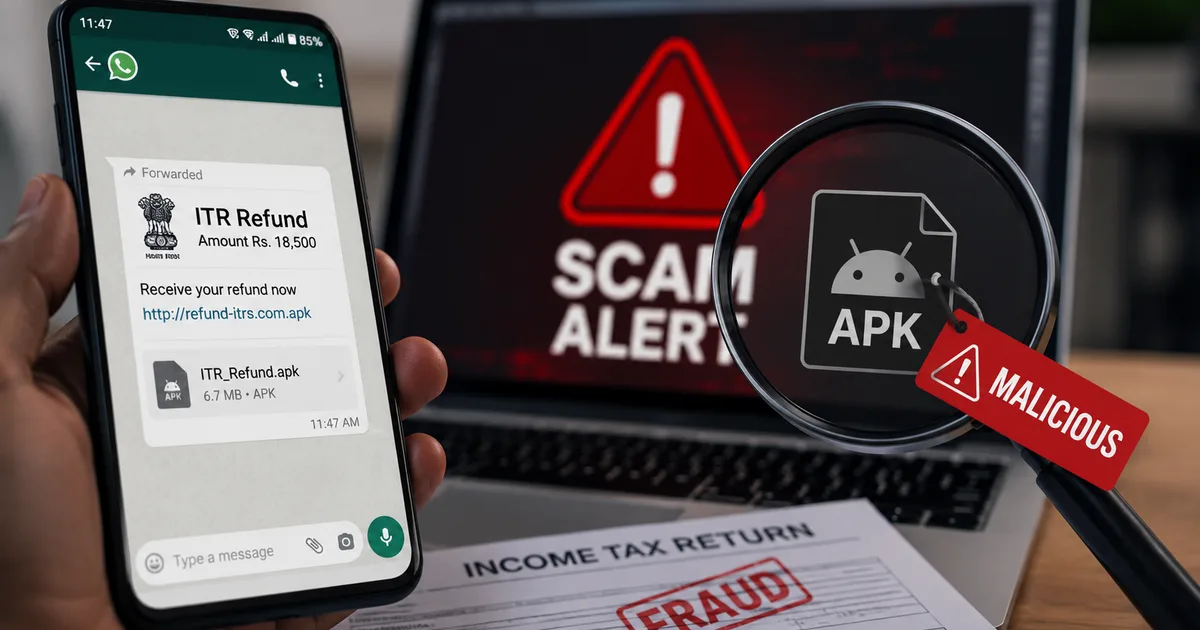
Here's the deal. Scammers want total control over your Android phone. Stealing passwords is old news. The fake ITR refund APK scam involves sending a malicious Android application package file (an APK) directly through WhatsApp. The message usually claims to be from the Income Tax Department. It might say your refund is stuck due to a banking error or that you need to complete a quick verification step.
They ask you to download and install this APK file to get your money. But this file is actually malware. Once installed, it doesn't give you a refund. Instead, it steals your banking credentials and intercepts your SMS messages. It basically gives the scammers a backdoor into your digital life.
I know it sounds complicated. But it really isn't. It's a very simple social engineering trick. They use the promise of cash to make you ignore your phone's built-in security warnings. The psychological manipulation is heavy. They bank on the fact that dealing with taxes is stressful and most people just want it over with.
I talked to a cybersecurity analyst last week who said these specific APKs are being sold in underground forums for a few thousand rupees. I'm not sure exactly why it's so cheap, but the barrier to entry for scammers is incredibly low now.
The Android god mode threat
Recent reports, like the one from Cyfirma on similar RTO challan frauds, show that these malicious APKs are getting highly sophisticated. They often request accessibility permissions right after installation. Once you grant those, the malware can read everything on your screen. It can see your UPI PIN when you enter it. It can also read your OTPs before you even see the notification. It gives the attacker total dominance over your device.
Your Aadhaar details and your DigiLocker documents are also at risk. The financial damage is bad enough. But the identity theft can haunt you for years. Scammers can use your stolen identity to open new bank accounts or take out instant loans in your name. You might not find out about these loans until recovery agents start calling you months later (which is a complete nightmare, obviously).
In my experience, I've seen cases where the malware also accesses the contact list and starts sending the same fake ITR refund message to all the victim's friends and family. It turns your phone into a weapon against the people you care about.
How the scam works step by step
Let me break down exactly how this fraud plays out in the real world.
- You receive a WhatsApp message from an unknown number. It might even have the Income Tax Department logo as its profile picture. The message says your ITR for assessment year 2026-27 has been processed and a refund of something like ₹35,000 is approved.
- The message claims the transaction failed due to an incorrect IFSC code or account number. It tells you to update your details urgently to avoid cancellation of the refund.
- Instead of directing you to the official website, the message includes a file named something like "ITR_Refund_Update_2026.apk" or "Tax_Portal_V2.apk". They tell you to install it to fix the error.
- Your phone will warn you about installing apps from unknown sources since it's an APK. The scammers provide detailed instructions in the WhatsApp chat on how to bypass this warning. They rely on your panic to push through the security prompts.
- You open the app. It looks legitimate. It usually has a fake login screen identical to the actual e-filing portal. It asks you to log into your net banking or enter your debit card details to receive the refund. The moment you type that information, it goes straight to the scammer's server.
- The app quietly hides its icon from your app drawer. While you wait for your money, the scammer uses your stolen details to initiate transfers. Because the malware intercepts your SMS, the OTPs for those transfers are automatically read and sent to the scammer. They are then deleted from your inbox. You have no idea your account is being emptied until it's too late.
This silent theft is what makes APK malware so devastating. By the time you realize something is wrong, the scammers have usually drained the maximum daily limit from your accounts.
"The victim is completely blind to the fraudulent transactions happening in the background until they physically check their bank balance or try to use their card. The malware completely controls the SMS inbox."
This is why you have to stay vigilant. If you want to learn more about how these digital cons work, check out our latest scam alerts.
Warning signs you shouldn't ignore
You can spot these scams from a mile away if you know what to look for. Thing is, most people are too distracted by their busy lives to notice the red flags.
- WhatsApp delivery: The Income Tax Department will never send you an APK file on WhatsApp. They communicate via official emails and SMS from registered sender IDs like 'VM-ITDEPT' or 'JD-INCOMETAX'. Any official app is only available on the Google Play Store or Apple App Store.
- Urgency: Scammers always create artificial panic. "Update within 24 hours or your refund will be cancelled." The real tax department works slowly. They don't give 24-hour ultimatums for refunds over text messages.
- Unknown sources: If you have to change your phone settings to allow installations from unknown sources, stop immediately. That's a massive red flag. Stick to the official app stores.
- Excessive permissions: Does a tax refund app really need permission to view your SMS or access your microphone? No. If an app asks for unrelated permissions upon launching, uninstall it immediately.
- Generic greetings: Fake messages often start with "Dear Taxpayer" or use your mobile number. Official communications usually include your name and your masked PAN.
Another big clue is the phone number sending the message. Official government updates don't come from standard 10-digit mobile numbers or international country codes. If you see a +92 or +84 number sending you tax updates, block it immediately.
How to protect yourself from APK fraud
Protecting yourself isn't about being a tech genius. It's about building good digital habits. I try to follow these rules strictly, and you should too.
First, never download APK files from WhatsApp or random links sent via SMS. This is non-negotiable. If you need an app, search for it on the official app store. If it's not there, you probably don't need it. Sideloading apps is incredibly risky unless you're a developer testing your own code.
Second, always check your refund status through official channels. Go directly to incometax.gov.in and log in with your PAN and password. Don't click links in text messages to get there. Type the address into your browser yourself. You can also use the official AIS for Taxpayer app from the Play Store.
Third, review your app permissions periodically. Go to your phone's settings and look at which apps have access to your SMS and accessibility features. If you see something sketchy or an app you don't recognize, revoke the permission and uninstall the app. For more technical explanations on securing your devices, our detailed tech explainers are a good place to start.
Fourth, educate your family. The older generation is particularly vulnerable to these tactics. My uncle almost fell for a similar trick last month because the message looked so official and he was genuinely expecting a refund. Talk to your parents about these threats. Show them examples of fake messages.
What CERT-In recommends
The Indian Computer Emergency Response Team (CERT-In) regularly issues advisories on these types of threats. They strongly advise disabling the "Install Unknown Apps" option on your Android device entirely (which makes sense, actually). You can find this in your security and privacy settings. Leaving it off prevents these malicious APKs from installing, even if you accidentally tap on them in a chat.
They also recommend using a reliable mobile antivirus solution and keeping your phone's operating system updated with the latest security patches. A lot of these malware variants exploit older vulnerabilities in Android that have already been fixed in newer updates. I couldn't find a clear official answer on exactly how many people have been hit by this specific ITR variant this year, but the numbers for APK fraud generally run into the thousands of crores.
You can also track broader cybersecurity trends and tools on our recommended tech tools page to find good antivirus options for Android.
Where to report if you get scammed
If you've installed one of these apps and entered your details, you need to act fast. Minutes matter.
Immediately disconnect your phone from the internet. Turn off Wi-Fi and mobile data. Better yet, turn on Airplane Mode. This stops the malicious app from sending any more data back to the scammers.
Next, call your bank using a different phone and freeze your accounts and debit cards instantly. Don't wait to see if a transaction happens. Tell the bank representative that your phone has been compromised by malware. They need to block all digital transactions immediately.
Then, report the fraud. Call the national cybercrime helpline at 1930 immediately. The faster you call, the higher the chance they can freeze the stolen funds in the scammer's mule accounts before the money is withdrawn as cash or converted to cryptocurrency. You must also file a formal complaint at cybercrime.gov.in. Be sure to provide the malicious APK file if you can safely isolate it, the exact WhatsApp number that sent it, screenshots of the chat, and any bank transaction details.
After that, factory reset your infected phone. It's a pain to set everything up again. But it's the only way to be completely sure the malware is gone. You can reinstall your legitimate apps from the Play Store later. Don't restore apps from a backup made while the device was infected.
This fake ITR refund APK scam is just one of many threats targeting Indian internet users today. Scammers are ruthless. Stay skeptical. Don't let the promise of a quick tax refund blind you to the very real dangers lurking in your WhatsApp inbox.