Look, BSNL rolling out its 4G and 5G networks across India is genuinely good news. We've all been waiting for them to catch up to Jio and Airtel. But scammers are already turning this massive infrastructure upgrade into a complete nightmare for normal people. The fake BSNL 5G SIM upgrade WhatsApp APK scam 2026 is currently spreading like wildfire across the country. Honestly, it's one of the most dangerous and ruthless frauds I've seen this year.
These scammers target the big money. They want to empty entire bank accounts and drain fixed deposits. The message looks incredibly official. It catches smart folks off guard. If you ask me, anyone with older parents using a BSNL connection needs to warn them today. Not tomorrow. Today.
What is the fake BSNL 5G SIM upgrade scam
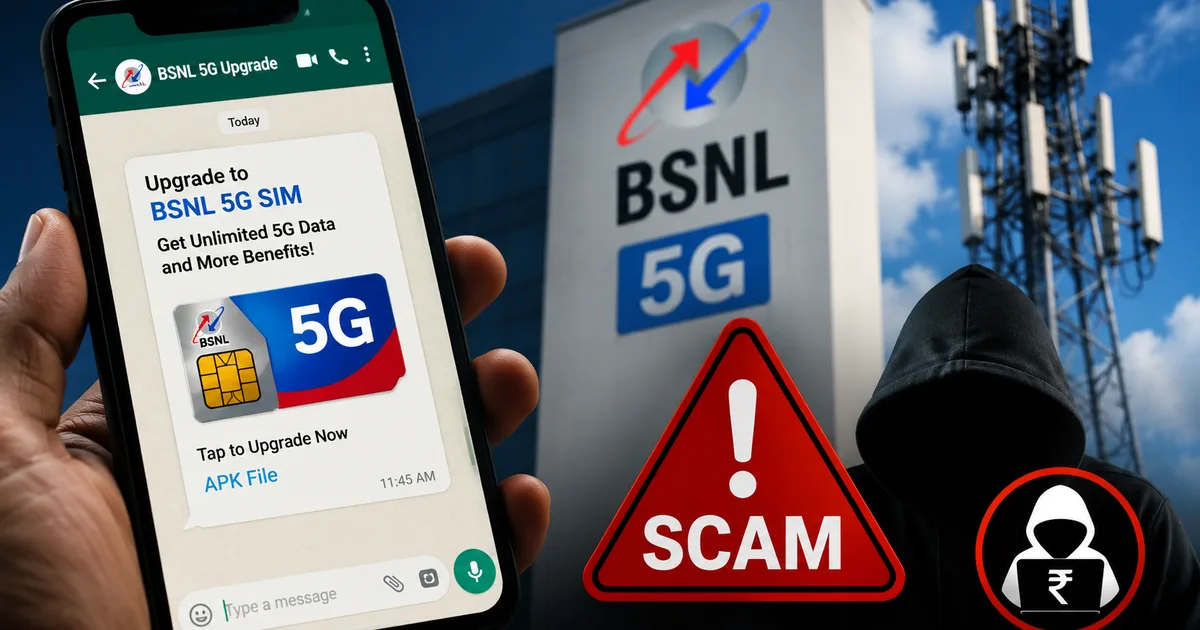
It starts simply enough. You're having your morning chai and scrolling through messages. Then you get a WhatsApp text or a standard SMS. It claims your BSNL SIM needs an urgent KYC update. Or it says your number is eligible for a free 5G upgrade.
The message throws in a heavy dose of panic. It states your mobile number will be permanently blocked in 24 hours if you don't act immediately. (Which makes sense, actually, since fear works.)
It's a classic pressure tactic. The Press Information Bureau had to step in recently. They issued a nationwide warning that these notices are 100% fake. Yes, BSNL is actively expanding its networks in places like Delhi. They're launching new services like Quantum 5G FWA in Hyderabad. But here's the truth. BSNL won't ask you to download a sketchy app over WhatsApp to upgrade your SIM card or verify your Aadhaar details.
We've seen similar tactics before. You can read our previous scam alerts to see how they recycle these tricks. But this scam is a mess. It uses malicious software instead of just tricking you into sending money.
How this BSNL KYC scam actually works
Here's the exact playbook these fraudsters use to steal your money. I know talking about malware sounds complicated. But it isn't. It's basically digital pickpocketing done from a laptop miles away. (Which is terrifying, honestly). I think you need to understand the sheer scale of this operation. These aren't isolated kids trying their luck. These are highly organized cybercrime syndicates. They run massive call centers.
They buy databases of BSNL users on the dark web. So they already know your name and your number before they even send that first WhatsApp message. They script the entire conversation. And they've got specialized teams handling the malware development and the money laundering.
I'm not sure exactly why, but finding a clear official answer on how many people have fallen for this specific BSNL variant is tough. But similar APK scams have drained hundreds of crores from Indian citizens over the past few years. It's a massive operation. They even have dedicated customer support teams for the victims. Yes, really. If you get stuck trying to install the malware, they'll happily guide you through the process over the phone. They pretend to be helpful tech support. And because the malware intercepts all incoming SMS, they intercept any warning messages your bank tries to send you about unusual logins.
The panic message arrives
You receive a WhatsApp text complete with a stolen BSNL logo as the profile picture. It says your KYC is suspended. Or it says your SIM is outdated and incompatible with the new network. They give you a link to upgrade to 5G instantly. They often use terrible grammar. But the fear of losing your phone number makes people ignore the typos.
The malicious APK file download
When you click that link, it doesn't take you to the official Google Play Store. It downloads a raw Android application package. This is an APK file. It's usually named something completely harmless like BSNL_5G_Quick_Support.apk or BSNL_KYC_Update_2026.apk. Your phone might throw up a warning about downloading files from unknown sources. The scammers provide instructions on how to bypass that security warning.
Handing over the keys
You install the app, and it asks for permissions. It wants access to your contacts and your SMS messages. Most people just blindly hit allow to get the setup over with. The moment you do that, you've handed them total control. The app then hides its icon from your app drawer. You think the installation failed. But it's running silently in the background. It intercepts and forwards every single incoming SMS message straight to a server controlled by criminals.
The silent bank drain
This is where the real damage happens. The scammers go to your banking app or PhonePe. They enter your phone number and try to register a new device. When your bank sends the high-security OTP to your phone via SMS, the hidden malware catches it. It reads the OTP and deletes the SMS from your screen so you never even see it arrive. Then it forwards that six-digit code to the scammers in Jamtara or Mewat.
They reset your UPI PIN. They access your net banking. Within minutes, they start transferring chunks of ₹50,000 or ₹1,00,000 out of your account to untraceable mule accounts.
Your bank account is emptied while your phone sits quietly in your pocket.
When they get your OTPs, they route your hard-earned cash through a complex web of rented bank accounts and crypto wallets. By the time you realize your ₹2,00,000 fixed deposit's been broken and drained, the money's bounced across five different states.
Warning signs you shouldn't ignore
You can spot this fraud from a mile away if you know what to look for. Don't let the panic override your common sense. In my experience, people only fall for this when they're rushed.
Real telecom operators give you weeks or even months to complete KYC procedures. And they send multiple reminders. Scammers give you 12 to 24 hours. They want you to panic and make a mistake.
BSNL apps are hosted on the Google Play Store or the Apple App Store. They never send installation files directly through WhatsApp or SMS links.
The message comes from a normal 10-digit mobile number. Official communications from BSNL always come from verified shortcodes like VK-BSNL or AD-BSNL.
Sometimes they don't use an app. They ask you to send a specific SMS string to a 1900 number to verify your SIM. This links their device to your UPI. So don't do it.
How to protect your bank account and UPI
Staying safe on the Indian internet requires slowing down. You need to be a little paranoid.
- Never download APKs from unknown links. Only use the official app stores. This one strict rule will save you from 90% of the malware out there. If someone sends you an app on WhatsApp, delete it.
- Verify through official channels only. If you're genuinely worried about your SIM being blocked, open the official BSNL Selfcare app or call their customer care directly from their official website. Never call the number provided in the suspicious text message.
- Audit your app permissions today. Go to your phone settings, search for permissions, and see which apps have access to read your SMS. If you see a random calculator app or a BSNL support app you don't remember installing properly, delete it immediately.
- Educate your family. Scammers heavily target senior citizens because they aren't as familiar with how digital KYC actually works. Talk to your parents about this specific scam today.
Also, set up transaction limits on your banking apps. Most Indian banks now allow you to set daily limits for UPI and IMPS transfers. Set these to a reasonable amount. If you only spend ₹2,000 a day on groceries and bills, you don't need a ₹1,00,000 daily UPI limit active all the time. You can always increase it temporarily if you need to buy something expensive. This is a massive speed bump for scammers trying to drain everything at once.
You should also seriously consider using a separate phone number for your banking. Have one number that you give out to delivery guys and shops. Keep a completely separate, private number registered with your bank accounts and UPI. That way, if your public WhatsApp number gets flooded with scam messages, your actual banking lifeline remains hidden from the fraudsters. It's a bit of a hassle. But honestly, peace of mind is worth it.
Be incredibly careful about screen-sharing apps too. Sometimes the APK method fails. The scammer will call you and pretend to be a BSNL executive. They'll ask you to install an app like AnyDesk or TeamViewer to help you configure your 5G settings. Never install a screen-sharing app at the request of a customer care agent. They use it to watch you enter your banking passwords live on your screen.
For more advice about securing your devices, you can check out our tech explainers.
The deployment of malware via fake KYC and 5G upgrade messages is a significant threat to digital financial security in India, requiring immediate user vigilance. - CERT-In Advisory.
Where to report if you've been scammed
If you clicked the link and installed the app, you need to act incredibly fast. Every second counts. Don't wait to see if money disappears.
Immediately put your phone on airplane mode. This cuts off the internet and cellular connection. It stops the malware from sending your OTPs back to the scammers.
Next, borrow someone else's phone. Call your bank immediately and tell them to freeze your accounts and block your debit cards.
Once your money's secured, you must report the fraud to the authorities. You can call the national cybercrime financial fraud helpline at 1930. You should also file a written complaint on the official government portal at cybercrime.gov.in. The Indian Computer Emergency Response Team (CERT-In) is actively tracking these malware campaigns. Reporting this helps them take down the scammers' servers. (The numbers here are a bit fuzzy, but every report counts.) If you need help navigating government portals, we've got several step-by-step guides available.
Look, as BSNL continues to upgrade its massive network, these scammers will keep trying to take advantage of the headlines. They know people are desperate for faster internet speeds. But handing over your life savings for a fake 5G promise just isn't worth it.