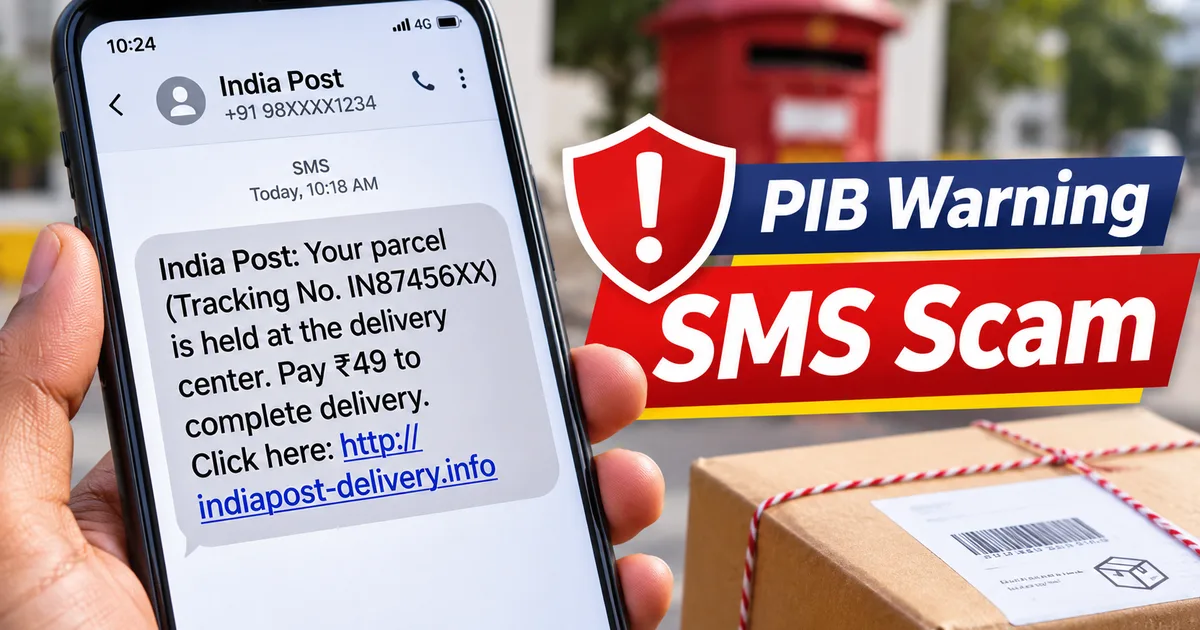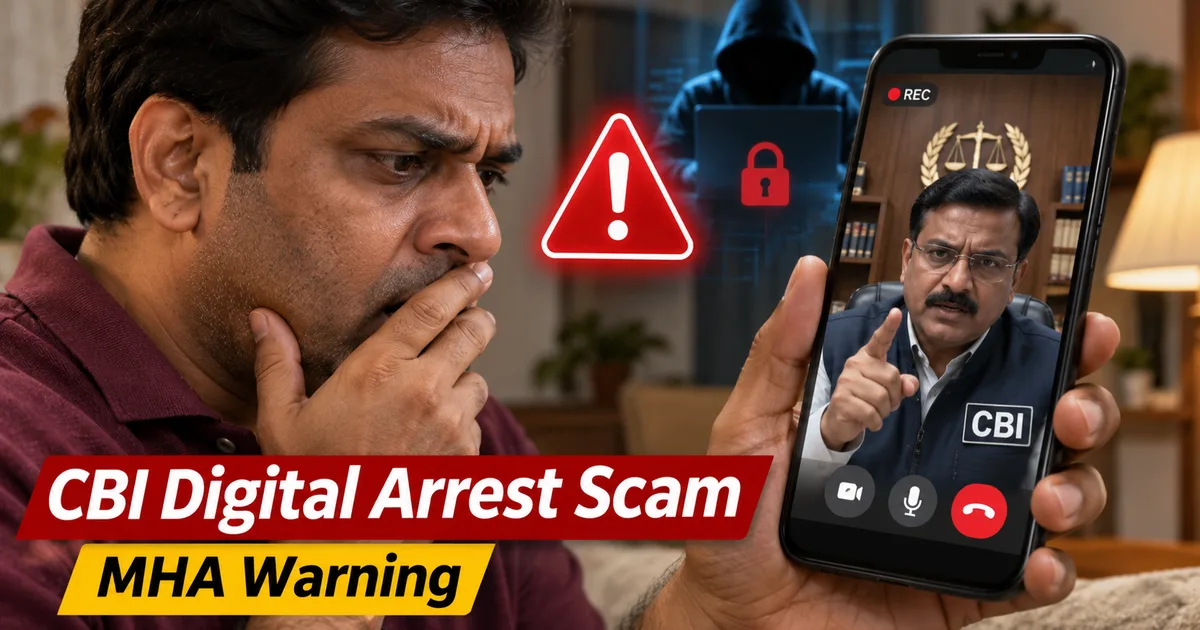
If you ever get an unexpected video call on WhatsApp or Skype showing an officer in a police uniform who claims you're booked for money laundering, hang up. Right away. You're looking at the fake CBI digital arrest video call scam, and it's draining bank accounts across India right now. Fraudsters build studio sets that mimic real police stations and wave forged judicial warrants with fake official stamps. Then they order you to stay on camera under threat of immediate jail time. It sounds absurd when you read about it over morning chai, but when a loud voice quotes your Aadhaar number and lists criminal charges against you, panic takes over.
That fear is expensive.
Between January 1 and August 31, 2026, Indian citizens filed over 21,900 complaints about digital arrest fraud, losing more than ₹647 crore according to a status report submitted by the Ministry of Home Affairs to the Supreme Court. Though in my experience, the numbers here are a bit fuzzy because so many victims never file a police report out of pure embarrassment. That's not some petty street fraud. It's an organized criminal industry. Last month in Chandigarh, scammers posing as Anti-Terrorism Squad officers defrauded a retired public health official and his wife of almost ₹2 crore. In Gujarat, the Central Bureau of Investigation arrested suspects linked to an ₹11.42 crore extortion ring operating across ten states. If you ask me, this racket is currently the most aggressive threat to Indian families. Our team tracks these patterns daily in our scam alerts and safety guide.
What is a digital arrest scam?
Look, digital arrest does not exist under Indian law. None at all. There's no legal statute or court ruling anywhere in India that allows any investigating agency to arrest someone through a phone screen.
Legitimate arrests in India demand physical presence. Officers have to present identity cards and write an arrest memo. Then they must inform your family and produce you before a magistrate within 24 hours (which makes complete sense, actually). That's the law. Nobody sits on Skype in front of a webcam to order you to stay locked in your bedroom.
No police officer, CBI investigator, ED official, or court judge in India has the legal authority to arrest anyone over a video call or demand money for clearance. Any caller demanding money to verify your innocence is committing extortion.
The entire concept of digital arrest was invented by cybercrime syndicates. They use video calls on Skype and WhatsApp to build psychological detention. Scammers keep you on camera for hours at a stretch. That way, you can't think clearly or talk to your children. In my experience, once that isolation sets in, common sense just flies out the window.
How the fake CBI video call scam works step by step
These syndicates run like well-oiled corporate call centers. Seriously. I've looked closely at recent court filings, and almost every case follows five distinct steps.
Stage 1: The automated panic call
The trap usually begins with an automated IVR robocall straight to your mobile. It sounds urgent. A recorded voice announces that your mobile connection will be blocked within two hours because an illegal SIM card registered to your Aadhaar was found linked to money laundering or contraband packages. This setup mirrors fake TRAI disconnection calls (which is a classic pressure trick). It's calculated to make you panic before you even get to speak with a human.
When you press 9 to dispute the block, an operator answers. They sound brisk and strictly professional. Then they claim that Mumbai Police or the CBI Crime Branch has taken over your file.
Stage 2: Transfer to the fake police station
The operator transfers your call to an alleged senior investigating officer. This caller insists your phone line isn't secure and orders you to switch over to Skype or WhatsApp video immediately. If you hesitate, they threaten that a patrol car will pull up outside your house in twenty minutes.
So you switch to video.
Honestly, what appears on your screen looks convincing. The caller wears a police uniform with badges and stars. Behind him sits an office desk with legal files and banners displaying the CBI emblem (annoying how realistic they make it look). It's a fake set, often run from compounds in Cambodia or Myanmar using coerced workers.
Stage 3: Staged interrogation and forged warrants
Once the video starts, the tone turns hostile fast. The fake officer claims an illegal bank account in your name was used to wash ₹38 crore for a drug syndicate. When you deny it, they immediately accuse you of lying.
They send PDF files straight to your chat window. These documents carry the national emblem and forged signatures of High Court judges, alongside official-looking stamps claiming to be an order of seizure and arrest warrant. Scammers have even created a fake Supreme Court website where they display forged case dockets under your name.
Stage 4: Complete isolation
Next comes the psychological trap. The scammer claims your case falls under national security rules and the Official Secrets Act. They order you into a private room and tell you to lock the door. Then they command you to keep your laptop on a desk facing you.
Thing is, you can't turn that camera off.
If you move away, they scream that you're violating bail conditions. They explicitly forbid you from telling your family, claiming anyone you contact will face arrest. That isolation prevents anyone outside from breaking the illusion.
Stage 5: The money siphon
After keeping you terrified for hours, the fake officer has an easy way out for you. He claims the Reserve Bank of India has set up a temporary secure escrow account for asset verification.
He tells you to break your fixed deposits and liquidate your mutual funds. Then he insists you transfer your savings to this clearance account via RTGS, NEFT, IMPS, or UPI. And he promises that once federal auditors verify that your money is untainted, the full sum will return to your account within 48 hours.
Here's the reality: never transfer money to any verification account. Government bodies and police agencies never run verification accounts or ask citizens to transfer money to prove innocence. Once that transfer leaves your bank, it bounces through multiple mule accounts and gets converted into cryptocurrency or sent overseas within minutes. Good luck getting it back.
Warning signs that prove your digital arrest call is fake
I think spotting these calls simply comes down to understanding what real Indian authorities can and can't do. Watch out for these clear operational red flags whenever someone calls you about criminal charges:
- The caller demands that you install Skype or join a WhatsApp video call to record an official statement, which no Indian legal agency does for suspects.
- The caller orders you to lock yourself in a room, stay on camera continuously, and keep the matter secret from your family.
- The caller sends arrest warrants or court summons over WhatsApp chat instead of serving physical notices under Section 41A of the CrPC or Section 35 of the Bharatiya Nagarik Suraksha Sanhita.
- The caller demands an immediate financial audit by forcing you to send savings or fixed deposits into a designated bank account.
- The caller threatens that police patrol cars are en route to your home unless you comply immediately.
- The bank account provided for your transfer belongs to an individual name or private firm instead of a government treasury account.
What the Supreme Court and MHA are doing about it
The massive scale of this racket has forced the highest levels of government to step in. In January 2026, following suo motu hearings by the Supreme Court of India, the Ministry of Home Affairs formed a High-level Inter-Departmental Committee to tackle digital arrest syndicates.
This committee operates under the Chairmanship of the Special Secretary for Internal Security in the MHA. It brings together senior officials from the Ministry of Electronics and Information Technology, Department of Telecommunications, Ministry of External Affairs, Department of Financial Services, Central Bureau of Investigation, National Investigation Agency, Reserve Bank of India, and Delhi Police, while the CEO of the Indian Cyber Crime Coordination Centre is Member-Secretary.
The Supreme Court has taken a tough stance against systemic negligence (about time, honestly). The bench noted that banks and telecom operators must face liability if victim losses stem from weak KYC verification or unmonitored mule accounts. The judges ordered a nationwide rollout of the RBI Standard Operating Procedure for suspicious transaction monitoring, and pushed for an emergency call kill switch to sever spoofed international calls. You can read more about securing your online identity and banking profiles in our practical tech guides.
How to protect yourself and your family
If your phone rings and an aggressive voice claims to be a police officer or CBI inspector, don't panic. Just follow these basic defensive steps:
First, disconnect the call immediately. Don't argue. Don't try to explain that you're innocent. Don't ask for their badge number either, because they'll simply give you a fabricated one. Just cut the call.
Second, no government agency will ever interrogate you over Skype or WhatsApp. Real police officers visit your home in person, or they issue a physical notice summoning you to a local station. If someone claims a parcel in Mumbai or Delhi contains contraband under your name, tell them to send a physical notice to your registered address.
Third, talk to your family right away. Scammers rely on shame and fear to keep you quiet. Talk to your spouse or your children. If you ask me, the moment you say the story out loud to another human being, the absurdity of a digital arrest becomes obvious.
Fourth, block the caller on your dialer and report the number on WhatsApp. Never install remote access apps like AnyDesk or TeamViewer, and never share your screen during any call with a stranger. Ever.
Where to report digital arrest fraud immediately
If you or someone in your family was targeted by this scam, speed is everything. I'm not sure exactly why banks take so long to spot these mule accounts on their own, but how fast you act determines whether your bank can freeze the stolen money.
First, dial 1930 within the golden hour. The national cybercrime helpline 1930 connects directly to the citizen financial cyber fraud reporting system managed by the Indian Cyber Crime Coordination Centre. If you report the transfer within one to two hours, officials can often trigger an immediate freeze on the recipient mule account before fraudsters withdraw cash from an ATM.
Second, register a formal complaint on the official government cybercrime portal at cybercrime.gov.in. Upload transaction receipts, bank statements, screenshots of the video call, and any phone numbers or Skype IDs used by the scammers. Keep your complaint acknowledgement number safe for following up with your bank.
Third, visit your home bank branch immediately. Submit a written dispute letter requesting the branch manager to flag the beneficiary account for fraudulent activity and initiate an inter-bank recall. You can also consult the security guidelines published by CERT-In at https://www.cert-in.org.in/ for standard cyber hygiene and incident handling protocols.
Stay calm. Share this warning with your parents and elderly relatives right away, and never let a stranger on a screen bully you into giving away your hard-earned money.