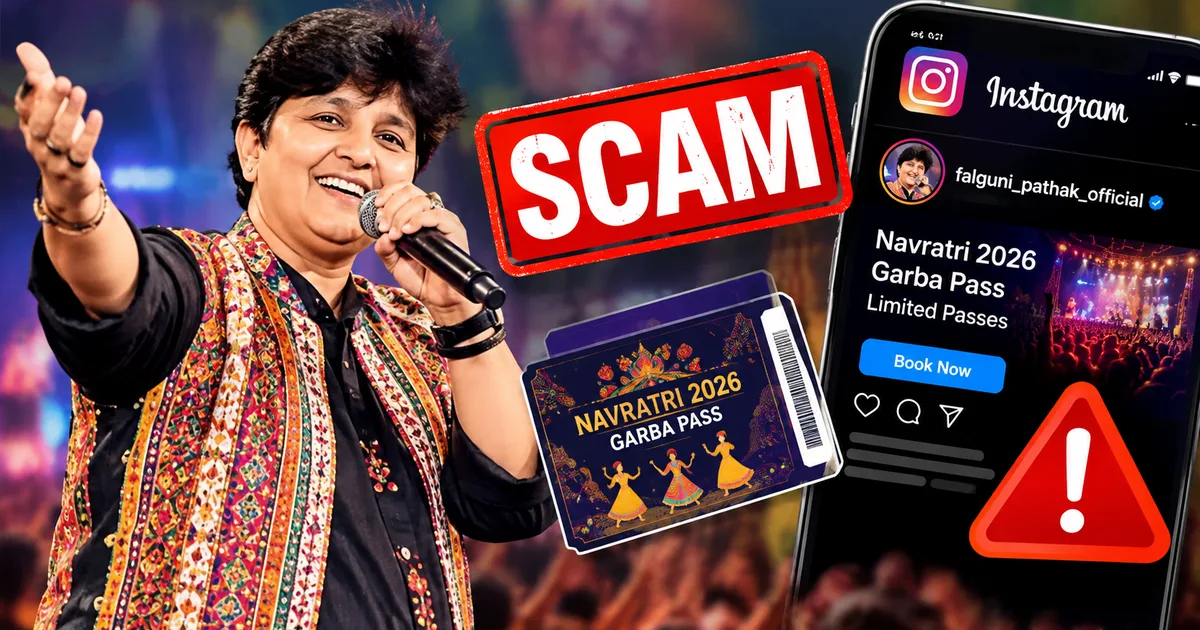
If you're scrambling to find a ticket for Mumbai's biggest dandiya nights, beware of the fake Falguni Pathak Navratri 2026 garba pass Instagram scam spreading across social media right now. Every year around October, thousands of people across Mumbai and Ahmedabad get desperate when official passes sell out on BookMyShow within minutes. Honestly, scammers know this panic all too well, and they take full advantage.
I saw three sponsored posts on Instagram yesterday claiming to sell VIP passes for Falguni Pathak's show at Borivali at half price. One profile had 12,000 followers and dozens of glowing comments praising twenty-minute delivery. It looked genuine at first. But when you check the history, the whole page was made just three weeks ago, and every single comment came from a bot account. If you ask me, half of Instagram is crawling with this stuff right now.
Getting locked out of a festival night hurts. Losing ₹6,000 or ₹15,000 to an anonymous scammer hurts much more. (I know, sounds obvious, but when you're rushing to coordinate outfits with friends, your brain just skips the warning signs.)
The exact numbers here are a bit fuzzy, mostly because people feel embarrassed to report losing a few thousand rupees to an online stranger. But the pattern is identical across every app. Let's break down how this whole scam works so you don't hand your festive budget to criminals.
How the fake garba pass scam works step by step
The whole operation relies on paid ads and fake urgency. Scammers know that genuine passes for Falguni Pathak's Mumbai Navratri Utsav cost between ₹3,000 and ₹4,500 for a single night. A full nine-day season pass easily crosses ₹25,000 or ₹30,000. When tickets vanish from authorized ticketing portals, desperate buyers turn to Instagram search and local hashtags looking for anyone selling extras. In my experience, that panic search is where almost everyone messes up.
Here's the deal: scammers don't have passes. They never did. They just follow a simple routine to grab your UPI payment before you realise what's happening.
- Scammers register Instagram accounts using handles that closely mimic official event pages. They add words like passes, tickets, VIP, or official to the username.
- They run targeted Instagram and Facebook ads using stolen posters, stage photographs of Falguni Pathak, and fake booking receipts to look authentic.
- When you contact them on direct message, they claim to hold unsold organizer quota passes or corporate sponsor tickets that they're selling at reasonable rates.
- They insist on immediate payment through UPI apps like PhonePe, Google Pay, or Paytm. They warn you that the passes will go to another buyer within ten minutes if you hesitate.
- Once you transfer the money, they send a blurry, counterfeit PDF file with a copied QR code, or they ask for an additional deposit before blocking your number.
Thing is, that QR code they send you is completely useless. It's usually just a screenshot lifted from an old pass or an image slapped together on Canva. When you show up at the turnstiles in Borivali or Ahmedabad, the scanner flashes red. Security turns you away on the spot.
And by the time you're standing outside the venue in your chaniya choli or kurta, the page that took your money has already blocked your account and swapped its username. A complete mess.
The viral garba partner angle and cyber fraud
This season, cyber police in Gujarat ran into an even weirder variation of festive fraud. Alongside fake passes, several accounts launched viral posts advertising a so-called rent a garba partner service. They offered tiered packages, starting from Silver at ₹1,000 for two hours up to Platinum packages costing ₹6,500 for a full night of dancing and recording reels.
Honestly, I think some of these started out as dumb jokes to gain followers. But the Ahmedabad Cyber Crime Cell warned that unverified offers like this turn into advance-fee fraud remarkably fast. I'm not sure exactly why anyone would trust a random account for something like that, but the hype takes over. Scammers demand an upfront booking fee via UPI. Then they vanish. Rahul Mishra, Cybersecurity Adviser with the Uttar Pradesh Police, explained that festive hype makes people drop their usual guard.
According to Rahul Mishra, Cybersecurity Adviser with the Uttar Pradesh Police, fraudsters exploit festival excitement because victims rush through payments without checking seller authenticity.
Basically, the game is always the same. Whether someone is selling a garba partner service or a cheap VIP pass, you get a flashy promise and send a quick UPI transfer, only for the seller to vanish.
Warning signs of a fraudulent Navratri pass seller
Spotting these fake accounts isn't hard once you know what to look for. Real event organizers don't sell tickets through Instagram DMs or ask for transfers to personal UPI handles. Never.
Watch out for these red flags before you send a single rupee:
- The seller insists on receiving money through a personal UPI handle rather than an official merchant payment gateway.
- The profile has disabled comments on their posts or only displays repetitive, generic praises from newly created profiles.
- The seller quotes prices far below the official platform rates, claiming to offer exclusive organizer discounts on sold-out dates.
- They pressure you to complete the payment within minutes, claiming several other buyers are waiting in line.
- They ask you to continue the conversation on WhatsApp or Telegram rather than keeping records on the platform where you found them.
- After receiving the ticket price, they demand an extra refundable security deposit or gate pass clearance charge before releasing the PDF.
Look, the moment someone asks for a courier charge or an activation deposit after you already paid for the passes, you're being scammed. Real booking platforms never charge an activation fee (which makes sense, actually).
I spoke to a college student in Malad who lost ₹9,000 trying to buy two VIP passes for Saturday night. The seller claimed venue security needed a refundable ₹3,000 verification deposit per pass that she'd get back at the gate. She paid it. She really didn't want to lose out on the night. But within five minutes of that second UPI transfer, the seller blocked her and vanished. If you ask me, that bogus deposit is where victims lose the most.
Protecting your money from festival ticket fraud
If you ask me, the only safe rule for Navratri 2026 is simple. Accept it when passes sell out on official apps. Hunting for tickets on Instagram almost always ends with lost money (annoying, I know, but true). You can check our latest scam alerts to see how common these social media payment traps have become all across India.
We saw this exact playbook during other recent festivals. Scammers used the same tricks during the fake Lalbaugcha Raja VIP pass fraud, where devotees lost thousands trying to buy VIP darshan passes on WhatsApp. It's the same scam whether they're pushing tech like those pre-order shopping frauds on Instagram or sold-out garba passes.
Here are a few practical steps to protect your bank account:
- Book exclusively through authorized ticketing platforms such as BookMyShow, Paytm Insider, or the official event box office at the venue.
- Remember that you never enter your UPI PIN to receive money or tickets, and anyone asking you to approve a collect request is trying to debit your account.
- Verify the organizer credentials on official social media accounts that have verified badges and a documented history stretching back years.
- Check the physical pass redemption process, because genuine high-value season passes usually require physical wristband collection with government ID verification like Aadhaar or DigiLocker records.
- Refuse to scan QR codes sent over chat, because malicious links can trigger phishing forms designed to steal banking credentials.
If you want more tips on keeping your phone and bank accounts safe, check out our digital safety guides.
What to do if you transferred money to a scammer
If you realise you sent money to a scammer, don't bother arguing with them in chat. They'll just block you the second you ask tough questions. Focus on getting your money back.
The first two hours after an unauthorized UPI transfer are called the golden window. If you move fast, banks can freeze the scammer's account before they pull the cash out at an ATM or move it to mule accounts. In my experience, waiting even until morning makes recovery ten times harder.
Follow these steps straight away:
- Call the National Cyber Crime Helpline at 1930 right away and explain that you fell victim to an online UPI fraud.
- Provide the transaction reference number, your bank account details, and the recipient UPI address to the helpline officer so they can raise a freeze alert.
- File a formal complaint on the official portal at cybercrime.gov.in with screenshots of your Instagram conversation, payment slips, and the scammer profile link.
- Contact your bank's fraud prevention helpline to report the transaction ID and request an immediate dispute chargeback.
- Report the fraudulent Instagram profile directly within the app using the scam or fraud reporting option to prevent others from falling into the same trap.
Speed is everything. Act within that two-hour window, and you actually have a decent shot at getting the transfer reversed before the scammer drains the account.
Where to report Navratri ticket fraud to cyber police
India has clear official channels for reporting online financial scams, and using them fast makes a massive difference. The Indian Computer Emergency Response Team, known as CERT-In, tracks fake domains and phishing campaigns at https://www.cert-in.org.in/.
Run into a fake site or a sketchy APK download pretending to be a ticketing app? Send the details straight to CERT-In for a domain takedown. But if you actually lost money, your main stop is the National Cyber Crime Reporting Portal at cybercrime.gov.in and the 1930 helpline under the Ministry of Home Affairs.
Local police cyber cells across Maharashtra and Gujarat are tracking festive scams throughout Navratri 2026. If your loss is over ₹50,000, head to your local cyber police station with printouts of your bank statements and chat screenshots to lodge a formal First Information Report. Honestly, doing that in person puts extra pressure on the cops to act.
Navratri is meant for celebrating with friends and family, not dealing with frozen bank accounts. Be careful where you send your money, stick to authorized apps, and don't let the fear of missing out cost you thousands.