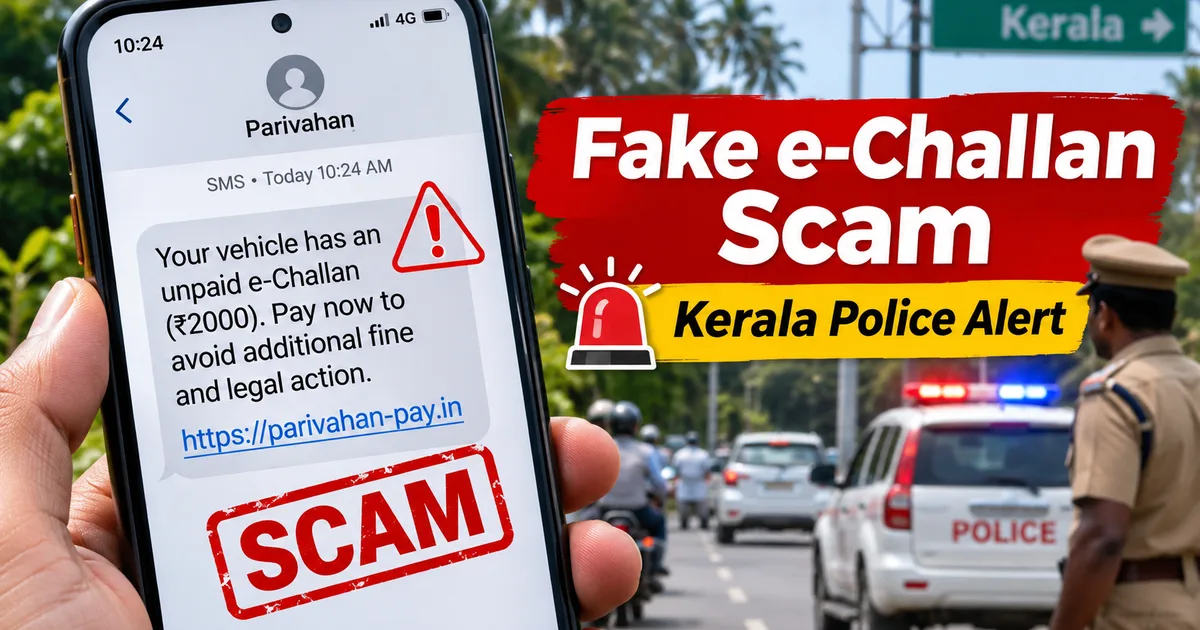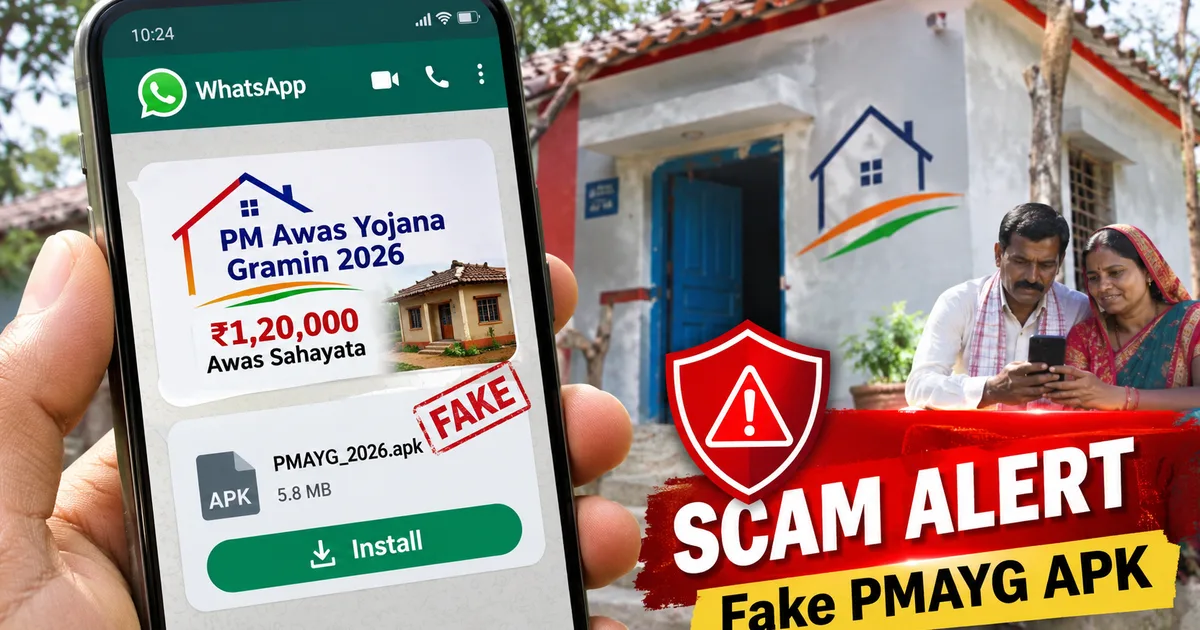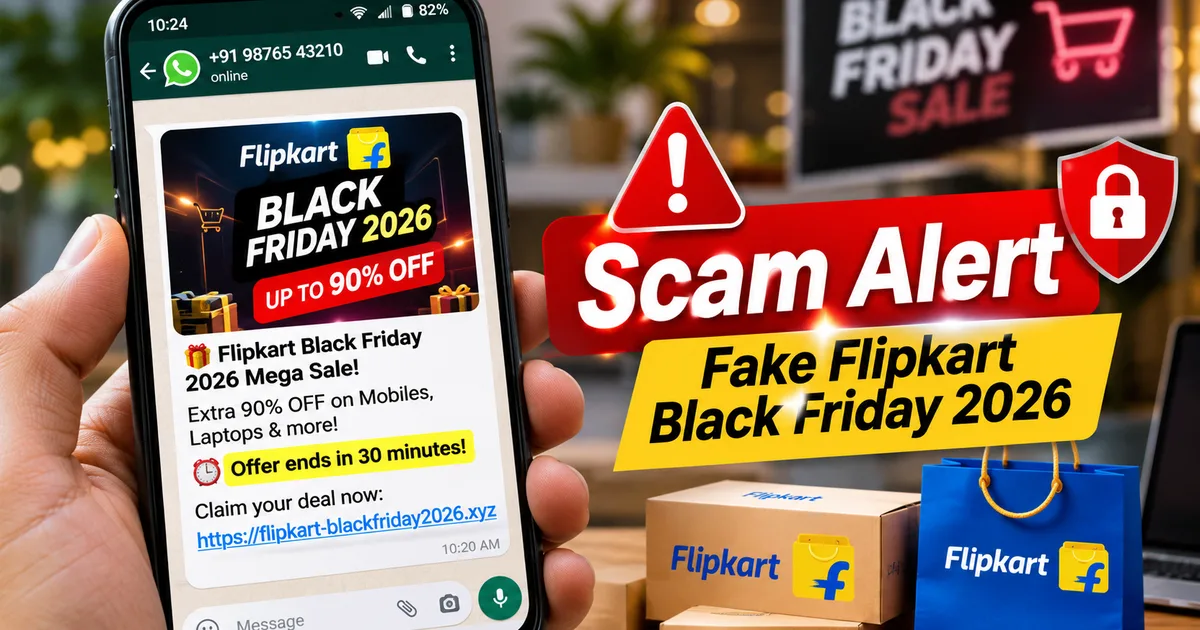
If your WhatsApp family groups are buzzing with messages promising an iPhone 16 for ninety-nine rupees or a 65-inch smart TV for free, take a deep breath. The fake Flipkart Black Friday 2026 WhatsApp link scam is making rounds across India right now. It looks genuine, uses Flipkart's signature blue and yellow branding, and claims to offer special Black Friday deals. But clicking that link won't get you a new phone. It will likely empty your bank account instead.
I saw three different relatives forward this exact link into my family group just yesterday. Honestly, my heart sank. When I opened the message on a test phone, it redirected to a deceptive website built to steal personal data and money. Shopping scams spike around major sales every single year. In fact, survey data published by Livemint showed that 67 percent of Indian cyber scam victims never get their lost money back once it's stolen. Prevention is really your best defense here.
What is the fake Flipkart Black Friday 2026 WhatsApp link scam?
This attack is a standard phishing scam built for Indian festive shoppers. Basically, cybercriminals register domain names that look almost identical to Flipkart's real web address. They pick web addresses like flipkart-blackfriday-offers.site or flipkart-deal2026.online instead of using the official company site.
The text usually arrives with a catchy message: 'Flipkart Black Friday Sale 2026 Special Gift! Spin the wheel and win an iPhone or laptop for ₹99. Limited stock available.' Click the link and you land on a webpage that looks just like Flipkart's mobile site (which is super sneaky, if you ask me). It has fake customer reviews, fake stock countdown timers, and stolen logos to trick you into believing the offer is real.
CERT-In and cybersecurity authorities consistently advise users never to click on unverified links received via messaging apps. Genuine e-commerce platforms do not distribute sales or rewards exclusively through forwarded WhatsApp links.
How the fake Flipkart Black Friday WhatsApp scam works
Scammers rely on basic human psychology. They mix urgency with crazy discounts so you act before thinking clearly. In my experience, that's why these deal links spread so quickly. Here is the step-by-step process fraudsters use to target victims:
- The viral message: You get a message from a friend or family member on WhatsApp containing a link. Because it came from someone you trust, your guard drops instantly. Much like earlier fake Amazon Great Indian Festival deal scams, the text promises top-tier electronics for practically nothing.
- The interactive survey trick: Once you tap the link, the page asks you to answer three or four quick questions. Questions usually ask if you know Flipkart or how old you are. After answering, you get a 'Spin the Wheel' game or a box-opening game.
- The guaranteed win: Miraculously, you win on your second try. The screen flashes a congratulatory message claiming you won a flagship phone or a laptop worth ₹75,000 for just ₹99.
- The forced viral chain: Here's where the scam multiplies. Before you can claim your prize, the website blocks you. It demands that you share the link with 5 WhatsApp groups or 10 individual contacts. That is how your well-meaning relatives end up sending it to you.
- The payment trap or malware download: Once you share the link, you go to a payment screen asking for a ₹99 'delivery charge' via UPI. Alternatively, the site asks you to download an Android application file (APK) to complete your order. Entering your UPI PIN on that fake payment gateway transfers money straight to fraudsters. Downloading the APK installs spyware on your phone that reads your incoming SMS OTPs.
Thing is, fraudsters also gather details from discarded delivery boxes. Recent security reports from Moneycontrol show that discarded packaging with intact shipping stickers gives scammers your name, address, and phone number. I'm not sure exactly why so many people forget this (annoying, I know), but scammers combine that data with WhatsApp links to sound completely believable on the phone.
Warning signs of a fraudulent Flipkart link
Spotting fake links is simple once you know what to check. Here are clear red flags to watch out for:
- Look at the domain name carefully. Official Flipkart links always end with flipkart.com. Any link using extensions like .xyz, .top, .site, or extra words like flipkart-offers.com is fraudulent.
- The website requires you to share the link on WhatsApp before checking out. Genuine e-commerce companies never require messaging shares to unlock purchases.
- The page asks you to download an APK file instead of using the official Flipkart app from Google Play Store or Apple App Store.
- The payment page asks for your UPI PIN to process a 'refund' or 'cashback'. Remember, you never need to enter your UPI PIN to receive money.
- You see spelling errors, broken links, or fake comments at the bottom of the page that never change when refreshed.
We covered similar attacks in our scam safety alerts hub, including fake Croma offer messages that operated using the exact same web script.
How to protect yourself and your family
Staying safe doesn't take high-tech skills. Just follow a few basic rules whenever you shop online:
First, never open links sent in random WhatsApp broadcasts. If a deal sounds too good to be true, open your browser and manually type flipkart.com or launch the official app. If the offer isn't inside the official app, it doesn't exist.
Second, inform elderly family members and students in your home. They're often the main targets of forwarded deal links because they might not inspect website addresses closely. You can read our detailed tech safety guides to help secure your family's phones.
Third, destroy shipping labels on delivery packages before throwing the boxes away. Tear or scribble over your phone number, address, and tracking numbers so scam callers can't use that information against you.
Where to report cyber fraud in India
If you mistakenly clicked on a suspicious link or lost money to a fake offer, quick action is vital. Here is what you should do immediately:
- Call 1930: Dial the national cybercrime helpline 1930 right away. If you report financial fraud within the first 1 to 2 hours, police and banks can often freeze the transferred money in the scammer's bank account before it is withdrawn.
- File an online complaint: Visit the official portal at cybercrime.gov.in and submit details including transaction IDs, phone numbers, screenshots, and payment links.
- Report to CERT-In: You can report phishing links and malicious websites to the Indian Computer Emergency Response Team (CERT-In) by emailing incident@cert-in.org.in.
- Report on WhatsApp: Tap the contact or group name in WhatsApp, scroll down, and tap 'Report Contact'. This helps WhatsApp block the scammer's account.
What to do if you already entered details or lost money
Don't panic if you made a mistake. Take these steps immediately to limit the damage:
If you shared banking details or entered your UPI PIN on a suspicious link, open your banking app and freeze your debit or credit card. Block your UPI profile immediately by calling your bank's customer support number.
If you downloaded an APK file from the link, turn off your mobile data and Wi-Fi instantly. Go to your phone Settings, find Applications, and uninstall any recently downloaded app that you don't recognize. Perform a full virus scan or reset your device if the app refuses to uninstall.
Finally, change your banking passwords and Flipkart account password from a clean, secure device. Taking ten seconds to double-check links saves you from losing your hard-earned cash during the festive shopping season.