It usually hits right when you're distracted. Your phone buzzes during dinner or in traffic, and an SMS claims a CCTV camera caught your car jumping a red light. Even worse, the message actually has your real vehicle registration number sitting right there in plain text. That single detail is why the fake Parivahan e-Challan traffic fine SMS scam has become so dangerously effective across India right now. On November 14, 2026, Kerala Police issued a public warning after a wave of complaints from vehicle owners targeted by these fake penalty alerts. People are losing serious money here. Days earlier, a 41-year-old man in Malappuram district lost Rs 3,89,496 from his bank account after tapping one of these links.
Honestly, I hate how clever this trick has gotten. Most of us are used to AI traffic cameras popping up on highways and city junctions, so getting a sudden challan text doesn't sound strange anymore. You feel a quick flash of irritation (and maybe some panic about extra fees), so you tap the link just to see what happened. Scammers count on that exact five-second impulse.
What is the fake Parivahan e-Challan traffic fine SMS scam?
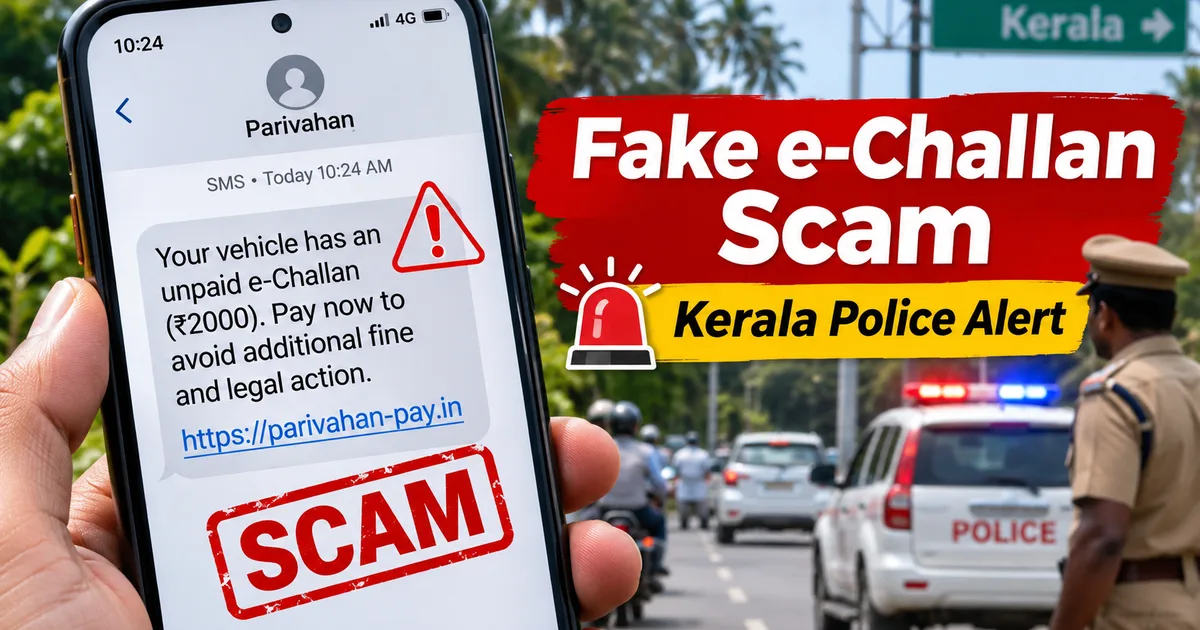
Basically, this fraud uses spoofed text messages that pretend to come from the Motor Vehicles Department (MVD) or the national Parivahan portal. The SMS says that a CCTV camera caught your bike or car breaking a traffic rule. It has an official-looking reference number and a shortened link, telling you to pay the fine online.
Look at what happened in Kondotty, Malappuram district earlier this month. On November 8, 2026, Jamsheed, a 41-year-old resident of Nambolankunnu near Calicut Airport, got one of these texts. He thought it was a real government notice, so he tapped the link. It opened a webpage built to look just like the official Parivahan portal.
He typed in his vehicle registration number to check things out. Right after that, money started draining out of his bank account. Police say Rs 3,89,496 vanished across 10 separate UPI transfers before he even realized his balance had dropped. In my opinion, that's terrifyingly fast. He reported the theft, and police registered a case on November 12 under the Bharatiya Nyaya Sanhita (BNS) and the Information Technology Act. Eventually, they traced and froze the receiving bank accounts.
Thing is, this isn't just a Kerala problem. We've been tracking versions of this trap across Indian states, including an earlier Parivahan payment link scam that hit drivers earlier this year. When a scam works well in one state, the gangs just swap out the state name and send the texts somewhere else.
How the traffic fine SMS scam empties your account step by step
You might wonder how just typing a vehicle number turns into nearly Rs 4 lakh vanishing from UPI. The technical trick varies depending on who runs the domain (I'm not sure exactly why some gangs use browser forms while others use apps). Police are still investigating the full money trail in the Malappuram case. But based on the Kerala Police warning, the scam usually works like this:
- First, scammers send bulk SMS texts carrying real vehicle numbers. How do they get your number plate and phone number together? Usually through leaked dealer databases or scraped service lists, though the exact source is hard to pin down.
- Second, the message creates panic by claiming a CCTV camera caught your vehicle, then drops a shortened link next to a fake challan number.
- Third, tapping the link opens a copied website with MVD or Parivahan logos. It asks for your vehicle number to check the fine, making it look genuine.
- Fourth, once you enter your details, the site asks for payment. Depending on the setup, it asks for your card details and banking OTPs, or pushes a sketchy UPI request to your phone.
- Fifth, as soon as you approve that UPI prompt or enter card details, scammers empty your account. In Jamsheed's case, ten quick UPI debits cleared out Rs 3.89 lakh before he could react.
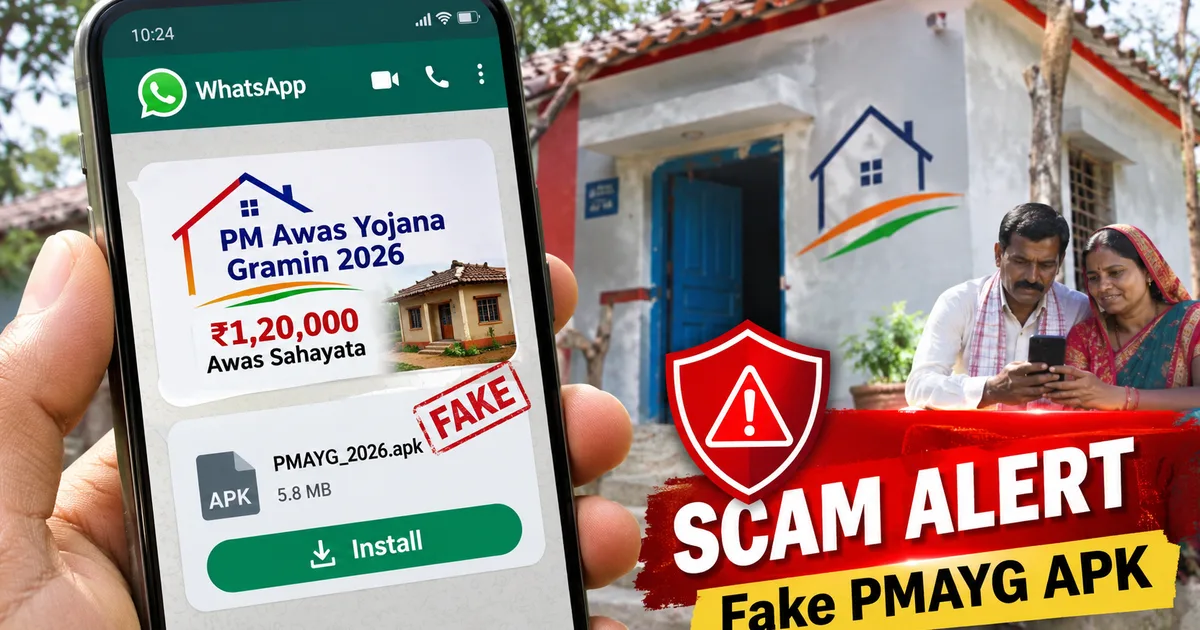
Some gangs also send fake Android APK files through messaging apps instead of website links. If anyone sends you a file ending in .apk on WhatsApp claiming it's a fine receipt, check our warning on WhatsApp e-Challan APK malware before touching it. In my experience, once a bad APK gets installed, it reads your OTP texts and hijacks your bank apps without you knowing.
Red flags of a fake Parivahan e-Challan message
Most fake texts look fine at first, especially on a small phone screen when you're busy. But if you pause for ten seconds, things look sketchy pretty fast.
In its November 14, 2026 alert, Kerala Police warned people against paying traffic fines through unknown SMS links. They noted that fake MVD sites steal card numbers, CVVs, passwords, and banking OTPs. Never tap payment links inside unexpected traffic SMS messages.
Here are the warning signs to watch for whenever a challan text lands on your phone:
- Shortened web links like bit.ly, tinyurl, or weird domains ending in .top or .xyz. Real Indian government portals always use .gov.in or .nic.in links.
- Texts sent from ordinary 10-digit mobile numbers rather than official government headers. And even if the sender name looks right, don't trust the link.
- Extreme pressure to pay right away, threatening court action or blacklisting within 24 hours. Real fines don't work like that, which is very similar to the trick used in fake SBI reward points alerts.
- Any site asking for your PIN, card CVV, or banking OTP just to show a photo of your car.
- Small design mistakes, like broken menu buttons, fuzzy logos, or bad spelling in the text.
Honestly, the link itself is the biggest tell. Why would a government site make you click a weird shortened URL when every official notice tells you to visit Parivahan directly? It wouldn't.
How to check genuine traffic fines and protect your money
Let's be practical here. You can't ignore every traffic alert forever. Real CCTV cameras do catch violations across India, and unpaid fines will eventually block your vehicle insurance or fitness certificate. The key is changing your habits (which is harder than it sounds, I know). Stop tapping SMS links and check things manually instead.
Verify challans only on official government portals
Whenever you get a violation text, close your SMS app right away. Open Chrome or Safari and type echallan.parivahan.gov.in into the address bar yourself. On the actual Parivahan e-Challan site, you can check fines using your vehicle number or driving licence number along with a simple captcha. You never need to enter bank details or card numbers just to see if a fine exists.
You can also check through the official mParivahan app from the Play Store, or inside your DigiLocker account. If nothing shows up on the official portal, that text was a trap. Delete it immediately.
Lock down your UPI and phone habits
A lot of families keep all their savings in the bank account linked to Google Pay or PhonePe. In my view, that's a huge mistake in 2026. Open a secondary savings account for everyday UPI spending, keep around Rs 5,000 to Rs 15,000 in it, and don't link your main salary account to payment apps.
Also, open your banking app tonight and lower your daily UPI limits. If Jamsheed's UPI app had a Rs 20,000 daily limit set up, ten fast transfers couldn't have wiped out nearly Rs 4 lakh. Take a look at our practical tech safety guides to learn how to lock down app permissions on Android phones.
And here's a quick tip for family WhatsApp groups. If your dad or uncle forwards a traffic fine message asking if it's real, tell them to send a screenshot instead. That way, nobody taps the live URL by mistake.
Where to report cyber fraud in India: 1930 and cybercrime.gov.in
If you already clicked a link or lost money, don't just sit there feeling embarrassed. Scammers count on silence. Every wasted hour gives them time to transfer your money through dummy accounts and withdraw it.
So move fast if you can:
- Call the national cybercrime helpline at 1930 right away. Keep your bank account number and UPI transaction ID ready so operators can freeze the scammer's account.
- File a complaint online at cybercrime.gov.in as soon as you get off the phone. Upload screenshots of the SMS, the fake site, the URL, and bank debit alerts.
- Call your bank's official customer care number to block your card and stop UPI access immediately.
- Report bad links or APK files to CERT-In (cert-in.org.in) so their team can block the domains.
- Head to your local police station or cyber cell with printed bank statements so they can lodge an FIR, just like police did in the Kondotty case.
Look at the timeline in that Kerala case. The theft happened on November 8, and the police registered the case on November 12. Even after four days, police managed to trace and freeze those destination accounts. If you ask me, your odds are way better if you call 1930 within the first 30 minutes.
You should also bookmark our scam alert hub to stay updated on new SMS traps. Don't trust random links, verify challans on the real Parivahan site, and make sure your parents know these simple rules before a fake text lands on their phone.