Have you recently received a text message claiming your India Post parcel couldn't be delivered because of an incomplete address? You're definitely not alone. The fake India Post parcel delivery failed SMS scam 2026 is spreading fast across the country right now. People are losing their hard-earned money in a matter of minutes, all because they clicked a link that looked perfectly official.
I got one of these messages last week. It looked totally normal at a glance. But here's the deal. India Post doesn't send WhatsApp messages or SMS alerts asking you to update your address through a random link. They just don't do it.
Honestly, the scammers have really upped their game lately. The website you land on looks identical to the actual India Post tracking page. And that's exactly why so many people are falling for it. You might even be expecting an actual delivery. That makes the timing seem completely natural (which makes sense, actually).
What Is the India Post Parcel SMS Scam?
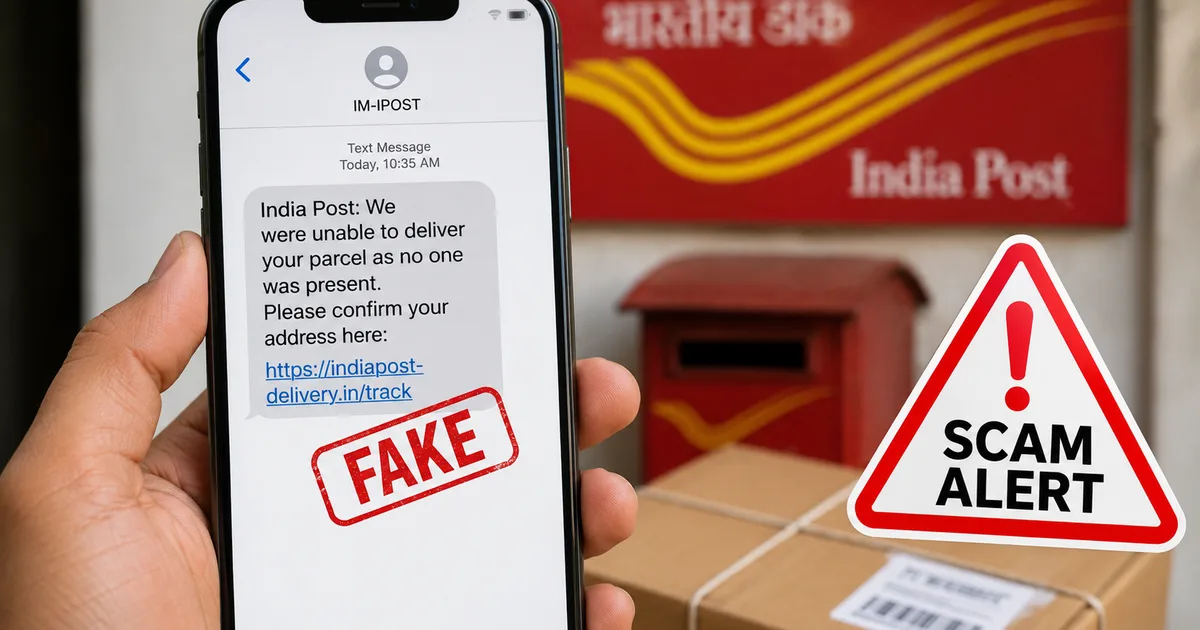
It starts with a simple text message. Usually, it says something like, "Your parcel has arrived at the warehouse but cannot be delivered due to incomplete address details. Please update your address within 24 hours to avoid return."
Then, there's a link. The link often looks harmless enough, maybe something like indiapost-tracking.in or post-update.com. But if you click it, you're not going to a government website. You're heading straight into a trap designed to drain your bank account.
This isn't a new concept, but the 2026 version of this scam is particularly nasty. In my experience, these things just keep evolving. The Press Information Bureau (PIB) has had to issue multiple warnings about it. They've explicitly stated that India Post never asks customers to pay a fee or update their address via text message links.
The scale of this operation is massive.
We're seeing thousands of complaints across Twitter and various consumer forums. Scammers send these texts in bulk. They know that statistically, a small percentage of people are waiting for a package and will click without thinking.
How the Delivery Scam Actually Works
Let's walk through exactly what happens when you interact with this message. Understanding the mechanics is your best defense against it. The process is smooth. And that's what makes it so dangerous.
Step 1: The Urgent Message
You get the SMS. It creates a sense of urgency. Nobody wants their package sent back, right? Scammers rely on panic. When you think you're going to lose something, you stop thinking critically and just react.
Step 2: The Fake Website
You click the link and land on a site that perfectly mimics the India Post portal. The red and yellow colors and the official logo make it look legitimate. They even have fake tracking numbers that appear to show a package stuck at a local sorting facility.
Step 3: Handing Over Your Data
The site asks you to fill in your "correct" address details. This includes your name, phone number, email, and full physical address. Now they have your personal information. Sometimes they even ask for your Aadhaar number for "verification." Never give your Aadhaar details to random websites. They use this data to build profiles for future identity theft.
Step 4: The Tiny Fee Trap
This is the main trap. The website will tell you there's a small redelivery fee. Usually, it's a tiny amount, maybe 10 INR or 25 INR. It seems completely reasonable. You think, "Fine, it's just 20 rupees, I'll pay it so my parcel comes." They know that asking for 5,000 INR would raise immediate suspicion. Asking for 15 INR doesn't.
Step 5: The Bank Account Drain
You're directed to a payment gateway. Again, it looks real. You enter your card details or try to complete a UPI transaction. Sometimes they ask you to enter an OTP sent to your phone.
The moment you enter that OTP, you aren't paying 25 INR. The scammers authorize a massive transaction. Your entire account balance can vanish in seconds. They use your card details and the OTP to siphon out everything they can. In some cases, they set up a recurring mandate on your UPI. They just drain funds over several days.
Warning Signs You Need to Watch For
Scammers are smart. But they always leave breadcrumbs. Here is how you can spot the fake India Post parcel delivery failed SMS scam 2026 before you lose a single rupee.
- Look at the sender ID: Official government messages come from specific shortcodes (like VD-INDPST), not random 10-digit mobile numbers or international numbers starting with +84 or +62.
- Check the URL carefully: The official India Post website is
indiapost.gov.in. Anything ending in.com,.in,.xyz, or.netthat claims to be India Post is a fake. Look for the.gov.indomain. This is non-negotiable. - Urgency is a massive red flag: Scammers always want you to act fast. "Update within 24 hours" is a classic tactic to stop you from thinking clearly. Government departments rarely operate with that kind of aggressive urgency.
- Requests for money online: India Post does not charge a redelivery fee online via SMS links. If they couldn't deliver, the postman will leave an intimation slip at your door, and you pick the item up from the local post office. You pay any pending customs duty or fees physically at the counter.
"Never click on suspicious links sent via SMS claiming to be from India Post. Official communications do not ask for personal information or payments through third-party links." (Advisory from the Press Information Bureau (PIB)).
How to Protect Yourself from Parcel Phishing
You have to be proactive. If you're ordering things online or expecting mail, you need a solid defense strategy. I think we all just assume notifications are real. But you can't just trust every notification that pops up on your screen.
First, track your packages directly through the merchant's app or website. If you bought something on Amazon, check the Amazon app. If you have an actual India Post tracking number, go straight to indiapost.gov.in by typing it into your browser yourself. Never rely on a link sent in a text message.
Second, consider reading our guide on other common scams targeting Indian internet users. The more you know about these tactics, the safer you'll be. I'm not sure exactly why, but scammers reuse these exact methods for fake electricity bill warnings and KYC update alerts.
Avoid saving your credit card details directly on websites unless absolutely necessary. And always, always read the entire SMS when you receive an OTP. Does the amount match? Does the merchant name make sense? If you think you're paying 15 INR and the OTP message says "Authorization for 15,000 INR," stop immediately. Don't type those six numbers.
For keeping your digital life secure, I highly recommend checking out some of the security tools available that help filter spam messages. Truecaller is decent. But your phone's native SMS spam filter is often quite good if you actually enable it in the settings (annoying, I know).
Also, be careful with your official documents. If a random courier site asks you to upload your Aadhaar or PAN card to "clear customs," stop. Genuine customs clearance happens through official channels. It doesn't happen through a random link texted to your phone. Keep your documents secure in DigiLocker, and only share them with verified entities.
What to Do if You Actually Clicked the Link
Look, mistakes happen. We're all busy, and sometimes we click things without thinking. If you clicked the link and entered your information, don't panic. But you do need to act fast. Speed is everything here.
If you just entered your address, you might get more spam calls. Be wary of anyone calling pretending to be a courier or bank official. They might call you the next day pretending to be from your bank, claiming there was fraudulent activity on your account. That's just part two of the scam.
If you entered your card details or a UPI PIN, you're in immediate danger.
- Block your card instantly: Open your banking app and temporarily block or hotlist your debit or credit card. You can also call your bank's customer care immediately. Most apps have a one-tap block feature now. Use it.
- Change your UPI PIN: Open Google Pay, PhonePe, or Paytm and change your UPI PIN right now. If you suspect your phone itself is compromised, uninstall the apps entirely until you secure your accounts.
- Report the fraud: This is critical. Call the National Cyber Crime Reporting Portal helpline at 1930 immediately. The faster you call, the higher the chance they can freeze the transaction and recover your money. Do not wait until tomorrow morning.
- File an official complaint: Go to cybercrime.gov.in and file a detailed report with screenshots of the SMS and the website. The police need this data to track the syndicates running these operations.
It's also worth keeping an eye on updates from CERT-In (the Indian Computer Emergency Response Team) about new phishing campaigns. They often post alerts about these widespread attacks. You can read more about how to navigate the digital world safely in our comprehensive guides.
The internet is incredibly useful, but it requires a bit of street smarts. Treat every unexpected SMS with extreme suspicion. Nobody is going to cancel your parcel delivery over a missing house number and demand you pay 20 rupees online. It just doesn't happen. Stay alert, delete those sketchy texts, and keep your hard-earned money exactly where it belongs, right in your bank account.