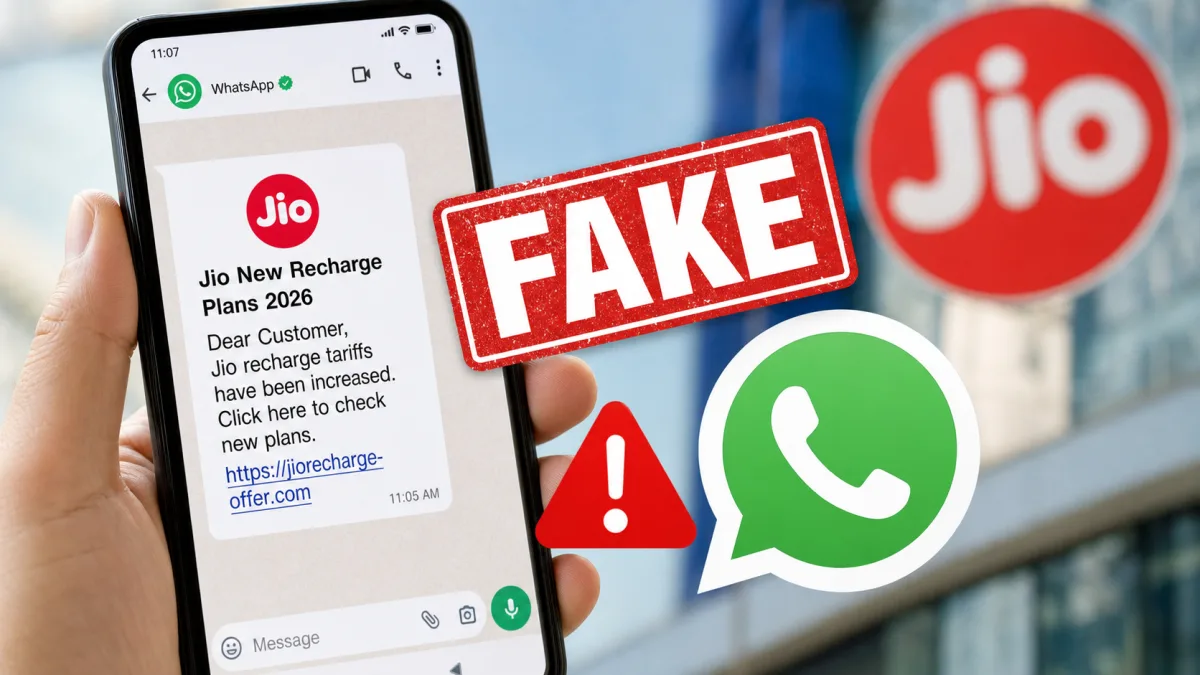
So telecom prices are going up again. You probably read the news. It's all over the place right now. Reports say Jio, Airtel, and Vi might hike their prepaid plans by 15 percent by mid-2026. This is annoying for all of us. But what's worse is how fraudsters are exploiting this real news to launch the fake Jio recharge tariff hike WhatsApp scam 2026 to steal your hard-earned money.
I got a forward in my family group yesterday. It claimed I could lock in my old Jio plan for a year. I just had to recharge through a specific link before midnight. Look, it looked very convincing. But it was a complete trap (which makes sense, actually, when you think about it). This scam is spreading fast across India right now. And people are losing thousands of rupees from their bank accounts. I think it works because people are already stressed about money.
Honestly, this is a dangerous scam. It feeds on a genuine fear. Nobody wants to pay more for mobile data. So when someone offers you a way out, you click. But that click costs you way more than any tariff hike. The mechanics of this scam are brutally simple.
The reality behind the fake Jio recharge tariff hike WhatsApp scam 2026
You might be wondering why this particular scam is effective. Well, the scammers are watching the news just like we are. They know telecom operators are planning to increase their prices.
When a real news article comes out about tariff hikes, scammers immediately draft a fake WhatsApp message. They mix real facts with their fake links. In my experience, they often tell you that Jio is offering a grace period for old customers. Or they claim the government is giving out free recharges to help users deal with inflation. They slap a picture of Mukesh Ambani on it to make it look legitimate.
But none of it is true. Telecom companies don't send random WhatsApp forwards with special links for you to bypass their official pricing. If a tariff hike happens, it happens for everyone. There's no secret back door. Period.
How the telecom price hike scam actually works
I spent the weekend looking into how these fraudsters pull this off. It's surprisingly simple. The process has three main steps.
Step 1: The panic-inducing WhatsApp forward
Basically, it starts with a message. Usually, it comes from someone you know. Maybe an uncle or a friend blindly forwarded it. The message has a sense of extreme urgency. It'll say something like, "Jio prices increasing by 20% tomorrow! Recharge now at old rates using this link. Valid for next 2 hours only."
They use urgency so you don't have time to think. They want you to act out of FOMO. And because the message comes from a trusted contact, your guard is already down. It's a mess.
Step 2: The malicious link
The message includes a blue link. It might look something like jio-recharge-offer-2026.com or a shortened link. When you click it, one of two things happens. Either it takes you to a fake website that looks exactly like the official MyJio or Paytm recharge page. Or worse, it automatically downloads an APK file to your phone.
If it's an APK, the site prompts you to install it. They claim it's a special app needed for the discount.
Don't install it. If you install that app, you're giving the scammer full access to your phone. These sketchy apps can read your SMS messages. And that means they can read your bank OTPs.
Step 3: Stealing your UPI PIN and bank details
Let's say you landed on the fake website instead. The site asks for your mobile number and shows you a heavily discounted plan. Maybe a yearly plan for just INR 599. You think it's a steal.
So you proceed to payment. The site asks for your debit card details or your UPI ID. You enter them. Then, it asks for your UPI PIN or the OTP sent to your phone. The moment you enter that PIN, the scammers capture it. They aren't processing a 599 rupee payment. They're using your details to drain your entire account balance in the background.
"We're seeing a massive spike in telecom-related cyber fraud whenever there's news of price changes. Users must understand that no telecom operator will ask you to install an unknown APK for a recharge." — CERT-In advisory note.
Real news vs fake messages
I remember back in 2023 when similar rumors about massive price hikes circulated. The exact same scam pattern played out. But today, the stakes are higher. With the widespread adoption of UPI across India, moving money is frictionless. A scammer doesn't need you to wait for a bank transfer to clear. The moment you enter your UPI PIN, the money leaves your account and bounces through multiple mule accounts in seconds.
And they want more than your money. Sometimes, these fake sites ask for your Aadhaar details. Or they ask you to verify your identity using DigiLocker. They claim it's a mandatory KYC step for the new government-subsidized recharge plan. If you give them your Aadhaar and OTP, you're handing over your entire digital identity. They can use this to open fake bank accounts or take out instant loans in your name. You won't even know about it until the recovery agents start calling you months later.
Consider the actual telecom price hikes. The numbers suggest a 15 percent increase. If your current plan is INR 719, it might go up to around INR 829. That's an extra 110 rupees (annoying, I know). It's annoying, absolutely. But compare that to losing your entire month's salary because you entered your PIN on a sketchy website. The risk here is terrible.
I've seen people on Twitter complaining that they lost over INR 50,000 trying to save INR 200 on a recharge. It breaks your heart. The fraudsters often use scripts that check your account balance before they attempt the withdrawal. If you have 50,000, they'll try to pull exactly 49,999. If it fails, they try 20,000. They keep trying until a transaction goes through. Because you think you're authorizing a small payment, you might blindly enter the PIN for a much larger amount. I'm not sure exactly why the banking systems don't catch this faster, but they don't.
Warning signs of a fraudulent recharge offer
You need to know how to spot these fakes. Here's the deal. Scammers are getting smarter, but they still make mistakes. Keep an eye out for these red flags.
- If a plan usually costs INR 2,999 and someone is offering it for INR 499, it's a scam. Telecom companies operate on thin margins. They don't give massive discounts out of nowhere.
- Look at the URL in your browser. The official site is jio.com. If the URL has extra words, numbers, or ends in strange extensions, close it immediately.
- The official MyJio app is only available on the Google Play Store or Apple App Store. If a website asks you to download a file ending in .apk, it's a virus. Period.
- A lot of these messages have weird formatting or spelling errors. Big companies have PR teams to ensure their messages are flawless.
- Remember this basic rule. You only enter your UPI PIN to SEND money, never to receive a refund or a cashback.
Another sneaky tactic is the refund scam. Let's say you try to recharge on their fake site, and it shows a payment failed error. The site then prompts you to click a button to claim your refund. They tell you to open your UPI app and enter your PIN to receive the money back. I said it before, but it bears repeating. You never need a PIN to receive money in India. The UPI system doesn't work that way. Entering a PIN always means money is leaving your account.
How to protect yourself from WhatsApp recharge scams
It's actually not that hard to stay safe if you follow a few basic rules. I always tell my parents to just stick to the apps they already have installed.
First, never click on links in WhatsApp forwards for recharges or payments. If you want to recharge your phone, open your MyJio app, Airtel Thanks app, Paytm, or Google Pay directly (I usually use PhonePe). Check the offers section within the official app. If there's a real offer, it'll be there.
Second, talk to your older family members. Scammers heavily target senior citizens who might not be tech-savvy. Warn them about the fake WhatsApp messages. Tell them to call you before making any random payments they receive on WhatsApp.
Third, keep your phone's security settings updated. Go to your Android settings and ensure the setting to install unknown apps is turned off for your browser and WhatsApp. This simple step stops malicious APKs from installing themselves without your permission.
If you're genuinely worried about the upcoming price hikes, the best strategy is to buy an annual plan right now through the official channels. Many people are buying the 365-day plans offered by Jio and Airtel before the new rates kick in. If you buy a plan today, it stays active for the entire year. It doesn't matter what happens to the prices next month. You can find these plans on the MyJio app or directly on their website. It requires a bigger upfront payment, but it locks in the current rate safely.
What to do if you already clicked the fake link
Maybe you're reading this too late. Maybe you already clicked the link and entered your details. Don't panic, but you need to act fast.
Immediately turn off your mobile data and Wi-Fi. This stops the scammers from controlling your phone or receiving your OTPs if they installed malware.
Next, use another phone to call your bank's customer care immediately. Tell them you suspect fraud. Ask them to freeze your account and block your debit cards. Do this before you do anything else.
Then, you need to report the crime. Head over to cybercrime.gov.in and file a complaint. You can also dial the national cybercrime helpline at 1930. The faster you report it to 1930, the higher the chance they can freeze the funds before the scammers withdraw them.
Finally, if you downloaded an app, you need to factory reset your phone. I know it's a hassle (and you might lose some photos), but it's the only way to be 100 percent sure the malware is gone. Just uninstalling the app isn't enough because these programs hide themselves deep in your system.
You've also got to be careful about who you trust online. There are fake customer care numbers floating around on social media. If your recharge fails or you suspect a scam, don't search for customer care numbers on Google. Scammers run ads with fake phone numbers that appear at the top of the search results. If you call them, a polite person answers. They'll pretend to help you while actually guiding you to install a remote access app. Once that's on your phone, they can see everything on your screen. They'll empty your bank account while you watch helplessly. Always use the contact options provided within the official telecom apps.
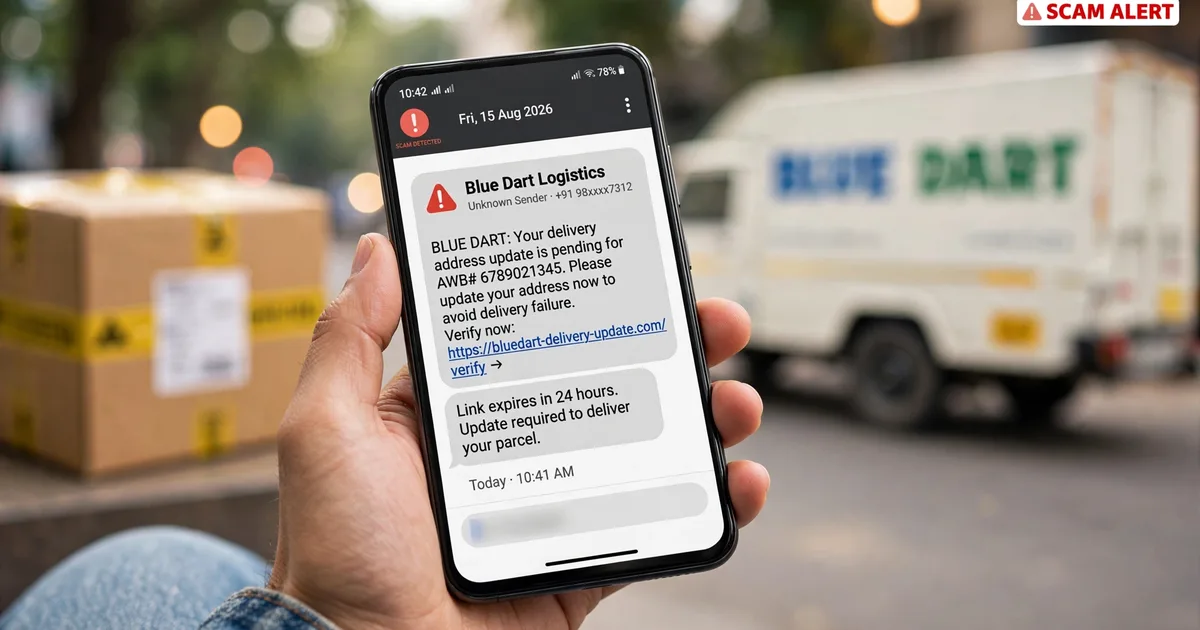
The sheer scale of cyber fraud in India right now is staggering. The government is trying to crack down. But the fraudsters are always finding new angles. They exploit our trust or our anxiety about rising costs. Today it's a telecom scam. Next month, it'll be a fake electricity bill scam or a fake courier delivery scam. The mechanics are always the same. They want you to click a link. Or download an app. Or enter your PIN.
So, the next time your phone buzzes with an urgent message promising an unbelievable deal, take a deep breath. Don't click. Don't forward. Just delete it.