The fake NHAI monthly toll pass Rs 350 WhatsApp APK scam 2026 is catching thousands of drivers off guard right now. Scammers are taking advantage of recent news. The National Highways Authority of India recently expanded their digital local FASTag pass system. People living within 20 kilometers of a toll plaza can now get a monthly pass for around 350 rupees, and sometimes an annual pass depending on the specific plaza rules. It's a good initiative for locals who cross these plazas daily for work. But fraudsters are using this legitimate update to drain bank accounts across the country.
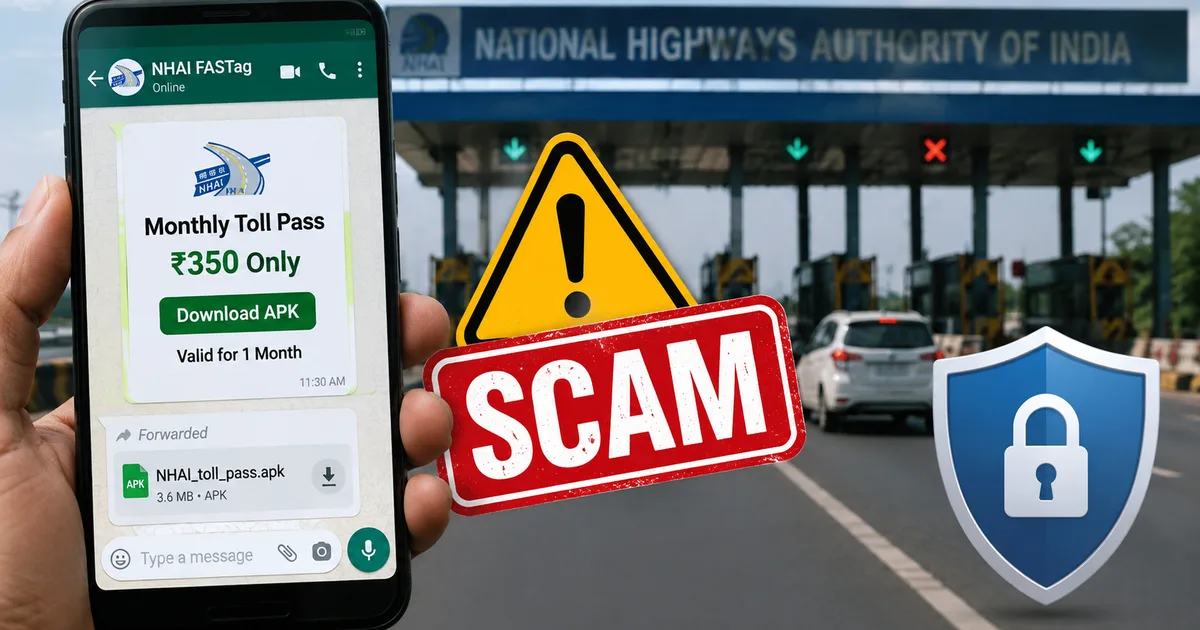
I saw the actual WhatsApp message circulating yesterday. Honestly, it's highly convincing. The message claims you can skip the queue and apply for your NHAI local pass directly through a new app. They even use official NHAI and Ministry of Road Transport logos. You just need to download their "NHAI Fast Pass" APK file attached to the message.
Don't do it. This is a trap designed to steal your OTPs and empty your bank account.
What the fake NHAI monthly toll pass Rs 350 WhatsApp APK scam 2026 is
Basically, scammers track the news closely. When the Road Ministry announced that locals around a 20-km radius of toll plazas would get passes without visiting the plaza physically, criminals saw a massive opening. They created fake Android applications that look exactly like official government platforms. In my experience, we've seen similar tactics with fake electricity bill apps. But this one targets drivers.
They distribute these fake apps via WhatsApp. Sometimes they use targeted SMS campaigns. The pitch is incredibly simple. Pay 350 rupees now, get your local toll pass activated instantly on your existing FASTag. They prey on convenience. Nobody likes waiting in line at a toll plaza office with a physical copy of their Aadhaar card and RC book (annoying, I know).
Thing is, the app they send isn't available on the Google Play Store. It's a direct APK file download. Once you install it, you give the app permission to read your SMS messages in the background. That's the entire point of the scam. The scammers don't want your 350 rupees. They want the bank OTPs your phone receives when they initiate massive fund transfers from your account. It's sketchy.
Why the Rs 350 monthly pass makes perfect bait
Scams work best when they are rooted in a bit of truth. And the NHAI actually does offer concessions for people living near toll plazas. Depending on the plaza, if you live within a 20-kilometer radius, you can apply for a monthly pass. For many plazas, this fee was recently revised to around 340 or 350 rupees per month (though the numbers here are a bit fuzzy for older plazas).
For someone driving a car, crossing a toll plaza multiple times a day for work gets expensive fast. A single trip might cost 80 to 150 rupees. So a monthly pass for 350 rupees is a massive saving.
Fraudsters know this. They know that people living near newly built highways or recently operational toll plazas are actively looking for information on how to get these passes. When the news hits that a new digital system is launching, there's a window of confusion (which makes sense, actually). People know they can apply online now, but they don't know exactly how. Read our explainers on official government apps to see how the real ones actually work.
The scammers step right into that confusion. They provide the "how" before the official information trickles down to everyone. They design the fake app to look like a logical extension of the DigiLocker or Aadhaar ecosystem. They ask for the exact documents you'd expect a government agency to ask for. You feel like you're doing the right thing by submitting your KYC. You don't realize you just handed the keys to your bank account to a criminal syndicate.
How this NHAI FASTag local pass scam actually works
Understanding the mechanics of this fraud helps you spot it early. The operation is smooth and heavily automated. I'm not sure exactly why it works so well, but I've broken down the exact sequence of events based on reports from state cyber cells.
Step 1: The WhatsApp bait
You receive a message from an unknown number. It might have a FASTag or NHAI logo as the profile picture. The text usually says something urgent. "Your vehicle UP14XX9999 is eligible for the new NHAI Rs 350 monthly local pass. Apply today to avoid regular toll charges. Download the official app below."
They often include a link that downloads a file directly to your phone. The filename is usually something like NHAI_Local_Pass_v2.apk or FASTag_Monthly_KYC.apk. Never download an APK file from a WhatsApp forward.
Step 2: Downloading the malicious APK
If you click the link and install the app, your Android phone will throw a warning about installing from unknown sources. Scammers include instructions in their WhatsApp message telling you to ignore this warning. They often claim the app is "in beta" or "not yet on the Play Store due to server issues."
Once installed, the app opens a fake registration screen. It asks for your full name, vehicle registration number, Aadhaar number, and linked phone number. It looks like a standard government form. Then it asks for a processing fee or the first month payment of 350 rupees.
Step 3: SMS forwarding and bank drain
This is where the real damage happens. To process the payment, the app requests permission to view your SMS messages. They claim this is to "auto-read the OTP" for your convenience during the 350 rupee transaction.
The moment you grant SMS permissions, the app starts silently forwarding every single text message you receive to the scammer's command server. They use your leaked phone number to initiate a password reset on your banking app. Or they try to log into your UPI app on a different device. When your bank sends the high-value transaction OTP to verify the transfer, the scammers intercept it instantly.
You might not even see the message. The malicious app often hides or deletes the incoming SMS right after forwarding it. Within minutes, they drain your account. They usually transfer the money to mule accounts. You only realize what happened when you check your balance days later, or if your bank flags a massive suspicious transaction and calls you.
Warning signs you are dealing with a fake NHAI agent
You need to know how to separate the real NHAI digital initiatives from these criminal setups. The official process is actually quite strict and follows standard digital security practices.
Look, the government doesn't send unsolicited WhatsApp messages with APK files attached. If NHAI wants you to use an app, they'll direct you to download it from the official Google Play Store or Apple App Store. The official app for highway services and FASTag management is Rajmargyatra. They'll never ask you to install an app from a random Google Drive link or WhatsApp document.
And the urgency is always a massive red flag. Scammers want you to act fast before you stop to think. They might say the offer for the 350 rupee pass expires at midnight, or that your current FASTag will be blacklisted if you don't update the local pass KYC immediately. The real NHAI local pass policy doesn't have flash sale deadlines. If you qualify based on your residential address, you qualify.
Fake apps often redirect you to a personal UPI ID rather than a verified merchant account. If the UPI ID belongs to an individual name instead of a government agency or a recognized corporate entity like Indian Highways Management Company Limited, stop immediately.
How to protect your bank account from toll pass scams
Securing your smartphone is your best defense against these modern digital heists. The methods are straightforward but require constant discipline.
- Don't install apps from outside official app stores. Go to your Android settings and disable "Install Unknown Apps" for Chrome and WhatsApp. If an app isn't on the Play Store, you don't need it. The risk is simply not worth the perceived convenience.
- Verify information through official channels. If you hear about a new NHAI pass or a FASTag rule change, go directly to the official NHAI website or the IHMCL portal. You can also read reports from reliable news sources. Don't take a WhatsApp forward at face value.
- Check the permissions you grant to apps. A toll pass application has absolutely no reason to read your SMS messages or access your phone calls. If an app demands permissions that don't make sense for its core function, deny the permission and uninstall the app.
- Keep your UPI PIN and net banking passwords secure. Never type them into an app you downloaded from a random link. Use the official banking apps or well-known payment platforms.
Read the guidelines from CERT-In regularly. They publish alerts about new malware strains and banking trojans targeting Indian internet users. Staying informed is half the battle.
Where to report if you get scammed
If you installed the fake APK and notice unauthorized transactions, you must act fast. Time is heavily working against you.
Call 1930 immediately. This is the national cybercrime financial fraud helpline. Report the fraudulent transactions. The faster you call, the higher the chance the authorities can freeze the funds in the scammers' accounts before the money is moved out of the country.
File a formal written complaint on cybercrime.gov.in. Provide all the exact details. Upload screenshots of the original WhatsApp messages and your bank statements that show the unauthorized deductions.
Contact your bank without delay. Tell them your phone was compromised by malware and your SMS messages were intercepted. Ask them to block your net banking access and stop any pending transactions. You'll need to get a new debit card and possibly change your account number if the compromise is severe.
Uninstall the malicious app immediately. Go to your phone settings and remove it. Better yet, back up your photos to a computer and perform a full factory reset on your device. This is the only way to be completely sure the malware is gone. A factory reset wipes everything, including any deeply hidden tracking software the scammers might have installed alongside the fake toll pass app.
I've seen too many hardworking people lose their savings to these simple tricks. Fraudsters are exploiting the massive digital push in India. They know we're all looking for easier ways to handle government services online. Stay skeptical. If a deal or a process seems too easy or comes via an unsolicited message, it's a trap, if you ask me. Read our other scam alerts to stay updated on the latest tactics criminals are using against us.