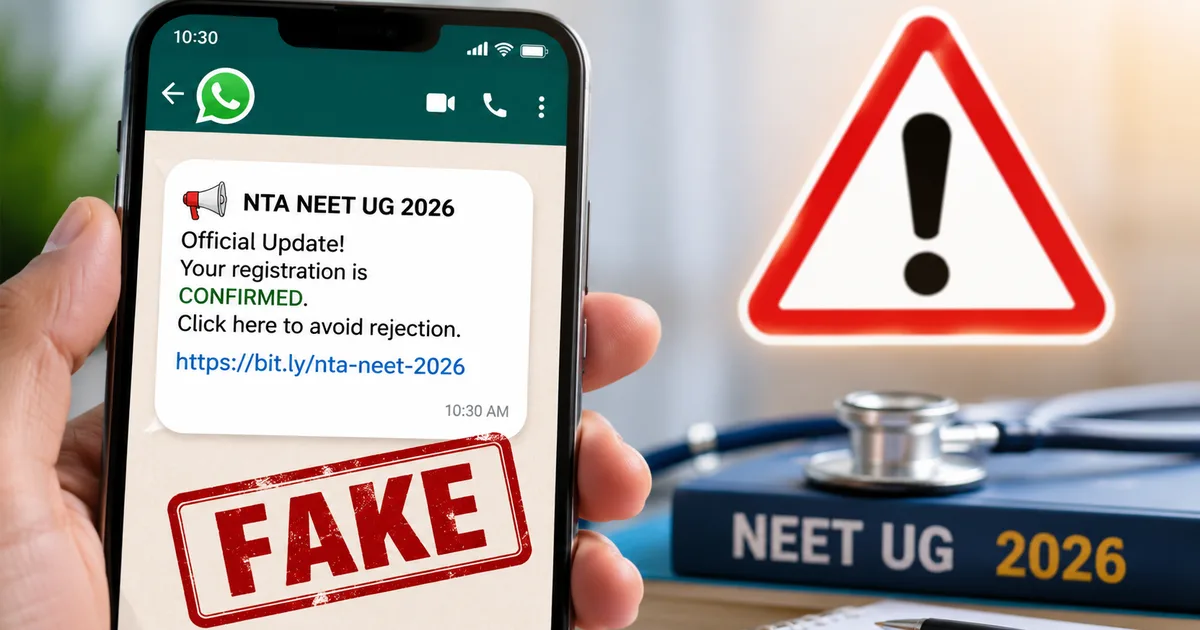
NEET UG 2026 is stressful enough. Preparing for the re-test and tracking notifications has got students and parents constantly on edge. Honestly, scammers know all about this anxiety and they're exploiting it. If you've received a message claiming to be from the National Testing Agency (NTA), don't click it. You're likely seeing Fake NTA NEET UG 2026 WhatsApp Messages designed to steal your details. Scammers send fake admit card links to aspirants. They pretend to offer easy downloads or center change options. I saw a message yesterday sent to a student in Prayagraj that looked incredibly convincing. But it was completely fake.
Here's the deal: fraud during exam season isn't new. But targeting students directly on WhatsApp with customized fake details is a massive security concern. CERT-In's warned multiple times about messaging scams that steal user data. We've got to understand how these criminals operate so we don't fall into their trap. Understanding their tactics is the first step to shielding yourself.
What this WhatsApp fraud is about
Basically, they're sending WhatsApp messages. They claim to be official representatives of the NTA (which makes sense, actually, given the panic). The messages target NEET UG 2026 candidates who're waiting for re-exam updates. Some messages claim that the candidate's exam centre's been changed because of logistical issues. They reference real-world news like the relocation of the Prayagraj centre. Others offer direct download links for updated admit cards. If you ask me, they're just exploiting the confusion. If you've been tracking these issues on our explainers, you'll know that they're always waiting to strike. So, parents receive these texts and panic. They think their child might miss the exam. They click the links without a second thought. The links lead to spoofed websites. These look identical to the official NTA portal. Once you're there, you must enter sensitive details. The scammers steal this info instantly.
How the NEET WhatsApp scam works
Look, scammers follow a clear pattern to trick you. They don't just send random texts. If you ask me, they plan every single step (which is pretty scary). Here's the breakdown:
- Database acquisition: Scammers buy leaked student databases online. These lists contain candidate names, mobile numbers, and exam centre locations. Because they've got your real name, the WhatsApp message looks official from the start.
- The hook: You receive a WhatsApp message from an unknown number. The profile picture's the official NTA logo. The message uses urgent language, warning that your NEET UG 2026 re-exam admit card's changed and must be downloaded immediately.
- The fraudulent link: The message contains a link to a website. The domain name mimics the official portal, using names like nta-admitcard-govt.in instead of the official ac.in domain. They might also attach a PDF file that they claim's the admit card.
- Data collection: If you click the link, you're redirected to a copycat webpage. The site asks for your NEET application number, date of birth, Aadhaar card number, and parent's phone number. Once you submit, this data's saved to the scammer's server.
- Payment prompt: To complete the download, the fake portal demands a processing fee of 499 INR. They present a UPI QR code or a link. Since the amount's small, many parents pay it without checking, hoping to secure the admit card.
- The block: Once the payment goes through, the webpage either crashes or displays a fake confirmation. The scammers block your number, and you're left with a compromised bank account and stolen identity documents.
Spotting fake admit cards for the NEET UG 2026 re-exam
Honestly, you can spot these fakes if you pay attention. Scammers make mistakes. In my experience, even the smart ones mess up. Here's the checklist:
- Check the sender's profile: The official NTA WhatsApp updates only come from their verified business channel. This channel's got a green tick next to the name. If the message comes from a standard 10-digit mobile number, it's fake. No official agency uses personal mobile numbers to broadcast urgent updates.
- Inspect the web address: Official NTA links always end with exams.nta.ac.in or nta.ac.in. Scammers use lookalike domains ending in .com, .org, or .in. If the URL looks long and messy, don't tap on it. Always type the official address directly into your browser's search bar.
- Spot the spelling mistakes: Scammers often make grammatical errors. You'll see weird spacing, random capitalizations, and incorrect spelling of official terms. The NTA's official communications are always proofread and professional.
- Demands for UPI payments: NTA doesn't charge students extra fees via WhatsApp or UPI to access admit cards. The application fee you've paid during registration covers all services. If any website or person asks for money to download your hall ticket, they're trying to rob you.
- Requests for OTPs: The NTA won't ever send a WhatsApp message asking for Aadhaar OTPs or DigiLocker access pins. These're private credentials. If a message asks for these, close the app immediately.
Don't download PDF files or click links sent by unknown numbers on WhatsApp. You'll only find official admit cards on the official NTA website.
How to verify the official NTA WhatsApp channel
Thing is, the NTA did launch a WhatsApp channel. It is supposed to make updates easier. But you've got to make sure you're on the right one.
The NTA has a verified channel for the NEET UG 2026 re-test. I think this actually helps a lot. Here's how to verify it:
- The official broadcast number's +91 7827980287. Save this number. Any other number claiming to be NTA's a scam.
- Look for the green verification badge. This badge's displayed next to the account name and can't be faked on WhatsApp's official API.
- The channel's broadcast-only. You won't be able to reply to messages or send queries. If someone's chatting with you or replying to your messages, it's a human scammer.
- NTA's channel only shares official notification links pointing directly to nta.ac.in or exams.nta.ac.in. It won't share direct PDF downloads of admit cards.
Check our scam alerts page. It's got reports on other scams that target Indian students (a total mess, if you ask me). But you can also read our verification guides to see how to check government notices.
Using official methods for downloads
Don't rely on chat alerts. Stick to the official portals instead. The NTA website's the safest place for NEET UG 2026 updates.
You can also use DigiLocker to get your admit card. It's a neat tool from the Ministry of Electronics and IT. I think it's the safest way. It links directly to your Aadhaar card. It retrieves verified documents straight from the source database. This helps you avoid downloading sketchy malware. If you're still unsure, check the official press releases.
How to protect your NEET UG 2026 re-exam information
Look, ignoring fake messages isn't enough. You've got to protect your details proactively. If you ask me, you should do these things right now:
- Disable auto-download on WhatsApp: Go to WhatsApp Settings > Storage and Data. Under Media auto-download, turn off all options. This stops malicious PDFs or APK files from installing on your phone automatically.
- Don't forward unverified alerts: If you get a message about exam postponement or centre changes, don't share it in study groups. Check the official site first. Forwarding fake messages spreads panic and helps scammers.
- Secure your DigiLocker: Use a strong PIN and enable biometric lock on the app. Don't share this PIN with anyone.
- Report suspicious numbers: If a number sends you fake links, block it and report it using WhatsApp's report feature. This helps the platform flag and ban the account.
It's always better to be safe. Cyber criminals use these high-stress periods to catch you off guard. One wrong click can compromise your phone (which is a nightmare). Then hackers get easy access to your UPI apps and photos.
Where to report WhatsApp exam fraud
If you've been targeted by these scammers, don't stay quiet. Report it. In my experience, reporting helps law enforcement track down the networks. Here's how to do it:
- File an official complaint online at the National Cyber Crime Reporting Portal at cybercrime.gov.in. You'll be able to upload screenshots of the WhatsApp chats and the payment details there.
- Call the national cybercrime helpline number at 1930. This helpline operates 24/7 and assists victims of financial fraud in freezing stolen funds.
- Contact the NTA helpdesk directly by emailing them at neet@nta.ac.in or calling their official helpline numbers listed on their website.
- Report the scammer's bank details or UPI ID if you've made a payment. You should contact your bank immediately to block any further unauthorized transactions.
Don't feel embarrassed if you fell for the trick. These scams are designed to look official. So, just report it immediately (it takes only a few minutes). That way, the authorities can block the fraudster's accounts.