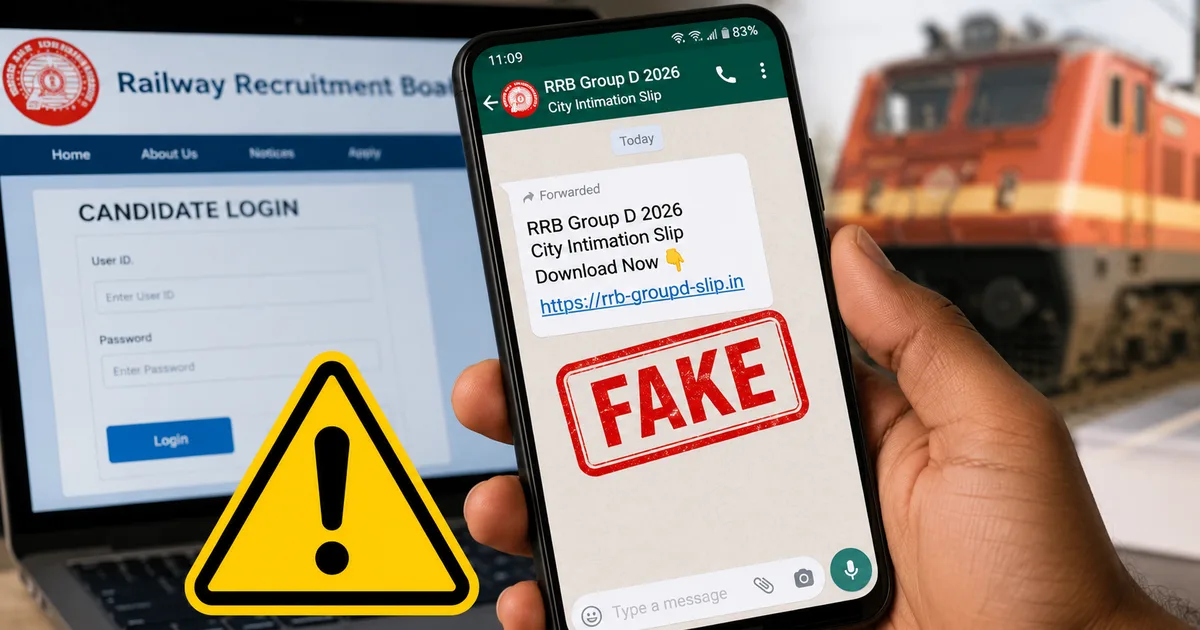
Look, if you've applied for the railway exams, you're probably checking your phone constantly. I get it. With the RRB Group D 2026 exams coming up in August and the CBT city slip supposedly dropping soon, the anxiety is real. Over a crore of candidates apply for these jobs. And scammers know this. Right now, there's a massive wave of Fake RRB Group D 2026 City Intimation Slip WhatsApp Links floating around. These messages look incredibly official. They claim your exam city has been allocated and urge you to click a link to download your slip. But clicking that link is a terrible idea. It isn't from the Railway Recruitment Board. It's a trap designed to steal your Aadhaar details and your hard-earned money.
The trap: what exactly is this scam?
Honestly, this is one of the more organized scams I've seen lately. We've seen similar stuff before. Remember the fake appointment letters in Dhanbad where someone lost ₹29 lakh? Or that Thane guy duped of ₹22 lakh? Job scams are everywhere in India. The Enforcement Directorate recently cracked down on a massive fake recruitment scam across government departments. But this specific WhatsApp scam targets your immediate anxiety about the exam city allocation. It preys on the fear of missing out. Or getting a bad exam centre far away from your home district. (Which makes sense, actually, given how hard travel can be).
They send you a WhatsApp message with a link. The message says something like "Dear Candidate, your RRB Group D CEN 09/2025 city intimation slip is ready. Download now before the server crashes." They use the real notification number. This makes it look authentic. They use the Indian Railways logo as their profile picture. Basically, they create an artificial sense of panic. And because you're stressed about travel arrangements and train tickets, you might just click it without thinking twice. I think that's the scariest part.
How they find your phone number
You might be wondering how they got your contact details in the first place. I'm not sure exactly why, but data leaks from coaching centres and Telegram study groups are incredibly common. (Annoying, I know). If you joined a random RRB Group D 2026 preparation WhatsApp group to get free PDF notes, your number is out there. Anyone can scrape it.
Sometimes, it's even simpler.
Shady cyber cafes where students go to fill out online application forms sell phone number databases. They sell them to marketing agencies and scammers. It's a pure numbers game. If a scammer messages 50,000 candidates, even 100 panicking students clicking the malicious link is a massive financial win for them.
How this fake intimation slip fraud works
Let me break down exactly what happens when you interact with these messages. It's a sophisticated system designed to look legitimate. The goal is to trick you into handing over control of your digital life. In my experience, people underestimate how convincing these pages are.
Step 1: the urgent message
You get a text. It has official-sounding language. It might even spoof the sender ID to look like it came from a bulk SMS service. Instead of a regular 10-digit number, you see something official. The link they provide is deceptively similar to the real thing. It might be something like rrb-apply-gov.in.com or indianrailways-cbt2026.org.
At a quick glance on a small smartphone screen while riding a crowded bus, it's extremely easy to miss the extra characters. Or the wrong domain extension.
Step 2: the fake portal
You click the link. It opens a website that perfectly mirrors the official RRB application portal. It has the same blue headers and the exact same layout. It asks for your Registration Number and Date of Birth. This is the standard procedure for the real website. So you enter it naturally.
You think you're just logging in to check your city. But what you're actually doing is handing scammers your valid login credentials. They can now log into the real site as you. And they can mess with your application.
Step 3: the data harvest
Once you hit submit, one of two things happens. Option one says there's a server error and asks you to verify your identity. It then asks for your Aadhaar number or bank account number for supposed refund purposes. None of this makes sense for an exam slip. But panic makes people do illogical things.
Option two is a mess. It's far more dangerous.
It prompts you to download a PDF file to view your city details. But it isn't a PDF. It's a malicious APK file disguised as a document. If you install it, you've just given a remote hacker complete access to your Android phone. They can read your incoming text messages, including the OTPs from your bank. They can access your DigiLocker. They can wipe your UPI-linked SBI or HDFC account in minutes. They don't even need your UPI PIN. The malware intercepts the bank OTP, authenticates the transaction in the background, and forwards your money to a mule account before you even realize what happened.
Warning signs you should never ignore
It's easy to panic when you think you might miss your exam details. Take a deep breath. Look for these specific red flags.
- The link in your WhatsApp ends in .xyz, .net, .org, or has random words like rrb-exam-slip-download. The ONLY official website for RRB applications and intimation slips in 2026 is rrbapply.gov.in. Close anything else immediately.
- The site forces you to download an Android app to view your exam city. The real RRB portal lets you view and print your slip directly in the web browser. It will NEVER ask you to install an unknown APK file.
- The site asks for a processing fee or server charge via PhonePe, Paytm, or Google Pay. Checking your city intimation slip is absolutely free. Government websites do not charge you to view your admit card.
- The message uses excessive capital letters, exclamation marks, and phrases like URGENT ACTION REQUIRED. Real government alerts from the NIC SMS gateway are boring, plain, and formal.
- The sender profile is a normal 10-digit Jio or Airtel number instead of an official alphanumeric sender ID.
"No government department or testing agency will ever ask you to download a third-party application via WhatsApp to access your admit card or exam city details. This is a classic phishing tactic designed to bypass mobile security."
Critical warning: how to protect yourself
I can't stress this enough. Your personal data is worth real money. Scammers are getting better at extracting it. Here's what you need to do right now to keep yourself safe.
First, rely only on the official channels. Bookmark rrbapply.gov.in on your phone browser. If you hear from news outlets that the city intimation slips are out, type the address yourself. Don't click links forwarded in WhatsApp groups. Even if your best friend sent it. They might be fooled too. Read more about protecting your data in our security tools guide.
Second, if you accidentally clicked a sketchy link and entered your details, act fast. Change your email passwords immediately.
If you downloaded an app, turn on Airplane Mode right now. This cuts off the hacker's connection to your phone. Go to your phone settings. Find the unrecognized app, uninstall it, and format your phone to be entirely safe. It sounds extreme, but a complete factory reset is much better than losing your entire savings account balance. If you ask me, it's the only way to be totally sure.
Third, never share OTPs. If a railway official calls you saying your application is stuck and they need an OTP to verify your Aadhaar, hang up the phone. The RRB doesn't run an outbound call centre to fix individual application issues over a voice call. Anyone asking for an OTP is a criminal. Period.
CERT-In repeatedly advises users to verify the source before clicking any link. They've issued multiple advisories about these exact types of phishing campaigns during major exam seasons in India. You need to stay updated on these latest scam warnings.
Where to report this scam
If you receive one of these fake RRB Group D 2026 city intimation slip WhatsApp links, don't just delete it. Report it so the authorities can take down the fake websites and block the fraudulent numbers.
If you just got the message but didn't lose any money:
Block the sender on WhatsApp immediately. You can also report the number as spam within the app settings. Take a screenshot of the chat and report the phishing link to the Chakshu portal on the Sanchar Saathi website. The Indian government set up sancharsaathi.gov.in specifically to report suspected fraud communications.
If you clicked the link and lost money or gave away sensitive bank details:
Don't wait. The first 24 hours are absolutely crucial. Call the national cybercrime helpline at 1930 immediately. It's toll-free and they can sometimes freeze the fraudulent transaction if you report it fast enough. After calling, file a detailed formal complaint at cybercrime.gov.in. Keep all your screenshots and bank statements saved as evidence for the police. The numbers here are a bit fuzzy, but reporting fast gives you the best chance of recovering funds.
Look, finding a government job is hard enough without having to dodge these financial landmines. Be skeptical. Trust the official websites only. If something feels off about a link, it probably is. Share this with anyone you know who is preparing for the railway exams. They need to know what to look out for. You might just save their bank account from being drained.