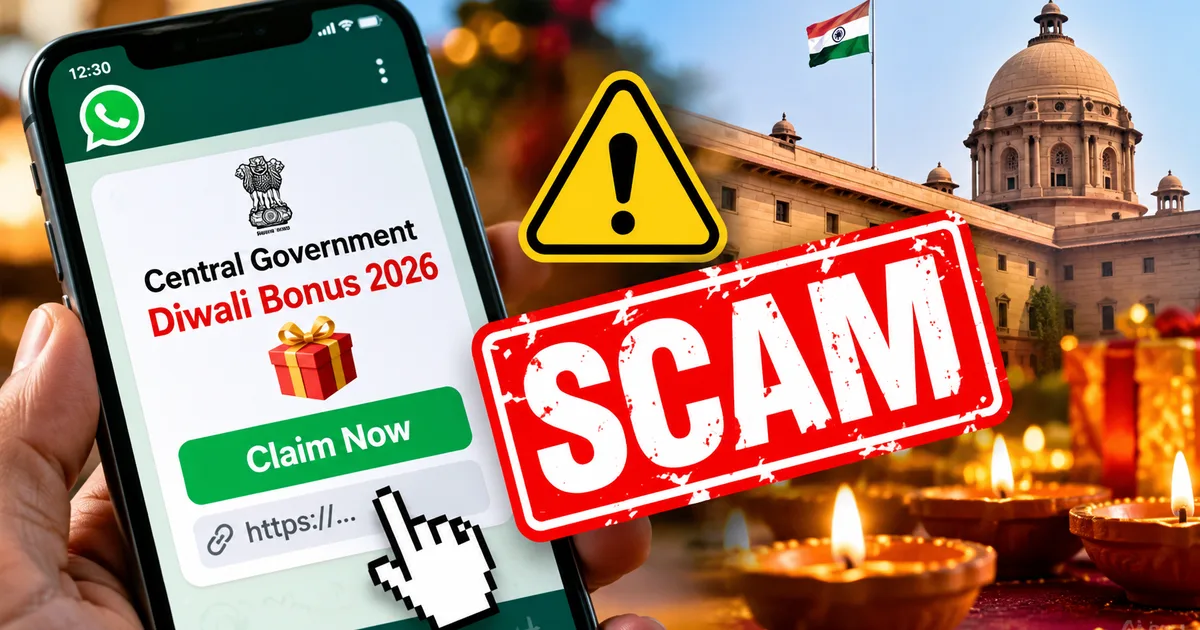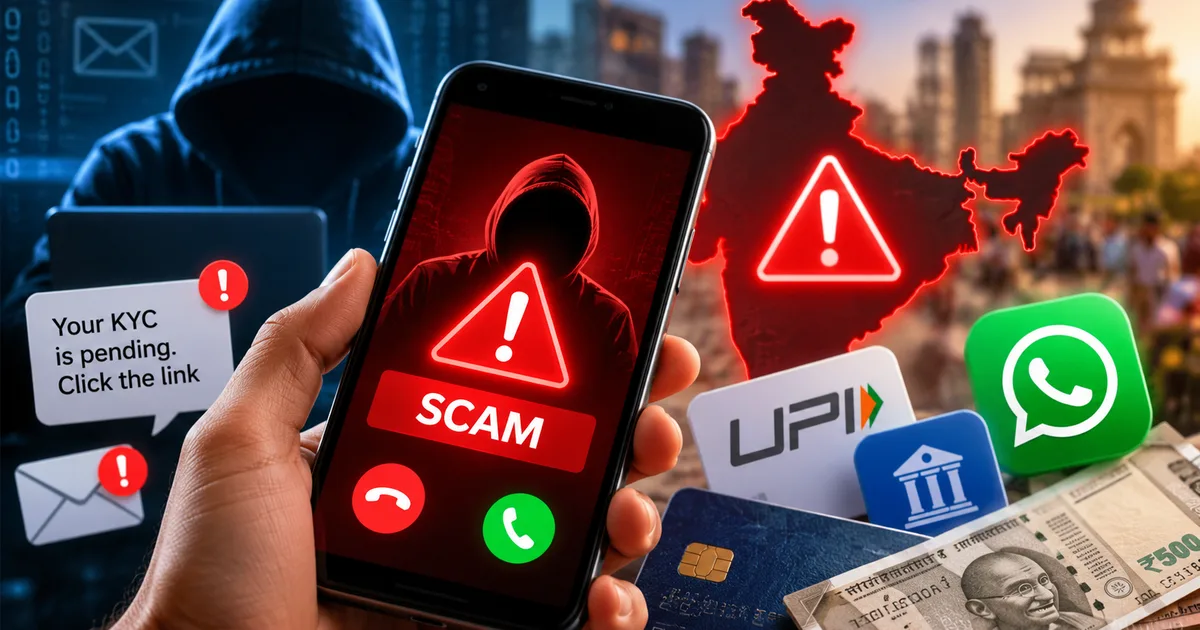
If you check your phone right now, chances are you've got at least one unread message pretending to be your bank or a courier service. Clumsy lottery emails from overseas are a thing of the past. Examining the latest scam alerts trends in India 2026 shows an aggressive shift toward hyper-local social engineering. Scammers study your habits. They know which apps you open first and what bank holds your salary. Honestly, they know exactly what tone makes you panic.
In my experience, even tech-savvy folks fall for this. I talk to people every week who watch ₹50,000 vanish from their account in under three minutes. It's sickeningly fast. That's why we keep tracking these patterns over at our scam alerts and safety hub, because staying safe today is really about understanding the psychology behind the screen.
The sharp rise of WhatsApp boss scams and impersonation fraud
The biggest shift this year is how fraudsters attack workplace trust. Both the Ministry of Home Affairs and the Securities and Exchange Board of India issued formal alerts about the boss scam spreading across WhatsApp. Fraudsters pull executive profiles from LinkedIn and company directories. Then they message an employee, usually someone in accounts or HR, using the CEO's actual photo and name.
The message always sounds urgent.
The imposter claims to be stuck in a board meeting with terrible network connectivity. Then they tell the employee to clear an overdue vendor bill or buy digital gift cards right away. And because the request looks like it comes straight from top management, people rush the transfer without running it past regular approval channels. If you ask me, workplace pressure is the easiest vulnerability to exploit.
Thing is, by the time the real boss finishes their meeting, the money is already long gone. Scammers move the cash across half a dozen mule accounts within minutes. (It sounds completely obvious from the outside, but panic simply shuts down normal thinking.) I'm not sure exactly why internal verification fails so often, but it happens every single day.
Fake event refunds and government summit phishing
Opportunists are also piggybacking on major news headlines. Look at what happened right after the India AI Impact Summit 2026 at Bharat Mandapam. Union IT Minister Ashwini Vaishnaw shared that the summit brought together over 5 lakh visitors and drew $270 billion in investment pledges. That's a massive crowd. Within hours of the wrap-up, attendees started getting SMS and WhatsApp messages promising registration fee refunds.
The IndiaAI Mission had to post an emergency warning on social media to stop folks from handing over their banking details. Scammers built fake forms asking for card numbers and CVVs under the guise of processing reimbursements. Here's what the IndiaAI Mission stated in their public warning:
"Fraudulent messages are being circulated via SMS and WhatsApp, requesting sensitive information to facilitate 'refunds'. These communications are not official and have not been authorized by our organization."
Scammers know people drop their guard when a message mentions an event they actually attended. It feels personal. We've seen the exact same sketchy trick pop up with concert tours and train cancellations. Honestly, I think people fall for it because the timing is downright uncanny. If you want to see how these copycat pages bypass spam filters, take a look at our breakdown of new fraud tactics hitting mobile users.
How new UPI scams and social engineering traps work step by step
UPI makes life wonderfully convenient, but that instant speed leaves zero margin for error. State Bank of India customers and users of popular UPI apps recently saw a flood of automated SMS warnings claiming their accounts were blocked for incomplete verification. Basically, it's an old panic trap with a modern skin. Here's how it works step by step:
- You receive an SMS warning that your bank account or UPI access will be suspended within twelve hours due to incomplete verification.
- The text includes a shortened link that opens a cloned banking portal or asks you to dial an unauthorized customer support number.
- The fake executive on the phone claims they will assist you with unblocking your account through a test transaction or a screen-sharing app like AnyDesk.
- They instruct you to accept a collect request on PhonePe, Google Pay, or Paytm, claiming the amount will be immediately reversed.
- The moment you enter your UPI PIN, the funds leave your account and land in a network of mule accounts.
Just remember this rule: you never enter your UPI PIN to receive money. Ever. Every single time you punch in those four or six digits, money goes out of your account. In my experience, scammers love targeting people who are slightly distracted. But there is simply no feature in UPI where entering your secret PIN adds a single rupee to your balance.
Warning signs you should never ignore on your phone
Spotting the pattern early is really your best shield. Phishing texts don't have messy spelling errors like they used to, because scammers use AI tools to polish their English. (Annoying, I know.) But the behavioral red flags are almost always the same:
- Unreasonable time pressure telling you that action must be taken within ten or fifteen minutes to prevent legal trouble, power disconnection, or account closure.
- Requests to step outside established official channels, such as an executive insisting on private WhatsApp chats instead of corporate email.
- Payment requests asking for gift vouchers, cryptocurrency, or unfamiliar UPI handles ending in personal phone numbers.
- SMS messages containing strange link shorteners rather than verified government or official banking web domains.
- Callers instructing you to install remote support utilities on your smartphone to fix a transaction glitch.
Hit pause whenever anyone pressures you to act fast. Real banks and government offices don't give you a fifteen-minute countdown to stop an account cancellation. They just don't. If you ask me, manufactured panic is the dead giveaway every single time.
How to protect yourself against new online scams
Look, staying safe isn't about being paranoid. It's about building small, solid habits that protect your money. First and foremost, always verify urgent financial requests through an independent voice call. If your boss or business partner texts you asking for emergency cash, call them on their known number before opening your banking app. Never dial the number sent in the message itself.
Second, never click on unsolicited refund links sent over SMS or WhatsApp. If you're expecting money back from an airline or a shopping site, open your browser and type the web address yourself. Check your order history right there instead of tapping sketchy external links.
Third, lock down your phone and SIM card properly. Turn on two-factor authentication for your primary email and skip public Wi-Fi whenever you move money around. In my experience, that single habit stops half the attacks out there. For step-by-step walkthroughs on configuring device protections on Android and iOS, check our security setup guides.
Fourth, guard your Aadhaar and PAN details like cash. Don't upload unmasked Aadhaar PDFs to random third-party portals, and use the official masked Aadhaar download whenever someone asks for proof of identity.
WhatsApp on-device scam detection and the privacy debate
Apps are also tweaking their defenses. Meta recently rolled out an on-device feature called Scam Alert on WhatsApp to flag sketchy messages. The tool downloads a lightweight machine learning model directly onto your handset. So when an unknown number texts you using known fraud phrases, the app puts up a warning banner that only you can see.
Because the model runs locally on your handset, your chats don't leave your phone and encryption stays intact. (Which makes sense, actually.) But policy is where things get complicated. The Telecom Regulatory Authority of India has been working on the Telecom Commercial Communications Customer Preference Regulations Third Amendment. Telecom operators want messaging platforms like WhatsApp and Telegram to share spam logs with the national Do Not Disturb registry. The Internet and Mobile Association of India strongly opposes the move, saying that forcing private platforms to share data overreaches state authority. Honestly, the exact timeline for these rules is still a bit fuzzy, and the whole debate is a mess.
While regulators and tech giants argue back and forth, you can't afford to wait for automated fixes to protect your bank balance. For more background on how digital regulations affect consumer privacy, read our tech explainers.
Where to report cyber fraud in India
Speed is everything if you think you've been scammed. Every second counts. If you typed your credentials or authorized an accidental transfer, call the 1930 national cybercrime helpline within the first hour. Investigators call this window the golden hour. When you dial 1930 right away, police can tell beneficiary banks to freeze the cash in the receiver's account before anyone withdraws it at an ATM.
Right after calling the helpline, follow up with these actions:
- Register a formal digital complaint on the Ministry of Home Affairs cyber portal at cybercrime.gov.in with transaction IDs, screenshots, and sender phone numbers.
- Contact your bank's emergency fraud desk immediately to block your debit cards, reset internet banking passwords, and disable UPI access.
- Report critical security threats and phishing campaigns to the Indian Computer Emergency Response Team at CERT-In so they can issue public advisories.
- Report and block the scammer's contact number directly inside WhatsApp and your default SMS application to improve community spam filters.
Financial scams thrive on shame. Scammers count on victims feeling embarrassed and keeping quiet instead of reporting the crime. Don't carry that guilt. These fraud syndicates operate just like legitimate businesses, complete with specialized software setups and dedicated shifts. If you ask me, speaking up immediately is the only realistic way to claw your money back and keep others from getting burned.