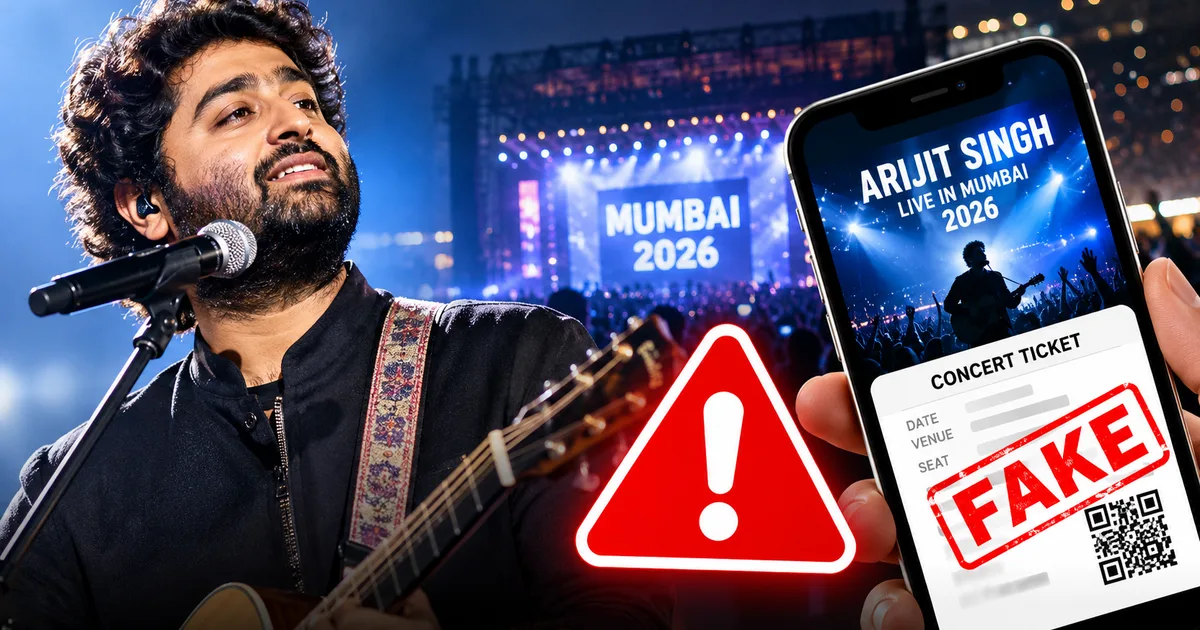
If you've been scouring social media for last-minute passes to see India's biggest playback voice live in Mumbai, you need to hit pause right now. Scammers are actively targeting eager music lovers with an elaborate fake Arijit Singh Mumbai concert 2026 ticket package scam that has already drained bank accounts across the country. These crooks know how desperate people get to grab premium lounge spots after regular booking slots sell out in minutes. They fabricate luxury hospitality packages and flash fake corporate passes, then insist on direct UPI deposits before you can even blink.
Honestly, it's terrifying how real these traps look.
When tickets for huge stadium gigs drop in India, real premium hospitality packages cost crazy money. In Mumbai, official luxury lounge packages for Arijit Singh shows have touched figures up to Rs 11.8 lakh. That sounds totally absurd to most of us. But those corporate boxes sell out fast. Scammers take full advantage of those wild headlines. They approach everyday fans on Instagram and Telegram, claiming they have reserved VIP lounge boxes or corporate sponsor quota seats they'll sell for Rs 25,000 to Rs 75,000 per person. If you're staring at a sold-out screen on your phone, that price looks like finding water in the Thar desert.
Thing is, genuine event organizers never sell spare seats through random direct messages. In my experience, and from what I've seen checking how authorized ticketing partners handle inventory, corporate allotments never spill into random WhatsApp groups or personal UPI payments. If someone claims they've got exclusive access to a sold-out Mumbai arena and tells you to settle the bill on PhonePe or Google Pay, you're talking to a scammer. Period.
And that's how concert ticket scams work across Indian cities today. The old days of shady touts whispering outside stadium gates are gone. Today, scammers run polished digital setups with verified-looking badges, fake reviews, cloned booking portals, and bogus screenshots.
How the fake VIP ticket package scam works
The whole operation follows a slick playbook designed to bypass your natural skepticism. Look, nobody wakes up planning to hand Rs 50,000 to a stranger on the internet, but these scammers know how to create panic. They build fake pages that look just like real corporate booking agencies.
First, the scammers run targeted ads on Instagram and Facebook using clips of Arijit Singh concerts. The ads promise confirmed access to exclusive VIP tables or backstage passes. Once you click the link or leave a comment, you're redirected to a private WhatsApp business account or a dedicated Telegram channel. The profile photo usually has an official-looking event management badge (annoying, I know), and the bio claims direct ties with major entertainment agencies.
Next comes the fake rush. The seller tells you only two passes are left in their corporate quota, and another buyer is already transferring funds. To back it up, they send over high-resolution seating charts and fake tax invoices. Then they demand a quick token deposit through UPI or IMPS to lock in your spot. Some even send spoofed BookMyShow or Zomato Live confirmation emails just to make the transaction look legitimate.
Once you send that deposit, the trap shuts. Instead of sending digital entry barcodes, the scammer invents a surprise fee. They might claim venue security needs an entertainment tax fee of Rs 5,000, or that lounge passes need a refundable security deposit of Rs 10,000 per wristband. If you pay, they just make up another fee. The moment you push back or ask for real ticket transfer details, they delete the chat and block your number. You're left with an empty bank balance. Zero tickets.
If you ask me, these scams always show the same telltale signs across different platforms:
- Promoters demanding upfront payment directly to personal savings accounts or virtual payment addresses rather than registered business gateways.
- Unsolicited messages on Telegram or Reddit claiming to hold spare VIP tickets from cancelled corporate delegations.
- Screenshots of digital booking receipts where transaction dates, venue timings, or booking IDs show obvious digital alterations.
- Sellers refusing to meet in person or conduct ticket transfers through verified venue re-sale desks.
- Fake agency representatives insisting that tickets will be delivered by courier on the morning of the event.
The Rs 1.41 crore concert fraud case from Gujarat and Mumbai
If you think only individual buyers fall for live event swindles, consider what happened in Surat recently. A 28-year-old co-owner of an event management firm approached Utran police after losing Rs 1.41 crore to two Mumbai-based operators who promised an Arijit Singh concert.
According to the police complaint, the accused duo claimed the full event production would cost around Rs 9 crore. They promised to arrange corporate sponsorships and promotional backing to ease the financial load on the event company. To gain the victim's trust, the scammers went to extraordinary lengths. They took the complainants to Pune to attend an actual Arijit Singh concert, making the victim cover every rupee of travel and hotel stays. The accused also lived in luxury hotels across Surat and Mumbai on the victim's tab while taking money under multiple excuses. (The exact timeline in the report is a bit fuzzy, but the spending went on for weeks.)
When the promised concert didn't happen, the operators didn't stop lying. They pivoted, offering substitute shows featuring comedian Kapil Sharma and dancer Nora Fatehi. Those events never happened either. After repeated refund demands were met with dead silence, the victim finally lodged an official cheating complaint at the Utran police station.
Concert ticket scammers exploit emotional investment and fear of missing out. When high-value events sell out, buyers often ignore basic verification checks in their rush to secure access.
That Surat case shows just how deep these scams run. If seasoned event managers can lose crores to smooth-talking fixers claiming access to Arijit Singh's management, an everyday fan scrolling through Instagram stands almost no chance if they drop their guard.
Warning signs of fraudulent concert booking passes
Spotting these traps is actually pretty straightforward once you know how real ticket distribution works. Event organizers follow strict protocols, especially when managing high-stakes shows in major metros like Mumbai.
Here are the warning signs you should watch for before parting with your money:
- The seller insists on instant UPI transfers using personal mobile numbers instead of merchant payment gateways like Razorpay or PayU.
- The price seems surprisingly affordable for a sold-out VIP enclosure that normally sells for thousands of rupees or lakhs on official channels.
- The seller sends you static PDF tickets or screenshots with static QR codes, even though modern stadium events use dynamic, time-sensitive barcodes inside official apps.
- The contact person becomes aggressive, claiming the offer expires in five minutes if you do not scan their payment QR code immediately.
- The booking website has a strange domain name, irregular spelling, or lacks verified customer support channels.
- The seller asks for your Aadhaar card or PAN card details under the pretext of guest registration before issuing the pass.
Compare this messy resale market with how legitimate concert changes actually work. When Arijit Singh had to postpone his major Etihad Arena concert in Abu Dhabi due to regional security tensions, the singer announced the decision openly on his official Instagram handle. Organizers kept purchased tickets valid for the rescheduled date. They also gave ticketholders a clear seven-day window to claim full refunds directly through authorized ticketing platforms (which makes complete sense). That's how professional organizers operate. Everything happens inside verified ecosystems, not via sketchy payment links over chat apps.
As we've documented in online concert ticket rackets across the country, scammers constantly jump on popular cultural moments to fleece eager fans. We've seen similar tactics in Instagram payment fraud schemes, where visual mockups and urgency push buyers into hasty decisions. Browsing through our scam safety portal reveals that whether the bait is a gadget pre-order or a concert seat, the theft mechanism is identical: unverified UPI transactions.
How to protect your bank account from ticket fraud
Protecting your finances doesn't take complex technical skills. Honestly, it just takes stubborn discipline and a refusal to let fear of missing out dictate your payment choices.
First and foremost, always verify on official ticketing platforms before believing any ticket availability claims. If the primary ticketing partner lists the Mumbai show as completely sold out, assume it's sold out. Don't go hunting for unauthorized secondary sellers on social media. Organizers don't authorize random third parties to resell tickets at markups.
Second, never send money to an individual UPI ID for concert tickets. Legitimate businesses process payments through registered merchant accounts that show verified green badges and corporate entity names on apps like PhonePe, Paytm, Google Pay, or BHIM. If the payment recipient is a personal name or a mobile number, walk away.
Third, do not scan unknown QR codes sent over WhatsApp or email. A payment QR code is designed to debit money from your bank account, not credit money or generate an admission pass. Scammers often send bogus verification QR codes claiming you need to scan them to receive your PDF ticket. The moment you scan and enter your UPI PIN, your money vanishes.
You can read more practical prevention rules in our digital payment safety guides to keep your online banking secure against everyday cyber threats.
What to do if you transferred money to scammers
If you realize you sent money to a concert ticket scammer, act within minutes. Speed is the single biggest factor here. It determines whether you get your funds back or lose them permanently.
First, dial 1930 immediately to reach the National Cyber Crime Helpline. Explain that you're a victim of financial fraud. The operator will collect your transaction details to issue a freeze request to the beneficiary bank before the fraudster withdraws the cash.
Next, file a formal complaint at cybercrime.gov.in within 24 hours. Upload transaction screenshots, UPI reference numbers (UTR), chat exports, and the scammer's phone numbers. Keep the complaint acknowledgment number safe for police verification.
Follow up by contacting your bank's fraud prevention desk to report the fraudulent UPI transaction. Request them to flag the beneficiary account for suspicious activity. Finally, submit a written complaint at your nearest local police station or cyber crime cell, referencing your national cyber portal complaint number.
The Indian Computer Emergency Response Team (CERT-In) regularly issues alerts warning citizens against fraudulent payment links and phishing domains impersonating popular brands. Staying alert and refusing off-platform transactions is your best defense against concert ticket swindles.