So, the wait for the State Bank of India's Junior Associate recruitment is finally over for lakhs of candidates. But unfortunately, the scammers were waiting too. Right now, a massive fake SBI Clerk 2026 notification registration link WhatsApp scam is targeting job seekers across India. And honestly, it's one of the more convincing frauds I've seen this year.
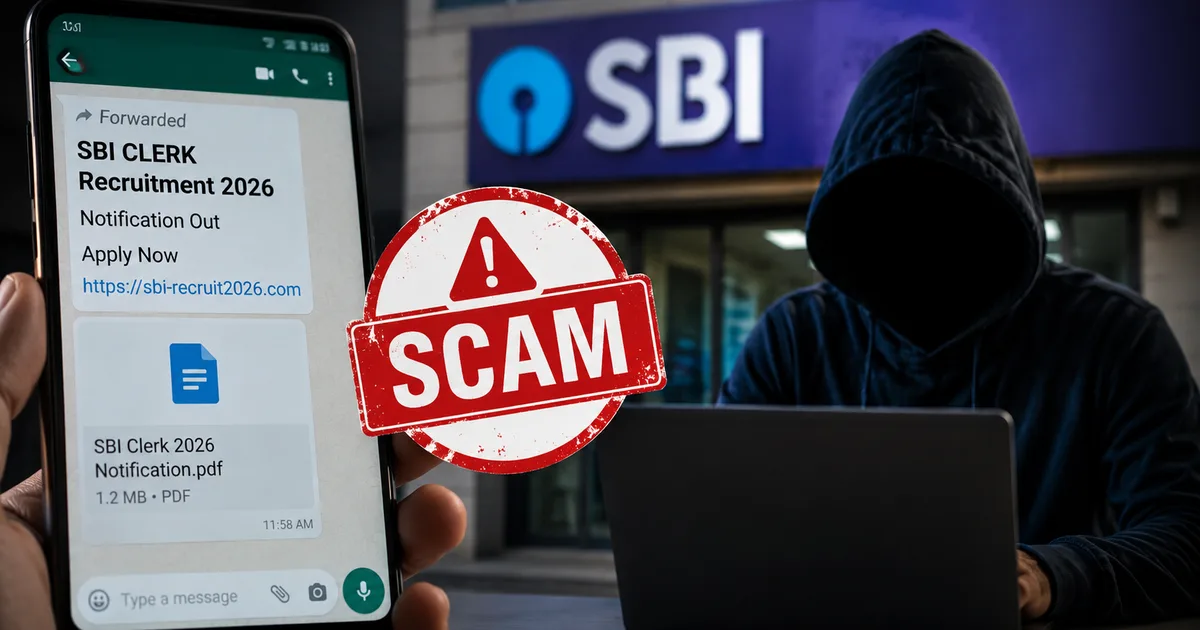
You get a message on WhatsApp. It looks incredibly official. It has the SBI logo and formatting that mimics government alerts. The message claims the SBI Clerk 2026 notification is out and you need to register immediately using the link provided. Thing is, clicking that link can empty your bank account.
What exactly is this SBI Clerk 2026 notification scam?
Every year, the SBI Junior Associate exam draws millions of applicants. With the official 2026 notification expected soon, candidates are anxious. Scammers know this. They monitor the news. They time their attacks perfectly. They send out bulk WhatsApp messages that look like legitimate bank communications.
These messages usually contain a link labeled as the "official SBI Clerk 2026 application portal" or something similar. But the link is a trap. Sometimes, it directs you to a fake website that looks exactly like the real SBI portal. Other times (and this makes sense, actually, given how they operate) it asks you to download an Android app (an APK file) to complete your registration.
If you check our latest scam alerts, you'll notice this APK tactic is everywhere right now. Fraudsters used the exact same method last month with fake HDFC reward points. Now, they're weaponizing job anxiety.
The really scary part is how tailored these messages have become. They aren't just random texts anymore. They mention the exact expected vacancies and they use the correct terminology like "Junior Associate (Customer Support & Sales)." They even copy the exact font styles from official SBI documents. It's a highly coordinated effort to exploit the desperation of unemployed youth in India.
How the fraud actually works
The mechanics of this scam are straightforward. They are also highly effective. Let's break it down step by step.
Step 1: The WhatsApp Bait
You receive an unsolicited WhatsApp message from an unknown number. Often, the sender's profile picture is the SBI logo. The text congratulates you or warns you that the deadline for the SBI Clerk exam is approaching. It provides a direct link to "apply online." They might even throw in a fake deadline like "Last Date to Apply: Today at 5 PM" to make you act without thinking.
Step 2: The Fake Portal or Malicious APK
When you click the link, one of two things happens. You might land on a phishing site. This site will ask for your Aadhaar number and PAN card details. It will also ask for educational certificates and eventually a "registration fee" via UPI.
Alternatively, the link prompts you to download a file. It's often named something like SBI_Clerk_2026_Registration.apk. Never download APK files from WhatsApp links. This is a massive red flag. Real banks don't distribute software this way.
Step 3: Stealing Your Data
If you install that APK, the app asks for permissions. It wants access to your SMS and your contacts. Most people just click "Allow" without reading because they think it's a standard registration app. The moment you hit "Allow," the scammers win. The malicious app hides in the background. It intercepts your incoming text messages, including bank OTPs.
Step 4: The Financial Drain
With your personal details from the fake form and access to your OTPs via the hidden app, the scammers can initiate unauthorized transactions. They bypass your bank's security because they have the OTPs. They can drain your primary account. They can max out connected credit cards. They can even take out instant pre-approved personal loans in your name. Before you even realize what happened, your hard-earned money is gone.
The psychological manipulation behind the scam
Fraudsters aren't just hacking phones. They are hacking human psychology. Finding a secure bank job is a massive deal in India. Families depend on it. When a candidate sees a message that looks like an official SBI notification, their logical brain often shuts down. They just want to secure their spot. I think the numbers here are a bit fuzzy, but thousands fall for this.
I have spoken to people who fell for similar job scams. The common thread is always the same. They were stressed and they were in a hurry. The message looked "real enough." Scammers exploit this tunnel vision. They know that if they can get you to click the link out of fear of missing out, you are much less likely to scrutinize the website URL or the app permissions.
This is exactly why you need to build a habit of zero trust when it comes to WhatsApp forwards. Even if the message comes from a friend or a study group, don't trust it implicitly. People unknowingly forward malicious links all the time thinking they're helping others. If you are unsure about a link, you can use online URL scanners. We discuss these in our security tools section. They check for malware before clicking.
Clear warning signs you should not ignore
I know the pressure of competitive exams makes you act fast. But you need to slow down and look for these signs.
- SBI does not send direct recruitment links via WhatsApp. They release notifications on their official careers page and through employment news. They might send an SMS alert if you are already a registered candidate on their official portal, but they do not blast out application links on WhatsApp.
- Legitimate government or bank applications are hosted on the Google Play Store or Apple App Store. They never ask you to download an APK directly from a random link. If a website asks you to download a .apk file for a job application, close the tab immediately.
- Look closely at the web address. Scammers use domains that look slightly similar to the real ones to trick your eyes. Always check if the URL is officially sbi.co.in/careers or something completely weird like sbi-clerk-apply-2026.com.
- Scams always try to rush you. If a message says "Last chance" or "Apply within 1 hour," it is almost certainly a fraud. Real recruitment notifications give candidates several weeks to apply.
- No legitimate job application process will ever ask you to enter your UPI PIN. You enter a UPI PIN to send money, not to receive a confirmation or verify your identity. If a site asks for your PIN under the guise of verification, it is a scam.
The State Bank of India has actually issued warnings about fake letter and recruitment alerts recently. They clearly state that all official announcements are made only on bank.sbi/careers or sbi.co.in/careers. They have even published cautionary notices regarding fake selection lists and job offers.
The dangers of identity theft
Losing money is terrible. But the secondary consequences of this scam can be even worse. When you fill out that fake registration form, you are handing over your Aadhaar details and PAN number. You are also handing over your address and date of birth.
Scammers use this information for identity theft. They can open fake bank accounts in your name. They then use these accounts to launder money from other scams. You could end up getting a notice from the police or the Income Tax department for transactions you never made (annoying, I know). Just last week, a shopkeeper in UP got a ₹141 crore tax notice because scammers misused his PAN linked to fake firms. Your data is valuable. Protect it.
Always use DigiLocker for sharing documents only when you are absolutely certain about the recipient. Never upload scanned copies of your ID proofs to unverified portals. If you want to know more about keeping your documents safe, read our detailed explainer on digital privacy.
How to protect yourself (and your bank account)
You can avoid this completely if you follow some basic rules. It takes just a little bit of friction to break the scammer's workflow.
First, only trust the official source. If you hear about the SBI Clerk notification, open your browser. Type in the official SBI website URL yourself (sbi.co.in/careers). Navigate to the current openings section. Never click links in WhatsApp forwards.
Second, turn off the setting on your Android phone that allows installing apps from unknown sources. This prevents accidental installations of malicious APKs. Go to Settings and search for "Unknown apps." Make sure WhatsApp and your browser don't have this permission enabled. You only want to install apps from the Google Play Store.
Third, read the SMS before you enter an OTP. I can't stress this enough. If you are supposedly paying a ₹750 exam fee, but the OTP message says "OTP for transaction of ₹50,000," stop immediately. The bank SMS tells you exactly what the OTP is for. Read it.
Fourth, educate your family. The older generation is particularly vulnerable to these official-looking messages. Younger job seekers fall for them too because of the high stakes. Talk about these scams at the dinner table.
Where to report if you get scammed
If you clicked the link or installed the app, you need to act immediately. Every minute counts.
Call 1930 right now. This is the National Cyber Crime Reporting Portal helpline. The faster you call, the higher the chance they can freeze the fraudulent transaction and save your money. Don't wait for tomorrow. Call them immediately.
Next, file a detailed complaint on cybercrime.gov.in. Provide screenshots of the WhatsApp message and the link. Also provide any transaction details. The cyber police need this evidence to track down the syndicates running these operations.
Then, contact your bank. Call their official customer care number (found on the back of your debit card, not on Google). Block your account and cards. Tell them your phone might be compromised.
If you installed an APK, you must put your phone in airplane mode immediately. This disconnects the scammers from your device. Don't try to just uninstall the app. These malicious programs often hide their icons. They run deeply in the background. You will likely need to factory reset your phone to completely remove the malware. Yes, it's a huge pain. You will lose unsaved data. But it's better than losing all your savings.
CERT-In (the Indian Computer Emergency Response Team) constantly warns about these APK-based frauds. The threat is real. It's evolving daily. Scammers are getting smarter. Their fake apps look more professional. Their manipulation tactics are highly refined.
Look, I get it. Finding a secure government job is tough. The SBI Clerk exam is a major opportunity that can change your life. But don't let that anxiety make you a target. Stay alert. Trust only official websites. Warn your friends who are also preparing for bank exams.