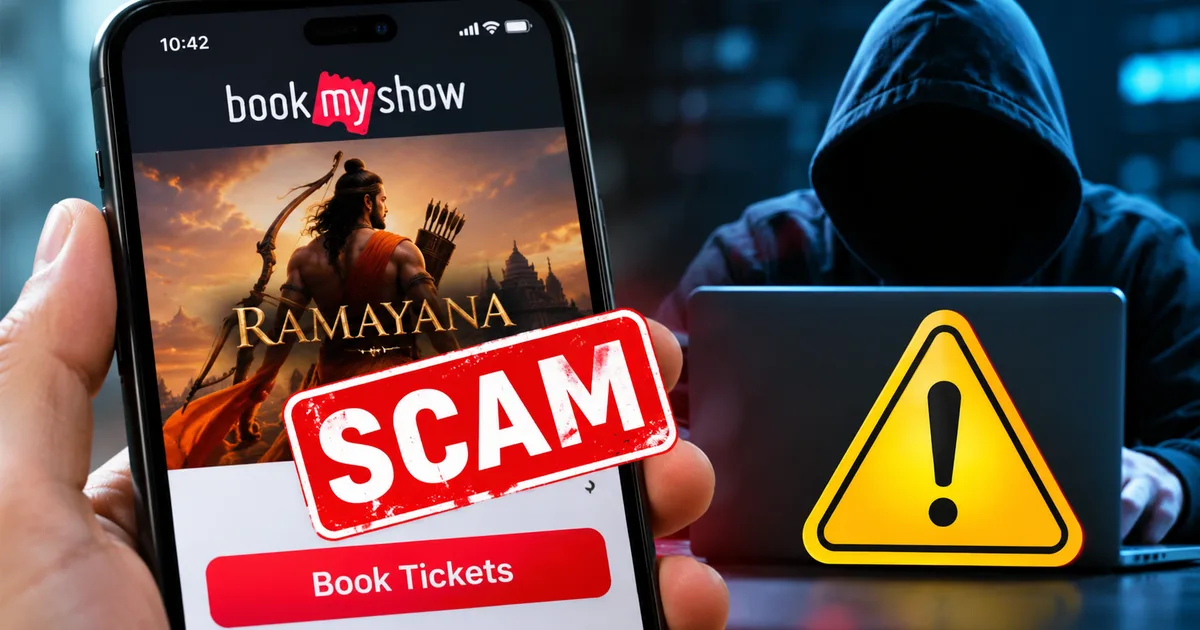
If someone on WhatsApp or Telegram offers you confirmed first-day tickets for Ranbir Kapoor's upcoming mythological epic, pause before opening your UPI app. Don't rush. The fake BookMyShow Ramayana movie ticket booking scam is already ripping through chat groups and social feeds across India, months before official theatre counters actually open (annoying, I know). Scammers are taking full advantage of fan excitement to push lookalike domains and forged seat confirmations. Honestly, it makes my blood boil watching decent film lovers lose thousands of rupees to these cheap digital traps.
Nobody gets backdoor access to box office tickets. Period.
I've watched this exact scam play out before. When Coldplay announced their Mumbai tour dates, an 18-year-old student from Chunabhatti and his friends lost Rs 2.2 lakh to scammers selling fake passes on chat apps. Same thing happened to cricket fans during tournament playoffs. And now, cybercriminals are targeting Nitesh Tiwari's big-budget Ramayana production, counting on crowd enthusiasm to cloud basic common sense. If you ask me, it's the exact same dirty playbook every time. You can see the pattern everywhere in our latest online scam warnings, where scammers clone familiar brands to clean out bank accounts.
What the fake Ramayana movie ticket booking scam looks like
The scam starts with targeted posts across Instagram, Facebook groups, X, and Telegram channels focused on Indian cinema. These posts promise advance corporate seats or exclusive IMAX 3D recliner passes for the Ramayana film. Some posts claim ticketing servers will crash from huge demand, so booking early through private distributor quotas is your only hope. Look, it's complete nonsense.
Sounds tempting if you're eager to catch Ranbir Kapoor as Lord Ram or Yash as Ravana on opening morning.
Once you tap the link or message their number, things move fast. The scammers send you straight to a fake portal built to copy BookMyShow. Colors match. Posters look genuine. You'll even see an interactive seat grid showing silver and platinum rows (which makes sense, actually). In my experience, moviegoers drop their guard right there.
Thing is, that whole website is an illusion. When you select your seats and hit proceed, the page doesn't send you to an authorized payment gateway like Razorpay or BillDesk. Instead, it flashes a static QR code or drops a personal UPI handle, asking you to transfer between Rs 500 and Rs 2,500 per ticket directly through PhonePe or Google Pay. We've seen this exact trick before. In similar cases, like the fake Durand Cup final tickets racket, buyers got tidy PDF tickets with random barcodes right after paying, only to find out at the gates that the passes were completely fake.
How scammers operate the fake ticket booking website step by step
Knowing how this racket works makes it much easier to catch before you punch in your UPI PIN. If you ask me, these syndicates follow a routine that's practically automated across five steps.
First, scammers register sketchy domain names that look almost like real portals. They rely on typosquatting tricks, grabbing web addresses like book-my-show.co, bookmyshow-tickets.in, bms-ramayana.in, or ramayana-booking.online. Glance quickly at your mobile browser, and the link looks totally legitimate.
Second, they run paid ads or blast cinema groups on social media. They post fake screenshots of sold-out auditorium layouts, claiming bulk quotas from theatre owners. Account stats here are usually a bit fuzzy. But they still pull in clicks.
Third, they create fake panic. A ticking countdown timer shows up right after you land on the site or start messaging their agent on WhatsApp. You'll see urgent messages warning that your chosen seats will vanish in seven minutes. It's a cheap trick. But it works, because it stops you from checking the URL or asking whether official ticket sales have even started.
Fourth, they collect upfront money through peer-to-peer UPI transfers. Just look at the Mumbai Coldplay case handled by police. The victim started by sending Rs 7,000 for one pass to see if it was genuine. Once the scammer emailed back a clean confirmation from confirmation@book-my-show.co, the buyer felt safe, collected Rs 2.17 lakh from friends, and tried buying 24 passes. Every single rupee vanished straight into mule bank accounts.
Fifth comes the squeeze. If you pay the initial ticket price, many scammers don't just disappear right away. Instead, they message back claiming you still owe an Aadhaar verification charge or an entertainment tax deposit of Rs 1,500 per ticket. They swear it's fully refundable at the theatre counter (a blatant lie, obviously). If you refuse, they threaten to cancel your booking without any refund. It's pure blackmail.
Red flags of a fake ticket booking website and clone link
Spotting these copycat pages isn't hard once you know what to check. Scammers can copy logos and graphics, but they can't fake banking infrastructure or verified payment rails.
Look closely at the browser address bar. The real BookMyShow site in India is always hosted on in.bookmyshow.com or bookmyshow.com. That's it. Any variation packed with hyphens or odd extensions like .co, .live, .cc, or .store is a scam portal. If you ask me, checking that URL line takes five seconds and saves your entire bank balance.
Check your payment screen carefully. Genuine Indian ticketing platforms process every transaction through licensed merchant gateways. When you pay BookMyShow through UPI, the recipient name displayed in your app will state Bigtree Entertainment Private Limited. If the prompt tells you to send money to a personal handle like moviepass99@ybl or an individual's name, cancel the payment immediately. Don't approve it.
Also, cinema release schedules work under strict rules. Multiplex chains like PVR Inox and Cinepolis only open advance bookings three to six days before a film's release date, once censor certificates and distributor deals are locked. Anyone claiming to hold confirmed seats weeks or months in advance is lying. We saw the exact same playbook during the Diljit Dosanjh Delhi concert scam, where desperate music fans paid crazy sums for fake QR passes that failed at the gate.
Watch out for these warning signals when booking entertainment passes:
- Website addresses containing odd hyphens, typos, or unusual domain extensions.
- Sellers demanding direct UPI transfers or manual QR code scans instead of standard payment gateways.
- WhatsApp or Telegram accounts claiming to possess distributor or VIP quota tickets.
- Aggressive countdown timers forcing you to pay within minutes without verification.
- Customer support provided exclusively through personal WhatsApp numbers rather than official in-app help desks.
Official warnings from authorities and cinema platforms
Police units and cinema apps across India keep issuing warnings against ticket scalping and fake portals. Following repeated incidents during stadium concerts and blockbuster movie releases, BookMyShow lodged formal police complaints at Mumbai's Vile Parle police station against unauthorized ticket resellers and fake website operators.
The platform issued a public statement clarifying its ticketing stance:
"BookMyShow is the only official platform for authorized ticket sales. Tickets purchased from unauthorized platforms, social media handles, or third-party sellers are invalid and will not permit entry."
The Mumbai Police Economic Offences Wing has actively summoned unauthorized ticketing operators and shut down dozens of rogue domains. At the same time, CERT-In frequently flags clone links. I'm not sure of the exact number of phishing links out there right now, but police are pulling down dozens every single month.
Under Indian cyber law, creating clone websites and selling fraudulent tickets constitutes identity theft, cheating by personation, criminal conspiracy, and fraud under Sections 66C and 66D of the Information Technology Act, alongside sections of the Bharatiya Nyaya Sanhita. But here's the catch. Scam operators quickly cycle through disposable SIM cards and mule bank accounts. If you ask me, that's why recovering lost funds requires you to act immediately.
How to protect yourself from BookMyShow ticket fraud
Staying safe online doesn't take advanced tech skills. Just a few basic digital habits will keep your bank balance safe from cinema scammers. In my experience, official apps eliminate almost all of this risk right away.
First and foremost, never send money to individual UPI IDs for movie tickets. Real businesses don't conduct ticket sales over private WhatsApp chats or Telegram groups (it happens way more often than you'd think, sadly).
Always install the official BookMyShow app directly from the Google Play Store or Apple App Store. Don't search Google and click the first sponsored ad. Scammers frequently buy search ads that sit above official sites and direct people straight to lookalike phishing domains. If you're on desktop, type the address directly into your browser navigation bar yourself.
You can review our digital safety guides for step-by-step methods to verify SSL security certificates and identify spoofed websites before entering any financial details.
Follow these everyday protective measures whenever buying tickets:
- Book tickets exclusively through verified cinema apps or directly at physical theatre box office counters.
- Verify that the merchant name on your UPI payment approval screen reads Bigtree Entertainment Private Limited.
- Ignore unverified social media accounts claiming early access to blockbuster theatrical releases.
- Refuse to pay secondary processing fees, courier charges, or refundable security deposits requested after booking.
- Report suspicious ticket booking links to platform administrators and cyber authorities immediately.
What to do if you already sent money to scammers
If you realize you've fallen into a fake ticket booking trap, don't panic. How quickly you react in the first two hours directly determines whether your bank can freeze the stolen funds.
Speed is everything here.
Immediate actions to freeze fraudulent UPI transactions
Dial the national cybercrime helpline at 1930 right away. It's toll-free. The helpline operates under the Ministry of Home Affairs and connects directly to the Citizen Financial Cyber Fraud Reporting and Management System. When you report the fraud, operators coordinate with partner banks to freeze the scammer's beneficiary account before the money gets withdrawn at an ATM or routed through crypto exchanges.
At the same time, open your UPI application (like Google Pay, PhonePe, Paytm, or BHIM) and raise a dispute on that specific payment. Mark the transfer as fraud and grab the transaction complaint reference number. And if you inadvertently shared banking passwords or OTPs, call your bank's official fraud helpline right away to place a temporary debit freeze on your account.
Filing an official complaint with Indian cyber cells
Next, lodge a formal cyber complaint on the official national portal at cybercrime.gov.in. If you ask me, preparing your evidence beforehand makes the whole registration process much smoother.
Gather the following documentation for your cyber police report:
- Full screenshots of WhatsApp or Telegram conversations showing seat promises and payment demands.
- Bank transaction receipts displaying the UTR number, recipient UPI handle, timestamp, and amount.
- The exact phishing URL or mobile application download link used by the fraudsters.
- Any forged ticket confirmation emails, fake PDF tickets, or spoofed BookMyShow receipts received.
Once submitted, your complaint generates an official acknowledgment number. Cyber police cells across states use these details to trace mule accounts and blacklist suspicious mobile numbers under DoT regulations.