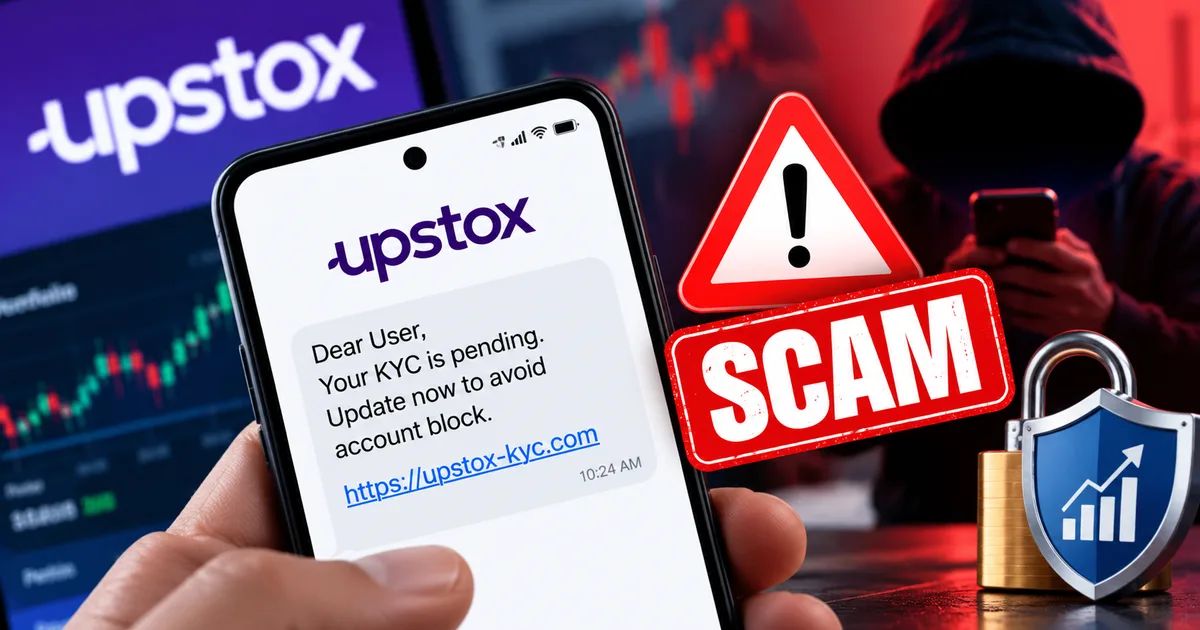
You probably got the text message this morning. Or maybe last night. It says your Upstox demat account is going to be blocked because your KYC is incomplete. It includes a link that looks vaguely official. I'm telling you right now, don't click that link. The Fake Upstox Login 2026 KYC Update SMS Scam is catching a lot of smart people off guard right now, and the financial damage is brutal.
Honestly, scammers are getting terrifyingly good at copying the exact look and feel of trading apps. Upstox has millions of users in India. So it's a massive target. If you trade options or hold mutual funds, you have money sitting in that demat account. And criminals want it.
The reality of the KYC confusion
Basically, this is a highly targeted phishing operation mixed with a remote access attack. Scammers blast out thousands of text messages to Indian phone numbers (which is super cheap to do, actually). They don't even know if you have an Upstox account. They just play the odds. Since demat account openings surged in the last few years, the chances of hitting an actual investor are pretty high.
The message claims there's a mandatory KYC update required by SEBI for 2026.
This sounds entirely plausible. SEBI actually did update KYC rules recently about Aadhaar and PAN linkage. It caused a lot of confusion among retail investors. Scammers use this real-world regulatory change as a smokescreen to panic you into acting quickly. I'm not sure exactly why it works so well, but people panic when they think their account is frozen. They know you probably saw a news headline about KYC deadlines. So the SMS feels like a natural follow-up.
"Fraudsters are exploiting the recent SEBI re-KYC mandate confusion to target retail investors. They create immense urgency, pushing victims to compromise their login credentials and trading PINs before they can verify the source."
Thing is, they aren't just trying to steal a few hundred rupees from a linked bank account. A compromised demat account gives them access to your entire portfolio. They can sell your blue-chip stocks and buy worthless penny stocks. Which they conveniently own and are trying to pump the price of. This is known as circular trading. And it drains your wealth overnight.
The scammer buys illiquid stocks from their own accounts using your money at highly inflated prices. You're left holding junk shares, and your hard-earned money is gone.
How the fraud plays out step by step
The mechanics of this fraud are smooth. I've seen the fake portals, and they're near-perfect clones of the actual login pages.
First, you get an SMS or WhatsApp message. The sender ID might say something like "UPSTOX" or "VK-UPSTX". Or it might just come from a random 10-digit number. The text usually says something like: "Dear user, your Upstox account KYC will expire today. Update immediately via this link to avoid account suspension."
You panic. You click the link. Here's where the trap snaps shut.
The link takes you to a fake website. The URL might be something sketchy like upstox-kyc-update.in or login-upstox-2026.com. It isn't the real upstox.com domain. But the page has the right purple and white colors, and it has the correct logo.
This fake site asks for your mobile number and your 6-digit PIN. You type them in.
The site then asks for an OTP to "verify your device".
Behind the scenes, the scammer is sitting at a computer. They take your phone number and enter it into the real Upstox app. The real Upstox app sends an actual OTP to your phone. You see the OTP on your screen. You think it's for the KYC form you're filling out. So you type it into the fake website.
The scammer takes that OTP and logs into your real account.
And then they ask for one more thing on the fake site. They ask you to download a "KYC Verification App" to complete a live video check. If you download this Android APK file, you're handing over full control of your phone (which is a total nightmare, obviously). It's screen-sharing malware. This allows them to read your SMS messages in the background. They intercept bank OTPs and bypass two-factor authentication entirely. We've seen similar tactics in the Fake HDFC Bank Credit Card Reward Points SMS Scam 2026, where users are tricked into downloading malicious files that compromise their devices.
Red flags you should never ignore
It's easy to say you'll never fall for this. But when you're distracted at work and worried about your investments getting locked, your brain takes shortcuts. I think we all do this sometimes. You have to look for the structural flaws in the scam.
- The sender is a regular 10-digit mobile number on WhatsApp. Official brokers use verified business accounts with a green tick, and official SMS alerts come from registered short codes.
- The link does not start with exactly https://upstox.com or https://pro.upstox.com. Any variation is a trap. Scammers buy cheap domains that look similar.
- The page asks you to download an APK file directly from the browser instead of redirecting you to the Google Play Store or Apple App Store. Official apps are never distributed via random web links.
- The message creates extreme urgency. Banks and brokers give you weeks or months to complete KYC updates, not 24 hours. They will send multiple reminders.
- The communication has slight spelling errors or weird grammar. Keep an eye out for capitalization mistakes or strange phrasing that a professional corporate communications team would catch.
I know this sounds basic. But these details are all that stand between you and a zeroed-out account.
Protecting your money and shares
You need to build a defensive perimeter around your demat account right now. Don't wait until you get a suspicious text.
Always log in through the official mobile app or by typing the web address into your browser manually. Never click a link in a text message to access a financial platform. If you get a message about KYC, open the official app. If there's a real issue, you'll see a prominent notification on your dashboard. Or it'll be in the account settings section.
Set up biometric authentication. Use your fingerprint or Face ID to log into the app. This adds a physical layer of security that remote scammers can't bypass easily. You should also enable TOTP (Time-based One-Time Password) using an app like Google Authenticator or Microsoft Authenticator. Upstox supports this feature. And it's significantly safer than SMS OTPs because the codes are generated locally on your device. They can't be intercepted by SIM swapping or malware reading your texts.
Never share your 6-digit Upstox PIN with anyone.
Not even if they call you claiming to be from Upstox support. Real support staff don't need your PIN to help you. They have access to your account details on their backend systems.
If you use an Android phone, go to your settings and disable the option to "Install from unknown sources" for your web browser and WhatsApp. This prevents you from accidentally installing malicious APK files. It's the same advice I gave when covering the Fake Apple Pay India 2026 UPI Setup SMS Scam, and it holds true here. The malware threat is a total mess right now.
What to do if you clicked the link
If you're reading this because you already entered your details on a fake site, you have to move incredibly fast. You're in a race against the scammer. Don't panic, but do act immediately.
First, log into your Upstox account from a safe device right away. Change your PIN.
Go to the security settings and log out of all other active sessions. This might kick the scammer out if they're currently logged in.
Second, call Upstox customer care. Tell them your account is compromised. Ask them to freeze trading and withdrawals temporarily. You can reach their support through the official numbers listed on their website or within the app. Don't search for their customer care number on Google. Scammers often plant fake support numbers in the search results.
Third, if you downloaded any app outside the Play Store, turn off your phone's internet connection immediately. Go to settings and uninstall the app. If you aren't sure which app it was, or if your phone is behaving strangely, you might need to factory reset your phone to be safe. Make sure you back up your photos first. It's painful. But a compromised device is a huge risk.
Where to report the fraud
You have to report this to the authorities. Don't skip this step out of embarrassment. These are professional syndicates. You aren't the first person they've tricked. The more data the police have, the better they can track the syndicates running these operations and recover funds.
Call the national cybercrime helpline immediately at 1930. This is a dedicated line for financial fraud in India. The numbers here are a bit fuzzy, but if you call within the first few hours, they can sometimes freeze the fraudulent transactions before the money leaves the banking system.
File a detailed written complaint on the official government portal at cybercrime.gov.in. Provide screenshots of the SMS and the fake website URL. Include your bank or demat statements if any money or shares were stolen. If you want more general advice on staying safe online and spotting these patterns, you can browse our Scam Alerts & Safety category.
Also, you should report the phishing link to CERT-In (Computer Emergency Response Team - India) at incident@cert-in.org.in. They can work with internet service providers to get the fake domains blocked across the country. That stops others from falling for it.
Look, scams like this rely on fear and confusion. The RBI and SEBI rules change, people get confused about their compliance status, and criminals step into that gap. Just remember that no legitimate financial institution will ever rush you into clicking a random link to save your account. Take a breath. Verify through official channels. And keep your money safe.