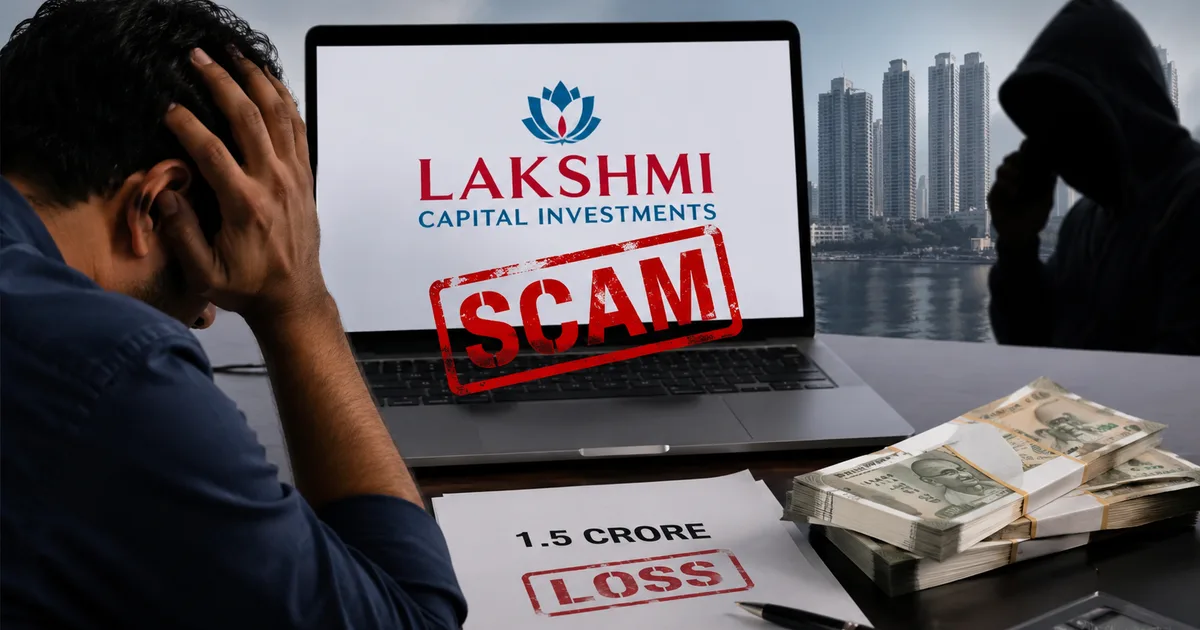
Look, if you've been added to a WhatsApp group promising easy stock market returns, you need to read this immediately. A resident of Sector 30A in Vashi, Navi Mumbai, recently lost a staggering Rs 1.5 crore after falling victim to the fake Lakshmi Capital Investments scam. This isn't an isolated incident. Scammers are actively targeting regular retail investors across India, using polished PDF guides and fake institutional trading apps. Here's how they got a 61-year-old Vashi man to transfer his life savings, and how you can avoid the same trap.
Honestly, it's scary how fast these guys can empty a bank account. They don't need to hack your phone. If you ask me, it's just pure social engineering, and they're incredibly good at it.
What is the Lakshmi Capital Investments scam?
Basically, it's a scam that pretends to be a real trading desk. The scammers create WhatsApp groups under names like Laxmi Capital 20191 VIP Group to build trust. They add hundreds of numbers. (Most of them are just bots, to be honest.) And then they start posting fake screenshots of huge profits. They do this to make you feel like you're missing out on a massive opportunity. In my experience, these setups always use the same script. They claim they have inside info or special quotas so you can buy shares cheap. But they don't. It's just a trap. The Vashi victim, who lives in Sector 30A, really thought he was joining some VIP club. He had no clue the nice assistants helping him were actually scammers in a call center somewhere far away.
The scammers use the name of Laxmi Capital because it sounds like a real, registered financial firm. But it's not. The actual company has absolutely nothing to do with these groups. It's a common trick where they steal the name of a reputable brand so you don't suspect anything. If you want more details, check our guides on online scams. You'll quickly see that this is a classic move.
How the online share trading fraud works step by step
Here's the deal: nobody wakes up and decides to send Rs 1.5 crore to some random bank account. The scammers build trust over weeks. It starts with a simple WhatsApp invite or maybe a Facebook ad. Once you're in, they start sharing daily tips. And honestly, some tips actually make money. That's because they're just copy-pasting standard analysis from real news sites, but if you're a beginner, it feels like magic. The group admins pretend to be expert fund managers who just want to help you make money. They even show fake certificates from SEBI or foreign regulators. I've seen these papers myself, and they're full of typos. But on a tiny phone screen, they look real enough to trick anyone.
Then comes the trading platform itself. They don't use regular, registered brokers.
Instead, they use a step-by-step system to drain your account. Here's how they do it:
- First, they convince you to register on a custom-built mobile app or web portal. They'll send you a direct link to download this app. It's never on the Google Play Store or Apple App Store. They claim it's a private institutional app that's not open to the general public.
- Next, you see a dashboard that looks incredibly professional. It shows your name and a dummy trading account balance alongside real-time stock tickers. But the app is completely fake. It's just a web page showing simulated numbers controlled by the scammers. You think you're buying real shares of companies like Reliance or Tata, but nothing is actually being bought.
- Then, they tell you to transfer money to buy exclusive shares. They promise returns of 200% or more. But they tell you that official institutional trading accounts never ask you to transfer money to personal savings accounts. However, they claim their clearing house requires direct transfers to individual accounts for faster processing. They even give you a list of different bank accounts to transfer money to.
- After you transfer the money via UPI or IMPS, your app dashboard shows an updated balance. You think your investment is growing. But your cash has already been withdrawn from a mule bank account in another state. The dashboard update is just a manual edit made by a scammer sitting behind a laptop.
- Finally, when you try to withdraw your profits, the trap closes. They tell you that you must pay a 20% tax or service fee before you can get your cash. If you pay it, they disappear. If you don't, they block you. They might even threaten you with fake legal notices from the RBI or SEBI if you refuse to pay.
In the Vashi case, the 61-year-old victim was added to the group back in February. Over the next three months, they got him to make 21 different transactions. The total came to Rs 1.56 crore. When he tried to get his supposed profits out, the admin demanded more money for taxes. That's when he realized he'd been conned. Honestly, it's heartbreaking because this is usually someone's retirement savings. I think it's a total mess. The Vashi police station has registered a case, but recovering money after months is close to impossible. We've discussed this in our explainers on how bank freezes work.
Warning signs of fake stock investment groups
Spotting these scams early is the only real way to protect your cash. The Securities and Exchange Board of India (SEBI) has repeatedly warned that real brokers can't guarantee profits. But scammers do it anyway. They use high-pressure tactics to make you act fast before you have time to think. (It's a classic trick, if you ask me.) They want you to make decisions based on emotion rather than logic.
So look out for these clear red flags if you're in any investment group:
- The group admin uses a foreign phone number or a virtual number. They'll claim they're working from a fancy office in Mumbai or London, but their WhatsApp country code says otherwise. For instance, many admins use numbers starting with +1 (USA) or +44 (UK) while claiming to be Indian fund managers.
- You're asked to download a trading app via an APK file link. Real brokers always list their apps on official app stores. Downloading APK files bypasses your phone's security checks and can install malware.
- The bank account names for transferring funds keep changing. One day you're sending money to a construction firm in Bihar, and the next day to a retail shop in West Bengal. This is a classic sign of money laundering. Real brokers only collect money in their registered corporate bank accounts.
- You're promised guaranteed returns on IPO shares that are otherwise hard to get. There's no such thing as a guaranteed allotment in the Indian stock market. All IPO allotments are handled by registrar companies through a lottery system.
- They show screenshots of massive daily profits from other members. If you look closely, these screenshots are often identical across different groups, with only the dates changed.
If you see even one of these signs, exit the group immediately. I know it's tempting to think you can play along and make a quick buck, but these scammers are professionals. They know exactly how to manipulate you. Honestly, I think that's why they're so successful. For a list of safe brokers and apps, you can visit our tools section.
How to protect yourself from WhatsApp trading scams
Protecting yourself doesn't require a degree in cyber security. It just takes a healthy dose of skepticism. The first rule is simple: don't download apps via APK files or web links. If a trading platform isn't registered with SEBI, don't use it. You can check the registration status of any broker directly on the official SEBI website. It takes less than two minutes, and in my experience, it can save you lakhs of rupees.
Here's another rule. Real investment platforms will never ask you to transfer funds to bank accounts in the names of random individuals. All stock market transactions in India go through clearing corporations. When you add funds to your broker app, the receiver is always the broker's official corporate account. So if you see a personal name on the bank details, stop immediately.
According to a recent advisory from CERT-In, Indian internet users must verify the credentials of any investment adviser before transferring funds. Don't trust screenshots of high returns, since they're easily fabricated using online templates.
You should also follow these basic digital hygiene steps:
- Enable two-factor authentication on your WhatsApp and Telegram accounts to prevent unauthorized access.
- Report sketchy WhatsApp groups using the in-app report button. This helps WhatsApp block the numbers faster.
- Make sure you never share your UPI PIN or transfer funds to unknown personal bank accounts under the guise of trading deposits.
- Read our latest safety guides to keep yourself updated on the latest tactics used by cyber criminals.
By taking these simple steps, you'll make it much harder for scammers to target you. Remember, they're looking for easy targets. If you ask tough questions, they'll likely block you and move on to someone else. (Which makes sense, actually.)
Where to report cyber fraud in India
If you've already transferred money, time is your worst enemy. It's a race against the clock. The first two hours are what the police call the Golden Hour, which is when banks can freeze the money before the scammers withdraw it. If you act fast, you might get some of it back. But if you wait, your chances drop to zero. I'm not sure exactly why, but the cash is quickly moved through multiple accounts and withdrawn at ATMs across the country.
If you think you've been scammed, follow these steps immediately:
- First, immediately call the national cyber crime helpline at 1930. This helpline is run by the government and connects you to cyber police who can freeze bank accounts.
- Second, register a formal complaint on the official portal at cybercrime.gov.in. Upload all screenshots of the WhatsApp conversations and transaction receipts, along with the scammers' phone numbers.
- Third, report the transaction to your bank within 2 hours. Ask their fraud department to raise a chargeback or dispute request for the transfer.
Dealing with cyber fraud is a mess. But staying silent only helps the scammers, if you ask me. So report it and warn your friends. Let's keep our digital spaces secure by sharing these alerts.