If your phone buzzes with a WhatsApp message from your company director asking for an urgent wire transfer, don't hit send. Tracking the latest scam alerts trends in India 2026 reveals that cyber fraudsters have moved past clumsy lottery texts. Far past them. Today, they target finance managers and regular UPI users with surgical precision. Over chai yesterday, a colleague told me how his cousin lost ₹45,000 to a fake delivery APK within ten minutes. It's happening across every major Indian city. And honestly, staying alert is your first line of defense.
Look, digital fraud in India is getting personal. Very personal. Criminals rarely blast random spam emails anymore. Instead, they study your LinkedIn profile, learn who your boss is, track where you order groceries, and write messages that look completely normal. In my experience, that's what makes the scam work so well. You can keep track of recent warnings on our scam alerts and safety section, but understanding how these traps work is what actually keeps your bank balance intact.
What new patterns show about online fraud
The biggest shift this year is how quiet these scams have become. You just don't see glaring typos or silly lottery promises anymore. Fraudsters write in clean, professional English. Or fluent Hindi and Tamil. It's subtle.
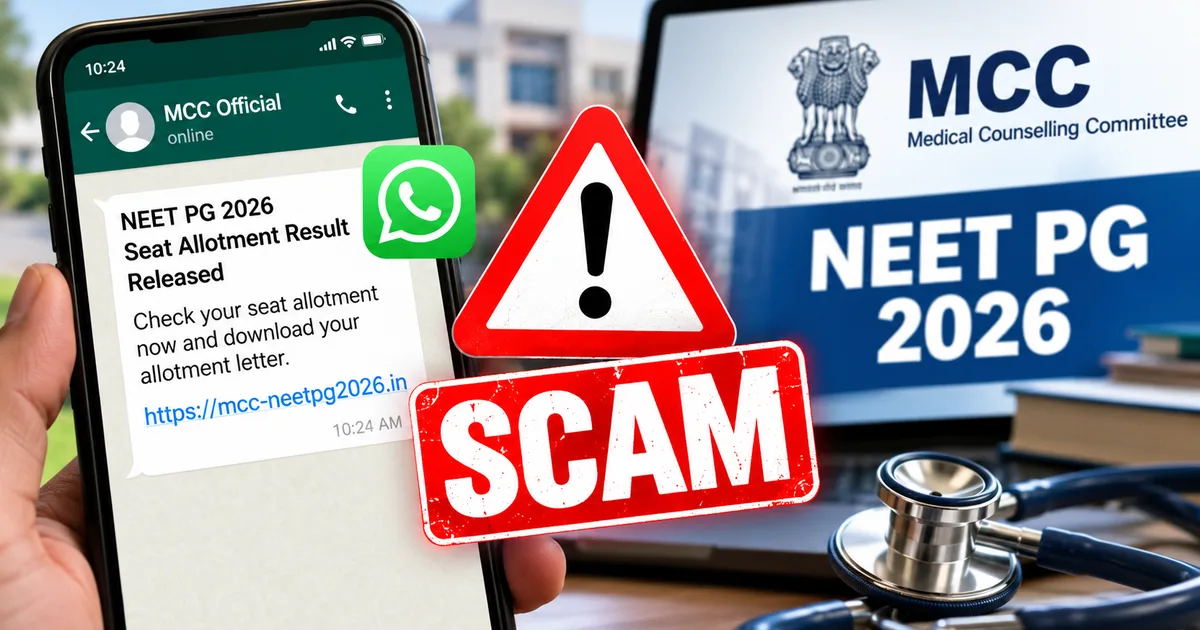
The National Payments Corporation of India recently issued an urgent digital safety alert about text message smishing. Scammers send SMS alerts stating your electricity will be cut off tonight or that your bank account is blocked due to an incomplete KYC update. These messages have short links that download sketchy Android application packages directly onto your phone. Once installed, that fake app reads your incoming SMS messages and steals your two-factor authentication codes to wipe your savings. You won't even realize anything went wrong until your balance hits zero.
Messaging platforms are trying to fight back. Meta is testing on-device scam detection for WhatsApp in India as regulators push OTT messaging apps into stricter anti-spam rules (which, if you ask me, is a solid move). But technical filters won't catch everything. Criminals use social tricks to mess with your head, and software can't fix that.
How the WhatsApp boss scam tricks finance staff
Corporate offices across Mumbai, Bengaluru, Delhi NCR, and Hyderabad are seeing a sharp rise in the boss scam. It's everywhere right now. Both the Ministry of Home Affairs and the Securities and Exchange Board of India recently warned finance professionals about this specific attack. Here's how it actually plays out in real life.
Say you work in accounts or human resources. At 3:30 PM on a hectic Tuesday, you get a WhatsApp message from a number you don't recognize, but the display picture has your managing director's face on it. The message sounds rushed: "I am trapped in an urgent board meeting with investors. I need you to process an immediate vendor payment of ₹4,80,000 via RTGS. I cannot take phone calls right now. Confirm once done."
Panic hits immediately. You don't want to upset your boss, and you want to look efficient on a busy afternoon (which makes sense, actually). So you skip the usual verification steps and send the money. In my experience, that fear of looking slow is exactly what scammers count on.
According to an advisory issued by the Ministry of Home Affairs cyber safety wing, corporate employees must independently verify any unusual financial instructions over a trusted phone call before transferring funds or purchasing digital vouchers.
Step by step: how the impersonation attack works
- Attackers scrape executive names, job titles, and company hierarchy details from professional networks and corporate websites.
- They purchase virtual mobile numbers or activate stolen SIM cards to set up fresh WhatsApp accounts using the executive's publicly available photo.
- The fraudster messages a finance employee, creating extreme urgency as they claim they are in a closed-door meeting or on a flight where voice calls aren't possible.
- They demand an instant wire transfer to a specific account or ask you to purchase digital gift cards for client gifts.
- Once the funds land, the criminal syndicate disperses the cash across a chain of pre-arranged mule accounts within three minutes.
UPI fraud in 2026 and malicious payment links
UPI handles billions of transactions every single month across India. That massive volume makes it a prime hunting ground for digital thieves. Lately, the tactics have shifted away from crude QR codes toward sketchy refund and debit alerts.
State Bank of India recently flagged a major spike in fake customer care scams. Here is how they get you. Say you order clothes online and the delivery gets delayed (annoying, I know). I'm not sure exactly why so many people trust random helpline numbers online, but you search Google for a courier helpline and call the first number you see. The guy answering sounds totally professional. He claims he just needs to send you a ₹5 refund to verify your UPI account. Then he shoots over a collect request on PhonePe or Google Pay and tells you to approve it to get your cash.
Here's the deal: never enter your UPI PIN to receive money. Period. A UPI PIN is needed only when money is moving out of your bank account. Honestly, if someone tells you that entering your PIN will credit cash to your balance, they're robbing you. I think that's the single most important rule to remember here. Full stop.
We break down similar fraud tricks in our detailed guide on guarding against digital fraud, which shows you exactly where hidden payment requests try to trap you.
Step by step: how fake APK files drain bank accounts
- You receive an SMS warning that your power connection will be cut off by 9:00 PM due to an unpaid bill of ₹142.
- The text includes a link pointing to an external website hosting a file named something like Bijli_Bill_Pay.apk or Bank_Security_Update.apk.
- When you tap the link, your Android browser warns you that downloading files from unknown sources can harm your device, but you tap install anyway because the text sounded urgent.
- During installation, the app requests permission to view your SMS messages and access phone contacts.
- The app opens a fake login screen asking for your net banking user ID, password, and debit card details.
- In the background, the malware reads your bank OTPs, logs into your real account, and transfers your funds to multiple mule wallets.
Fake job offers and the money mule trap
Scammers don't just want your savings. Often, they want your bank account so they can clean stolen cash without getting caught. That's where the money mule trap comes in, and it's hitting college students and young job seekers hard across India.
A recent high-profile case involved fake recruitment emails claiming the Indian Army had paid internships with stipends of ₹75,000. Students were told to pay registration fees and verify their accounts for direct benefit transfers. In other setups, young grads get offered remote gigs on Telegram or WhatsApp that pay ₹2,000 a day just for moving money around.
The setup sounds completely harmless at first. The fake company deposits ₹50,000 into your savings account. They tell you to keep ₹2,500 as your commission and forward the remaining ₹47,500 to another UPI ID. Easy pocket money, right? But what actually happened is that you just helped launder money stolen from a retired pensioner three states away.
Thing is, when the victim files a police complaint, the trail leads straight to you. Your bank freezes all your savings accounts and your PAN gets flagged immediately. Then police officers show up at your doorstep. The numbers here are a bit fuzzy, but thousands of student accounts get frozen this way every month. And claiming you didn't know is not a valid legal defense under Indian criminal law.
Before you apply for any remote gig, check our practical digital safety guides to verify corporate credentials and protect your identity.
Warning signs that should stop you in your tracks
While scam methods keep shifting, human psychology is still the main target. Always has been. Fraudsters rely heavily on urgency and artificial panic to get their way. If you ask me, that pressure is always the giveaway. Watch out for these clear red flags in your daily messages:
- Messages demanding instant action within minutes to prevent account closures, power cuts, or legal notices.
- Any caller or text asking you to install software through an APK link rather than Google Play or Apple App Store.
- Requests from colleagues or supervisors asking for secret payments while claiming they cannot speak on a voice call.
- Anyone offering payment for allowing deposits into your personal savings account or digital wallet.
- Unsolicited calls from individuals claiming to be police officers, customs officials, or CBI agents placing you under digital arrest.
- Foreign recruitment agencies asking you to share biometric data, fingerprint scans, or passport details without verified diplomatic licenses.
How to protect your money right now
You don't need a cybersecurity degree to stay safe. In my experience, a few sensible habits will stop 99% of these attacks cold.
First, turn off auto-download for media on WhatsApp and Telegram. Go into your settings, open storage and data, and switch auto-download off for both Wi-Fi and mobile data (trust me, rogue APK files love sneaking into random groups). It stops sketchy files from landing on your phone without your knowledge.
Second, set hard transaction limits on your bank app and UPI handles. If you usually spend ₹2,000 a day on groceries and cabs, set your daily UPI cap to ₹10,000 on BHIM or your banking app. That way, even if someone compromises your account, your losses are capped immediately.
Third, set up a strict callback rule with your team and family. If your boss or a relative texts you from an unknown number asking for cash, stop. Pick up the phone and call their saved number on regular cellular voice. Never verify someone's identity inside the exact same chat thread they messaged you from.
Fourth, keep an eye on safety advisories from the Indian Computer Emergency Response Team, known as CERT-In (https://www.cert-in.org.in/). They regularly publish alerts covering banking Trojans and phishing campaigns that we track in our latest tech news reports.
Where to report fraud immediately
If you or someone you know has been duped, don't stay silent out of embarrassment (and honestly, shame only helps the scammer). It happens to smart people every day. What you do in the first two hours after a fraudulent transfer determines whether you ever see that money again.
In cyber policing, that window is called the golden hour. During those initial two hours, stolen funds are usually sitting in transit wallets or intermediary accounts before criminals convert them to crypto or pull them from cash machines.
Here is the exact protocol to follow right away:
- Call the national cyber financial fraud helpline at 1930 immediately from your phone. Operators will record the transaction details, your bank account number, and the recipient details to initiate an emergency freeze across partner banking networks.
- Contact your bank's official fraud helpline right after dialing 1930 to block your debit cards, net banking access, and UPI profiles linked to that account.
- File an official written complaint on the National Cyber Crime Reporting Portal at cybercrime.gov.in. Upload screenshots of your chat history, the sender's phone number, transaction reference numbers, and bank account statements.
- Visit your local police station's cyber crime cell with printouts of your complaint acknowledgment from the national portal to register a formal General Diary entry or First Information Report.
Digital payments make daily life across India smooth, but speed cuts both ways. Taking thirty seconds to pause and verify an odd message will save you months of stress and lost savings. When in doubt, just hang up.