So, OpenAI finally did it. They released SearchGPT. If you've been living under a rock, this is their direct answer to Google Search. And honestly, it's about time someone challenged them.
I know what you're thinking. Another AI search engine? We already have Perplexity. But SearchGPT feels different. It's built by the people behind ChatGPT. It has the raw power of their best models right out of the gate (which makes sense, actually). I spent the last few days reading about what this means for us. Getting on the OpenAI SearchGPT India waitlist 2026 is your first step to actually trying it out.
Look, I'm not going to sit here and tell you it'll replace Google tomorrow. That's just silly. Google is basically muscle memory for all of us. When you need to find the nearest SBI branch or check the latest UPI limits, you Google it. But SearchGPT is aiming for a different kind of search. It gives direct answers. You don't have to click through a list of blue links.
What exactly is SearchGPT?
Think of it as ChatGPT but with a direct real-time pipe to the internet. Normally, when you ask ChatGPT something, it relies on its training data. If you ask it about a news event from yesterday, it might stumble. SearchGPT fixes this. It searches the web and synthesizes an answer for you. It has clear citations. You get a little sidebar with links to the actual sources.
This is a big deal for Indian users.
We deal with a lot of noise online. Try searching for a budget smartphone under 20000 INR on Google right now. You'll get bombarded with SEO spam and outdated articles. SearchGPT promises to cut through that junk. It tells you what the best phones are right now based on recent reviews. In my experience, that's exactly what we need.
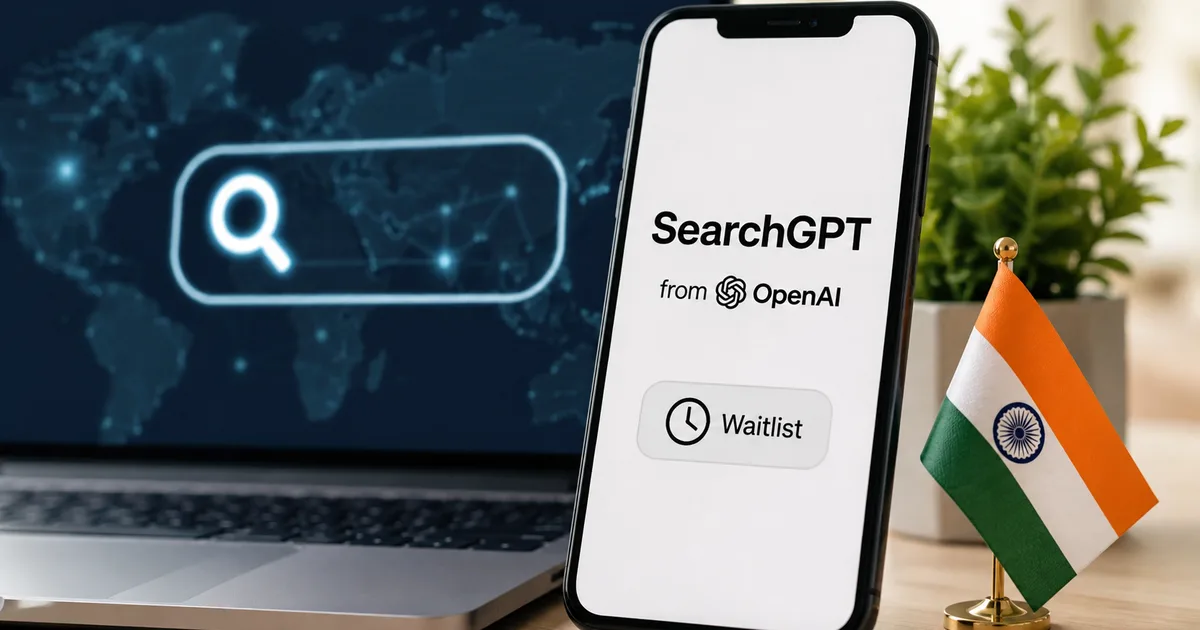
And yes, they're rolling this out to everyone eventually. But right now, it's a prototype. They're testing the waters. That means there's a waitlist. You have to sign up if you want in early. It's that simple.
Google vs SearchGPT: A quick reality check
Let's talk about the elephant in the room.
Google is terrified. They've been slapping their own AI overviews on top of search results for months now. But Google has a massive problem. They make their money from ads. You don't click the ads if they give you the answer directly. OpenAI doesn't have this problem. They sell subscriptions.
I've read a lot of hot takes on this. Some people think OpenAI SearchGPT will kill Google overnight. I think that's ridiculous. Google has decades of local data. Google is still your best bet if you're looking for a plumber in Koramangala or want to know if a specific local train is running late in Mumbai. SearchGPT isn't going to know the exact details of Indian street addresses anytime soon.
But for research? For summarizing a complex topic? SearchGPT is going to be incredibly useful. Imagine you're a student trying to understand the new tax brackets for the 2026 budget. You can just ask SearchGPT. It'll pull the latest data from credible news sites. Then it explains it to you simply. No more digging through a dozen confusing financial blogs (annoying, I know).
The good stuff
Here's what I actually like about what I'm seeing so far.
- It actually links to publishers. If it quotes a news article, it gives you a prominent link. This is great for verifying information.
- You can ask a follow-up question just like you do in ChatGPT. The context stays. This is infinitely better than starting a new Google search every time.
- They're promising better visual answers for things like weather or stock prices.
The not-so-good stuff
Look, it's not all sunshine and rainbows. I have some real concerns.
- AI models notoriously struggle with Indian nuances. Will it understand the difference between Aadhaar and PAN requirements for a specific bank account? Maybe. Will it understand regional slang? Probably not.
- Right now, we don't know the long-term pricing for this. OpenAI has to make money. I worry this will eventually become a premium feature locked behind a twenty dollar paywall. That's roughly 1600 INR a month, which is a lot for a student or a small business owner.
Is SearchGPT free in India?
This is the big question everyone is asking. For now, yes. The prototype is free to test if you get off the waitlist. But let's be realistic here. Running AI search is incredibly expensive. Compute power costs a lot of money. OpenAI is giving this away right now to get data and feedback.
Eventually, they'll probably integrate it directly into ChatGPT Plus for paying users. They might offer a limited version for free users, but I'm not sure exactly why they'd make it unlimited. If you're already paying for ChatGPT Plus, you'll likely be at the front of the line when this goes fully live. But for the average Indian user relying on the free tier, expect some tight usage limits down the road.
I strongly recommend checking out our other explainers on AI tools to see how they handle pricing in the Indian market. It's usually the same story. They are free at first. Then they tighten the screws.
Step-by-step guide: How to join the SearchGPT India waitlist
Alright, let's get to the practical part. Getting on the waitlist takes literally two minutes. I did it this morning on my phone while waiting for my chai.
Step 1: Head to the official page
Open your browser and go to chatgpt.com/search. Don't fall for any sketchy links floating around WhatsApp. I've seen a few scams already where people send APK files. They claim to be early access versions. It's a lie. They just want to steal your data.
Step 2: Sign in with your OpenAI account
If you already use ChatGPT, just log in with your existing account. If you don't have one, you'll need to create one. It's completely free. You can use your Google or Microsoft account to speed things up.
Step 3: Click the waitlist button
Once you're logged in, you should see a button that says "Join waitlist". Click it. That's it. You're on the list.
You won't get an immediate confirmation email. At least, I didn't. But the button should change to say you're on the list. Now you just have to wait.
Warning: Beware of SearchGPT WhatsApp scams
I need to take a second to talk about this. It's getting out of hand. Whenever a new tech product launches, the scammers come out in full force. We're already seeing reports of fake SearchGPT apps on Telegram and WhatsApp groups across India.
Here's how the scam works. You get a message from an unknown number or a hijacked account of a friend. The message says something like "Get immediate access to SearchGPT Premium without waiting! Download this APK." If you download and install that APK, you're handing over full control of your phone to a scammer. They can read your OTPs and drain your accounts via UPI. It's a mess.
Warning signs are always the same. They push a sense of urgency and offer something that sounds too good to be true. They ask you to install apps from outside the official Google Play Store or Apple App Store.
How to protect yourself? It's simple. Never download APKs from WhatsApp links. SearchGPT doesn't have a separate app right now anyway. It's entirely web-based for this testing phase. If you or someone you know falls for this, immediately freeze your bank accounts. Report it to the national cyber crime portal at cybercrime.gov.in or call the 1930 helpline.
How will this impact Indian students and professionals?
Let's think about the practical applications here.
If you're a student at a university in India, research just got a lot faster. Instead of spending hours verifying facts across different tabs, SearchGPT can pull together a well-sourced summary for your assignments.
For professionals, especially freelancers and small business owners, this is a massive time saver. Need to understand the latest GST compliance rules for freelance writers? Ask SearchGPT. It can parse the heavy government documents and give you a plain English answer. Just make sure to double-check the sources it provides. This is true especially when dealing with legal or financial matters.
I've spoken to a few developers working in Bengaluru, and they're already excited about how this could speed up coding. Finding specific API documentation or troubleshooting a weird error message could take seconds instead of minutes. It's a small productivity bump. But those bumps add up over a week. If you ask me, that's where the real value is.
When will you actually get access?
Honestly, nobody knows the exact timeline. OpenAI is always vague about their rollouts. They usually start with a small group of users in the US and slowly expand globally. Given how big the Indian market is, I expect we'll see a significant chunk of invites coming our way soon.
But don't hold your breath. It could be weeks or even months before you get an email saying you're in. They're testing for bugs and server load. Their servers would probably crash if a million people from India suddenly got access tomorrow.
In the meantime, there are plenty of other tools you can play with. Perplexity is still a fantastic option for AI search. It works perfectly in India right now. Microsoft Copilot is also integrated right into Windows and Edge. Copilot uses OpenAI tech under the hood anyway.
My honest take on SearchGPT
I have mixed feelings. On one hand, competition is good. Google has been lazy for years because they had no real threats. SearchGPT is waking them up. That means better products for all of us.
But I'm also cautious. We're trusting another massive tech company to decide what information we see. When you do a Google search, you can see ten different perspectives on the first page. You can choose which one to click. SearchGPT reads those ten pages and gives you one synthesized answer. What if it gets it wrong? What if it misses important context? The numbers here are a bit fuzzy, honestly. Yes, it gives you citations. But most people won't click them. They'll just read the summary and move on.
This is especially risky in India. We have complex regulations and rapidly changing government schemes like DigiLocker updates or new UPI rules. If SearchGPT hallucinates an answer about your taxes or a visa application, it could cause real problems.
So, use it. Test it when you get access. But keep your brain turned on. Don't blindly trust everything it spits out.
"I think there's a lot of room to build a much better search engine than what we have today." - Sam Altman on the vision for SearchGPT.
He's right. There's plenty of room for improvement. SearchGPT is definitely worth keeping an eye on.
I'll be updating our guides section as soon as I get hands-on access to the prototype. Get on that waitlist.