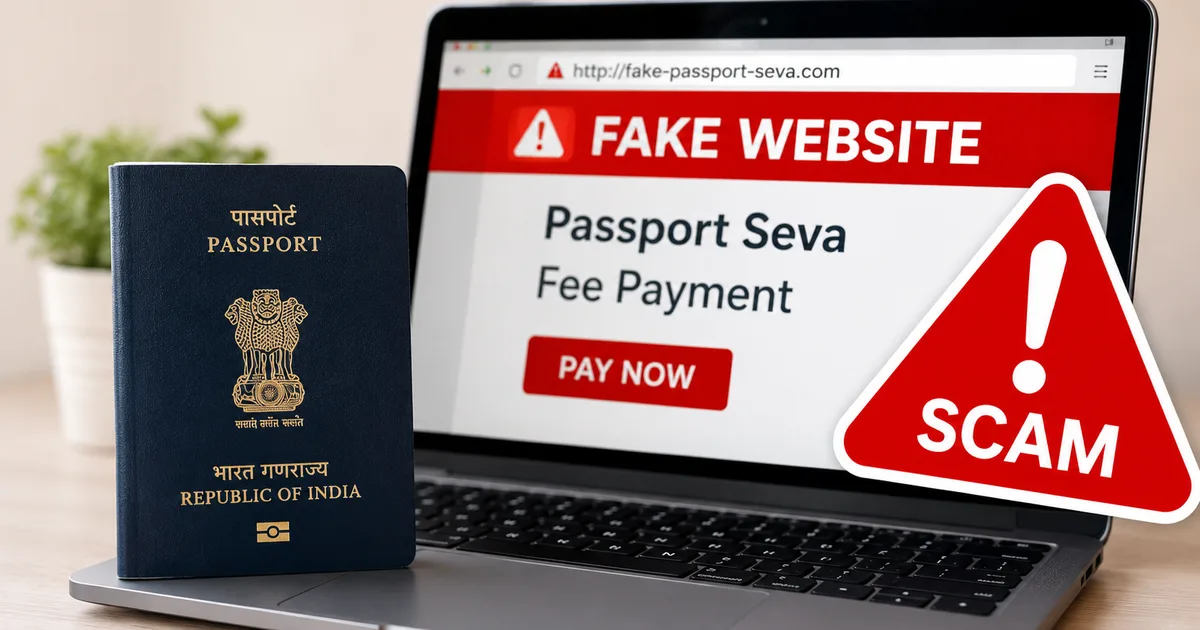
If you're planning to apply for a new passport or renew your old one, you've probably heard about the upcoming price revision. Starting July 1, 2026, passport application charges in India are set to rise. But there's a bigger problem than the extra hit to your wallet: a sudden surge in Passport Seva fee hike scams. Scammers are setting up fake websites designed to steal your money and personal information under the pretext of booking slots before the price hike kicks in. You'll need to know how these fake portals operate and how to protect yourself.
It's an old trick. Scammers take a real news event, like the upcoming fee revision, and use it to create urgency. People rush. They let their guard down and pay triple the amount on a clone site. Honestly, if you ask me, it's just one of the most common online scams targeting citizens today.
Let's look at the actual price changes first. The Ministry of External Affairs is revising the fee structure for the first time in years. A standard 36-page passport booklet that used to cost Rs 1,500 will now set you back Rs 2,500 (which is a lot, actually). If you're opting for the Tatkal scheme, the price jumps from Rs 3,500 to Rs 5,000. That's a massive jump. Especially for families applying together. So it makes sense that you want to get your application in before July 1. But speed shouldn't make you careless.
The internet is flooded with websites that look identical to the government portal. They use similar logos and the same blue-and-white color scheme. It's easy to get fooled. Basically, they steal the standard fee. Then they charge fake convenience fees before vanishing with your data.
How the July 1 price revision drives Passport Seva online application fee scams
Scammers know search engines are the first place we all go when we need to apply for a passport. So they buy sponsored ads. When you look up things like "apply for passport online" or "passport renewal India," these fake websites pop up right at the top of the search results. Honestly, in my experience, they even sit above the official government link. Since these results have that tiny "Ad" label, people just click on them without thinking.
These fake platforms take the official fee and use the upcoming hike to squeeze extra cash out of you. They put up big warnings on their homepages: "Apply today to avoid the July 1 fee hike! Late registration charges may apply after June 30." It works because it creates panic. You think you're saving money, but you're actually handing your hard-earned cash to a sketchy network.
Losing money is bad enough, but the identity theft part is way worse. To apply for a passport, you submit your Aadhaar number, PAN card, date of birth, mother's maiden name, and home address. With this data, a scammer can easily open bank accounts in your name. Or they can apply for instant loans.
The anatomy of a passport fraud: step by step
To protect your bank balance, you need to understand how these criminals operate. They've got a template. And they've refined it over several years.
First, scammers register domain names that mimic the official URL. They use variations like passport-seva.org.in, passportindia-gov.in, or online-passport-seva.co.in. To an untrained eye, these look real. Very real. Honestly, I think it's easy to miss the difference, especially since they might even use "gov" as a subdomain just to trick you.
Second, they build a user interface that copies the official portal. They copy everything. They steal the logos and use the same blue-and-white color scheme just to deceive you. And they'll often throw in fake security badges to build trust (which works surprisingly well, actually).
Third, they make you fill out a long application form. It's a lot of detail. These fake sites want your complete personal history, which goes way beyond simple sites that just target passwords. They'll demand scans of your Aadhaar card and address proof. And they might even ask to connect your DigiLocker, but they can't bypass security unless you hand over your credentials.
Fourth, the site asks for money. They'll claim you must pay a processing fee of Rs 2,500 or maybe a convenience charge of Rs 1,500 just to secure an early slot before July 1. They have UPI options and credit card gateways. It looks real. But the money goes straight to a mule account.
Finally, the site generates a fake appointment slip. It'll show a real-looking date and time at a nearby Passport Seva Kendra. You won't realize it's a scam. Not until you show up at the actual center and the officers tell you that your application number doesn't exist in their system.
Red flags to identify fake passport websites
You can spot these fake sites if you know where to look. They always leave clues. Honestly, they just can't replicate the official government setup perfectly.
The domain name is the absolute giveaway. Government of India portals always end with the .gov.in extension. So if the website URL ends in .org, .in, .com, .net, or .co.in, it's a fake site. No exceptions. The official website for passport services in India is passportindia.gov.in. Anything else is a trap.
Look at the payment system too. The official portal doesn't ask for payment through random UPI IDs or personal wallets. Instead, it uses the official Bharatkosh system or proper bank gateways. I've noticed the official system always clearly shows the recipient is a government department. If a site asks you to send UPI money to a personal name or some company like "Passport Services Pvt Ltd," stop.
You should also check the quality of the text. Honestly, clone websites are usually a mess. You'll spot typos easily. Also, the fonts are often pixelated and look completely wrong.
According to an advisory by the Indian Computer Emergency Response Team, citizens must verify the URL of any government service before entering sensitive personal credentials or making payments online, as phishing sites often use typosquatting to mimic official portals.
How to protect yourself from Tatkal passport fee hike fraud
If you're in a rush to get a Tatkal appointment, you're probably under a lot of pressure. Scammers know this. So they'll promise you guaranteed next-day slots if you pay them a premium (which is a complete lie, by the way).
First off, no official passport agency exists. The Ministry of External Affairs hasn't authorized any private agents to book slots or collect fees. If you ask me, you just have to do it yourself. Use the official website or the mPassport Seva app.
So, here are the steps from our safety guides you should follow:
- Always type the URL manually into your browser address bar instead of clicking on search engine results or links received in WhatsApp messages.
- Double-check the spelling of the domain to ensure there are no subtle typos like "pasport" instead of "passport."
- Use the mPassport Seva app, which is available on both Android and iOS, as it connects directly to the official government databases.
- Remember that you should never share your DigiLocker PIN or Aadhaar OTP with any website that claims it needs to verify your identity for a passport slot.
If a site claims it can bypass the July 1 price revision, it's lying. They can't book a Tatkal slot at the old Rs 3,500 rate. Government systems update fees automatically at midnight. Basically, nobody can give you a discount on a government fee.
Where to report passport fraud in India
If you've already fallen for one of these clone websites and lost money, move fast. Don't feel bad. Honestly, these scams are sophisticated (which is why people fall for them), so just report it.
First, call your bank right away. Block your card or freeze that UPI transaction. If you act within the first few hours, there's a good chance the bank can halt the transfer before the scammers run off with the cash. In my experience, this is the absolute most important step to save your money.
Second, file a complaint on the official national cybercrime reporting portal at cybercrime.gov.in. You can also call 1930. That's the national cybercrime helpline, and they'll connect you with officers who can help.
Third, report the URL to CERT-In so they can take down the fake domain. It stops others from getting ripped off. Honestly, I'm not sure exactly why it takes so long to block these domains, but reporting them is the only way to clean up our web space.